In today’s digital landscape, event marketers face a critical challenge: capturing genuine attention in an environment saturated with sponsored messages. Audience members increasingly seek experiences rooted in authenticity rather than polished corporate messaging. As a result, user-generated content has emerged as a cornerstone strategy for conferences, trade shows, and virtual meetups. By tapping into photos, videos, reviews, and social posts created by attendees themselves, brands can transform passive spectators into passionate advocates. This year (2026), successful organizers leverage attendee voices to build trust, extend reach, and foster a sense of community that amplifies every aspect of an event.
Adopting a thoughtful approach to user-generated content not only enriches the attendee journey but also drives measurable outcomes such as higher engagement rates, organic impressions, and valuable word-of-mouth referrals. From branded hashtags that spark social sharing to interactive installations that invite real-time participation, every touchpoint becomes an opportunity to turn attendees into content creators. In this comprehensive guide, we explore the fundamentals of user-generated content, reveal proven tactics for encouraging authentic sharing, outline best practices for curation and compliance, and highlight metrics to measure impact. Whether you’re hosting a small workshop or a large-scale festival, you’ll discover actionable insights to harness the power of attendee contributions and elevate your event marketing strategy today.
Understanding User-Generated Content
![[object Object]](https://eventmarketingguide.com/wp-content/uploads/2026/05/harnessing-user-generated-content-for-event-market-image-1.webp)
User-generated content refers to any form of media—photos, videos, reviews, social posts, or blog articles—created voluntarily by individuals rather than by paid professionals or brands. In the context of event marketing, it encompasses everything from an Instagram story captured at a keynote address to a tweet sharing behind-the-scenes learnings. Rather than relying solely on high-gloss promotional assets, marketers harness these authentic expressions to showcase unfiltered experiences and foster genuine connections with audiences.
Defining the Scope
Today, user-generated content covers multiple digital formats. Social media platforms such as Instagram, X, TikTok, and LinkedIn serve as primary channels where attendees document their experiences in real time. Meanwhile, specialized event apps and community forums provide dedicated spaces for feedback, questions, and networking posts. Organizers can also invite longer-form contributions via blog posts or video testimonials, expanding the narrative beyond fleeting social updates.
Why Authenticity Matters
Trust in branded messages has been steadily declining, with 92% of consumers indicating they trust peer recommendations over traditional advertisements. According to Pew Research, audiences gravitate toward genuine perspectives that reflect real experiences. When attendees see their peers sharing candid moments—whether it’s a powerful keynote takeaway or a lively networking session—they form deeper emotional connections with both the event and its sponsors.
Key Characteristics
- Spontaneity: UGC is often created on the spot, capturing unfiltered moments.
- Diversity: A wide range of voices and demographics contribute unique viewpoints.
- Variety: Formats include photos, short videos, text-based testimonials, and live streams.
- Engagement: Posts featuring user-generated content achieve up to 6.9x higher interaction than standard branded content.
Benefits of User-Generated Content in Event Marketing
Integrating user-generated content into event campaigns yields a host of advantages that amplify ROI and brand affinity. Below, we explore five major benefits that make UGC a must-have tactic for organizers seeking sustainable growth in 2026.
1. Increased Trust and Credibility
Audiences inherently trust their peers more than corporate spokespeople. When real attendees share genuine experiences, it humanizes your event and builds credibility. This trust factor translates into higher registration conversions and stronger brand loyalty post-event.
2. Cost-Effective Content Creation
Producing high-quality videos and photographs can strain marketing budgets. By encouraging attendees to generate content, you significantly reduce production costs while maintaining a steady stream of engaging visuals. These authentic contributions often resonate more deeply than staged campaigns.
3. Enhanced Engagement Metrics
Data indicates that social posts featuring user-generated content drive dramatically higher engagement rates. Whether it’s likes, comments, or shares, audiences respond enthusiastically to candid snapshots and honest testimonials, extending the life cycle of your event messaging across channels.
4. Expanded Organic Reach
Every attendee’s social network becomes an additional distribution channel. When individuals share event highlights, they introduce your brand to new potential attendees and sponsors. This multiplier effect can lead to exponential growth in organic impressions.
5. Stronger Community Building
Inviting attendees to contribute content nurtures a sense of belonging. As participants see themselves reflected in event narratives, they become more invested in the community. This loyalty can transform one-time guests into repeat attendees and brand ambassadors for future programs.
Strategies to Encourage and Collect User-Generated Content
![[object Object]](https://eventmarketingguide.com/wp-content/uploads/2026/05/harnessing-user-generated-content-for-event-market-image-2.webp)
Motivating attendees to share their own content requires thoughtful incentives and seamless integration into the event experience. Below are proven tactics to spark participation at every stage—from the pre-event buzz to post-event reflections.
Branded Hashtag Campaigns
Create a distinctive, concise hashtag and weave it into all promotional materials: emails, social profiles, on-site signage, and digital screens. Encourage registrants to use the tag when posting, making it easy to track and aggregate submissions.
Interactive Photo and AR Booths
Install photo booths equipped with augmented reality filters or branded overlays. When attendees share these interactive snapshots directly to social media, the booth doubles as a content generator and brand ambassador. Ensure that uploads automatically include your hashtag.
Live Social Media Walls
Display attendee posts in real time on large screens around the venue. This gamified approach creates a feedback loop: guests see their content featured, feel recognized, and are motivated to contribute more.
Contests and Giveaways
Introduce daily or hourly challenges that reward the most creative submissions. For example, offer gift cards for the best behind-the-scenes photo or the most inspiring quote captured on camera. Prizes boost participation and drive friendly competition.
Onsite QR Code Prompts
Position QR codes in high-traffic areas—entrance gates, networking zones, demo booths—to prompt quick shares. Link the code to a simple share page preloaded with your hashtag and an invitation to submit tips or highlights.
Best Practices for Curating and Showcasing User-Generated Content
Collecting a flood of attendee contributions is valuable only if you curate carefully and respect legal guidelines. Follow these best practices to maintain brand integrity, protect privacy, and maximize impact.
Obtain Clear Consent
Always secure permission before reposting attendee content. Implement waiver forms during registration or in-app opt-ins that outline how you’ll use submissions. For additional legal guidance, consult the Federal Trade Commission.
Maintain Brand Alignment
Define visual and thematic guidelines for UGC. While over-editing can strip authenticity, subtle brand-aligned overlays or consistent color grading ensure that submissions reflect your brand voice cohesively.
Quality Moderation
Set minimum resolution and relevance standards. Use moderation workflows—either manual or platform-driven—to filter out off-topic or low-quality entries that could harm your brand image.
Give Proper Credit
Tag the original creator whenever you share their content. Publicly thank contributors to reinforce positive behavior and encourage others to participate.
Repurpose Across Channels
Transform standout UGC into dynamic marketing assets: short video reels, testimonial blog posts, email headers, and even print collateral for future events.
Measuring Success and Looking Ahead
Tracking the performance of user-generated content is essential for proving ROI and refining your approach. Simultaneously, keeping an eye on emerging trends will help you stay ahead of the curve.
Key Performance Metrics
- Hashtag Mentions: Monitor volume, sentiment, and growth rate.
- Engagement Rate: Analyze likes, shares, comments, and story views per post.
- Impressions & Reach: Measure total eyeballs on UGC streams.
- Referral Traffic: Track website visits and registrations originating from UGC links.
- Brand Sentiment: Use social listening to gauge audience perceptions.
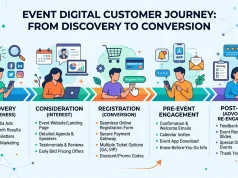
UGC Integration Across the Event Funnel
User-generated content works best when integrated across the entire event funnel—before, during, and after the experience. In the awareness stage, teaser posts and influencer previews encourage anticipation. During the event, live sharing, hashtag participation, and interactive installations capture real-time engagement. After the event, curated highlights and attendee recaps extend content lifespan. This continuous loop transforms a single event into an ongoing conversation. When UGC is strategically placed at each stage, it reinforces messaging without feeling forced and helps maintain audience attention far beyond the event timeline.
Technology Stack for UGC Collection and Management
Modern event marketing relies on a strong technology stack to capture and manage user-generated content efficiently. Tools like social listening platforms, event apps, and AI-powered aggregation dashboards help organizers collect posts from multiple channels. QR code generators and social sharing APIs simplify participation for attendees. Centralized dashboards allow marketers to filter, categorize, and repurpose content in real time. Without proper tools, valuable content can get lost in the noise. A well-structured tech stack ensures scalability, consistency, and faster decision-making during high-traffic event periods.
Legal, Privacy, and Compliance Considerations
Handling user-generated content requires clear attention to legal and privacy standards. Organizers must obtain explicit consent before reposting attendee content, often through opt-in forms or registration waivers. Platforms like Federal Trade Commission emphasize transparency when using user content for marketing purposes. Privacy policies should clearly explain how submissions will be used, stored, and shared. Additionally, respecting intellectual property rights and giving proper credit reduces legal risks. Strong compliance practices not only protect brands but also build trust with attendees who are sharing their experiences.
Psychological Triggers Behind UGC Participation
User-generated content thrives on emotional and psychological triggers such as recognition, belonging, and reward. Attendees are more likely to share content when they feel seen and valued by the community. Gamification elements like leaderboards, contests, and badges tap into competitive instincts, increasing participation rates. Social validation also plays a key role—when users see others being featured on screens or social channels, they feel encouraged to contribute. By designing experiences that reward visibility and acknowledgment, event marketers can significantly boost UGC volume and quality without relying on heavy incentives.
UGC in Hybrid and Virtual Events
Hybrid and virtual events expand the potential of user-generated content beyond physical venues. Online attendees can share reactions through live chats, reaction emojis, polls, and video snippets. Virtual networking rooms also allow participants to post insights in real time. This digital layer ensures that engagement is not limited by geography. Recorded sessions can be clipped and reshared as short-form content, extending reach across platforms. When properly structured, hybrid UGC creates a unified experience where both in-person and remote audiences contribute equally to the event narrative.
AI-Powered Curation and Content Scaling

Artificial intelligence is transforming how user-generated content is processed and distributed. AI tools can automatically identify high-performing posts, categorize sentiment, and suggest the best content for repurposing. This reduces manual workload and ensures only the most relevant material is highlighted. Machine learning models also help detect spam or low-quality submissions, improving content integrity. As volume increases, AI becomes essential for scaling UGC strategies without sacrificing quality. In 2026, combining human creativity with AI-driven curation is becoming a standard approach for efficient event marketing workflows.
Emerging Trends to Watch
Augmented reality is becoming a key format for immersive attendee experiences, allowing participants to overlay digital effects and share interactive filters. Short-form videos on platforms like TikTok and Instagram Reels continue to dominate, making concise, snackable content essential. Meanwhile, AI-powered curation tools are automating the selection of top-performing UGC, accelerating workflows and ensuring only the most relevant content surfaces. Finally, micro-influencer collaborations can spark early momentum by engaging niche voices who resonate deeply with targeted audience segments.
FAQs on User-Generated Content in Event Marketing
1. What exactly is user-generated content (UGC) in events?
User-generated content in event marketing refers to any photos, videos, reviews, social posts, or live updates created by attendees rather than the brand or event organizer. It captures real-time, authentic experiences such as keynote reactions, networking moments, or behind-the-scenes clips. Unlike polished promotional content, UGC is spontaneous and emotionally driven, making it more relatable and trustworthy for wider audiences. It helps brands showcase real attendee experiences while building credibility and social proof around the event.
2. Why is UGC more effective than traditional event marketing content?
UGC is more effective because it feels authentic and unbiased. Modern audiences are increasingly skeptical of corporate messaging and prefer peer-driven recommendations. When attendees share their own experiences, it builds trust and emotional connection. Additionally, UGC increases engagement rates, improves organic reach, and enhances content diversity. Unlike branded content, it spreads naturally through personal networks, creating a multiplier effect that traditional ads cannot easily replicate.
3. How can event organizers motivate attendees to create UGC?
Organizers can encourage UGC by making participation simple and rewarding. Popular methods include branded hashtags, live photo booths, AR filters, contests, and giveaways. Displaying attendee posts on live social walls also motivates participation through recognition. Clear instructions, visible prompts, and small incentives such as prizes or shout-outs significantly increase participation. The key is to integrate sharing naturally into the event experience rather than forcing it.
4. What are the best platforms for collecting UGC during events?
The most effective platforms depend on your audience, but commonly used channels include Instagram, TikTok, X (Twitter), and LinkedIn. Instagram and TikTok are ideal for visual content, while LinkedIn works better for professional events and conferences. Event-specific apps and community platforms also allow centralized collection of posts, feedback, and media. Using a combination of social platforms and dedicated tools ensures maximum coverage and easier content aggregation.
5. How do branded hashtags help in UGC campaigns?
Branded hashtags act as content organizers. They make it easy to track, collect, and showcase all attendee-generated posts in one place. A strong hashtag should be short, memorable, and unique to the event. When consistently promoted across signage, emails, screens, and digital platforms, it becomes a unified thread connecting all user-generated content. Hashtags also increase discoverability, allowing non-attendees to explore event conversations and highlights.
6. How can organizers ensure legal compliance when using UGC?
Legal compliance requires clear consent and transparent communication. Organizers should include permission clauses during registration or use opt-in agreements within event apps. Attendees must understand how their content may be used for marketing purposes. It’s also important to follow platform guidelines and data protection laws. Giving proper credit to creators further reduces legal risk and builds trust within the community.
7. What types of UGC perform best for event marketing?
The most effective UGC types include short-form videos, live reactions, behind-the-scenes photos, testimonials, and keynote highlights. Video content generally performs best because it captures emotion and context. Authentic, unfiltered moments—such as audience reactions or networking interactions—often generate higher engagement than staged posts. Content that tells a story or provides insights tends to resonate most with broader audiences.
8. How does UGC improve event ROI?
UGC improves ROI by reducing content production costs while increasing reach and engagement. Instead of relying solely on paid marketing or professional content creation, brands leverage attendee-generated media. This expands organic visibility through personal networks and increases conversions through trust-building. UGC also extends the lifespan of an event’s marketing impact, continuing to generate traffic and interest long after the event ends.
9. Can UGC be used after the event ends?
Yes, UGC is extremely valuable post-event. Organizers can repurpose attendee content into highlight reels, blog posts, email campaigns, and promotional materials for future events. Post-event UGC also serves as social proof for future registrations. Additionally, analyzing this content helps understand attendee sentiment and improve future event planning. It effectively turns a single event into ongoing marketing material.
10. What are the biggest challenges of using UGC and how can they be solved?
Common challenges include content overload, inconsistent quality, lack of participation, and legal concerns. These can be solved by using moderation tools, setting clear content guidelines, and providing easy sharing methods. Encouraging participation through incentives and real-time visibility also improves engagement. Implementing AI-based curation tools can help filter and organize large volumes of content efficiently, ensuring only high-quality UGC is highlighted.
Conclusion
User-generated content offers a powerful mechanism to deepen attendee engagement, expand organic reach, and reinforce authenticity in modern event marketing. By understanding the core principles of UGC, deploying strategic campaigns to incentivize sharing, and adhering to best practices for curation and compliance, organizers can transform every participant into a brand storyteller. Measuring success through robust metrics ensures continuous improvement, while attention to emerging technologies—augmented reality, short-form video, and AI-driven workflows—positions your brand at the forefront of innovation. Today, embracing the creativity of your audience not only elevates the live experience but also creates a reservoir of compelling content that fuels marketing initiatives long after the final keynote. Start small with a single hashtag or an interactive photo booth, refine your processes, and scale to more complex integrations as you witness the momentum that only genuine, user-generated content can deliver in an increasingly competitive events landscape.