Effective event marketing combines digital promotion, audience targeting, strategic partnerships, and post-event engagement to maximize attendance and reach. From leveraging social media and email campaigns to early-bird offers and influencer collaborations, the right mix of tactics can transform a half-empty venue into a sold-out experience.
Getting people to show up is the hardest part of hosting an event. You can book the best speakers, design the most immersive experience, and secure the perfect venue—but if your marketing falls flat, the seats will stay empty.
Event marketing has changed dramatically over the past decade. Audiences are more selective about where they spend their time. Attention is fragmented across dozens of platforms. And the competition for that attention has never been fiercer. A simple Facebook post or a generic email blast no longer cuts it.
That said, the fundamentals of great event marketing haven’t changed. People attend events because they expect value—education, connection, entertainment, or all three. Your job as a marketer is to communicate that value, clearly and consistently, across every channel your audience uses.
This guide covers proven event marketing ideas that actually move the needle. Whether you’re planning a local networking night, a multi-day industry conference, or a virtual summit, you’ll find actionable strategies here to fill your event and extend its reach far beyond the room.
Why Event Marketing Matters More Than Ever
Events represent one of the highest-ROI marketing channels available. According to Bizzabo’s Event Marketing Report, 95% of marketers believe in-person events provide attendees with a valuable opportunity to form connections in an increasingly digital world. Meanwhile, 79% of U.S. marketers say generating event registrations is their top challenge.
That gap—between the value of events and the difficulty of filling them—is exactly where smart event marketing ideas come in.
Strong event marketing does more than sell tickets. It builds anticipation, establishes credibility, attracts the right audience, and creates content opportunities that extend the event’s value for months. Done well, marketing turns a single event into an ongoing brand asset.
Start With a Clear Event Marketing Strategy

Before diving into tactics, you need a foundation. Jumping straight into promotion without a strategy leads to scattered messaging and wasted budget.
Define Your Target Audience
Knowing who you’re trying to reach shapes every decision that follows—from which platforms to use, to what messaging will resonate. Define your ideal attendee by demographics, professional role, interests, and motivations. Ask yourself: why would this person give up three hours of their evening to attend?
A detailed audience profile makes your event promotion strategies sharper, your ad targeting more precise, and your content more compelling.
Set Measurable Goals
Vague goals produce vague results. Instead of “get more registrations,” set specific targets: 500 registrations by week four, a 35% email open rate, or 200 social media mentions on event day. Clear benchmarks allow you to track progress and pivot if a channel isn’t delivering.
Build a Marketing Timeline
Most events fail not because of bad marketing, but because marketing starts too late. A general rule: begin promoting at least six to eight weeks before a large event, and four weeks out for smaller ones. Map out every campaign touchpoint—announcement, early-bird deadline, speaker reveals, reminder emails, and day-of posts—on a single calendar.
Email Marketing: Your Highest-Converting Channel
Email remains one of the most reliable tools for event promotion. According to Campaign Monitor, email marketing delivers an average ROI of $42 for every $1 spent. For events specifically, it’s often the channel that converts browsers into buyers.
Build and Segment Your Email List
Not everyone on your list needs the same message. Segment by past attendees, new subscribers, VIP contacts, and geographic location. A past attendee who came last year needs a different email than someone hearing about your event for the first time.
Personalized subject lines and tailored copy dramatically improve open and click-through rates. “You came last year, [Name]—here’s what’s new” outperforms a generic broadcast every time.
Create an Email Sequence That Builds Momentum
A single email isn’t a campaign. Plan a sequence:
|
|
Timing |
Purpose |
|---|---|---|
|
Announcement |
6–8 weeks out |
Introduce the event and open registration |
|
Early-Bird Offer |
5–6 weeks out |
Create urgency with a limited-time discount |
|
Speaker/Content Reveal |
4 weeks out |
Highlight key value and build excitement |
|
Last Chance for Early Bird |
3 weeks out |
Drive conversions before price increases |
|
Countdown Reminder |
1–2 weeks out |
Remind and re-engage |
|
Day-Before Reminder |
24 hours out |
Logistics, links, and final confirmation |
|
Post-Event Follow-Up |
1–2 days after |
Share highlights and nurture the relationship |
Each email should have one clear call to action. Don’t ask people to register, share, and follow your social account in the same message.
Use Automation Wisely
Marketing automation platforms like Mailchimp, HubSpot, or ActiveCampaign let you trigger emails based on behavior. Someone who clicked your registration link but didn’t complete the purchase? Send them a follow-up within 24 hours. Automation handles the follow-up so you can focus on the bigger picture.
Social Media Promotion: Reach, Engage, and Convert
Social media is where awareness gets built and excitement goes viral. But success on social isn’t about posting frequently—it’s about posting strategically.
Choose the Right Platforms for Your Audience
Different events belong on different platforms:
- LinkedIn is ideal for B2B conferences, professional workshops, and industry summits
- Instagram suits lifestyle events, product launches, and anything visually compelling
- Facebook works well for community events, local gatherings, and paid promotion
- TikTok is increasingly powerful for entertainment events, festivals, and younger audiences
- X (Twitter) thrives during live events for real-time commentary and hashtag trends
Spreading yourself too thin across every platform dilutes your effort. Pick two or three channels where your audience is most active and own them.
Create a Dedicated Event Hashtag
A strong hashtag ties all event-related content together—before, during, and after. Keep it short, specific, and easy to spell. Promote it consistently across all channels and include it in email signatures, speaker briefs, and printed materials at the venue.
Encourage attendees, speakers, and sponsors to use the hashtag. This multiplies your organic reach without spending an extra dollar on ads.
Leverage User-Generated Content
User-generated content (UGC) is among the most persuasive event marketing ideas available, and it’s essentially free. Before the event, run a contest encouraging people to share why they’re attending. During the event, create shareable moments—a photo wall, a challenge, a hashtag giveaway. After the event, reshare the best content with credit.
When real people post about your event, it signals social proof to their networks. That’s far more credible than anything your brand can say about itself.
Use Paid Social Advertising
Organic reach on most platforms has declined significantly. Paid social lets you target precisely—by job title, location, interest, and even behavior—so your ads reach people who are genuinely likely to attend.
Facebook and Instagram ads work particularly well for events. Use retargeting to re-engage people who visited your registration page but didn’t convert. Even a modest paid budget, used strategically, can significantly boost registrations.
How to Increase Event Attendance With Early-Bird and Urgency Tactics
One of the most reliable ways to drive early registrations is to make waiting costly.
Offer Early-Bird Pricing
Early-bird discounts reward decisive action and create an artificial deadline that motivates potential attendees to commit. Offer a meaningful discount—15% to 30%—for a defined window. When the deadline hits, raise the price and stick to it.
Communicate the deadline clearly and repeatedly. The message “only 48 hours left at this price” outperforms a vague “limited time offer” every time.
Create Tiered Ticket Options
Tiered pricing serves two purposes: it captures value from attendees willing to pay more for premium access (VIP seating, networking breakfasts, speaker meet-and-greets), and it provides an accessible entry point for those with tighter budgets.
A three-tier structure—Standard, Premium, and VIP—is a proven framework. Make the value difference between tiers obvious so buyers can self-select.
Show Registration Numbers
Social proof is a powerful psychological motivator. Displaying “412 people have already registered” or “only 47 spots remaining” creates a bandwagon effect. People are more likely to commit when they see others have already done so—and they’re more likely to act fast when scarcity is visible.
Content Marketing: Build Anticipation Before the Event
Content marketing is one of the best event marketing ideas for building long-term awareness and organic search traffic. It works before, during, and after the event.
Write SEO-Optimized Blog Posts
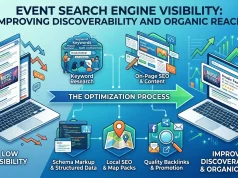
Blog content about your event—speaker profiles, topic previews, behind-the-scenes planning articles—can rank in search engines and drive organic traffic for weeks before registration closes. This is also where understanding how to promote an event successfully in search results becomes valuable.
Targeting relevant keywords in your blog posts brings in people who are actively searching for information related to your event’s topic. Once they land on your content, converting them to attendees becomes a matter of smart calls-to-action.
Produce Pre-Event Video Content
Video is the highest-engagement format on almost every platform. Tease your event with short clips: a 60-second highlight reel from last year, a quick speaker interview, or a “what to expect” walkthrough of the venue. These videos don’t need a production budget—a smartphone and good lighting are enough to create content that builds genuine excitement.
Launch a Podcast or Interview Series
For multi-day conferences and large events, a pre-event interview series with speakers or panelists does double duty. It provides valuable content to your audience and promotes the event simultaneously. Each episode drives registrations and generates shareable content.
Partnerships and Influencer Marketing
You don’t have to reach your audience alone. Strategic partnerships multiply your reach without multiplying your budget.
Partner With Industry Associations and Media
Industry associations often have large, engaged member bases that align perfectly with conference and summit audiences. Approach them with a co-promotion arrangement: they promote your event to their members, and you offer their audience a discount code or reserved tickets.
Trade publications and industry newsletters work similarly. A sponsored email to a publication’s 50,000 subscribers can generate more registrations than months of organic social posting.
Work With Influencers and Thought Leaders
Influencer partnerships work across both B2B and B2C event marketing. An industry thought leader with 10,000 engaged followers on LinkedIn recommending your event carries more weight than a paid ad with 10x the reach.
Offer influencers complimentary tickets, exclusive access, or a speaker slot in exchange for genuine promotion. The best partnerships feel organic—the influencer shares your event because it’s genuinely relevant to their audience, not because they were paid to say nice things.
Activate Your Speakers as Marketers
Your speakers already have audiences who trust them. Give each speaker a personalized promotional kit: pre-written social posts, a custom discount code, email copy, and branded graphics. Make it as easy as possible for them to promote their participation.
A speaker with 5,000 followers on LinkedIn promoting their session is worth far more than a paid post with the same reach, because their audience already trusts their recommendation.
Creative Event Marketing Ideas That Stand Out
Conventional promotion gets conventional results. The best event marketing ideas break through the noise by doing something unexpected.
Host a Pre-Event Challenge or Competition
A pre-event challenge drives engagement and creates a steady stream of organic content in the lead-up to your event. Challenge your audience to share a relevant insight, solve a problem, or create something related to your event’s theme. Feature the best submissions and offer prizes—free tickets, upgraded access, or branded merchandise.
Run a Countdown Campaign
A structured countdown campaign builds momentum over the final weeks before your event. Count down with daily posts that reveal a new speaker, announce a new session topic, or share a fun fact about the venue. Each post gives followers a reason to stay tuned and keeps your event top-of-mind.
Create an Exclusive Private Community
Launching a private Facebook Group, Slack workspace, or LinkedIn community exclusively for registered attendees creates a compelling reason to register early. The community builds connections before the event even happens, making the event itself feel more valuable. It also gives you a direct line to your audience for updates, Q&A sessions, and content sharing.
Use Event Teaser Campaigns
Intrigue works. A teaser campaign that hints at something without revealing everything drives curiosity and conversation. “Something big is happening in October” followed by a series of cryptic clues can generate more buzz than a straightforward announcement—especially if your audience knows from experience that your events deliver.
On-Site Marketing and Experience Design
The event itself is a marketing opportunity. What happens inside the venue shapes whether people talk about it afterward—and whether they come back next year.
Design Shareable Moments
Every event should have at least one designed-for-sharing moment. This could be a striking photo installation, a live art piece, an interactive demonstration, or an unexpected performance. When attendees share these moments on social media during the event, they become real-time ambassadors to their networks.
Encourage Live Social Sharing
Display your event hashtag prominently. Set up a social media wall that shows live posts in real time—seeing their content displayed publicly motivates attendees to post more. Offer small incentives for the most creative posts.
Capture Testimonials on the Day
Video testimonials captured on event day are gold. The emotion is fresh, the environment is contextual, and the authenticity is impossible to fake. Use these clips in post-event emails, on your website, and in promotion for future events.
Post-Event Marketing: Extend Your Reach After the Curtain Falls
Most event marketers stop promoting the moment the event ends. This is a missed opportunity.
Send a Post-Event Email Sequence
A post-event email sequence keeps the relationship alive and sets up your next event. Send a highlights email within 48 hours. Share speaker presentations, photos, and key takeaways a week later. Announce early-bird pricing for your next event two to three weeks after.
For attendees who gave positive feedback, this is also the right time to ask for a testimonial or review.
Repurpose Event Content Across Channels
A well-recorded event creates months of content. A single keynote presentation can become a YouTube video, a podcast episode, a blog post, a series of social media clips, and a downloadable resource. Each piece of content drives organic traffic and keeps your brand visible long after the event has ended.
Analyze and Iterate
Every event produces data. Review your registration numbers, channel-by-channel performance, email open rates, and social media metrics. What drove the most conversions? Which channel underdelivered? Use these insights to improve your event promotion strategies for the next campaign.
Event Marketing Tools Worth Using
|
Tool |
Category |
Best For |
|---|---|---|
|
Eventbrite |
Registration & Ticketing |
All event types |
|
Mailchimp |
Email Marketing |
Automated email sequences |
|
Hootsuite |
Social Media Management |
Scheduling and monitoring |
|
Canva |
Design |
Social graphics and promotional assets |
|
HubSpot |
CRM & Automation |
Lead tracking and email workflows |
|
Loom |
Video |
Speaker teasers and walkthroughs |
|
SurveyMonkey |
Feedback |
Post-event surveys |
|
Notion |
Planning |
Event marketing calendars and briefs |
Measuring the Success of Your Event Marketing
Tracking the right metrics is what separates a good event from a great one. Without data, you’re guessing.
Key Metrics to Track
Registration Metrics
- Total registrations by channel
- Registration-to-attendance conversion rate
- Early-bird vs. standard ticket ratio
- Cost per registration
Engagement Metrics
- Email open and click-through rates
- Social media reach, impressions, and engagement
- Website traffic during the promotional period
- Hashtag mentions and UGC volume
Revenue Metrics
- Total ticket revenue
- Sponsor revenue
- Cost per attendee
- Overall event ROI
Benchmark these metrics against your goals and against previous events. Progress matters more than perfection, but you can only track progress if you’re measuring consistently.
How to Promote an Event Successfully: A Pre-Launch Checklist
Before you launch your event marketing campaign, run through this checklist:
- Target audience defined with a detailed persona
- Event landing page live with clear value proposition and registration CTA
- Email list segmented and automation sequences built
- Social media profiles updated with event information
- Dedicated event hashtag created and promoted
- Speaker promotional kits distributed
- Partnership agreements confirmed
- Paid advertising campaigns built and scheduled
- Content calendar mapped for the full promotional period
- Analytics and tracking tools configured
The Bottom Line on Event Marketing
Event marketing success is rarely the result of one brilliant idea. It’s the product of consistent execution across multiple channels, a clear understanding of your audience, and a willingness to test, measure, and improve.
The best event marketing ideas are the ones that match your audience, align with your brand, and are executed with enough lead time to build real momentum. Start with strategy, choose your channels deliberately, create content that earns attention, and make the registration process as frictionless as possible.
Every event is an opportunity to strengthen your brand, deepen relationships, and create content that works for you long after the lights go down.
Frequently Asked Questions
1. What are the most effective event marketing ideas for small budgets?
Email marketing, organic social media, speaker partnerships, and content marketing offer the highest ROI for limited budgets. Focus on leveraging existing audiences—your email list, your speakers’ followers, and your partner networks—before investing in paid promotion.
2. How far in advance should I start promoting an event?
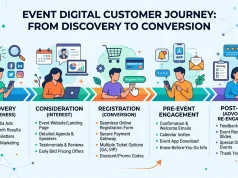
For large conferences or multi-day events, begin promotion six to eight weeks out. For smaller events, four weeks is generally sufficient. The key is building enough time for an announcement phase, a consideration phase, and an urgency phase before the event date.
3. Which social media platform works best for event promotion?
It depends on your audience. LinkedIn works best for professional and B2B events. Instagram and TikTok suit lifestyle, entertainment, and consumer events. Facebook is effective for local community events and paid advertising. Choose platforms based on where your target audience spends their time.
4. How do I increase last-minute event registrations?
Urgency tactics work well in the final stretch. Highlight scarcity (“only 30 seats remaining”), extend a flash sale, use retargeting ads to reach people who visited your registration page, and send a direct email to your most engaged subscribers with a compelling final offer.
5. What is a good email open rate for event promotion emails?
Industry benchmarks vary, but event-related emails typically see open rates between 25% and 35%. Personalized subject lines, segmented lists, and well-timed sends improve open rates significantly. Anything above 30% for a general list is considered strong performance.
6. How do I measure the ROI of my event marketing?
Calculate ROI by comparing total event revenue (tickets, sponsorships, upsells) against total costs (venue, marketing, staff, technology). Track the cost per registration for each marketing channel to identify which delivers the best return. Include post-event value—leads generated, media coverage, content produced—in your full ROI calculation.
7. What content should I create before an event to drive registrations?
Speaker interview videos, topic preview blog posts, behind-the-scenes planning updates, attendee testimonials from previous events, and countdown social media posts all perform well. The goal is to communicate value and build anticipation simultaneously.
8. How important are partnerships for event marketing?
Partnerships are one of the highest-leverage tactics available, particularly for reaching new audiences. A well-structured partnership with an industry association, media outlet, or influential speaker can generate more registrations than weeks of organic promotion. Prioritize relationships where your target audiences already overlap.
9. Should I use paid advertising to promote my event?
Paid advertising is most effective when used to retarget warm audiences (people who visited your event page or engaged with your content) and to reach specific demographic or professional segments. It works best as an amplifier of organic effort, not a replacement for it.
10. What should I do with event content after the event ends?
Repurpose recordings into YouTube videos, podcast episodes, blog posts, and social media clips. Send post-event recap emails to both attendees and those who registered but couldn’t attend. Use the best content as social proof and marketing material for your next event.