Virtual event marketing succeeds through strategic planning, targeted promotion, engaging experiences, and data-driven optimization. By combining email marketing, social media, SEO, partnerships, interactive content, and post-event nurturing, businesses can increase registrations, improve attendance, boost engagement, and generate qualified leads with measurable ROI.
Virtual event marketing combines strategic promotion, audience targeting, and platform selection to drive attendance and engagement. The most effective approaches use email sequences, social media campaigns, strong branding, and post-event follow-ups to maximize ROI and lead generation from every virtual event.
Running a virtual event without a marketing plan is like hosting a party and forgetting to send invitations. The event might be extraordinary—polished speakers, engaging content, flawless production—but none of it matters if the right people aren’t in the (virtual) room.
Virtual events have become a permanent fixture in the modern business landscape. According to Grand View Research, the global virtual events market was valued at $114.12 billion in 2021 and is projected to grow at a compound annual growth rate (CAGR) of 23.2% through 2028. That growth brings opportunity—and competition. Standing out requires more than a great agenda.
This guide breaks down every critical component of virtual event marketing, from building pre-event buzz to converting attendees into long-term leads. Whether you’re launching your first webinar or scaling a flagship virtual conference, these best practices will help you fill seats, drive interaction, and generate measurable results.
What Is Virtual Event Marketing?
Virtual event marketing refers to the strategies and tactics used to promote, manage, and follow up on online events—webinars, virtual conferences, product launches, online workshops, and more.
Effective virtual event marketing covers the full event lifecycle:
- Pre-event: Building awareness, driving registrations, and nurturing interest
- During the event: Keeping attendees engaged, on-platform, and active
- Post-event: Converting attendees into leads, customers, or loyal community members
The goal isn’t just to get people to register. It’s to attract the right people, keep them engaged throughout, and turn that engagement into tangible business outcomes.
How to Build a Virtual Event Marketing Strategy from Scratch
Before launching any campaign, you need a clear strategic foundation. Jumping straight into promotions without a plan wastes budget and muddies your messaging.
Define Your Event Goals and KPIs
Start by asking: what does success look like? Common virtual event goals include:
- Registrations (e.g., 500 sign-ups in 30 days)
- Live attendance rate (industry average: 40–50% of registrants)
- Engagement metrics (poll responses, Q&A participation, chat activity)
- Lead generation (qualified leads captured during or after the event)
- Revenue (ticket sales, upsells, or post-event conversions)
Each goal should map to a specific KPI. This gives your marketing team a north star and makes post-event reporting far easier.
Identify and Segment Your Target Audience
Audience clarity is everything in virtual event marketing. A well-defined audience shapes your messaging, platform choices, and content format.
Segment your audience by:
- Job role: Are you targeting C-suite executives, marketing managers, or independent freelancers?
- Industry: Niche-specific messaging consistently outperforms generic copy
- Stage in the buyer journey: Awareness-stage attendees need different content than decision-stage prospects
- Geography: Time zones affect scheduling decisions and language/localization needs
The tighter your audience definition, the more precisely you can tailor every element of your campaign.
Choose Your Event Format and Timing
Format and timing significantly impact attendance rates. Data from ON24 indicates that Tuesdays, Wednesdays, and Thursdays between 10 AM and 2 PM (in the attendee’s local time zone) consistently yield the highest webinar attendance.
Common virtual event formats include:
|
Format |
Best For |
Typical Duration |
|---|---|---|
|
Webinar |
Education, lead gen |
45–90 minutes |
|
Virtual conference |
Thought leadership, networking |
1–3 days |
|
Online workshop |
Skill-building, hands-on training |
2–4 hours |
|
Product launch event |
Brand awareness, sales enablement |
30–60 minutes |
|
Virtual summit |
Community building, authority |
1–5 days |
Choose the format that aligns with your goals and your audience’s preferred way of consuming content.
Social Media Marketing for Virtual Events
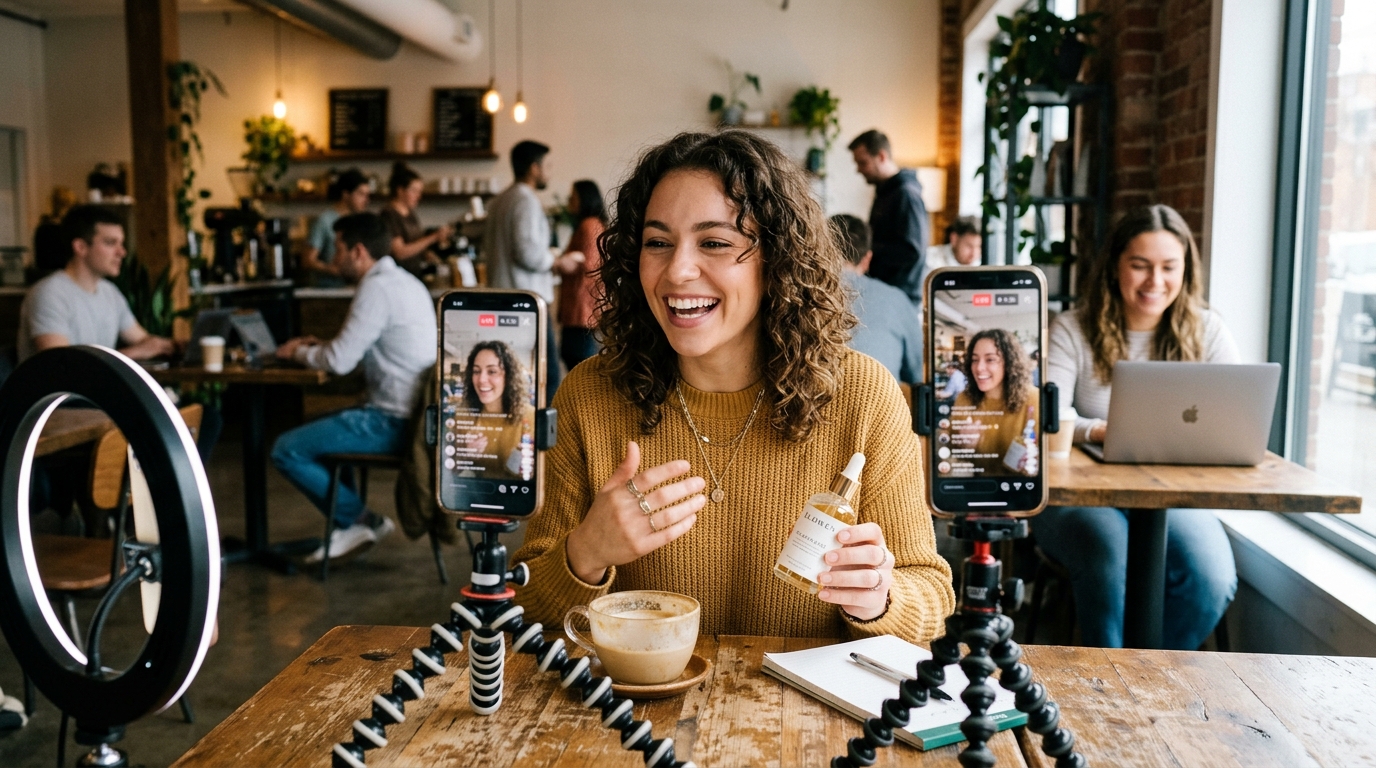
Social media is one of the highest-leverage channels for promoting virtual events. The key is building momentum over time—not blasting a single promotional post the week of the event.
Create a Pre-Event Social Media Timeline
A structured posting schedule builds anticipation and keeps your event top-of-mind. A typical timeline might look like:
- 6–8 weeks out: Announce the event with a save-the-date post. Use bold visuals, event branding, and a clear value proposition.
- 4–6 weeks out: Introduce speakers or featured content. Behind-the-scenes content performs particularly well here.
- 2–4 weeks out: Share attendee testimonials from previous events, or early registration numbers to build social proof.
- 1 week out: Increase posting frequency. Share agenda previews, countdown posts, and speaker spotlights.
- Day of the event: Post a “we’re live” announcement with the join link. Use Stories, Reels, or Shorts for real-time updates.
Use Platform-Specific Strategies
Different social platforms serve different purposes in your virtual event marketing mix:
LinkedIn is ideal for B2B virtual events. Native video posts, event pages, and sponsored content reach professional audiences with high purchase intent. LinkedIn Event pages also allow followers to express interest directly, which helps with organic reach.
Instagram and TikTok work well for consumer-facing events and younger demographics. Short-form video teasers, speaker clips, and countdown stickers drive engagement and shares.
X (Twitter) is excellent for real-time event conversation. Create a branded event hashtag early, and use it consistently across all channels to aggregate user-generated content and expand reach.
Facebook Groups build community before and after the event. A dedicated group for registrants gives attendees a space to connect, ask questions, and generate pre-event buzz organically.
Leverage Paid Social Advertising
Organic reach alone rarely fills seats for mid-to-large virtual events. Paid social advertising—particularly on LinkedIn and Meta—allows you to target lookalike audiences, retarget website visitors, and reach specific job titles or industries.
For best results, run A/B tests on ad creative and headlines at least 3–4 weeks before the event. Allocate 60–70% of your ad budget to the 2 weeks immediately preceding the event, when purchase intent is highest. Learn more about Event Marketing for Customer Engagement: Proven Strategies to Build Stronger Audience Connections
Email Marketing for Virtual Events
Email remains the highest-ROI digital marketing channel, and virtual events are no exception. According to Litmus (2023), email marketing delivers an average return of $36 for every $1 spent.
Build Your Pre-Event Email Sequence
A well-structured email sequence nurtures registrants from sign-up to show-up. Here’s a proven framework:
Email 1 – Confirmation (Immediately after registration)
Confirm their spot, provide event details, and set expectations. Include a calendar invite attachment and a link to add the event to their calendar automatically.
Email 2 – Value Primer (1–2 weeks before the event)
Remind registrants why they signed up. Share a preview of the agenda, introduce speakers, or offer a helpful resource related to the event topic to keep them warm.
Email 3 – Countdown (3–5 days before)
Create urgency. Highlight key sessions, share any exclusive perks for attendees (downloads, networking opportunities, live Q&A access), and include a strong reminder of the date and time.
Email 4 – Day-of Reminder (Morning of the event)
Short and direct. Provide the join link prominently, confirm the start time, and remove any friction between the reader and the event.
Email 5 – Post-Event Follow-Up (Within 24 hours)
Thank attendees, share the recording (if applicable), and include a clear next step—a content download, a free trial, a consultation booking, or a survey.
Optimize for Open Rates and Click-Through Rates
A few technical practices that meaningfully improve email performance:
- Personalize subject lines with the recipient’s name or company
- Send from a recognizable human sender name (e.g., “Sarah from [Brand]”), not a generic brand alias
- Test send times—mid-morning on weekdays typically outperforms evenings and weekends for B2B audiences
- Keep CTAs singular and specific: one email, one action
Virtual Event Lead Generation
Virtual events are powerful lead generation engines—but only if you structure them with lead capture in mind from the start.
Use Registration Forms Strategically
Your registration form is the first conversion point. Collect the information you need, but avoid over-asking. Forms with more than 5–7 fields see significant drop-off.
Key fields to consider:
- Name and email (mandatory)
- Job title and company name (valuable for B2B qualification)
- Industry (helps with post-event segmentation)
- How they heard about the event (informs attribution)
Capture Leads During the Event
Live events create natural opportunities to gather qualified leads:
- Polls and surveys: Ask questions that reveal intent (e.g., “What’s your biggest challenge with [topic]?”)
- Resource downloads: Offer exclusive content in exchange for an opt-in
- Q&A submissions: Every question is a signal of interest and intent
- Networking sessions: Facilitated breakout rooms or sponsored networking sessions generate warm connections
Follow Up with Lead Scoring and Segmentation
Not all attendees are equal. Someone who attended the full session, asked three questions, and downloaded your resource guide is a hotter lead than someone who joined for 10 minutes and left.
Use your virtual event platform’s engagement data to score leads and segment your post-event follow-up accordingly. High-engagement attendees should receive a personalized, direct follow-up. Lower-engagement attendees can enter a nurture sequence.
Virtual Event Branding
Strong branding makes your event memorable and reinforces your organization’s authority. Inconsistent or generic event branding signals a lack of professionalism—and attendees notice.
Develop a Distinct Event Identity
Every virtual event should have its own visual identity, even if it lives under your main brand umbrella. This includes:
- A clear event name that communicates value (e.g., “The Growth Summit” vs. “Q3 Webinar”)
- A logo or visual mark specific to the event
- A consistent color palette and typography
- A dedicated landing page and event hashtag
Apply Branding Consistently Across All Touchpoints
Brand consistency builds trust and improves recall. Apply your event branding to:
- Registration and confirmation pages
- Email templates
- Social media graphics and video frames
- Speaker slides (provide a branded template)
- Virtual backgrounds for speakers and moderators
- On-platform banners, sponsor logos, and waiting room screens
Virtual Event Audience Engagement
Registration is a vanity metric if attendees don’t show up—and showing up doesn’t mean engaging. The average virtual event sees 50–60% of registrants actually attend live, and drop-off during the event is a persistent challenge.
Design for Engagement from the Start
Engagement begins before the event starts. Build interactive elements directly into your agenda:
- Live polls: Use polling tools to involve the audience immediately. Opening with a poll in the first 5 minutes significantly reduces early drop-off.
- Q&A sessions: Schedule dedicated Q&A time, not just a tacked-on 2 minutes at the end. Attendees who submit questions are far more likely to stay for the full event.
- Breakout rooms: Small-group discussions create a sense of connection that large-format webinars can’t replicate.
- Gamification: Points, leaderboards, and digital prizes drive participation, especially in multi-session events.
- Live chat: An active chat creates social proof and energy. Assign a dedicated moderator to keep the conversation moving.
Manage Attendee Drop-Off
Even with excellent content, some drop-off is inevitable. Strategies to minimize it include:
- Keep sessions tight. Research from Wistia shows that engagement drops sharply for video content beyond 30 minutes.
- Vary the format. Alternate between presentations, panel discussions, demos, and interactive segments.
- Tease what’s coming. At the end of each segment, briefly preview what comes next to give attendees a reason to stay.
Best Virtual Event Platforms
Choosing the right platform is a foundational decision that affects everything from attendee experience to lead capture to post-event analytics.
Top Virtual Event Platforms Compared
|
Platform |
Best For |
Key Features |
Starting Price |
|---|---|---|---|
|
Hopin |
Mid-to-large conferences |
Networking, expo, sessions |
Custom pricing |
|
Zoom Webinars |
Webinars and small events |
Ease of use, broad adoption |
From $149/month |
|
ON24 |
B2B demand generation |
Analytics, lead scoring, integrations |
Custom pricing |
|
Airmeet |
Community-driven events |
Networking tables, speed networking |
From $167/month |
|
Hubilo |
Enterprise events |
Engagement tools, sponsor features |
Custom pricing |
|
StreamYard |
Live streaming events |
Multi-platform streaming, branding |
From $49/month |
|
Eventbrite |
Ticketed virtual events |
Ticketing, discovery, promotion |
Free + transaction fees |
What to Look for in a Virtual Event Platform
When evaluating platforms, prioritize:
- Attendee capacity: Ensure the platform can handle your expected audience size with headroom
- Integration compatibility: Does it connect with your CRM, email platform, and marketing automation tools?
- Analytics depth: Can you track attendance duration, engagement actions, and individual attendee behavior?
- Customization: Can you brand the experience to match your event identity?
- Technical support: What level of live support is available during the event?
Virtual Event Marketing Checklist
Use this checklist to ensure nothing falls through the cracks across each phase of your event.
8+ Weeks Before the Event
- Define event goals and KPIs
- Confirm event format, date, time, and platform
- Build the event landing page with clear registration CTA
- Develop event branding assets (logo, color palette, templates)
- Confirm speakers and send branded slide templates
- Set up registration form with appropriate lead capture fields
4–8 Weeks Before the Event
- Launch email invitation to existing lists
- Begin social media promotion (organic + paid)
- Publish a blog post or content piece targeting relevant keywords
- Set up email automation sequences (confirmation, reminders, follow-up)
- Coordinate with speakers on promotion (social posts, email to their lists)
- Finalize agenda and session structure
1–2 Weeks Before the Event
- Send value primer email to registrants
- Increase social media posting frequency
- Conduct a full technical rehearsal with speakers and moderators
- Prepare engagement elements (polls, Q&A prompts, breakout topics)
- Confirm all integrations between the event platform and your CRM/marketing tools
Day of the Event
- Send day-of reminder email (morning)
- Post “we’re live” announcement on social media
- Have technical support on standby
- Assign a dedicated chat/Q&A moderator
- Record the event for post-event distribution
Within 1 Week After the Event
- Send post-event thank-you and recording email within 24 hours
- Score and segment leads based on engagement data
- Follow up with high-intent leads directly
- Enroll lower-engagement attendees in nurture sequences
- Analyze KPIs against pre-event goals
- Repurpose event content (clips, blog posts, social snippets, highlight reels)
Repurposing Virtual Event Content
One of the most underutilized aspects of virtual event marketing is what happens to the content after the event ends. A 90-minute webinar contains dozens of reusable assets.
High-Value Content Repurposing Ideas
- Recording: Edit and publish as gated on-demand content to continue capturing leads
- Key quotes: Pull standout speaker quotes for social graphics and email content
- Short clips: 60–90 second highlight clips perform well on LinkedIn, Instagram Reels, and YouTube Shorts
- Blog posts: Expand on key themes from the event in dedicated blog content
- Infographics: Visualize data, frameworks, or step-by-step processes discussed during the event
- Podcast episodes: Convert audio from speaker sessions into a podcast episode
- Email nurture: Use event content as the basis for a post-event drip campaign
Each piece of repurposed content extends the life of your event, drives ongoing traffic, and continues generating leads long after the event date.
Making Your Next Virtual Event More Successful Than Your Last

Virtual event marketing isn’t a single campaign—it’s an iterative system. Every event gives you data: what messaging resonated, which channels drove the most registrations, where attendees dropped off, and what content generated the most post-event engagement.
The organizations that consistently produce high-performing virtual events treat each one as a learning opportunity. They review the numbers honestly, document what worked, adjust what didn’t, and carry those insights into the next campaign.
Start with the fundamentals: clear goals, a defined audience, a strategic promotion plan across email and social, a platform that supports your needs, and a post-event follow-up process that converts attention into action.
Execution doesn’t need to be perfect from day one. It needs to be consistent, data-informed, and continuously refined. Apply the best practices in this guide, check every box on your marketing checklist, and your virtual events will improve with every iteration.
Conclusion
Virtual event marketing is more than promoting an online event—it’s about creating a complete attendee journey that begins long before the event starts and continues well after it ends. Success comes from setting clear goals, understanding your audience, using the right promotional channels, and delivering engaging experiences that encourage participation and build lasting relationships.
The most successful virtual events combine strategic planning with consistent execution. By leveraging email marketing, social media, SEO, marketing automation, interactive features, and data-driven insights, you can increase registrations, improve attendance rates, generate qualified leads, and maximize your return on investment. Review your performance after every event, refine your strategy based on analytics, and apply these virtual event marketing best practices to make each future event more impactful than the last.
Frequently Asked Questions
What is the best way to market a virtual event?
The most effective virtual event marketing combines email campaigns, social media promotion, and paid advertising with a strong registration landing page. Start promoting at least 6–8 weeks before the event, use a multi-touch email sequence, and engage speakers to promote to their own audiences for maximum reach.
How far in advance should you start marketing a virtual event?
For most virtual events, begin marketing 6–8 weeks in advance. Larger conferences may require 3–4 months of lead time. Launching too late—less than 2 weeks before the event—significantly limits registration volume and gives your audience less time to plan attendance.
What is a good attendance rate for a virtual event?
The industry benchmark for live attendance is 40–50% of total registrants. If your event consistently converts above 50% of registrants to live attendees, your reminder email sequence and audience engagement strategies are performing well. Below 30% suggests gaps in pre-event nurturing or audience fit.
How do you increase engagement during a virtual event?
Use interactive elements from the start: open with a live poll, schedule dedicated Q&A time, run breakout room discussions, and keep sessions under 30–40 minutes where possible. Assigning a dedicated chat moderator also makes a measurable difference in live engagement levels.
What data should I collect during a virtual event for lead generation?
Collect registration data (name, email, job title, company, industry) and supplement it with in-event engagement data—attendance duration, poll responses, questions submitted, and resources downloaded. Combining these signals allows you to score and segment leads effectively for post-event follow-up.
Which virtual event platform is best for B2B lead generation?
ON24 and Hubilo are widely regarded as the strongest options for B2B virtual event marketing and lead generation, due to their deep CRM integrations, attendee-level engagement analytics, and lead scoring capabilities. Zoom Webinars is a cost-effective alternative for smaller-scale events with simpler lead capture needs.
How do you measure the success of a virtual event?
Measure success against the KPIs you defined before the event. Core metrics include registration volume, live attendance rate, average session duration, engagement rate (polls, Q&A, chat), post-event conversion rate, and overall ROI. Compare results to previous events to track improvement over time.