Event branding techniques help organizations create cohesive, emotionally resonant experiences that reinforce brand identity before, during, and after an event. From visual consistency to immersive storytelling, the right approach transforms any gathering into a powerful brand moment.
Every event your organization hosts is a live, breathing extension of your brand. Unlike a social media post or a paid ad, events put your brand directly in front of an audience—physically, emotionally, and experientially. Get the branding right, and attendees leave with a lasting impression. Get it wrong, and even the most logistically flawless event falls flat.
The challenge is that most event planners treat branding as an afterthought—a logo slapped on a banner, a branded lanyard tossed into a bag. But truly effective event branding techniques go far deeper. They shape the way your audience feels as they walk through the door, engage with your content, and talk about your brand long after the event ends.
This guide explores the most impactful event branding techniques available to marketers and event professionals today. Whether you’re planning a corporate conference, a product launch, a trade show appearance, or an intimate brand activation, these strategies will help you build an experience your audience won’t forget.
By the end of this post, you’ll understand how to develop a consistent brand narrative across every touchpoint, leverage technology to deepen engagement, and measure whether your event branding is actually working.
What Is Event Branding—and Why Does It Matter More Than You Think?
Event branding is the process of applying your brand’s visual identity, messaging, values, and personality to every element of an event. This includes the physical environment, digital assets, staff behavior, content, and even the sensory details like music and lighting.
But event branding techniques are more than a visual exercise. They’re a strategic communication tool. When executed well, they create emotional resonance, build trust, and drive long-term brand loyalty. According to the Event Marketing Institute, 74% of consumers say that engaging with branded event marketing experiences makes them more likely to buy the brand’s products.
The reason event branding carries such weight comes down to human psychology. People remember experiences far more vividly than they remember advertisements. When your brand is embedded into a memorable experience—one that stimulates multiple senses and emotions—it becomes associated with those positive feelings. That’s the psychological foundation behind why how to build a strong event brand is such a pressing question for modern marketers.
The Strategic Foundation: Establishing Your Event Brand Identity
Before you design a single sign or choose a color palette, you need to build the strategic backbone of your event brand. Skipping this step is one of the most common mistakes event marketers make—and it’s why so many events feel generic or disconnected from the parent brand.
What Are the Core Elements of Event Brand Identity?
Your event brand identity is the sum of all the elements that communicate who you are at this event. It includes:
- Brand purpose and messaging: What does this specific event stand for? What story are you telling?
- Visual identity: Logo usage, color palette, typography, and design elements
- Tone of voice: How does the event communicate with attendees—formal, playful, inspirational?
- Sensory identity: Sound design, scent, texture, lighting, and spatial layout
- Experiential values: The emotions and impressions you want attendees to walk away with
Defining these elements early ensures that every downstream decision—from stage design to social media hashtags—stays aligned. This is the first and most critical step in any set of event branding best practices.
How Should Your Event Brand Relate to Your Master Brand?
The relationship between your event brand and your master brand depends on the type of event you’re running. For a flagship annual conference, the event brand should feel like a natural extension of your corporate identity—same visual DNA, same tone, same values. For a product launch or brand activation, you may want to give the event a slightly distinct identity (its own name, theme, or visual direction) while still maintaining recognizable brand elements.
The key is coherence, not uniformity. Attendees should be able to connect the event to the brand without needing to be told explicitly.
10 Proven Event Branding Techniques to Elevate Any Event
1. Develop a Clear Event Theme and Narrative
Every compelling event has a story. The theme is the headline; the narrative is the arc that carries attendees from arrival to departure. Strong event branding techniques always start with a narrative framework that answers three questions: What are we here to celebrate or solve? What do we want attendees to feel? What action do we want them to take?
A well-developed theme does more than look good on marketing materials. It gives every element of the event a reason to exist. The stage design, the speaker lineup, the food and beverage choices, even the way staff greet attendees—all of it can be aligned to a central narrative. When everything serves the story, the event feels intentional, polished, and deeply branded.
2. Build a Cohesive Visual Identity System
Visual consistency is one of the most powerful event branding techniques at your disposal. Attendees form impressions quickly, and those impressions are largely driven by what they see. A fragmented visual identity—mismatched fonts, inconsistent color usage, off-brand signage—sends a subconscious signal that the brand isn’t organized or trustworthy.
Your event visual identity system should include:
|
Element |
Description |
|---|---|
|
Event logo/lockup |
A version of your brand mark tailored to the event |
|
Color palette |
Primary and secondary colors used consistently across all assets |
|
Typography |
Two to three fonts used across signage, digital, and print |
|
Iconography |
Custom icons or illustrations that reinforce the event theme |
|
Photography style |
Guidelines for event photography and videography |
|
Motion design |
Animated assets for screens, social media, and presentations |
Apply this system consistently across every touchpoint: event website, email campaigns, signage, stage backdrops, name badges, merchandise, and social media. The repetition of visual elements reinforces brand recognition and creates a sense of coherence that attendees notice—even if they can’t articulate why.
3. Design the Physical Space as a Brand Canvas
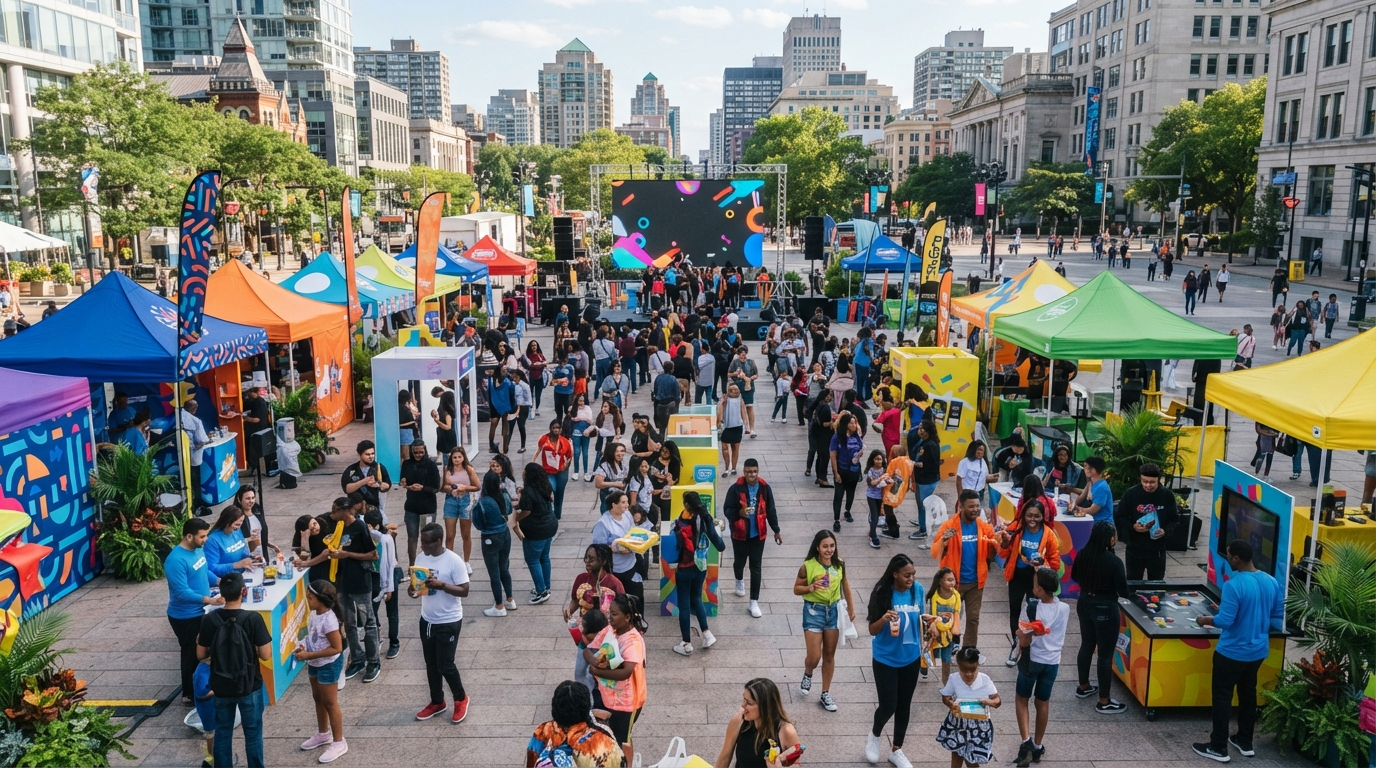
The venue is not just a container for the event. It’s a brand medium. Some of the most effective event branding techniques involve treating every square foot of the physical space as an opportunity to communicate brand values.
This includes obvious elements like signage and banners, but also more subtle ones: furniture style, floral arrangements, color-coded zones within the venue, custom carpet, ceiling installations, and ambient lighting. Consider event brand identity tips that go beyond the visual—scent diffusers that create a signature aroma associated with your brand, or a curated soundtrack that reflects your brand’s personality.
Brand activations and interactive installations deserve special attention. These are the moments that generate social media content, spark conversation, and stick in memory. A photo-worthy installation that embeds your brand into an aesthetically compelling experience does double duty: it impresses in person and extends the brand’s reach online.
4. Leverage Technology to Create Immersive Brand Experiences
Technology has fundamentally changed what’s possible in event branding. Augmented reality (AR), projection mapping, LED walls, interactive kiosks, and AI-powered personalization tools now allow brands to create experiences that feel genuinely futuristic.
Projection mapping, for example, allows brands to transform any surface—a building facade, a conference table, a product display—into a dynamic canvas for branded content. AR activations let attendees interact with virtual brand elements through their smartphones. Personalized digital experiences, powered by attendee data, allow brands to tailor content recommendations, networking suggestions, and branded touchpoints to each individual.
These technologies are no longer reserved for mega-budget events. As costs have come down, even mid-sized organizations can use technology-driven event branding techniques to create experiences that feel premium and memorable. The key is purposeful deployment—technology should serve the brand narrative, not distract from it.
5. Build Pre-Event Brand Momentum
The event experience begins long before attendees walk through the door. The pre-event phase is one of the most underutilized stages in event marketing and branding, and one of the highest-leverage opportunities to build anticipation and brand alignment.
Effective pre-event branding includes:
- Branded email campaigns that build excitement and communicate the event’s value proposition
- Social media content using a consistent event hashtag and visual identity
- Speaker and agenda announcements framed around the event narrative
- Countdown content that teases key moments and builds community among registered attendees
- Branded event apps that give attendees a digital home for the experience before, during, and after
The goal is to get attendees emotionally invested in the event before they arrive. When attendees show up already excited and aligned with the brand narrative, the on-site experience lands with far greater impact.
6. Create Consistent Brand Touchpoints Throughout the Attendee Journey
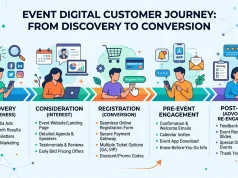
Mapping the attendee journey is one of the most practical event branding best practices you can implement. At each stage—registration, arrival, check-in, main sessions, breakouts, networking, meals, and departure—there’s an opportunity to reinforce the brand experience.
Here’s a simplified touchpoint map:
|
Stage |
Branding Opportunity |
|---|---|
|
Registration |
Branded confirmation email, event app, pre-event content |
|
Arrival |
Venue exterior signage, branded welcome team, first impression zone |
|
Check-in |
Branded check-in station, personalized badges, welcome gift |
|
Sessions |
Stage design, branded presentations, speaker introductions |
|
Networking |
Branded environments, conversation starters, event app features |
|
Catering |
Branded menus, custom packaging, themed food and beverage |
|
Departure |
Branded gift bags, follow-up email, social media prompts |
The most effective event branding techniques ensure that no stage in the journey is unbranded or off-message. Consistency across the entire arc creates a seamless experience that feels thoughtfully designed rather than assembled from unrelated parts.
7. Train Your Staff and Volunteers as Brand Ambassadors
Your event team is a living part of your brand experience. Their appearance, attitude, knowledge, and communication style all contribute to how attendees perceive the brand. Yet staff training is frequently overlooked in discussions of event branding techniques.
Effective brand ambassador training for events should cover:
- Brand story and values: Staff should understand not just what the brand does, but why it exists and what it stands for
- Brand tone of voice: How do we communicate with attendees—what phrases align with the brand, and which ones don’t?
- Dress code and presentation: Uniforms or branded attire should be consistent and reflect the event’s visual identity
- Scenarios and FAQs: Staff should be prepared for common questions and know how to handle challenges in a way that reflects brand values
- Social media behavior: Guidelines for how staff represent the event on personal social channels
When your team is genuinely aligned with the brand, that alignment is visible and felt by attendees. It adds an authentic, human dimension to the event brand identity that no amount of signage can replicate.
8. Use Brand Storytelling to Create Emotional Connection
Of all the event branding techniques available, brand storytelling is arguably the most powerful. Human beings are wired for narrative. We process information through stories, and we form emotional attachments to the characters, conflicts, and resolutions within them.
At an event, brand storytelling can take many forms: a keynote that traces the brand’s origin and vision, a video installation that showcases customer impact, a live demonstration that shows the brand’s values in action, or a series of testimonials woven into the program. The medium matters less than the authenticity and clarity of the story being told.
When developing creating a memorable event experience, focus on stories that connect the brand to something larger than itself—a mission, a community, a transformation. Attendees who feel emotionally connected to a brand story become advocates, not just customers.
9. Harness Social Media and User-Generated Content
Every event has a social media presence, whether you cultivate it or not. The question is whether that organic activity reinforces your brand or fragments it. Strategic event branding techniques around social media turn attendees into brand amplifiers.
Key tactics include:
- A branded hashtag: Short, memorable, and unique. Use it consistently across all official channels and encourage attendees to use it too.
- Social media walls: Live feeds displaying branded hashtag content on screens throughout the venue create real-time social proof and encourage participation.
- Photo moments: Design specific locations in the venue that are optimized for photography and clearly branded. These “Instagrammable” moments generate organic content that extends your brand’s reach.
- Influencer and speaker amplification: Brief speakers and key attendees on social media expectations and provide them with branded assets they can share easily.
User-generated content is one of the most credible forms of brand communication. When real attendees share genuine moments from your event, they’re endorsing your brand in a way that paid media cannot replicate.
10. Extend the Brand Experience Beyond the Event
The event ends. The brand experience should not. Post-event branding is one of the most neglected phases in event branding strategies, and one of the highest-ROI opportunities available.
Effective post-event branding includes:
- Branded recap content: Highlight reels, photo galleries, and key takeaways shared via email and social media
- On-demand content: Recorded sessions and keynotes hosted on a branded landing page
- Follow-up email campaigns: Personalized messages that reference the attendee’s specific experience at the event
- Community building: Online groups, forums, or platforms where attendees can continue the conversation
- Feedback collection: Branded surveys that gather insights while reinforcing the event’s identity
Each of these touchpoints keeps the brand top of mind and deepens the relationship with attendees in the weeks and months after the event.
How to Measure the Effectiveness of Your Event Branding Techniques
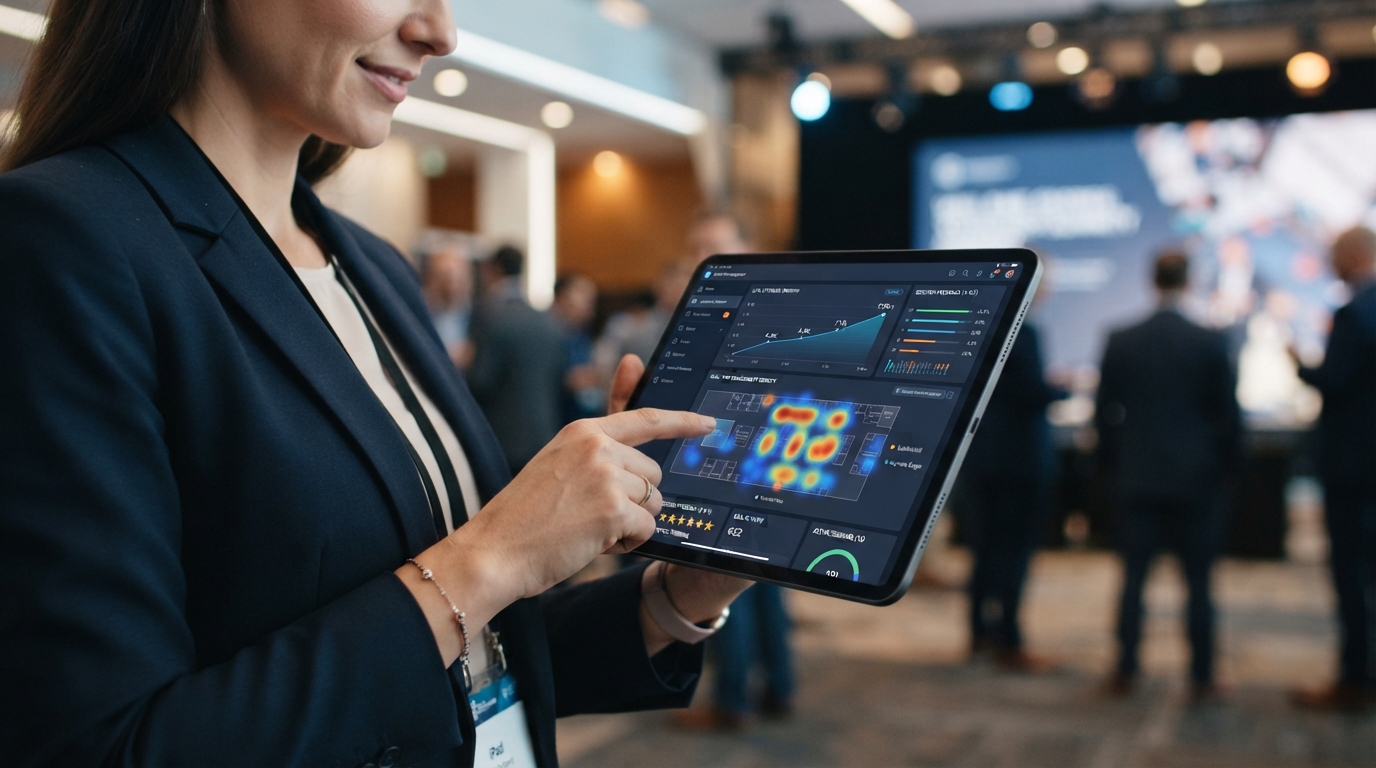
Measuring brand impact is harder than measuring ticket sales or session attendance, but it’s not impossible. Here are the key metrics that reflect the effectiveness of your event branding techniques:
|
Metric |
What It Measures |
|---|---|
|
Net Promoter Score (NPS) |
Likelihood of attendees recommending the event or brand |
|
Brand recall surveys |
Whether attendees remember and correctly identify brand elements post-event |
|
Social media reach and sentiment |
Volume and tone of branded hashtag usage |
|
User-generated content volume |
Number of organic posts featuring the event and brand |
|
Post-event website traffic |
Spike in brand searches and website visits following the event |
|
Lead quality and conversion |
Whether event attendees convert at higher rates than other channels |
Combining quantitative data with qualitative feedback (post-event surveys, interviews, social listening) gives you a complete picture of how your event branding techniques performed. Use these insights to refine your approach for future events.
Common Mistakes That Undermine Event Branding
Even experienced event marketers make branding missteps. Here are the most common ones—and how to avoid them:
Treating branding as decoration
Branding placed on surfaces without strategic intent is just decoration. Every branded element should serve a purpose: communicate a value, reinforce a message, or create an emotion. Ask “why does this exist?” for every design decision.
Inconsistent visual identity across channels
If your event website looks different from your email templates, which look different from your on-site signage, attendees notice the disconnection. Establish a visual identity system before production begins and enforce it across every output.
Ignoring the sensory dimensions of branding
Sound, scent, texture, and temperature all shape how people feel in a space. Brands that consider these dimensions create experiences that feel rich and intentional. Those that ignore them create experiences that feel sterile or generic, regardless of how good the visual branding looks.
Neglecting the post-event phase
The weeks following an event are when brand impressions are either reinforced or fade. A thoughtful post-event content and communication strategy keeps the brand alive in attendees’ minds and converts the emotional energy of the event into lasting loyalty. Leqarn more about Event Marketing from Start to Finish.
Conclusion
Event branding is one of the most powerful tools available to modern marketers. When executed well, it transforms a gathering into a genuine brand experience—one that builds loyalty, drives advocacy, and creates memories that persist long after the event ends. The event branding techniques outlined in this guide, from developing a cohesive narrative and visual identity to training staff as brand ambassadors and extending the experience post-event, give you a practical framework for building events that resonate. Start by defining your brand’s story, align every element to that story, and measure what matters. Apply these techniques consistently, and your events will become one of your brand’s most valuable assets.
Frequently Asked Questions
What are event branding techniques?
Event branding techniques are strategic methods used to align every element of an event—visual design, messaging, environment, staff behavior, and digital touchpoints—with a brand’s identity, values, and goals. They ensure that attendees experience the brand consistently and memorably throughout the event.
Why is event branding important for businesses?
Event branding creates emotional connections between a brand and its audience. According to the Event Marketing Institute, 74% of consumers are more likely to purchase from a brand after engaging with a branded event experience. Strong event branding builds trust, recognition, and long-term loyalty.
How do you create a strong event brand identity?
Creating a strong event brand identity starts with defining your brand’s purpose, audience, and key message for the event. From there, develop a consistent visual system (colors, typography, logo usage), establish a tone of voice, and apply both across every attendee touchpoint—from email invitations to on-site signage.
What is the difference between event branding and event marketing?
Event marketing focuses on promoting the event to drive registrations and attendance. Event branding is the strategic process of ensuring the event itself communicates and reinforces the brand’s identity and values. Both are essential—marketing brings people in; branding shapes what they experience when they get there.
How much does event branding typically cost?
Event branding costs vary widely based on event size, scope, and production quality. A small corporate event might allocate $5,000–$15,000 for branding elements, while a large-scale conference or product launch could invest $100,000 or more. The key is proportionate investment—branding should represent a strategic percentage of the total event budget, not an afterthought.
What are the most important visual elements in event branding?
The most important visual elements include event logo or lockup, color palette, typography, signage system, stage and backdrop design, and branded digital assets (presentations, apps, screens). Consistency across all of these creates a cohesive experience that reinforces brand recognition.
How can small businesses apply effective event branding techniques?
Small businesses can apply event branding techniques effectively by focusing on consistency over complexity. A clear theme, a cohesive color palette, branded printed materials, and a well-trained team can create a professional, memorable brand experience without a large budget. Digital tools and templates make consistent visual identity more accessible than ever.
How do you measure the success of event branding?
Measure event branding success through a combination of quantitative metrics (Net Promoter Score, social media reach, post-event web traffic, lead conversion rates) and qualitative feedback (attendee surveys, interviews, and social listening). Brand recall surveys administered post-event can directly assess whether branding goals were achieved.
What role does technology play in modern event branding techniques?
Technology enables brands to create immersive, personalized experiences that were previously impossible at scale. Projection mapping, AR activations, event apps, AI-driven personalization, and live social media walls are among the tools transforming what event branding can achieve. The key is using technology purposefully to serve the brand narrative.
How do you extend event branding beyond the event itself?
Post-event branding extends the experience through branded recap videos, on-demand content, personalized follow-up email campaigns, community platforms, and social media continuation. These touchpoints keep the brand present in attendees’ minds, reinforce the emotional connection formed at the event, and convert experience into lasting loyalty.