You need to understand the different types of event marketing available to maximize your brand reach. This guide breaks down every core strategy, comparing formats, costs, and returns. You will learn expert tips, avoid common execution mistakes, and build a high-converting event marketing machine.
Connecting directly with your audience builds trust and accelerates sales. Using the right types of event marketing allows you to create memorable experiences that turn prospects into loyal advocates.
Understanding the Value of Event Marketing
Organizations use event marketing to foster direct, meaningful connections between their brand and their target buyers. Unlike static digital ads, events allow your audience to experience your brand tangibly. This physical or virtual interaction fosters emotional engagement, leading to stronger, longer-lasting customer relationships.
When you explore the various types of event marketing, you realize that each serves a specific stage of the buyer’s journey. Some events focus on top-of-funnel brand awareness, while others serve as bottom-of-funnel conversion engines. By understanding this ecosystem, you can select the perfect format for your current business goals.
The Power of Direct Engagement
Interacting directly with customers removes friction from the sales process. Buyers want to shake hands, ask questions in real-time, and experience your product firsthand. This is why experiential marketing remains a cornerstone of enterprise growth. When attendees associate your brand with a positive, educational, or highly entertaining experience, they naturally develop a sense of loyalty.
You also gather incredible amounts of first-party data. Whether you track booth scans at a trade show or monitor session attendance during a virtual summit, this data helps you refine your broader marketing strategy. It allows you to score leads accurately and pass highly qualified prospects directly to your sales team.
Exploring the Main Types of Event Marketing
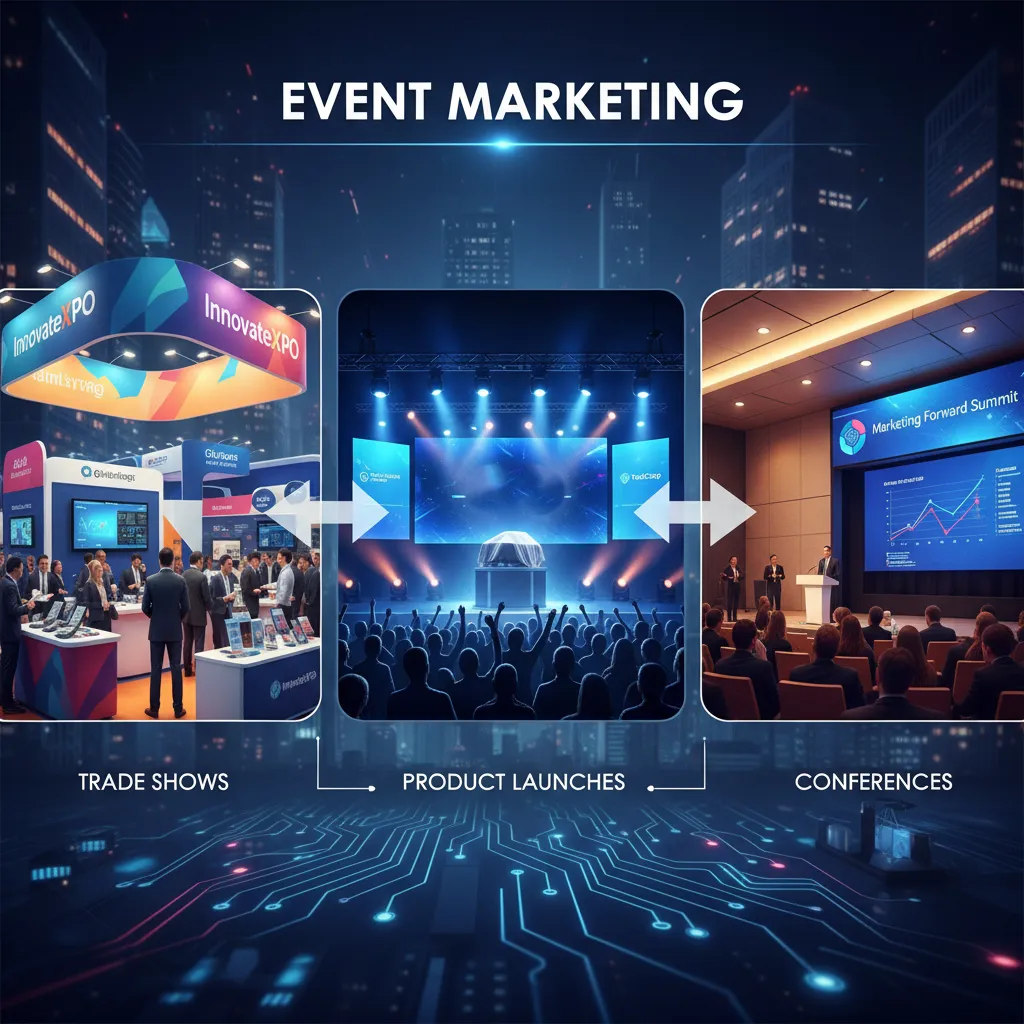
To build a comprehensive strategy, you must familiarize yourself with the distinct types of event marketing. Each category demands a different approach, budget, and technological infrastructure.
1. Trade Shows and Exhibitions
Trade shows bring together industry professionals, competitors, and buyers under one roof. These massive gatherings offer unparalleled access to highly targeted audiences. When evaluating different types of event marketing, trade shows stand out for their sheer volume of lead-generation potential.
Exhibiting at a trade show involves securing a booth, designing an attractive display, and staffing it with knowledgeable sales representatives. Your goal is to capture attention quickly as attendees walk the floor. You must offer compelling product demonstrations and valuable collateral.
To succeed here, you need a proactive approach. Do not wait for people to approach your booth. Train your team to engage passersby, ask open-ended questions, and qualify leads on the spot. Using robust event management software to scan badges and take instant notes will dramatically improve your post-event follow-up sequence.
2. Conferences and Summits
Conferences are highly structured events centered around education, networking, and industry advancement. Hosting your own conference positions your company as a definitive thought leader. Alternatively, sponsoring an existing conference allows you to tap into an established audience.
These types of event marketing rely heavily on content quality. Attendees expect to hear from influential keynote speakers, participate in breakout sessions, and gain actionable insights they can apply to their daily work. If you host a conference, you control the narrative. You get to showcase your newest product features, highlight customer success stories, and dictate the theme of the conversation.
Organizing a large-scale conference requires significant investment and months of planning. You must secure a venue, build an agenda, manage ticket sales, and coordinate travel logistics. However, the event return on investment can be astronomical, as you secure recurring revenue from sponsorships and ticket sales while closing major deals on-site.
3. Seminars and Workshops
When you need to educate a highly targeted group of prospects, seminars and workshops offer the perfect environment. These intimate gatherings focus on skill-building and deep-dive education. Out of all the types of event marketing, workshops are the most effective for moving mid-funnel prospects toward a final purchasing decision.
A typical seminar lasts a few hours to a full day. You invite a small group of relevant professionals and provide them with immense value without an aggressive sales pitch. For example, a financial software company might host a workshop on new tax compliance regulations. By teaching the attendees how to navigate the complex new laws, the company naturally positions its software as the ultimate solution.
Keep these events interactive. Provide worksheets, encourage group discussions, and dedicate ample time for questions and answers. The more hands-on the experience, the more likely attendees are to remember your brand.
4. Virtual Events and Webinars
The digital landscape has fundamentally transformed how we gather. Virtual events range from one-hour webinars to multi-day digital summits featuring dozens of speakers. These types of event marketing eliminate geographic barriers, allowing you to reach a global audience with a fraction of the budget required for physical events.
Webinars work exceptionally well for lead generation. You promote a specific topic, require an email address for registration, and deliver a highly focused presentation. Modern virtual platforms offer interactive features like live polling, Q&A boxes, and downloadable resources to keep the audience engaged.
To maximize the impact of your virtual events, you must treat them with the same production value as a live broadcast. Invest in good lighting, high-quality microphones, and stable internet connections. A poorly produced virtual event damages your brand credibility instantly. Additionally, always record your virtual sessions. You can gate this recorded content on your website to generate leads long after the live event concludes.
5. Hybrid Events
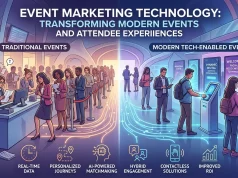
A hybrid event strategy combines the immersive experience of a live, in-person gathering with the expansive reach of a digital broadcast. This format represents the future of the industry, offering maximum flexibility for attendees and organizers alike.
Executing hybrid types of event marketing requires careful orchestration. You are essentially running two events simultaneously. The physical audience needs great food, comfortable seating, and face-to-face networking opportunities. The virtual audience needs high-definition streaming, dedicated digital hosts, and virtual networking rooms.
You must ensure the remote attendees do not feel like an afterthought. Use specialized software that allows virtual participants to ask questions to the live speakers on stage. Create digital sponsor booths where remote attendees can interact with exhibitors. By mastering the hybrid format, you protect your event against unexpected travel disruptions while massively increasing your total addressable market.
6. Field Marketing and Roadshows
Field marketing takes your brand directly to the customer. Instead of asking buyers to travel to a centralized conference, you pack up your best presentations and hit the road. Roadshows involve hosting a series of small, localized events across multiple cities or regions.
These types of event marketing work incredibly well for B2B event marketing teams trying to penetrate specific geographic territories. A software company might host half-day executive briefings in New York, Chicago, London, and Tokyo over a single month.
Because roadshows are smaller and hyper-local, you can personalize the content to reflect the specific challenges of that region. You can also invite local customers to speak, providing highly relevant social proof to the prospects in the room. This localized approach builds incredible trust and accelerates the sales pipeline in targeted regions.
7. VIP and Executive Dinners
Sometimes, the best way to close an enterprise deal is over a great meal. VIP events and executive dinners are highly exclusive gatherings designed for C-level executives and major decision-makers. You intentionally keep the guest list small—usually between 10 and 20 people—to foster intimate, high-level conversations.
These types of event marketing require flawless execution. You must select a high-end venue, curate an exceptional menu, and guide the conversation masterfully. The goal is not to deliver a slide presentation. Instead, you facilitate peer-to-peer networking among the executives. You position your company as the ultimate connector of industry leaders.
Invite a mix of your best current customers and your highest-priority prospects. Let your happy customers do the selling for you naturally during dinner conversation. When an executive prospect hears a peer praise your services over dessert, the impact far outweighs any traditional sales pitch.
8. Experiential Marketing and Pop-ups
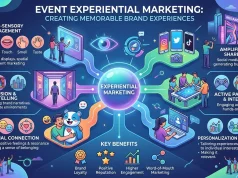
Experiential events prioritize immersion and creativity. You want to surprise and delight your audience, breaking them out of their daily routine. Pop-up shops, interactive art installations, and mobile brand experiences fall into this category.
While often associated with consumer brands, B2B companies increasingly use these types of event marketing to stand out. For example, a cloud storage company might build a physical “data vault” escape room at a major tech festival. Attendees must work together to solve puzzles related to data security to escape.
This creates a highly memorable, shareable moment. Attendees will post pictures on social media, expanding your brand reach organically. The key to experiential marketing is tying the fun activity directly back to your core brand message. If the experience is fun but completely disconnected from what you sell, you waste your budget.
9. Sponsorships
If you do not have the bandwidth to host your own event, sponsoring an existing one is a highly effective alternative. Sponsorships allow you to piggyback on the marketing efforts and audience trust built by another organization.
When reviewing different types of event marketing sponsorships, look beyond just slapping your logo on a banner. Seek out integrated opportunities. Sponsor a specific learning track, provide the branded Wi-Fi login, or host the official after-party.
Negotiate for access to the attendee list. The true value of a sponsorship lies in your ability to follow up with the audience after the event concludes. Ensure your sponsorship package includes speaking time or dedicated email blasts to the registered attendees.
Event Marketing Format Comparison
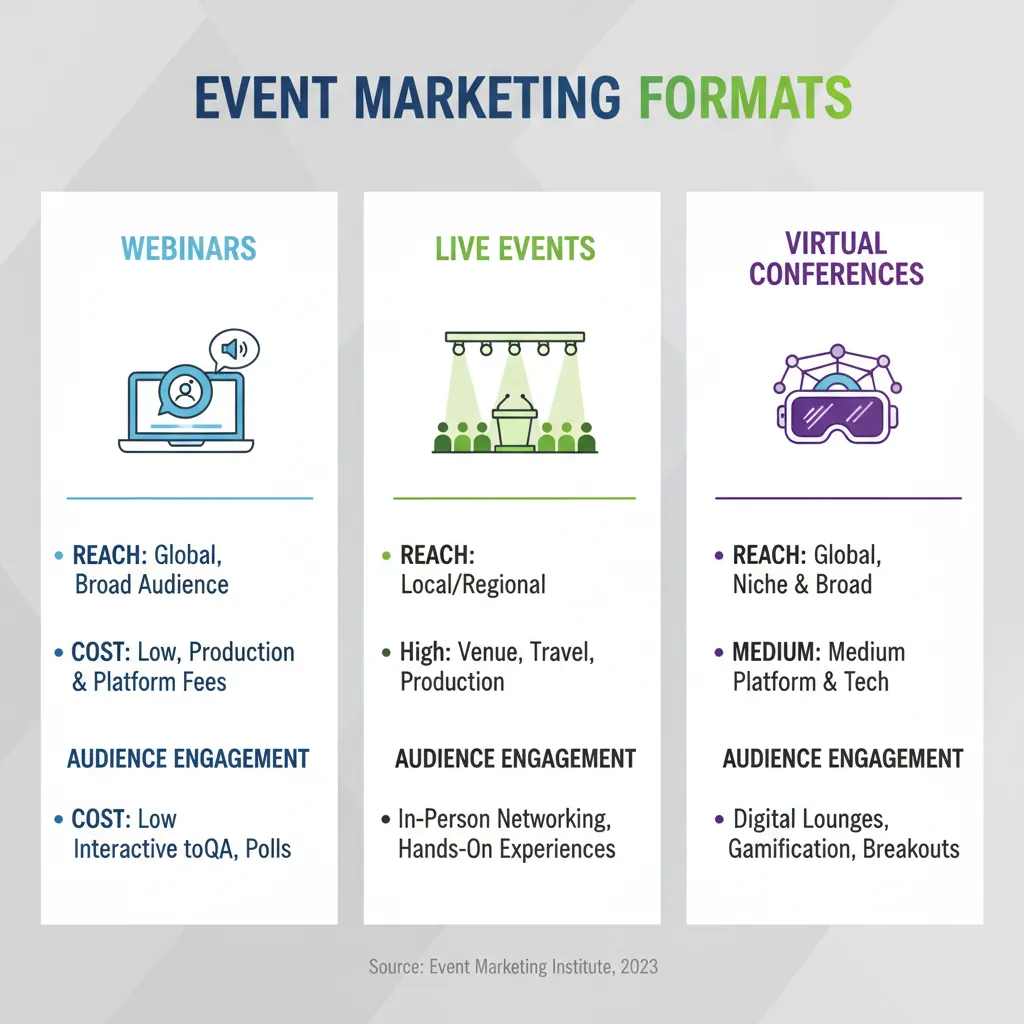
To help you choose the right types of event marketing for your current goals, review this structured comparison of the most common formats.
|
Event Type |
Primary Goal |
Funnel Stage |
Cost Level |
Best For |
|---|---|---|---|---|
|
Trade Shows |
Lead Generation |
Top/Middle |
High |
Meeting active industry buyers in high volume |
|
Conferences |
Brand Authority |
Full Funnel |
Very High |
Establishing thought leadership and networking |
|
Webinars |
Education & Leads |
Top/Middle |
Low |
Scaling reach and generating targeted email lists |
|
Workshops |
Skill Building |
Middle/Bottom |
Medium |
Accelerating pipeline for complex products |
|
VIP Dinners |
Relationship Building |
Bottom |
Medium/High |
Closing enterprise deals and C-suite networking |
|
Roadshows |
Regional Growth |
Middle/Bottom |
High |
Penetrating specific geographic markets |
|
Pop-ups |
Brand Awareness |
Top |
Medium/High |
Creating viral, shareable brand moments |
Expert Insights and Pro Tips
Executing various types of event marketing flawlessly requires experience and strategic foresight. Apply these expert insights to maximize your results across all formats.
- Define Clear KPIs Before Planning: Never host an event just for the sake of it. Determine exactly what success looks like. Are you tracking total registrations, qualified leads generated, cost per acquisition, or influenced pipeline revenue? Establish these metrics early.
- Leverage Multi-Channel Promotion: Do not rely on a single email blast. Promote your event across social media, targeted paid ads, direct mail, and through your sales team’s direct outreach. Create a unique event hashtag to centralize the conversation online.
- Segment Your Follow-Up: The fortune is in the follow-up. Do not send a generic “thanks for coming” email to everyone. Segment your list based on the sessions they attended or the booth conversations they had. Send highly personalized follow-up content that addresses their specific interests.
- Empower Your Sales Team: Your sales representatives must be heavily involved in the planning process. Have them personally invite their top prospects. Provide them with detailed briefs on the event goals and expected attendees so they can network with purpose.
- Use the Right Technology: Invest in reliable tools. Use a comprehensive platform that handles ticketing, landing pages, badge printing, and mobile event apps. Seamless technology improves the attendee experience and provides you with cleaner data.
Common Mistakes to Avoid
Even seasoned marketers stumble when managing complex types of event marketing. Watch out for these common pitfalls that can ruin your return on investment.
- Ignoring the Attendee Experience: Organizers often get so focused on their own sales goals that they forget to make the event enjoyable. If attendees are subjected to aggressive sales pitches, long lines, and poor food, they will associate those negative feelings with your brand.
- Failing to Train Booth Staff: Sending unprepared staff to a trade show is a massive waste of resources. Staff members who sit behind tables looking at their phones repel attendees. Train your team to stand, smile, ask engaging questions, and capture lead data efficiently.
- Overcomplicating the Registration Process: If your registration form asks for twenty different pieces of information, prospects will abandon the page. Keep registration simple. Ask only for the essential data you need to qualify the lead.
- Neglecting the Post-Event Strategy: Many companies pour all their energy into the live event and have no plan for the days immediately following it. The first 48 hours after an event are critical. Have your follow-up emails and sales cadences built and ready to launch before the event even begins.
- Failing to Capture Content: Events are goldmines for content creation. Failing to record keynote speeches, interview attendees, or take high-quality photos means you miss out on months’ worth of social media and blog content. Always hire a dedicated content capturer.
Integrating Events into Your Broader Strategy
No event should exist in a vacuum. The most successful types of event marketing integrate seamlessly with your broader digital and outbound marketing campaigns.
Use your content marketing team to create teaser blogs and whitepapers that align with the event’s theme. Run targeted LinkedIn ads to the specific job titles you want in the room. Have your outbound development representatives call prospects to personally invite them to exclusive VIP sessions.
When the event concludes, feed all the behavioral data you collected back into your customer relationship management system. If a prospect attended a specific breakout session on artificial intelligence, trigger an automated email campaign that sends them your latest AI research report. This creates a cohesive, omnichannel experience that guides the buyer naturally toward a purchase.
Choosing the Right Event for Your Audience
Selecting the best types of event marketing requires a deep understanding of your target audience. You must know where they spend their time, how they prefer to consume information, and what challenges they face.
If you are targeting busy doctors, a multi-day physical conference might be difficult for them to attend. A highly focused, one-hour virtual webinar on a new medical device would likely yield better results. Conversely, if you are targeting construction executives who value handshakes and physical machinery demonstrations, a digital summit will fail. You need to meet them at a large-scale physical trade show.
Survey your existing customers. Ask them which industry events they currently attend and what types of content they find most valuable. Use this direct feedback to shape your event marketing calendar for the upcoming year.
Maximizing Event ROI
Proving the value of different types of event marketing to your executive team requires meticulous tracking. You must move beyond vanity metrics like total attendees and focus on pipeline impact.
Track the source of every registration using unique tracking links. Integrate your event software directly with your sales CRM. When a lead from an event eventually closes a deal six months later, you must be able to trace that revenue back to the specific event they attended. This closed-loop reporting proves the financial viability of your event strategy and helps you secure larger budgets for future initiatives.
Conclusion
Mastering the various types of event marketing empowers you to build authentic relationships and accelerate your sales cycle. Whether you host an intimate VIP dinner, launch a massive hybrid summit, or exhibit at an international trade show, your focus must remain on delivering exceptional value to the attendee. Implement these strategies, avoid common execution traps, and watch your brand authority soar. Ready to transform your approach? Start planning your next high-impact event today.
FAQs
What is the primary purpose of event marketing?
Event marketing aims to build direct relationships with target audiences, increase brand awareness, and generate highly qualified leads through memorable, interactive experiences. It accelerates the sales cycle by facilitating face-to-face or engaging digital interactions.
How do I choose between different types of event marketing?
Select your event format based on your core objective, budget, and target audience preferences. Use webinars for cost-effective, top-of-funnel lead generation, and use VIP dinners or workshops for bottom-of-funnel conversions.
What makes a trade show successful?
A successful trade show requires proactive booth staff, engaging product demonstrations, clear branding, and a streamlined system for capturing and qualifying lead data instantly on the show floor.
Are virtual events still effective?
Yes, virtual events remain highly effective for scaling your reach globally, capturing lead data efficiently, and reducing overhead costs. They are essential components of modern types of event marketing strategies.
What is a hybrid event?
A hybrid event combines a live, in-person gathering with a simultaneous digital broadcast. This allows local attendees to network face-to-face while remote attendees participate through an interactive virtual platform.
How do I measure event marketing ROI?
Measure ROI by tracking the total cost of the event against the actual pipeline revenue generated from the leads captured. Use CRM integrations to attribute closed-won deals back to specific event campaigns.
What is experiential marketing?
Experiential marketing immerses consumers in a creative, interactive brand experience, such as a pop-up shop or interactive installation. It focuses on creating emotional connections and highly shareable social media moments.
How long should a promotional campaign for an event run?
For large conferences, begin promotion at least three to six months in advance. For smaller webinars or workshops, a four-to-six-week promotional window is usually sufficient to drive registrations.
What is the biggest mistake in event marketing?
The biggest mistake is lacking a structured, immediate post-event follow-up plan. Failing to contact leads while the event is still fresh in their minds drastically reduces your conversion rates.
How can I make my event more engaging?
Increase engagement by incorporating live polling, dedicated Q&A sessions, hands-on workshops, gamification elements like leaderboards, and ample, structured networking opportunities for all attendees.