Event management planning is the process of developing, organizing, coordinating, and managing an event from the initial idea through to its completion. Whether the event is a corporate conference, product launch, wedding, networking session, trade show, fundraiser, seminar, or private celebration, effective planning plays an important role in creating a smooth and memorable experience.
A successful event rarely happens by chance. Behind every well-organized event is careful preparation, clear communication, detailed scheduling, budget management, vendor coordination, and attention to the experience of attendees. Event managers must bring together many different elements while making sure that everything works within the available time and resources.
Modern events have also become more complex. Attendees expect professional experiences, convenient registration, engaging content, reliable technology, attractive venues, and smooth communication before and during the event. This makes a strong event planning strategy essential for organizations and businesses that want their events to achieve specific goals.
What Is Event Management Planning?
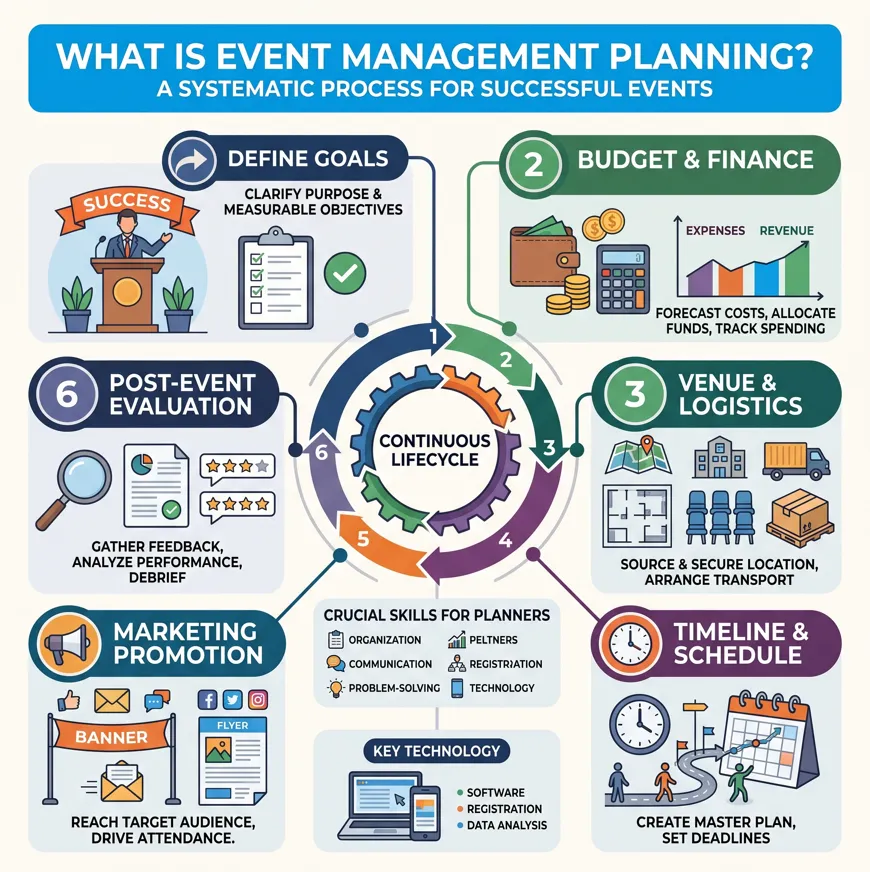
Event management planning involves managing all the activities required to turn an event concept into a successful real-world experience. It begins when an organization or individual defines why the event is being held and continues through planning, preparation, execution, and post-event evaluation.
The event planning process can vary depending on the size and purpose of the event. A small networking event may require only a few weeks of preparation, while a large conference or international exhibition can require months of coordination. Regardless of the scale, the fundamental purpose remains the same: bringing people, resources, services, and activities together in an organized way.
Professional event planning combines creativity with practical management. An event may have an attractive theme and impressive entertainment, but poor scheduling, unclear communication, inadequate facilities, or logistical problems can negatively affect the attendee experience. Effective planning therefore considers both the visible and invisible parts of an event.
Why Event Planning Strategy Matters
A clear event planning strategy gives an event a defined direction. Before selecting a venue, contacting vendors, or promoting an event, organizers need to understand what they want the event to accomplish. The objective could be generating leads, building relationships, educating an audience, launching a product, increasing brand awareness, celebrating an achievement, or raising funds.
The purpose of the event influences almost every later decision. A corporate conference designed for education may require presentation technology, breakout rooms, professional speakers, and structured schedules. A product launch may place greater emphasis on branding, demonstrations, media coverage, and audience engagement.
A strong strategy also helps prevent unnecessary spending. When organizers understand the purpose and audience of an event, they can prioritize resources that directly contribute to the desired outcome. This creates a more focused planning process and makes it easier to evaluate whether the event delivered meaningful results.
Understanding the Event Planning Process
The event planning process usually begins with an idea and gradually develops into a detailed operational plan. Organizers first establish the event’s purpose, target audience, expected attendance, date, location, and general format. These decisions create the foundation for everything that follows.
Budgeting is another important part of the process. Event expenses can include venue rental, catering, entertainment, equipment, transportation, marketing, staff, security, technology, decorations, insurance, and vendor fees. A realistic budget should account for both expected expenses and unexpected costs.
Once the basic framework is established, organizers can begin working with venues and suppliers. Venue selection is particularly important because the location influences capacity, accessibility, atmosphere, transportation, available technology, catering options, and overall attendee experience.
Scheduling then becomes a major part of event management planning. Every activity needs to fit into the available timeframe. Speakers need arrival and preparation times, suppliers need access to the venue, catering needs setup and service periods, and attendees need clear information about when activities begin and end.
Event Management Services and Professional Support
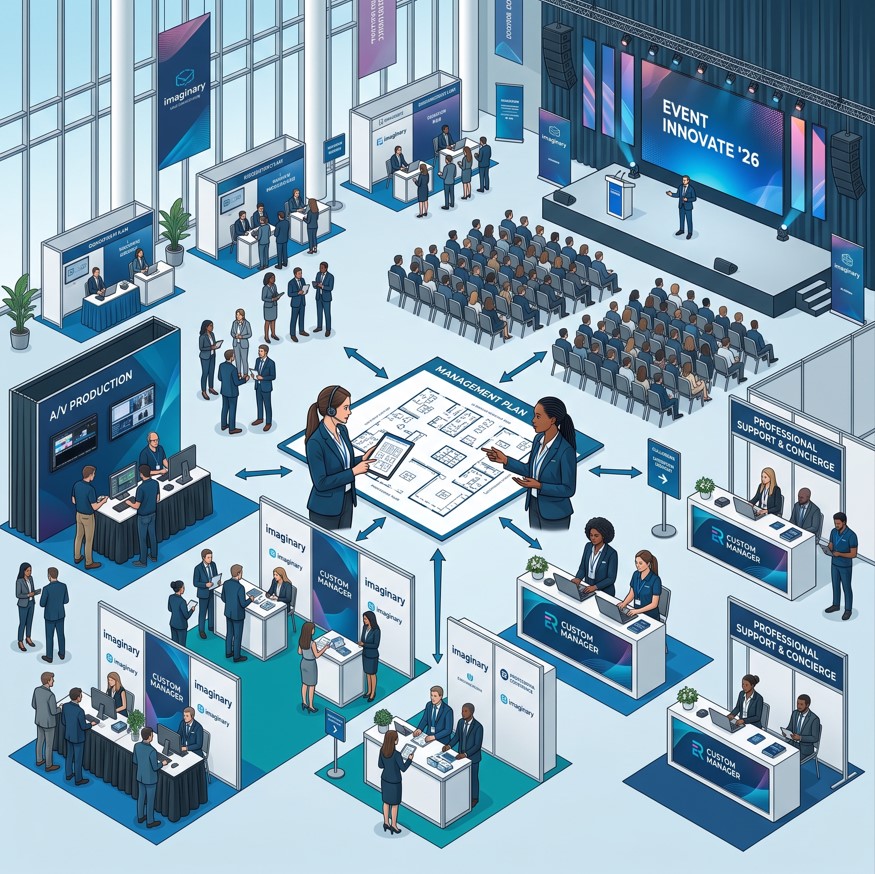
Many organizations use event management services to reduce the workload associated with organizing an event. Professional event management companies can support different stages of an event, including planning, venue selection, supplier management, registration, guest services, production, logistics, and on-site coordination.
The level of support depends on the event and the client’s requirements. Some organizations may need complete event management, while others may only require assistance with specific responsibilities. For example, a company might handle marketing internally while hiring an external team to manage venue operations, technical production, catering, and guest coordination.
Professional support can be particularly valuable for large or complex events. Experienced event professionals are familiar with common operational challenges and can often identify potential problems before they become serious issues. Their experience can also help organizations negotiate with suppliers, manage schedules, and maintain communication between different teams.
Corporate Event Planning
Corporate event planning requires careful consideration of both business objectives and attendee experience. Corporate events can include conferences, meetings, seminars, product launches, employee gatherings, award ceremonies, exhibitions, and networking events.
The event should reflect the company’s identity and professional standards. Branding can appear through signage, presentations, stage design, registration areas, digital screens, promotional materials, and other event elements. However, corporate branding should complement the attendee experience rather than overwhelm it.
Technology is also increasingly important in corporate events. Audio-visual systems, presentation equipment, event applications, live streaming, digital registration, audience interaction tools, and online networking can all influence how attendees experience an event.
Corporate organizers must also consider the expectations of different stakeholders. Executives may focus on business outcomes, marketing teams may focus on brand exposure, sales teams may prioritize lead generation, and attendees may care most about useful information and networking opportunities. Effective planning brings these different expectations together.
The Role of Event Coordination Services
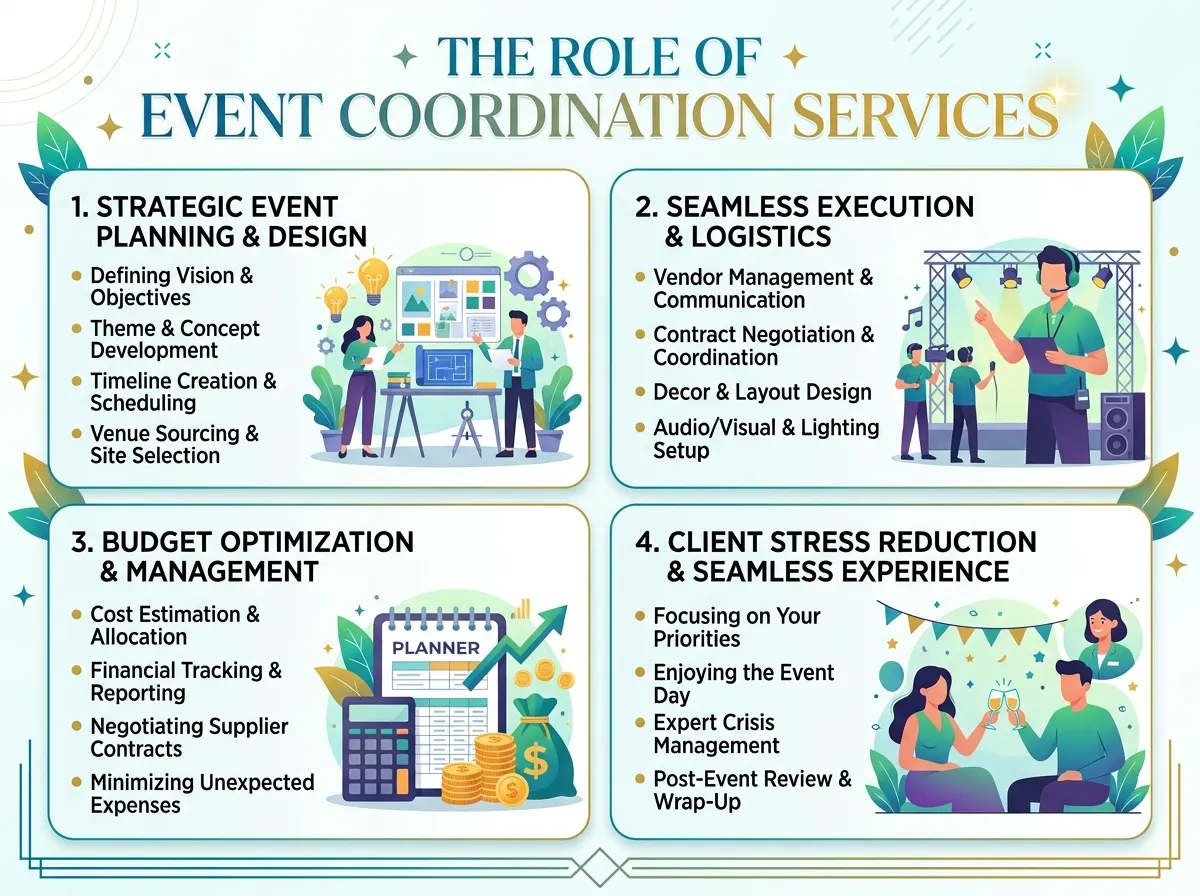
Event coordination services help ensure that individual parts of an event work together at the right time. Coordination becomes especially important when multiple vendors, speakers, staff members, performers, sponsors, and technical teams are involved.
Without effective coordination, even well-planned events can experience delays. A speaker might arrive before the presentation equipment is ready, catering might be delivered before the designated area is prepared, or a supplier might not know where equipment should be installed.
A coordinator acts as a central communication point between different parties. During the event, this role becomes even more important because decisions often need to be made quickly. A professional coordinator can monitor schedules, communicate changes, respond to unexpected situations, and make sure that the event continues moving according to plan. Strong event marketing for customer engagement can also complement this coordination by helping businesses maintain meaningful connections with attendees.
Event Organization Tips for Better Experiences
Good event organization begins with communication. Everyone involved should understand their responsibilities, deadlines, and reporting structure. When responsibilities are unclear, tasks can be duplicated or overlooked.
Communication with attendees is equally important. Guests should receive relevant information about registration, location, schedules, parking, transportation, accommodation, dress requirements, and other practical details before the event.
The attendee experience should remain central throughout the planning process. Small details can make a significant difference, from an efficient registration process to comfortable seating and clear directional signage. When guests can easily understand where to go and what to do, they are more likely to enjoy the event.
Organizers should also think beyond the main program. Arrival, registration, breaks, meals, networking periods, and departure all contribute to the overall experience. A well-designed event considers the entire attendee journey rather than focusing only on the headline activities. Following an event marketing from start to finish approach can help businesses coordinate promotion, audience engagement, and follow-up throughout the event lifecycle.
Using an Event Planning Checklist
An event planning checklist can help organizers maintain visibility over the many responsibilities involved in an event. Although every event is different, a checklist can provide a practical way to track important tasks, deadlines, suppliers, payments, approvals, and operational requirements.
The checklist should evolve as the event develops. Early planning may focus on objectives, budget, venue, audience, and event format. Later stages may involve guest registration, catering numbers, speaker confirmations, equipment testing, signage, staff schedules, and final vendor communication.
A checklist is particularly useful when several people are working on the same event. Shared task tracking can help teams understand what has been completed and what still requires attention. It can also reduce the possibility of important details being forgotten as the event date approaches.
Event Logistics Planning
Event logistics planning is one of the most operationally demanding parts of event management. Logistics involves coordinating the physical movement of people, equipment, materials, suppliers, and resources before, during, and after an event.
Transportation is one important consideration. Organizers may need to arrange parking, shuttle services, airport transfers, delivery schedules, or transportation for speakers and VIP guests. Venue access must also be considered so that suppliers have enough time to unload equipment and complete setup.
Equipment logistics can be equally complex. Large events may require stages, lighting, microphones, screens, computers, cameras, internet connections, furniture, signage, and other production equipment. Each item needs to arrive at the right location and be installed within the available setup period.
Catering also requires detailed coordination. Food quantities need to match expected attendance, service times must fit the event schedule, and dietary requirements should be communicated to the catering team. These operational details may not be highly visible to attendees, but they can strongly influence the quality of the overall experience.
Managing Risk During an Event
Risk management should be part of event management planning from the beginning. Events can be affected by weather, technical failures, supplier delays, transportation problems, medical emergencies, overcrowding, power interruptions, or unexpected changes in attendance.
Planning for these situations does not mean expecting something to go wrong. Instead, it means preparing reasonable alternatives so that the event team can respond quickly if a problem occurs.
Backup communication methods can be useful when technology fails. Alternative equipment may be necessary for important presentations. Additional time can be built into schedules to accommodate delays. Staff members can also be assigned specific responsibilities for handling emergencies or operational disruptions.
The goal is to reduce uncertainty and make the response to unexpected situations more organized.
Technology in Modern Event Management
Technology has transformed event management planning. Digital registration systems can make check-in faster, while event platforms can provide schedules, speaker information, maps, notifications, and networking features.
Virtual and hybrid events have also expanded the possibilities for reaching audiences beyond a physical venue. Organizations can combine in-person experiences with online participation, allowing people from different locations to attend.
Technology can also improve the way organizers measure event performance. Registration data, attendance rates, engagement levels, survey responses, lead generation, and other metrics can provide valuable information about whether an event achieved its objectives.
However, technology should serve the event rather than become the event itself. Tools should be selected based on genuine requirements and audience needs. Introducing unnecessary technology can create complexity without improving the experience.
What Makes Successful Event Management?
Successful event management combines planning, communication, flexibility, and attention to detail. An event can have an excellent concept, but its success ultimately depends on how effectively that concept is executed.
Strong event managers understand that plans may change. A speaker may cancel, attendance numbers may increase, equipment may arrive late, or a venue requirement may change. The ability to adapt without losing sight of the event’s primary objectives is an important professional skill.
Evaluation is also part of successful event management. After an event, organizers should review what worked well and where improvements are needed. Feedback from attendees, staff, sponsors, speakers, and vendors can reveal valuable insights.
The results should then influence future events. Over time, organizations can develop more efficient processes, stronger supplier relationships, better budgets, and improved attendee experiences.
Choosing a Professional Event Planner
Hiring a professional event planner can be beneficial when an event involves significant logistical requirements or when internal teams do not have enough time or experience to manage everything themselves.
A professional event planner can bring structure to the planning process and coordinate different suppliers and stakeholders. They can also help transform an initial concept into a realistic event plan while keeping practical limitations in mind. Strong communication and the use of modern AI conversational commerce solutions can also support smoother communication and engagement when digital tools are part of the event strategy.
When selecting a planner, organizations should consider experience, communication skills, organizational ability, previous event experience, supplier relationships, and understanding of the event’s objectives. The right professional should not simply organize individual tasks but should understand how those tasks contribute to the overall event experience.
Measuring Event Performance
The success of an event should be measured against its original objectives. Attendance is an important metric, but it does not always tell the entire story.
For a business event, organizers might evaluate qualified leads, sales opportunities, customer engagement, brand exposure, or networking activity. For an educational event, attendee satisfaction, participation, session attendance, and feedback may be more relevant.
Post-event surveys can provide direct insight into attendee satisfaction. Social media engagement, website traffic, registrations, repeat attendance, and sponsor feedback can also provide useful information.
Analyzing these results allows organizations to determine whether their investment produced the desired outcome. It also creates a foundation for improving future event management planning.
Conclusion
Event management planning is a combination of strategy, organization, communication, creativity, and operational execution. From establishing an event objective and managing a budget to coordinating suppliers and creating a positive attendee experience, every part of the process contributes to the final result.
Whether an organization is planning a small business gathering or a large corporate conference, preparation provides the foundation for success. A thoughtful event planning strategy can reduce confusion, improve resource management, and create a more consistent experience for everyone involved.
Professional event management services and experienced event coordination can provide additional support when an event becomes complex. At the same time, clear communication, detailed event logistics planning, careful scheduling, and post-event evaluation can help organizations continuously improve.
Ultimately, successful events are built around people. When planning decisions are made with the audience, objectives, and overall experience in mind, organizations have a stronger opportunity to create events that are organized, engaging, memorable, and valuable.
Frequently Asked Questions About Event Management Planning
What is event management planning?
Event management planning is the process of preparing and coordinating all major aspects of an event, from defining objectives and selecting a venue to managing suppliers, schedules, attendees, technology, logistics, and post-event evaluation.
Why is event management planning important?
Event management planning helps organizations create structure and reduce the risk of operational problems. It allows teams to manage budgets, schedules, suppliers, communication, and attendee experiences more effectively.
What is included in the event planning process?
The event planning process can include defining objectives, identifying the target audience, creating a budget, selecting a venue, arranging suppliers, developing schedules, promoting the event, coordinating attendees, managing logistics, and evaluating results after the event.
What are event management services?
Event management services are professional services that support the planning and execution of events. Depending on the provider, these services can include venue management, supplier coordination, registration, catering coordination, technical production, guest management, logistics, and on-site event support.
What is corporate event planning?
Corporate event planning involves organizing business-related events such as conferences, meetings, product launches, seminars, exhibitions, networking events, and employee gatherings. It combines business objectives with attendee experience and professional event execution.
Why are event coordination services useful?
Event coordination services help different teams, suppliers, speakers, and staff work together efficiently. Coordinators monitor schedules, communicate changes, manage operational details, and help resolve problems during the event.
How can an event planning checklist help?
An event planning checklist provides a structured way to track important tasks, deadlines, responsibilities, payments, suppliers, and event requirements. It can help organizers avoid overlooking important details.
What does event logistics planning involve?
Event logistics planning involves managing the movement and availability of people, equipment, materials, suppliers, transportation, catering, technology, and other resources required to operate an event successfully.
What makes an event successful?
Successful event management usually combines clear objectives, careful preparation, effective communication, reliable logistics, engaging experiences, professional coordination, and the ability to respond to unexpected changes.
When should I hire a professional event planner?
A professional event planner can be useful when an event is large, complex, time-sensitive, or involves multiple suppliers and stakeholders. Professional support can reduce the workload for internal teams and provide additional experience in managing event operations.