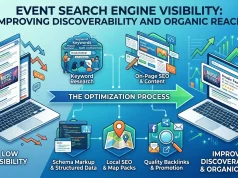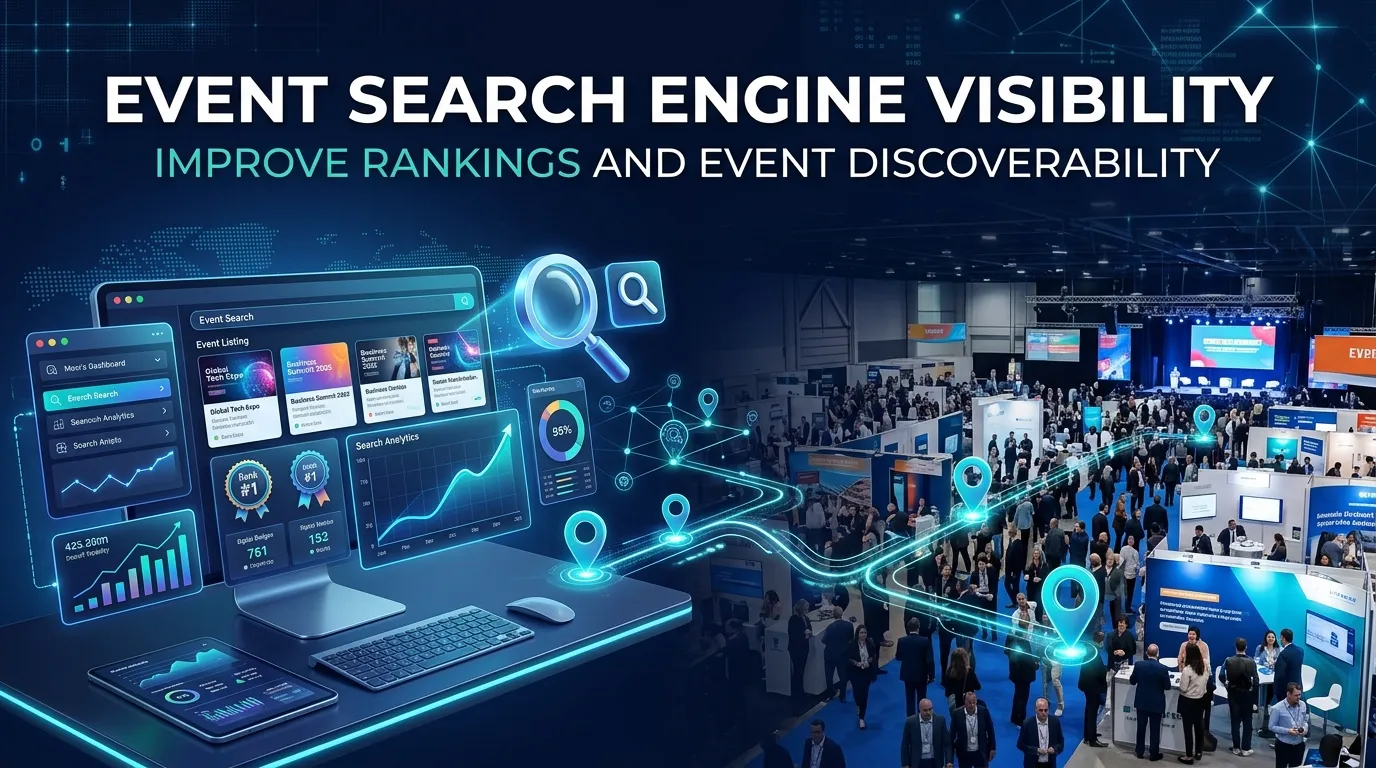
Event Search Engine Visibility helps event organizers improve online discoverability through keyword research, event page optimization, structured data, relevant content, and internal linking. By monitoring search performance and keeping event information accurate, organizers can attract relevant organic traffic, strengthen event awareness, and make it easier for potential attendees to find and register for suitable events.
Event Search Engine Visibility helps event organizers make their events easier to find when people search online for relevant activities, conferences, exhibitions, workshops, and networking opportunities. A strong search presence allows potential attendees to discover event pages, explore important details, and make informed registration decisions. By improving website content, researching relevant keywords, optimizing event pages, and using structured data, organizers can attract more qualified visitors through organic search.
As competition for online attention increases, event websites need more than attractive designs and informative descriptions. They also need content that matches what people are searching for and provides a clear, useful experience. Effective event search engine optimization connects event information with the needs of potential attendees, helping search engines understand the content and users find the right opportunities.
Understanding Event Search Engine Visibility
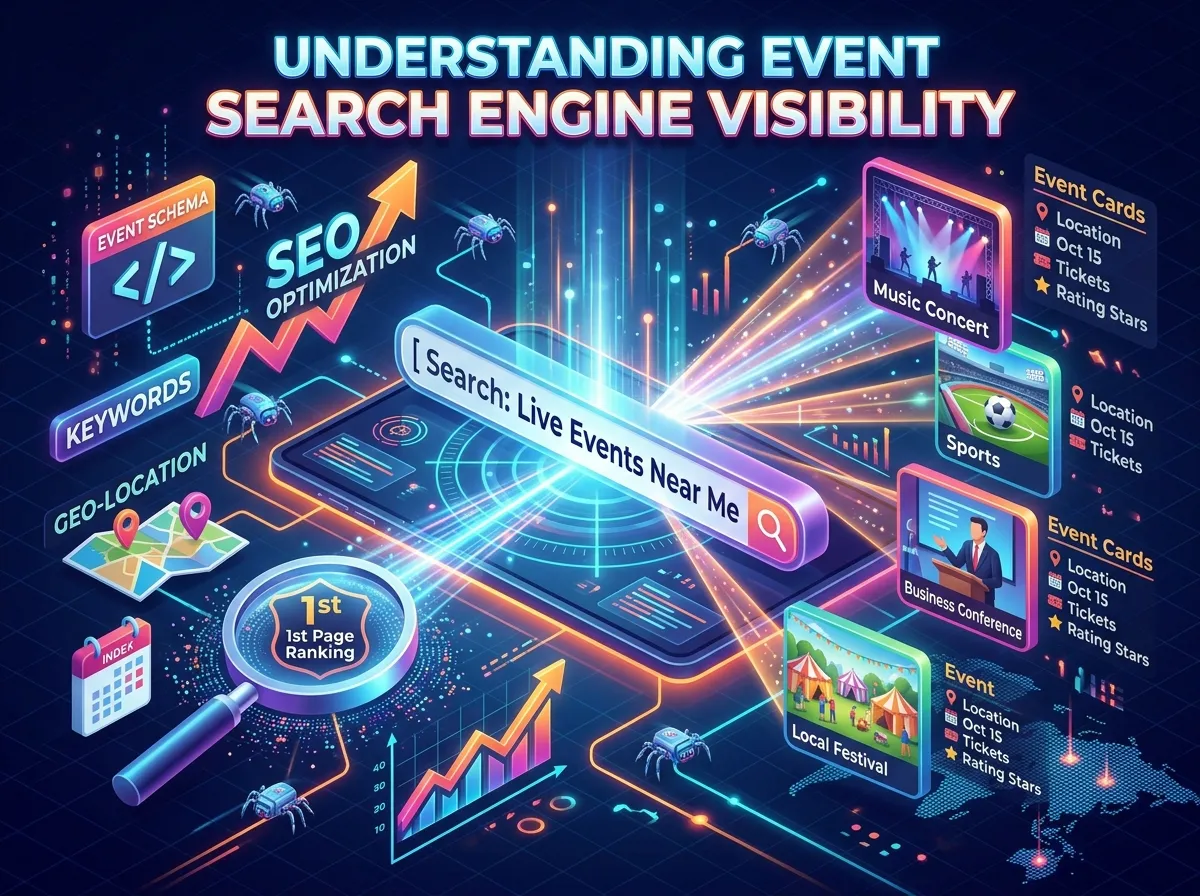
Event Search Engine Visibility refers to how easily people can discover an event through search engine results. It includes the visibility of event websites, dedicated registration pages, event announcements, and other relevant online content. When an event appears prominently for relevant search queries, it has a better opportunity to attract people who are actively looking for something to attend.
For example, someone searching for a digital marketing conference in Dubai may be interested in dates, speakers, ticket prices, venue information, and registration options. If an event page clearly answers these questions, it can offer a more relevant experience than a page containing only a promotional headline.
Improving visibility requires attention to both search engine requirements and audience expectations. Search engines need to understand the subject, location, timing, and purpose of an event. Visitors need accurate information that helps them decide whether the event matches their interests. Bringing these elements together creates a stronger foundation for organic discovery.
The Role of Event Search Engine Optimization
Event Search Engine Optimization focuses on improving event-related pages so they can appear for relevant searches and attract the right audience. It combines content relevance, technical accessibility, page quality, internal linking, and a positive user experience.
Unlike general website content, event pages often contain time-sensitive information. Dates, venues, registration deadlines, speaker announcements, and ticket availability can change quickly. Keeping these details accurate helps visitors make decisions and gives search engines a clearer understanding of the page.
Effective optimization begins with a clear purpose for each event page. A conference page might target people searching for industry conferences, while a local workshop page might focus on a specific topic and location. Giving each page a distinct purpose helps avoid competing pages that target nearly identical searches.
Organizers should also ensure that important information is available in readable text rather than being presented exclusively inside images, videos, or inaccessible interactive elements. Clear headings, descriptive page titles, useful event details, and concise explanations make content easier to understand.
Event Keyword Research and Search Intent
Event Keyword Research helps organizers understand the phrases people use when looking for events. These searches may include an event topic, location, date, audience, format, or a particular speaker. Identifying the language potential attendees use allows event websites to create content that responds to real search needs.
For instance, an organizer promoting a business conference might consider searches related to business networking events, marketing conferences, professional development workshops, or industry exhibitions. The most suitable terms depend on the event’s subject, audience, location, and available registration opportunities.
Search intent is equally important. Someone searching for upcoming marketing conferences may want a list of available events, while someone searching for a particular conference may already know which event they want to attend. The first search may be better served by an event discovery page, whereas the second may require a dedicated event page with dates, speakers, tickets, and venue information.
Keywords should appear naturally in page titles, headings, descriptions, image alt text where appropriate, and the main content. Repeating the same phrase excessively can make a page difficult to read and does not guarantee better rankings. A natural combination of related terms helps communicate the event’s relevance without compromising readability.
Improving Event Website Ranking Through Useful Content
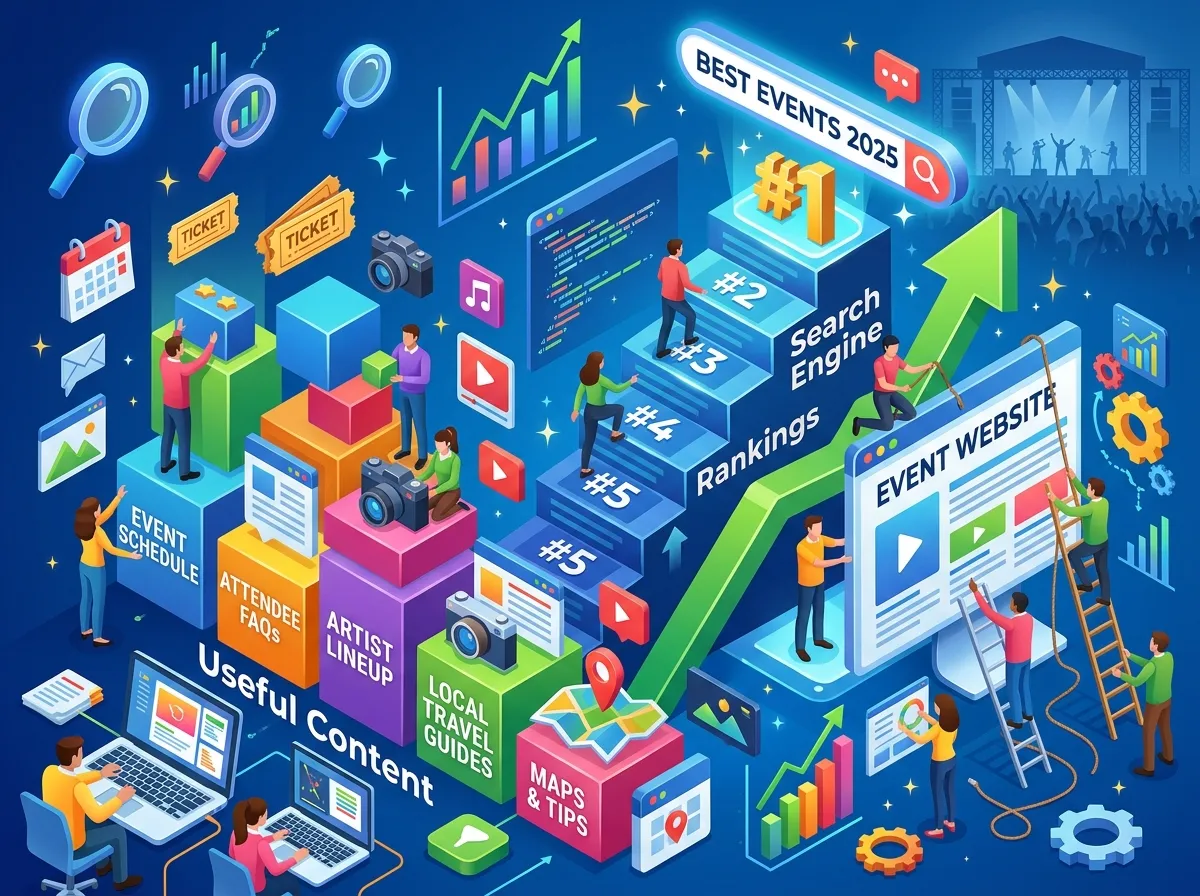
Event Website Ranking can benefit from pages that provide complete, original, and relevant information. Search engines aim to deliver useful results, so an event website should answer the questions that potential attendees are likely to ask before registering.
An effective event page usually explains what the event covers, who should attend, what participants can expect, when and where it takes place, and how registration works. Details about speakers, sessions, accessibility, transportation, ticket options, and frequently asked questions can provide additional value when relevant.
The quality of event descriptions also matters. General statements about an event being exciting or valuable may not explain why someone should attend. Specific information about the sessions, learning opportunities, networking activities, demonstrations, or participating organizations gives visitors a clearer reason to explore the event.
Original content can distinguish an event page from competing listings that repeat the same short description. Organizers can include a meaningful overview, confirmed speaker biographies, session summaries, and relevant updates. These details create a more informative destination for both search engines and potential attendees.
Event pages should also be easy to navigate on mobile devices. Many visitors research events on their phones, sometimes while comparing several options. Readable text, fast-loading pages, accessible registration forms, and clearly displayed dates help reduce friction during the decision-making process.
Event Page Optimization for Better Discoverability
Event Page Optimization brings together the on-page elements that help search engines interpret an event and help visitors find essential information. A descriptive title should communicate the event’s identity or subject without becoming unnecessarily long. The main heading should reinforce that purpose, while supporting headings organize information into understandable sections.
Meta descriptions should summarize the event accurately and give searchers a reason to visit the page. Although meta descriptions are not a direct ranking factor, a useful description may improve how appealing a result looks in search results. Search engines can also generate a different snippet depending on the query.
URLs should be concise, descriptive, and easy to understand. An event page addressing a specific conference or workshop should have a clear URL rather than a long string of unrelated words or unnecessary parameters. Consistent URL practices also help maintain an organized event website.
Images can make event pages more engaging, particularly when they show the venue, speakers, previous event experiences, or relevant activities. Descriptive file names and suitable alt text improve accessibility and help clarify an image’s purpose. Image files should also be optimized so they do not unnecessarily slow the page.
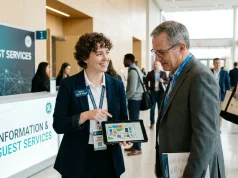
Internal linking connects event pages with related resources across a website. For example, an event page that highlights attendee support can naturally direct readers to information about Event Guest Services. This connection gives visitors more context about the experience they can expect while helping search engines understand the relationship between relevant pages.
Event Schema Markup and Search Results
Event Schema Markup is structured data that helps search engines interpret specific information about an event. Using the appropriate Event structured data can make details such as the event name, start date, location, organizer, and ticket information easier for search engines to identify.
When implemented correctly and when all applicable requirements are met, Event structured data can make an event eligible for enhanced search appearances, including supported event experiences. However, adding markup does not guarantee enhanced visibility, rich results, or higher rankings.
Accuracy is essential. The structured information should match the visible content on the page, and details should be updated when the event changes. Organizers should avoid marking up an event with misleading dates, unavailable tickets, or information that visitors cannot verify on the page.
The technical implementation also needs attention. Valid structured data should follow the relevant schema properties and search engine guidelines. Testing tools can help identify errors and warnings before and after publication. Event websites should also ensure that important event pages are accessible to search engine crawlers and are not unintentionally blocked from indexing.
For recurring events, organizers should represent individual event dates appropriately rather than combining unrelated sessions into one misleading entry. If an event is postponed, cancelled, or moved online, the page and its structured information should reflect the updated circumstances.
Event Search Visibility Strategies That Build Awareness
Strong Event Search Visibility Strategies extend beyond optimizing a single registration page. They create multiple relevant opportunities for people to discover an event while keeping the information consistent across the website and other promotional channels.
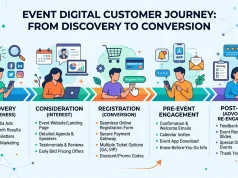
A dedicated event page should serve as the main source of accurate details. Related blog articles, speaker profiles, session descriptions, and industry resources can support discovery when they provide genuinely useful information. These pages should link naturally to the main event page where appropriate, helping interested readers move from research to registration.
Event promotion can also benefit from relevant partnerships and credible mentions. For example, collaborating with industry creators may introduce an event to audiences already interested in its subject. An organizer using Event Influencer Promotion can connect promotional messaging with relevant communities while directing interested users toward the official event information.
The same principle applies to experiences that are easier to communicate through demonstrations, participation, and real-world interaction. Content about Event Experiential Marketing can help organizers explain how attendees will engage with a brand, product, or activity. When these experiences are relevant to the event, detailed descriptions and authentic visual content can make the event page more useful.
Consistency across promotional materials is important. Event names, dates, venues, and registration details should not conflict between the official website and external listings. Inaccurate information can confuse potential attendees and weaken confidence in the event.
Growing Event Organic Traffic
Event Organic Traffic Growth depends on attracting visitors who are genuinely interested in the event rather than increasing visits without considering their relevance. A page may receive many impressions but few meaningful visits if its title or content does not match the audience’s expectations.
Search performance data can help organizers identify these gaps. Search impressions show how often pages appear in search results, while clicks indicate how many people visit from those results. Click-through rate helps reveal whether the result is attracting attention, and average position provides additional context about visibility for the queries being measured.
Website analytics can add information about what happens after visitors arrive. Organizers may examine engaged sessions, registration form visits, completed registrations, and the sources that contribute to attendance. These measures help distinguish between content that attracts general interest and content that supports event participation.
Seasonal timing also influences performance. Some attendees begin researching major conferences months before the event, while local workshops may attract searches closer to the date. Publishing useful information early gives search engines more time to discover and process the page, although indexing and ranking timelines are never guaranteed.
For events that happen regularly, previous event pages should be managed carefully. Organizers can preserve useful historical information where appropriate, update pages for future editions, or redirect outdated URLs when a suitable replacement exists. The best choice depends on whether the old page still serves a purpose and whether a genuinely equivalent destination is available.
Monitoring Event SERP Rankings and Search Performance
Event SERP Rankings describe how event-related pages appear on search engine results pages for particular queries. These rankings can vary according to the search term, location, device, competition, and other factors. As a result, organizers should evaluate broader performance patterns rather than relying on a single search from one device.
Google Search Console can help identify the queries that generate impressions and clicks, the pages receiving search traffic, and changes in search visibility. Reviewing this information regularly can reveal whether an event page is appearing for relevant terms or attracting unrelated searches.
If a page receives impressions but few clicks, its title and meta description may need improvement, or the result may not match the searcher’s intent. If a page receives clicks but few registrations, the issue could involve event relevance, ticket pricing, unclear information, registration friction, or the difference between the search promise and the page experience.
Content updates should address real shortcomings rather than introduce changes without a clear reason. Adding missing venue details, clarifying session information, improving mobile usability, or correcting outdated dates can make an event page more useful. Meaningful improvements are more valuable than repeatedly changing titles simply to make the page appear updated.
Strengthening Event Search Discoverability Over Time
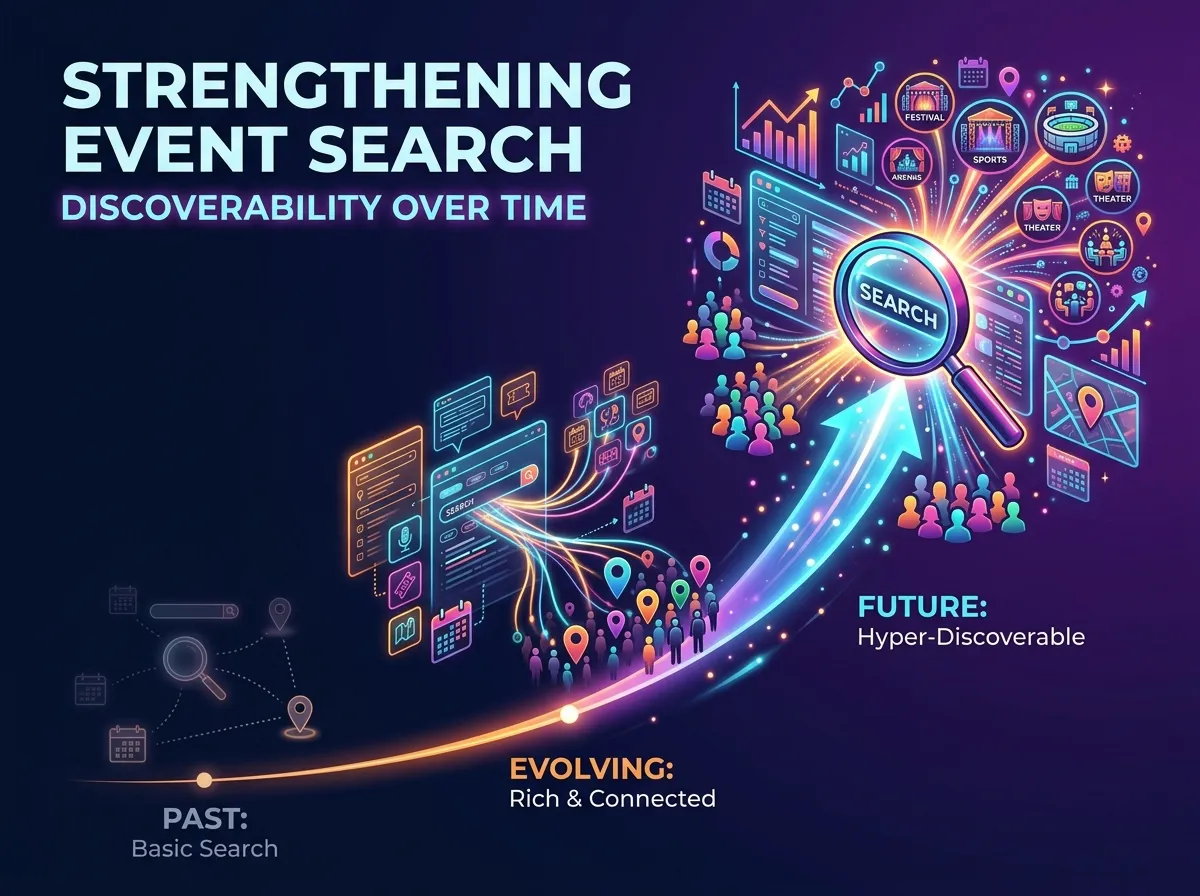
Event Search Discoverability improves when organizers maintain a consistent relationship between audience needs, useful content, and technically accessible pages. Each event should have a clear identity, accurate information, and a well-defined destination where interested visitors can learn more.
Human-centered event experiences can reinforce this effort. Clear communication, helpful staff, accessible facilities, and reliable attendee support help fulfill the expectations created by event pages. Organizers can explore Event Staff Training to understand how a prepared team contributes to a professional and consistent attendee experience.
Search visibility and event quality are connected through the promises an organizer makes online. When promotional content accurately represents the sessions, services, and experience available, visitors are more likely to find the information useful. When the actual experience matches those expectations, the event can build trust and encourage positive recommendations.
Long-term results come from maintaining accurate pages, reviewing search performance, improving relevant content, and adapting to changing audience interests. No single keyword, technical feature, or promotional channel can guarantee strong rankings. A balanced approach gives search engines clearer information and gives potential attendees a more dependable way to discover suitable events.
Conclusion
Event Search Engine Visibility helps organizers connect their events with people who are actively searching for relevant experiences. Effective keyword research, useful event descriptions, optimized page elements, accurate structured data, and thoughtful internal linking can strengthen the foundation for organic discovery.
By monitoring search performance and maintaining accurate information throughout the event lifecycle, organizers can improve the quality of their search presence and attract more relevant visitors. The ultimate goal is not simply to appear higher in search results, but to help the right people discover an event, understand its value, and confidently decide whether to attend.
Frequently Asked Questions
1. What is Event Search Engine Visibility?
Event Search Engine Visibility refers to how easily people can discover event-related pages through search engines. It depends on factors such as content relevance, technical accessibility, page quality, keyword targeting, and the accuracy of event information.
2. Why is search engine optimization important for event websites?
Search engine optimization helps event websites reach people who are actively searching for conferences, workshops, exhibitions, and other activities. It can increase organic discovery, attract relevant visitors, and support registration without relying entirely on paid advertising.
3. How does Event Keyword Research improve event visibility?
Event Keyword Research identifies the phrases potential attendees use when looking for events. Targeting relevant searches helps organizers create useful page titles, descriptions, and content that better match audience interests and search intent.
4. What should an optimized event page include?
An optimized event page should provide a clear event title, date, location or format, audience details, agenda, speaker information where available, ticket information, and registration instructions. It should also load efficiently, work on mobile devices, and answer common attendee questions.
5. What is Event Schema Markup?
Event Schema Markup is structured data that helps search engines interpret event details, including the event name, dates, location, and organizer. Correct implementation can make a page eligible for supported enhanced search appearances, but it does not guarantee them.
6. How can event organizers increase organic traffic?
Organizers can increase relevant organic traffic by publishing useful event information, targeting appropriate keywords, improving page performance, linking related content, and keeping event details current. Search performance should be monitored to identify opportunities for improvement.
7. How do internal links help event SEO?
Internal links connect related pages within a website. They help visitors discover useful information, provide context about the relationship between pages, and help search engines find and understand relevant content across the site.
8. How can organizers measure Event SERP Rankings?
Organizers can monitor search queries, impressions, clicks, click-through rates, and average positions using Google Search Console. Website analytics can then help determine whether organic visitors explore event details and complete registration.
9. How often should event pages be updated?
Event pages should be updated whenever important information changes, including dates, venues, speakers, schedules, ticket availability, and registration deadlines. Regular reviews are also useful for correcting outdated details and improving content that no longer meets attendee needs.
10. Can Event Search Engine Visibility guarantee more registrations?
No. Better search visibility can help an event reach more relevant people, but registrations also depend on the event’s appeal, pricing, timing, audience fit, reputation, and registration experience. SEO supports event promotion but cannot guarantee attendance or ranking positions.