Event Schema Optimization improves how search engines interpret event information through structured data, accurate metadata, and validated JSON-LD markup. Combined with useful landing pages, effective indexing, and consistent event details, it supports better event discovery and a clearer experience for potential attendees.
Event websites need to communicate accurate information to both visitors and search engines. Whether an organization promotes a business conference, a live performance, a product launch, or an online workshop, potential attendees should be able to find essential details quickly. Event Schema Optimization helps make this possible by organizing event information into a structured format that search engines can interpret more effectively.
A well-optimized event page combines accurate structured data with relevant content, clear metadata, and a user-friendly experience. This combination helps search engines understand what an event offers while giving visitors the information they need to decide whether to attend. Although structured data cannot guarantee better rankings or enhanced search appearances, it can support a stronger technical foundation for event discovery.
As event competition grows across search engines and digital platforms, businesses need to ensure their event information remains accessible, consistent, and relevant. By improving schema implementation and maintaining reliable event details, organizers can make their websites more useful to potential attendees and support broader event marketing objectives.
Understanding the Role of Event Schema in Search
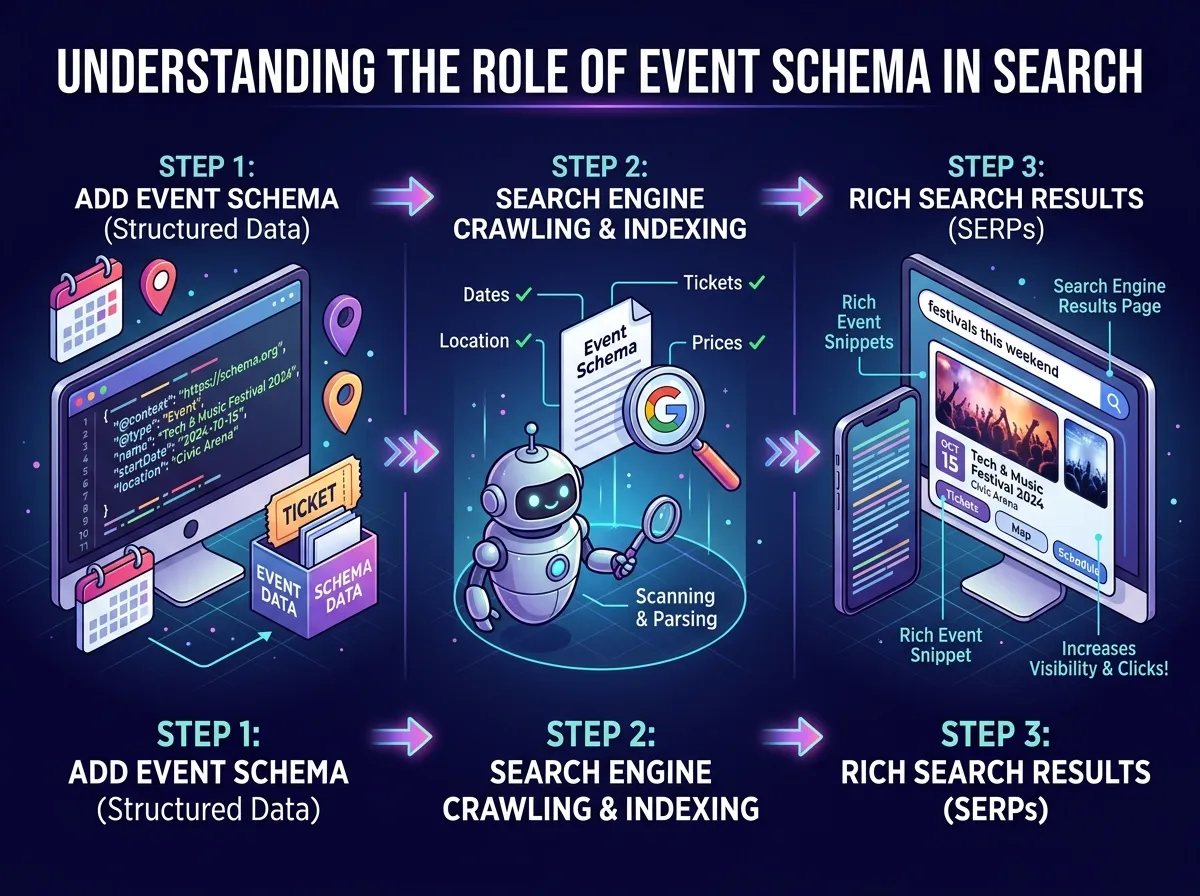
Event schema is a form of structured data that describes an event through standardized properties. It provides search engines with specific information about an event rather than relying entirely on the interpretation of ordinary page text.
For example, a page promoting a business networking conference may include its name, date, venue, organizer, description, and registration details. Visitors can read these details naturally, while structured data identifies what each piece of information represents. This makes the page’s event-related information easier for compatible search systems to interpret.
Event Schema Optimization involves reviewing and improving this information so that it accurately reflects the content of the page. The process includes selecting relevant properties, implementing suitable markup, validating the code, and keeping the information current as event details change.
The value of schema extends beyond the technical side of a website. It helps establish a consistent connection between an event’s identity, schedule, and location. When these details are clearly represented, search engines have better information to work with when evaluating the page for supported search features.
However, schema should not be treated as a replacement for valuable content. A page still needs a clear description, relevant information, accessible navigation, and a useful registration experience. Structured data works best when it reinforces the information already available to visitors.
Building a Strong Foundation for Event Structured Data Markup
Effective Event Structured Data Markup starts with accurate event information. Before implementing code, organizers should determine which details define the event and ensure that those details are available on the relevant landing page.
The event name should be recognizable and consistent across promotional materials. Dates and times should reflect the actual schedule, while the description should explain the event’s purpose and the audience it serves. Venue information should be specific enough to help attendees understand where the event takes place.
Organizers should also consider whether the event is physical, online, or hybrid. These formats involve different attendance arrangements, so the structured data should accurately represent the experience. For example, an online workshop should not be described as an in-person event simply because its organizer operates from a physical office.
Ticket information requires similar attention. If a page includes offers, prices, or availability, those details should correspond to the actual registration options. Outdated prices or unavailable offers can create confusion and weaken trust.
A dedicated landing page for each major event can make this process easier. It allows organizers to present unique information and associate the structured data with a specific event. For websites with recurring events, reusable templates can improve consistency, provided that the data is customized for every event rather than copied unchanged.
These foundations help create structured data that is meaningful, accurate, and easier to maintain.
Making Event Schema Implementation More Reliable
Event Schema Implementation requires a clear understanding of how event pages are generated and maintained. Websites may use content management systems, event plugins, ticketing integrations, or custom templates to publish information. Each method can produce structured data, but the implementation should be reviewed to ensure it reflects the actual page content.
JSON-LD is a widely used format for structured data because it separates machine-readable information from the page’s visual layout. Developers can include structured data without substantially changing how the page looks to visitors.
Implementation becomes more challenging when a website contains multiple sessions, recurring events, or several ticket categories. In these situations, developers need to ensure that the schema represents the correct event and that its properties are used appropriately.
Duplicate markup is another issue worth reviewing. If a plugin and a custom template both generate event schema, they may output conflicting values. Testing the rendered page can reveal such problems and help maintain one consistent representation of the event.
For websites managing many events, a consistent publishing process can reduce mistakes. Event details should be reviewed before publication, markup should be tested after implementation, and significant changes should trigger an update to the structured data. This helps keep event information accurate as schedules and registration details evolve.
Improving Event Rich Results Optimization
Event Rich Results Optimization focuses on helping eligible pages meet the requirements for enhanced search appearances supported by search engines. These presentations can make certain event details more prominent, helping searchers understand an event before opening its website.
For someone looking for a professional conference, relevant details such as the event name, schedule, and location can influence whether the result matches their needs. Clear information can reduce uncertainty and encourage interested searchers to visit the landing page.
The first priority is to satisfy the relevant technical and content requirements. Structured data must be valid, accurate, and associated with the correct page. The visible page should also provide the information represented in the markup, rather than using schema to describe details that visitors cannot verify.
Event Rich Results Optimization should also consider the quality of the landing page. A useful page explains the event’s purpose, intended audience, important sessions, and registration process. These details give potential attendees a reason to engage once they arrive.
Search appearance is not fully controlled by website owners. Even if a page passes a structured data test, the search engine may choose not to show an enhanced result. Eligibility, relevance, content quality, and search engine decisions can all influence the outcome.
For this reason, organizers should view rich-result eligibility as one component of their wider search strategy. The objective is to improve how event information is communicated, while continuing to provide a valuable experience for people who visit the site.
Using Schema.org Event Properties Correctly
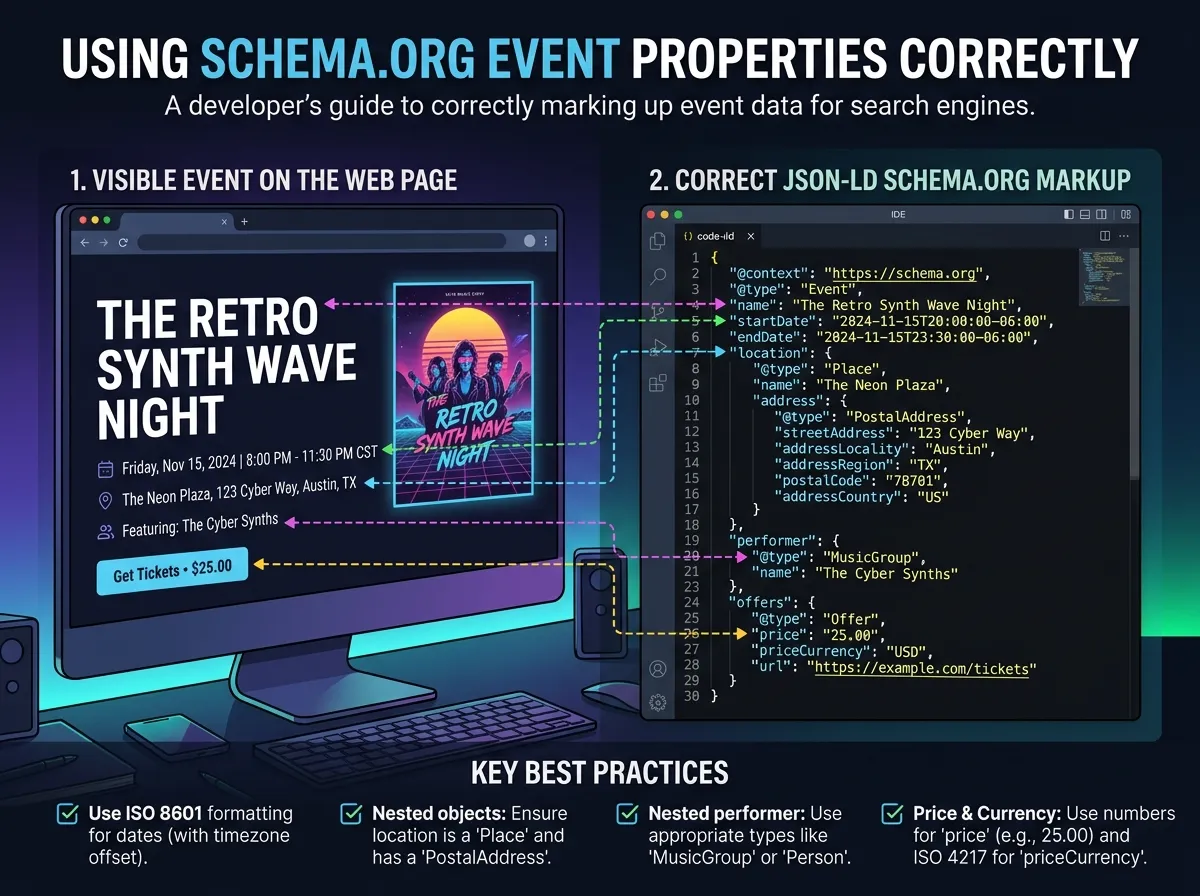
Schema.org offers a vocabulary for describing events and their characteristics. Selecting the appropriate properties helps ensure that structured data communicates useful information without becoming unnecessarily complicated.
The name property identifies the event, while description explains its purpose. The startDate and endDate properties communicate the schedule, and location identifies the venue or applicable event location. The organizer property identifies the organization or person responsible for the event.
Additional properties may be appropriate depending on the event. The image property can identify relevant imagery, while eventStatus communicates whether an event is scheduled, postponed, rescheduled, or canceled. The eventAttendanceMode property can describe whether attendance is online, offline, or mixed.
Using Schema.org Event Properties correctly means choosing values that reflect the real situation. An organizer should not mark a postponed event as scheduled if its status has changed. Similarly, the attendance mode should correspond to how people can actually participate.
It is also important to distinguish between the broader Schema.org vocabulary and the specific requirements of a search engine. A property may be valid within Schema.org without being required or supported for a particular rich-result feature. Checking current documentation prevents developers from assuming that every valid property will produce a visible search enhancement.
A focused implementation is generally easier to understand and maintain than markup filled with unnecessary or inaccurate information.
Strengthening Event Search Visibility Through Page Quality
Event Search Visibility depends on more than structured data. Search engines must be able to discover the page, understand its subject, and determine whether it is relevant to the searcher’s needs.
Clear page titles and descriptions help communicate the event’s purpose. Headings should organize important information logically, while the main content should answer common questions about the event. Depending on the event, this may include its agenda, speakers, audience, venue, accessibility, registration process, and attendance requirements.
Event pages should also offer distinctive information. Reusing the same generic description across many events provides little context for visitors and makes it harder to understand what makes each event different. Original descriptions and relevant details improve the usefulness of each page.
Internal linking can connect event pages with related articles, category pages, venue information, and other relevant resources. For example, organizers can strengthen their broader search efforts by exploring Event Search Engine Visibility, which discusses how search optimization can help people discover events online.
Links should be placed where they genuinely help the reader. A relevant article about event promotion might link to an upcoming conference, while a venue page might link to events taking place at that location. These connections improve navigation and help establish relationships between related content.
Together, strong content, meaningful internal links, accurate metadata, and structured data create a more complete foundation for event discovery.
Event Metadata Optimization and Search Relevance
Event Metadata Optimization helps communicate the purpose of an event page through its title, meta description, headings, and supporting content. Although metadata does not replace structured data, both contribute to a clearer representation of the page.
A title should identify the event and include a relevant detail when appropriate, such as its location or subject. For example, “Digital Business Summit in Dhaka | Event Name” communicates more context than a vague title such as “Upcoming Event.” The final title should remain natural and avoid unnecessary keyword repetition.
A useful meta description briefly explains the event and its main value. It might mention the intended audience, the topics covered, or a confirmed registration opportunity. The description should encourage relevant visitors to explore the page rather than make unsupported claims.
The visible page and its metadata should remain consistent with the structured data. If the title refers to a conference in one city but the page and schema identify a different location, the mismatch creates avoidable confusion.
Event metadata should also be reviewed when important information changes. A revised date, new venue, or updated event format may require changes to the page title, description, and related content where appropriate.
When metadata accurately summarizes a useful event page, it supports a clearer connection between search queries and the information presented to visitors.
Validating Structured Data and Maintaining Accuracy
Structured Data Validation helps identify errors that may affect how event markup is interpreted. These errors can include invalid syntax, missing properties, incorrect date formats, duplicate markup, or differences between the structured data and visible page content.
Google’s Rich Results Test can help determine whether a page is eligible for supported rich results. Schema.org’s validator can also help assess whether the markup follows the vocabulary’s structure. Since the tools serve different purposes, using both can provide a broader review.
Testing should take place after implementation and again whenever major changes are made. Developers should check the published page because plugins, templates, and integrations can alter the markup that ultimately reaches search engines.
Regular maintenance is particularly important for event websites. Dates may change, ticket offers may expire, venues may be updated, and events may be canceled. When these changes occur, the visible page and the structured data should be revised promptly.
Search Console can help monitor indexing and supported search enhancements where applicable. It is useful for identifying technical issues, but a clean report does not guarantee that a page will appear in a particular search feature.
A consistent validation process reduces the risk of publishing outdated information and makes structured data easier to manage across a large event calendar.
Supporting Event Search Engine Indexing
Event Search Engine Indexing concerns whether search engines can discover, crawl, and include event pages in their indexes. Structured data can explain what a page represents, but it cannot guarantee that the page will be indexed.
Organizers should make sure important event pages are accessible through relevant website links. An XML sitemap can help search engines discover event URLs, particularly when new pages are published frequently. However, sitemap inclusion alone does not guarantee indexing.
Technical accessibility matters as well. Pages should not be unintentionally blocked from crawling or excluded from indexing when they are intended to appear in search results. Broken links, unnecessary redirects, and duplicate pages can also complicate discovery.
The content of an event page should provide sufficient value to visitors. Pages with original descriptions, useful logistical details, and clear registration information are more helpful than nearly identical pages that differ only in the event date.
After an event ends, organizers should determine whether the page should remain available as an archive, point visitors toward a future edition, or be removed when appropriate. If a page remains online, its content should clearly explain that the event has concluded and provide relevant follow-up information when available.
Managing the event lifecycle helps keep the website useful while reducing confusion caused by outdated schedules and registration details.
Connecting Event Schema With Audience Engagement
Technical search improvements are most valuable when they help the right people discover an event and understand why it matters. Event Schema Optimization should therefore complement the broader attendee experience, from the first search impression to registration and follow-up communication.
An event landing page can introduce the central theme, explain the benefits of attending, highlight relevant speakers, and provide clear registration options. Structured data describes important event attributes, while the page content explains the value of the experience.
For events built around brand experiences, organizers can also explore Event Brand Activation, which discusses creating memorable experiences that encourage audience engagement.
Building lasting connections also matters beyond the initial registration. Relevant communication before an event, helpful information during attendance, and meaningful follow-up can strengthen the relationship between organizers and participants. The Event Relationship Marketing resource offers additional context on developing stronger attendee relationships.
These activities should align with realistic event objectives and operational planning. Organizers can refer to Event Planning Strategy for related insights into coordinating event activities around clear goals.
By connecting structured data with relevant content and thoughtful communication, businesses can make event discovery part of a more consistent marketing experience.
Measuring Event Schema Optimization Performance

Evaluating Event Schema Optimization requires both technical checks and performance analysis. Passing a validation test confirms that certain technical requirements have been met, but it does not show whether the page is attracting relevant visitors or generating registrations.
Google Search Console can provide information about impressions, clicks, indexing, and supported enhancement reports where available. Reviewing these signals over time helps organizers understand how their event pages perform in organic search.
Impressions indicate how often a page appears in search results, while clicks show how often users visit it from those results. Click-through rate can offer further insight, although changes should be interpreted alongside query relevance, search position, seasonality, and the type of event.
Website analytics can provide additional context about visitor behavior. Organizers may examine whether visitors view the agenda, select registration links, or complete a sign-up process, provided appropriate tracking is configured.
Results should be evaluated in relation to the event’s objectives. A small local workshop may have different traffic patterns from a major conference, and registration demand may change significantly as the event date approaches.
Regular reviews can reveal opportunities to improve page content, correct technical issues, and update outdated information. The purpose is to understand how technical improvements contribute to a better discovery and registration experience rather than assuming that schema alone determines performance.
Conclusion
Event Schema Optimization provides a structured way to communicate important event details to search engines. Accurate markup, suitable Schema.org properties, useful metadata, and regular validation help create a consistent technical foundation for event pages.
However, successful event discovery also depends on crawlable pages, original content, relevant internal links, and reliable information. Organizers should maintain their structured data whenever event details change and evaluate performance using search and registration signals.
When these elements work together, event websites can present clearer information, support eligible enhanced search appearances, and make it easier for potential attendees to discover relevant experiences.
10 Frequently Asked Questions
1. What is Event Schema Optimization?
Event Schema Optimization is the process of improving structured data on event pages so search engines can interpret details such as names, dates, venues, organizers, and attendance formats. It helps make event information machine-readable and may support eligibility for enhanced search results.
2. Why is structured data important for event websites?
Structured data identifies important event attributes in a standardized format. This can help search engines understand what an event page represents and evaluate it for supported search features. It also encourages greater consistency between event information and the details published on the website.
3. What is the best format for event structured data?
JSON-LD is a widely used format for event structured data because it allows developers to provide machine-readable information separately from the visible page layout. The implementation must still follow the appropriate Schema.org definitions and the current requirements of the intended search feature.
4. Which properties should event schema include?
Common properties include name, description, startDate, endDate, location, organizer, image, eventStatus, and eventAttendanceMode. The appropriate properties depend on the event and the relevant search requirements. All included values should accurately describe the actual event.
5. Does Event Schema Optimization improve rankings automatically?
No. Structured data does not guarantee higher rankings, increased traffic, or rich results. It helps search engines interpret page information, while rankings and search presentation depend on other factors, including relevance, content quality, technical accessibility, and search engine decisions.
6. How can I test event schema?
You can use Google’s Rich Results Test to check eligibility for supported rich results and Schema.org’s validator to review the structured data vocabulary. Testing the live page is important because plugins and website templates may generate errors or conflicting markup.
7. How does event schema support search engine indexing?
Event schema helps explain the meaning of a page’s information, but it does not guarantee indexing. Search engines must still discover and crawl the page. Internal links, accessible URLs, appropriate sitemap management, and useful content can support the discovery and indexing process.
8. How should organizers handle postponed or canceled events?
Organizers should update the visible page and structured data to reflect the event’s current status. They should also revise dates, venue details, and registration information when necessary. Completed events may remain available as archives if their status is clear and the pages continue to provide value.
9. How does event metadata optimization work with schema?
Metadata helps summarize an event through page titles, descriptions, and headings, while structured data provides machine-readable details. Keeping these elements consistent helps visitors and search engines understand the event more clearly and reduces the risk of conflicting information.
10. How can I measure the success of event schema optimization?
Monitor indexing, impressions, clicks, and supported enhancement reports in Google Search Console. Website analytics and registration tracking can show whether visitors from organic search take meaningful actions. Reviewing these indicators together provides a more complete picture of event discovery and performance.