Event email marketing helps businesses promote events, increase registrations, and engage attendees before and after an event. A strong event email marketing strategy uses timely invitations, reminders, confirmations, and follow-ups to improve attendance and results.
Event email marketing is one of the most effective ways to communicate with potential and registered attendees. Whether a business is organizing a webinar, conference, workshop, networking event, product launch, seminar, or virtual event, email can help generate awareness and encourage people to register.
Unlike many other promotional channels, email allows businesses to communicate directly with an existing audience. Subscribers can receive information about the event, understand why it is valuable, register through a dedicated page, and receive useful reminders leading up to the event.
However, successful event email marketing involves more than sending one invitation. People may ignore the first message, forget to register, or register and then forget the event date. A complete email strategy should therefore support the entire attendee journey, from initial awareness to post-event follow-up.
What Is Event Email Marketing?
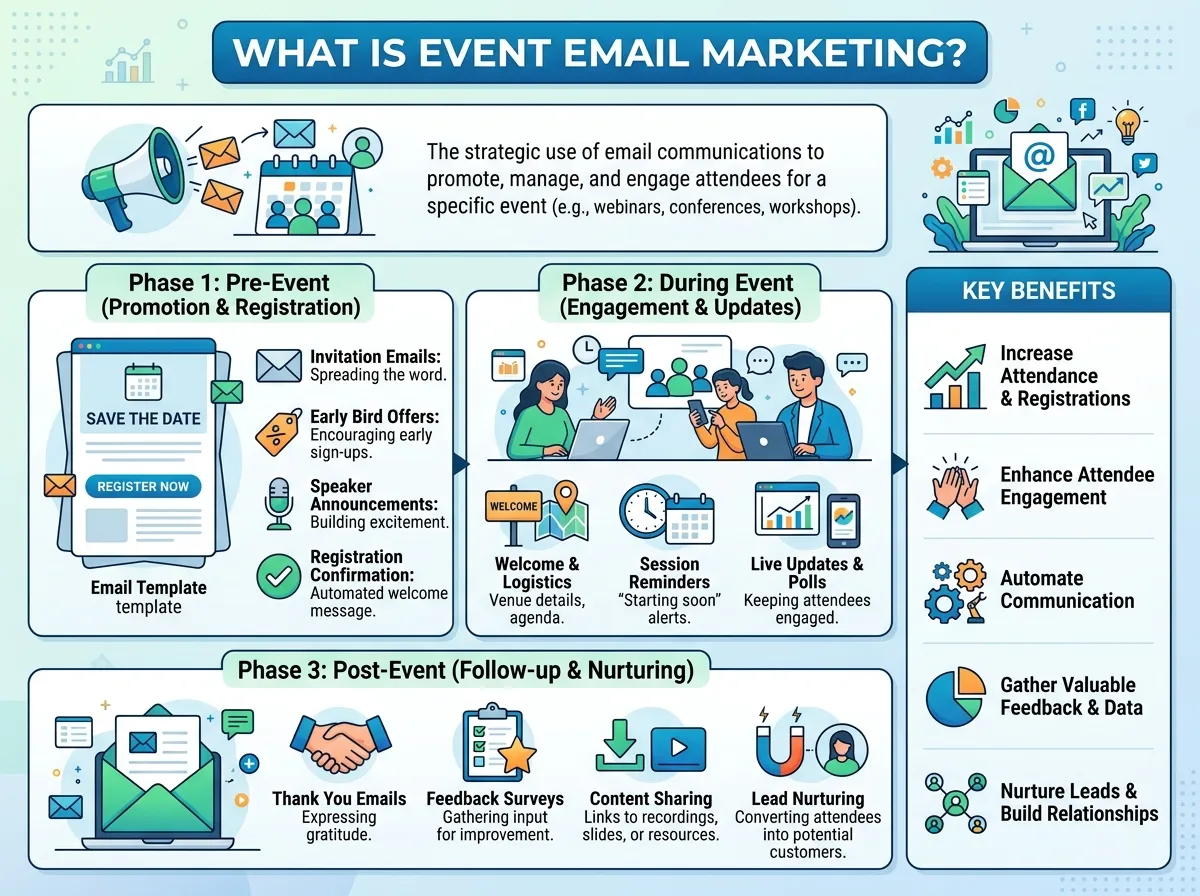
Event email marketing is the use of email communication to promote and manage an event before, during, and after it takes place. It can be used to attract new attendees, encourage registrations, provide event information, and maintain relationships with participants.
An event email campaign may include several different types of messages. A promotional email can introduce the event, an invitation can encourage a specific audience to attend, and registration emails can provide confirmation and important details.
As the event approaches, reminder emails can help reduce missed attendance. After the event, follow-up emails can provide recordings, resources, surveys, offers, or information about future events.
This makes email useful throughout the complete event marketing process.
Why Event Email Marketing Matters
Events often require people to take action in advance. They need to register, reserve time on their calendars, or decide that attending is worth their attention.
Email can communicate the event’s value directly and provide a convenient path to registration.
It can also help businesses maintain communication with people who have already expressed interest. Someone who does not register after the first invitation may respond to a later message that highlights a different benefit.
For registered attendees, email helps create confidence by providing clear information about schedules, speakers, access instructions, locations, and other important details. Consistent messaging across these touchpoints can also support event branding techniques and create a more recognizable attendee experience.
After the event, communication can continue rather than ending when the event is over. This creates opportunities for lead nurturing and future engagement.
Creating an Event Email Marketing Strategy
An event email marketing strategy should begin with the event’s goals. A business may want to increase registrations, generate leads, promote a product, strengthen relationships, or encourage existing customers to attend.
Once the objective is clear, the business can identify its audience and determine what information will motivate that audience to register.
The messaging should focus on the value of attending rather than simply providing event details. Potential attendees should quickly understand what they can learn, experience, or gain from participating.
The timing of communication is also important. Sending every email at once can overwhelm subscribers, while sending too few messages may result in low awareness or missed attendance.
A well-planned strategy creates a logical sequence that gradually moves people from awareness to registration and participation. For online events, businesses can also apply virtual event marketing best practices to improve registration, attendance, and engagement.
Event Promotion Emails
Event promotion emails introduce the event and explain why people should attend. The message should communicate the most important information clearly without making the reader search through a long block of text.
The subject line should create interest while accurately representing the content. The email itself can introduce the event, highlight important speakers or topics, explain key benefits, and provide a clear registration link.
Different promotional emails can emphasize different aspects of the event. One message might focus on educational value, while another could highlight speakers, networking opportunities, new research, or practical takeaways.
This allows businesses to communicate with the same audience without repeating exactly the same message every time.
Event Email Campaigns
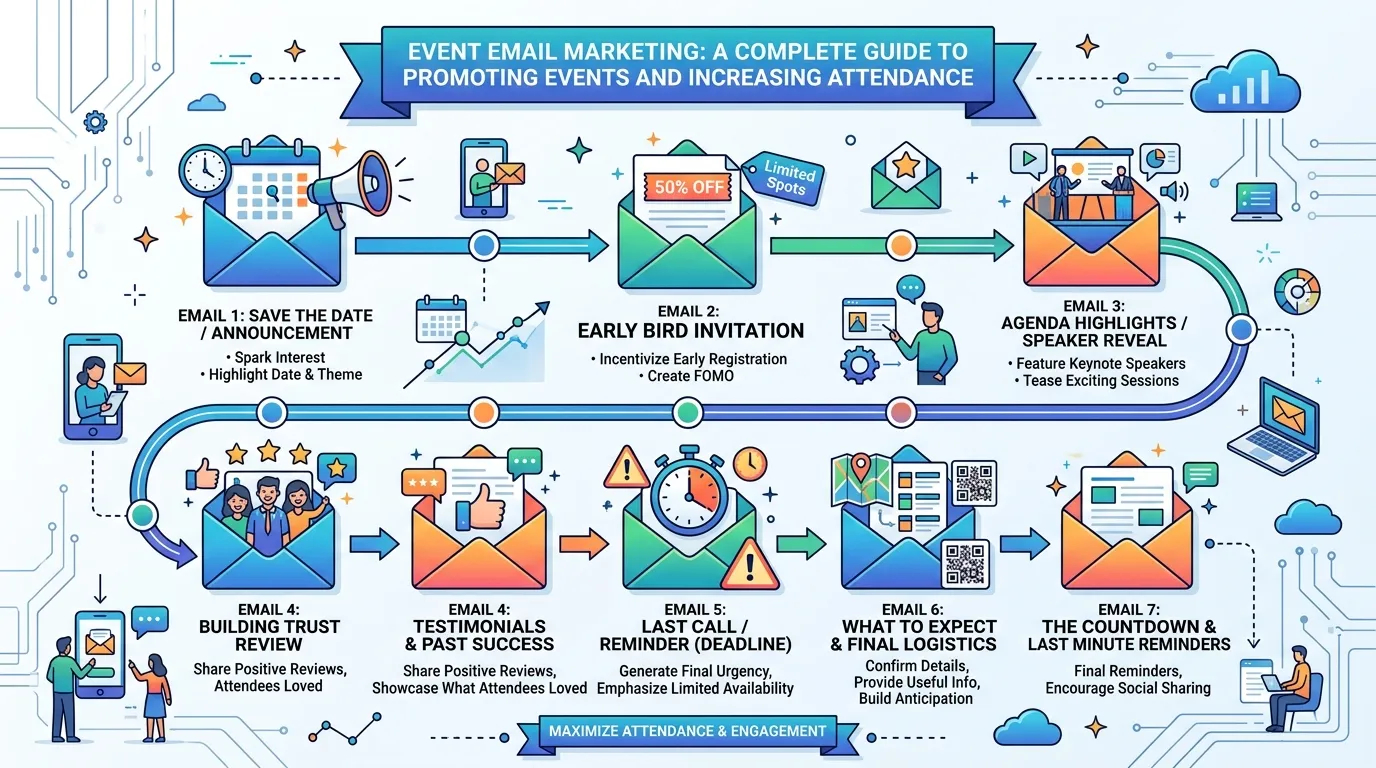
An event email campaign usually consists of several messages sent over a planned period. The campaign should be designed around the attendee journey rather than treating every email as an independent advertisement.
The first email may announce the event and open registration. Later communication can provide additional reasons to attend, introduce speakers, answer common questions, and create a sense of urgency as the event date approaches.
People who have already registered should generally receive different communication from people who have not. Sending registration invitations to people who have already signed up can create unnecessary confusion.
Audience segmentation can therefore make the campaign more relevant.
Event Invitation Emails
An event invitation email is designed to encourage a recipient to attend a specific event. It should make the invitation feel relevant to the recipient rather than looking like a generic mass promotion.
The email should explain what the event is, who it is for, when it takes place, and why attending could be valuable.
For professional events, the invitation can emphasize educational insights, expert speakers, industry discussions, or networking opportunities. For customer-focused events, the message might focus on product information, exclusive access, demonstrations, or special experiences.
A strong call to action should make registration simple. The recipient should be able to understand what to do next without navigating through unnecessary steps.
Event Registration Emails
Event registration emails are important because they confirm that the attendee’s action has been completed successfully. A confirmation email should provide the essential information the participant needs to remember the event.
This may include the event name, date, time, location or access information, and instructions for joining.
For online events, the email can include a clear access link and explain whether attendees need to download software or complete any setup before the event.
Registration communication can also be used to build anticipation. Businesses may introduce speakers, share preparation materials, or explain what attendees can expect.
The goal is to make the attendee feel informed and confident about participating.
Email Marketing for Events
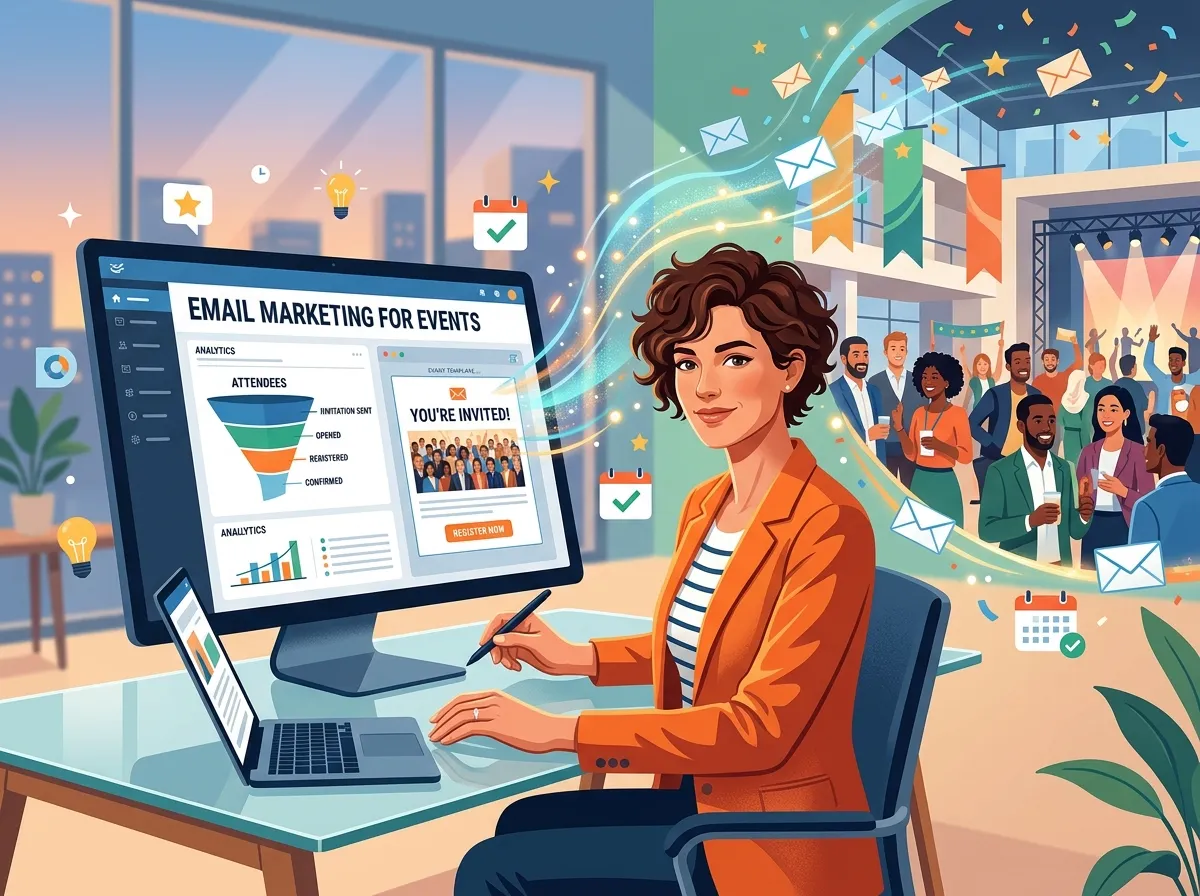
Email marketing for events should be useful rather than purely promotional. Subscribers are more likely to engage when emails provide information that helps them decide whether the event is relevant.
Businesses can share speaker introductions, session details, event agendas, customer stories, research findings, or practical information related to the event topic.
This content can build credibility and demonstrate the value of attending.
Email can also be segmented based on subscriber behavior. People who have opened previous event emails may receive more detailed information, while people who have not engaged may receive a shorter message with a stronger value proposition.
A successful email strategy can work alongside broader event marketing campaign ideas for businesses to attract more attendees, generate leads, and support overall event goals.
Event Reminder Emails
Event reminder emails help prevent registered attendees from forgetting about the event. Even people who are genuinely interested may miss an event because of scheduling conflicts or busy routines.
A reminder can be sent several days before the event and another closer to the start time. The exact schedule should depend on the type and length of the event.
Reminder messages should make participation easy by clearly displaying the date, time, location, and access information.
For virtual events, it is particularly useful to make the joining instructions highly visible. For physical events, attendees may need information about the venue, parking, check-in, or transportation.
The reminder should reduce uncertainty rather than simply repeat the original invitation. Including reminders as part of a broader email campaign management process can also help businesses organize communication, schedule messages, and ensure attendees receive relevant information at the right time.
Event Email Automation
Event email automation can make event communication more efficient. Automated workflows allow businesses to send specific messages based on registration status, timing, or attendee behavior.
For example, once someone registers, an automated confirmation can be sent immediately. A few days before the event, another email can provide preparation information. A final reminder can then be sent shortly before the event begins.
Automation can also help manage different audiences. People who register can automatically leave the promotional sequence and enter the attendee communication sequence.
After the event, attendees and non-attendees can receive different follow-up messages based on their participation.
This reduces manual work and creates a more consistent communication experience.
Improving Event Email Open and Click Rates
The success of an event email campaign depends partly on whether recipients open and engage with the messages.
Subject lines should be clear and relevant rather than relying on exaggerated claims. The content should quickly communicate the reason the email matters.
The call to action should also be easy to find. If the purpose is registration, the reader should not have to search for the registration link.
Mobile optimization is important as well. Many people read email on smartphones, so messages should be easy to scan and interact with on smaller screens.
Testing different subject lines, messaging approaches, calls to action, and sending times can help businesses understand what works best for their audience.
Segmenting an Event Email List
Segmentation can improve the relevance of event communication. Instead of sending identical emails to everyone, businesses can organize contacts based on their relationship with the event.
Potential attendees, registered attendees, previous event participants, customers, prospects, and people who have already attended can have different communication needs.
Geographic segmentation may also be useful for physical events. People located near the venue may receive different information from people traveling from another region.
Behavior-based segmentation can be even more useful. A person who repeatedly opens event emails may be highly interested, while someone who has never opened them may need a different message.
Relevant segmentation can improve engagement while reducing unnecessary emails.
Event Follow-Up Emails
Event follow-up emails are essential for extending the value of an event after it ends. The follow-up should not simply thank attendees and end the conversation.
Businesses can provide presentation slides, recordings, guides, additional resources, or answers to questions discussed during the event.
A follow-up email can also ask attendees for feedback. Surveys can reveal what participants liked, what could be improved, and which topics they would like to explore in the future.
For lead-generation events, follow-up communication can move interested attendees toward the next stage of the buying journey. Depending on the business, that might involve a consultation, demonstration, trial, or sales conversation.
Using Event Emails for Lead Nurturing
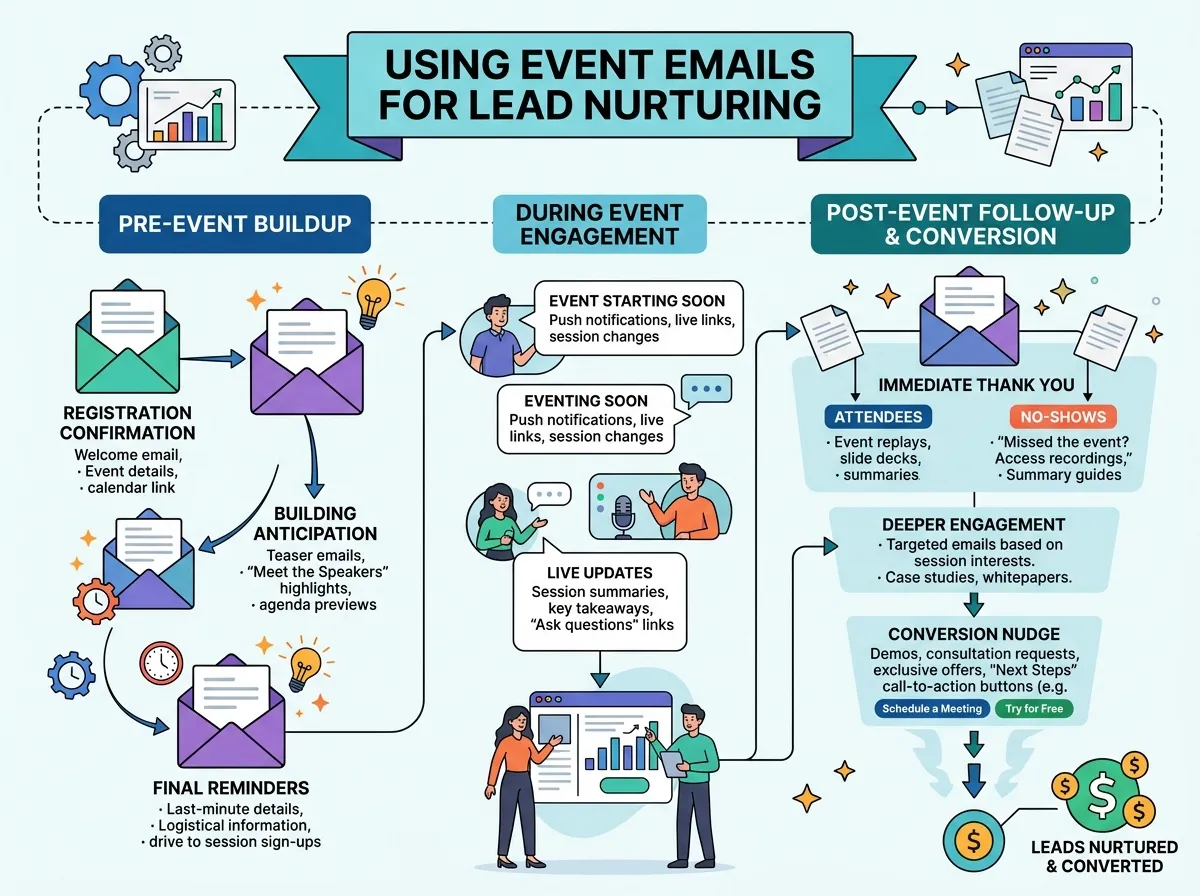
Events can generate valuable leads, but not every attendee will be ready to purchase immediately. Email provides a way to continue the relationship after the event.
A participant may initially attend a webinar to learn about a topic without having a specific purchasing intention. Follow-up content can gradually provide more information about the company’s solutions.
Case studies, educational articles, product information, and customer success stories can help maintain engagement.
The most effective nurturing sequences remain relevant to the attendee’s interests rather than immediately pushing a sales message.
Personalizing Event Email Campaigns
Personalization can make event communication more relevant. Basic personalization may include using the recipient’s name, but effective personalization can go further.
Businesses can tailor messages according to a subscriber’s industry, previous event attendance, interests, registration status, or interaction with previous emails.
For example, a returning attendee might receive a message highlighting advanced sessions, while a first-time participant may receive information explaining how the event works.
Personalized communication can make the event experience feel more organized and customer-focused.
Event Email Marketing Best Practices
Following event email marketing best practices can improve both registration and attendee experience. Businesses should keep their messaging clear, communicate the value of the event, and make registration simple.
Emails should be visually easy to read and optimized for mobile devices. Important details such as dates, times, locations, and registration links should be easy to find.
Businesses should also avoid sending excessive promotional emails. Every message should provide a reason for the recipient to open it.
Testing and measurement are equally important. Reviewing open rates, click-through rates, registrations, attendance, and post-event engagement can help identify opportunities for improvement.
Most importantly, event communication should be consistent. The information in emails should match the registration page, event website, calendar invitations, and other promotional materials.
Measuring Event Email Marketing Performance
Measuring campaign performance helps businesses understand whether their email strategy is producing results.
Registration is one of the most important metrics for promotional campaigns, but it should not be the only one. Businesses can also monitor email opens, clicks, landing-page visits, registration conversion rates, attendance rates, and post-event engagement.
For lead-generation events, businesses can track how many attendees become qualified leads and eventually customers.
These insights can help marketers identify which messages and audience segments produce the strongest results.
Over time, historical campaign data can also help businesses improve future event planning and make more informed decisions about email timing and content.
Common Event Email Marketing Mistakes
One common mistake is sending only a single invitation. People may miss the email or need more information before deciding to register.
Another problem is providing too much information without a clear call to action. Event emails should contain enough information to encourage a decision without overwhelming the reader.
Sending the same message to registered and unregistered contacts can also reduce relevance.
Some businesses focus heavily on registration but neglect the attendee experience after someone signs up. Confirmation, reminders, access information, and follow-up communication are all important parts of the process.
Finally, failing to measure campaign results makes it difficult to understand which activities are working and where improvements are needed.
Final Thoughts
Event email marketing provides businesses with a reliable way to promote events, increase registrations, communicate with attendees, and maintain relationships after an event ends.
A successful event email marketing strategy should cover the entire customer journey. Promotional messages create awareness, invitation emails encourage registration, confirmation emails provide reassurance, reminder emails support attendance, and follow-up emails keep the relationship active.
Event email automation can make this process easier by sending timely messages based on registration and attendee behavior. Segmentation and personalization can further improve relevance and engagement.
The most effective campaigns focus on providing value rather than simply sending more emails. By understanding the audience, communicating clear benefits, making registration easy, and measuring performance, businesses can use email to create stronger event experiences and achieve better marketing results.
Frequently Asked Questions
1. What is event email marketing?
Event email marketing is the use of email to promote an event, encourage registrations, communicate with attendees, send reminders, and maintain engagement after the event.
2. How many emails should an event campaign include?
There is no fixed number. A campaign may include an initial announcement, promotional messages, registration confirmation, reminders, and post-event follow-ups. The frequency should depend on the event and audience.
3. What should an event invitation email include?
An event invitation should explain what the event is, who it is for, when and where it takes place, why it is valuable, and how the recipient can register.
4. What are event reminder emails?
Event reminder emails are messages sent to registered attendees before an event to remind them about the date, time, location, access information, and other important details.
5. How does event email automation work?
Event email automation sends messages automatically based on triggers such as registration, time before the event, attendance, or recipient behavior. This can reduce manual work and improve communication consistency.
6. Why are event follow-up emails important?
Event follow-up emails help maintain engagement after the event. They can provide recordings, resources, surveys, additional information, or relevant offers and can support future lead nurturing.
7. How can businesses increase event email registrations?
Businesses can improve registrations by communicating a clear event benefit, using relevant subject lines, creating compelling content, simplifying the registration process, and sending timely promotional messages.
8. Should registered attendees receive promotional emails?
Registered attendees generally need a different communication sequence. Instead of continuing to receive registration invitations, they can receive confirmation messages, preparation information, reminders, and attendee-focused content.
9. What metrics should be used to measure event email marketing?
Important metrics can include open rates, click-through rates, landing-page visits, registrations, registration conversion rates, attendance rates, leads generated, and post-event engagement.
10. What is the best way to use email after an event?
Businesses can use post-event emails to thank attendees, share recordings and resources, collect feedback, provide additional educational content, and guide interested prospects toward the next step in the customer journey.