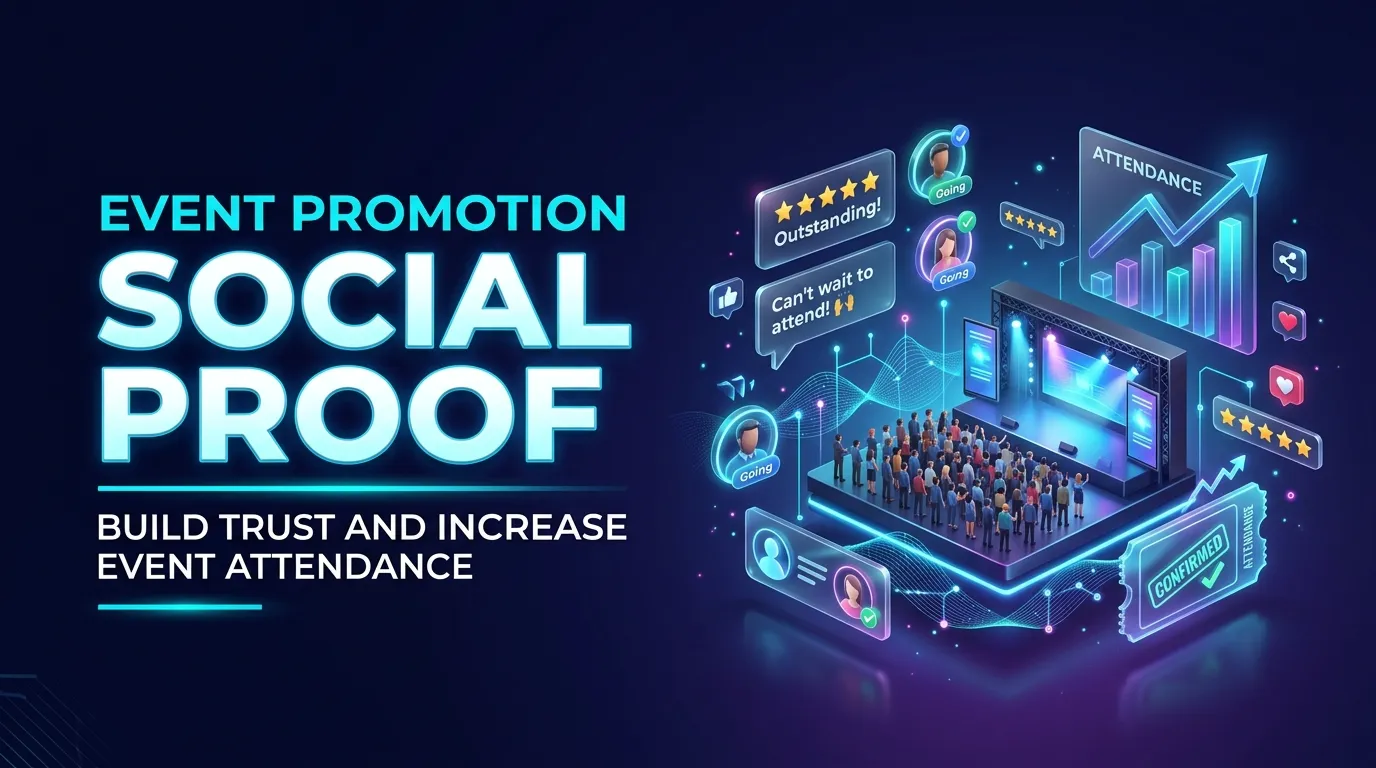
Event promotion social proof builds attendee confidence through testimonials, reviews, user-generated content, success stories, and credible endorsements. By presenting authentic evidence alongside clear registration information, organizers can reduce uncertainty and encourage informed decisions. Combining social proof with effective event planning, reputation management, and consistent measurement helps create trust that lasts beyond a single event.
People rarely decide to attend an event based on promotional claims alone. Before registering, they often want to know whether the event is worth their time, whether previous attendees enjoyed it, and whether the organizers can deliver the experience being promised. Event promotion social proof helps answer these questions by showing real experiences, credible recommendations, and evidence of an event’s value.
Social proof can take many forms, including attendee testimonials, public reviews, photographs, speaker endorsements, participant-generated content, and stories about successful past events. When these signals are genuine and relevant, they help potential attendees feel more confident about registering. They also give event organizers a practical way to communicate credibility without relying entirely on self-promotion.
For conferences, business networking sessions, exhibitions, workshops, festivals, and virtual gatherings, trust can directly influence registration decisions. A well-known speaker may attract attention, but a detailed testimonial from a previous participant can explain what made the experience worthwhile. Similarly, authentic attendee photographs may help prospective guests understand the atmosphere better than a generic promotional graphic.
Effective social proof is not simply about collecting positive comments. It involves identifying the evidence that matters to an audience, presenting it honestly, and connecting it to the questions people ask before committing to an event.
Why Social Proof Influences Event Registration
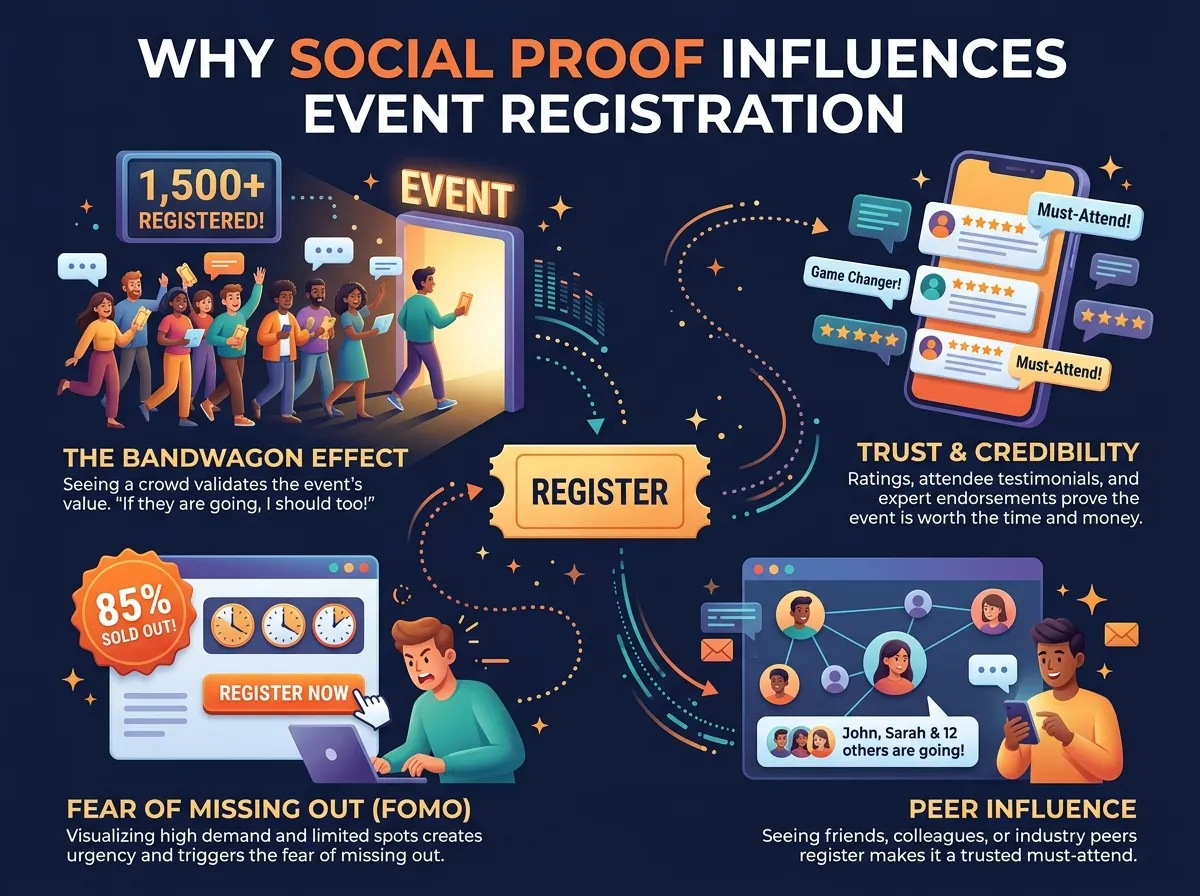
Registering for an event involves a degree of uncertainty. Potential attendees may wonder whether the speakers will deliver useful insights, whether networking opportunities will be meaningful, or whether the event will match its advertised description. For paid events, the decision also involves financial risk. Even free events require people to invest time and effort.
Event social proof marketing reduces some of this uncertainty by showing what other people have experienced or why they trust the organizers. When a previous attendee describes how a conference helped them develop professional connections, the statement provides context that a general claim about networking opportunities may not offer.
Social proof can be particularly valuable for new events that have not yet established a recognizable reputation. Organizers may not have years of attendance figures or extensive review histories, but they can demonstrate credibility through qualified speakers, genuine partner endorsements, relevant case studies, and transparent information about the event’s purpose.
The quality of the evidence matters more than the volume. A specific testimonial from someone who matches the target audience may be more persuasive than dozens of vague comments. Likewise, a verified review that explains the strengths and limitations of an event can appear more credible than promotional language that promises an exceptional experience without supporting details.
Social proof should therefore complement the event’s actual value proposition. It cannot reliably compensate for unclear programming, misleading promises, or a poor attendee experience. The strongest promotional results occur when the event delivers on the expectations its marketing creates.
Attendee Testimonials That Tell a Meaningful Story
Event attendee testimonials provide firsthand accounts of what participants learned, experienced, or achieved. They can help prospective attendees understand the practical value of attending, especially when the testimonial explains a specific benefit rather than simply stating that the event was enjoyable.
A useful testimonial might describe how a workshop helped a participant solve a professional challenge, how a conference introduced them to valuable industry contacts, or how an exhibition gave their company access to relevant suppliers. These details help potential attendees imagine how the event could meet their own needs.
Organizers should collect feedback at appropriate moments. Immediately after an event, participants may be able to comment on the sessions, venue, speakers, registration process, or overall organization. A later follow-up may reveal longer-term benefits, such as applying something learned during a workshop or establishing a business relationship with another attendee.
The collection process should be straightforward and voluntary. Participants can be invited to answer a few focused questions rather than being asked to write a long promotional statement. With permission, organizers can edit testimonials for clarity without changing their meaning.
Placement also influences usefulness. A testimonial about professional learning fits naturally beside the event’s educational program, while a comment about networking may be more relevant near information about attendee interaction. Matching each statement to the concern it addresses makes social proof more informative.
Using Event Reviews and Ratings Responsibly
Event reviews and ratings help audiences evaluate the experiences of people who have already attended. They can appear on event platforms, business review websites, social media pages, or feedback pages managed by organizers.
Reviews often provide a broader picture than short testimonials because they may cover several aspects of the experience. Participants might discuss session quality, accessibility, scheduling, venue facilities, communication, or the value received for the ticket price. This information helps future attendees make a more informed decision.
Organizers should make it easy for participants to provide honest feedback after an event. A short follow-up message with a clear review link can reduce friction, while a neutral request encourages people to share their actual experience rather than prompting only positive comments.
Negative feedback should not automatically be treated as a promotional problem. A reasonable criticism may identify an area that needs improvement, and a thoughtful response can demonstrate accountability. When organizers explain how they addressed a recurring issue, they show that attendee feedback influences future decisions.
Reviews must also be represented accurately. Businesses should not invent ratings, hide material context, or present a selected comment as though it reflects every participant’s opinion. Any incentives for reviews should be disclosed where required, and organizers should follow the rules of the platform where the review appears.
Trust grows when people can see that feedback is taken seriously. Honest reviews can strengthen an event’s reputation more sustainably than an artificial appearance of universal approval.
Building Trust Signals Across Event Promotional Channels
Event audience trust signals are the visible details that help potential attendees judge whether an event is credible. Social proof is one category of trust signal, but it works best alongside clear information about the organizers, speakers, venue, schedule, ticket terms, and attendee experience.
A promotional page might feature testimonials from previous participants, speaker biographies, recognizable partner organizations, event photographs, and links to independent reviews. Each element should support a specific question that a prospective attendee might have.
For a business conference, the audience may care about speaker expertise, session topics, and networking opportunities. For a public festival, visitors may want to see photographs, accessibility information, family facilities, and practical details about arrival. For a virtual event, participants may look for information about the platform, session access, technical requirements, and opportunities to interact.
Trust signals should be consistent across channels. If a social media advertisement describes an event as an advanced professional conference, the event website should provide a program that supports that positioning. If a testimonial mentions a particular speaker or benefit, the relevant information should be easy to verify.
Organizers can strengthen discoverability by making event details clear and easy to access. A well-structured event search engine visibility strategy can help potential attendees find accurate information through search engines while supporting a consistent experience from discovery to registration.
The goal is to remove avoidable uncertainty. When prospective attendees can quickly verify the event’s purpose, credibility, and practical details, they have a stronger basis for deciding whether to register.
User-Generated Event Content as Authentic Evidence
User-generated event content includes photographs, videos, social media posts, attendee reflections, and other material created by participants rather than solely by organizers. This content can help potential attendees understand the event from the perspective of people who experienced it.
A short video showing a busy networking session may communicate the atmosphere of a conference more effectively than a formal description. A participant’s post about a useful workshop can reveal the practical value of the session, while photographs from an exhibition may demonstrate the range of displays and interactions.
Organizers can encourage this content by creating experiences worth sharing. Clearly marked photo opportunities, event hashtags, interactive activities, and memorable session moments can make it easier for attendees to share their participation voluntarily. Prompts should feel natural rather than make guests feel obligated to promote the event.
Permission is essential when content is reused in promotional campaigns. A public post does not automatically grant unrestricted rights to reproduce the image, video, or written material in advertisements. Organizers should obtain the appropriate permission, respect platform terms, and consider privacy concerns when identifiable attendees appear in content.
User-generated material should also remain authentic. Editing a participant’s words to imply a stronger endorsement than they gave can undermine trust if discovered. Where content is sponsored or created in exchange for benefits, that relationship should be disclosed as appropriate.
Integrating genuine participant content into event-based content marketing can extend the usefulness of event experiences beyond the event date. Recaps, attendee stories, session highlights, and practical lessons can help future audiences understand the event’s value while providing existing participants with shareable memories.
Turning Event Success Stories Into Credible Promotion

Event success stories demonstrate what an event helped participants, sponsors, exhibitors, or organizers accomplish. They can be especially persuasive for professional events where attendees want evidence of practical outcomes rather than entertainment alone.
A success story may describe a business relationship formed during a networking session, a new skill developed through a workshop, or an exhibitor who connected with a relevant audience. The strongest examples explain the situation, the event experience, and the outcome without exaggerating what the event caused.
Organizers should distinguish between correlation and direct impact. If a participant gained a new customer after attending a conference, the story can explain that the connection began at the event if that is accurate. It should not automatically claim that the event alone generated the entire business result when other factors were involved.
Specific details make success stories more useful. Instead of saying that an event created valuable opportunities, a case study might explain how a participant met a collaborator during a structured networking session and later worked with them on a project. Such examples help readers understand the kinds of opportunities the event may support.
Permission should be obtained before publishing identifiable stories, company names, photographs, or business results. Participants should have an opportunity to verify quotations and factual details, particularly when the story includes confidential or commercially sensitive information.
Success stories are most credible when they reflect genuine outcomes and acknowledge the context in which those outcomes occurred. They should demonstrate possibilities rather than guarantee that every attendee will achieve the same result.
Social Proof That Reduces Registration Hesitation
Many registration decisions are delayed because potential attendees have unanswered questions. They may be uncertain about ticket value, event relevance, the experience level of other participants, or whether the sessions justify the time commitment. Event registration trust factors help address these concerns before they become reasons to leave the registration page.
Social proof should be positioned close to the information it supports. A testimonial about the usefulness of expert presentations can appear near the session program. A comment about meeting industry peers can accompany details about networking activities. A verified review of the registration experience may be useful near the ticket-selection section.
This approach gives social proof a practical role. Instead of filling the page with unrelated praise, organizers use relevant evidence to answer the questions most likely to affect the decision.
Registration pages should also explain ticket prices, refund or cancellation terms, accessibility arrangements, and any important restrictions. Testimonials cannot replace this information. A positive review may reassure a visitor about the event’s quality, but transparent policies help them understand the commitment they are making.
Organizers should avoid false urgency or misleading scarcity claims. Statements suggesting that tickets are almost sold out should be based on actual availability, and attendee numbers should be accurate. Pressure tactics may produce short-term registrations, but they can damage confidence if people discover that the claims were exaggerated.
The most effective registration experience combines social proof with practical clarity. People should be able to evaluate the event, understand the terms, and make a decision without being manipulated.
Influencer Endorsements for Events
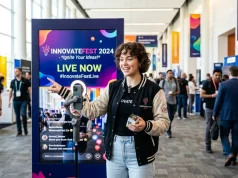
Influencer endorsements can introduce an event to audiences who trust a particular creator, industry expert, or community leader. An endorsement may take the form of a speaker announcement, an event preview, a personal invitation, a behind-the-scenes video, or a discussion about why the event is relevant to a specific audience.
The value of an endorsement depends on audience fit and credibility. A creator with a smaller but highly relevant professional following may attract more suitable attendees than a widely known personality whose audience has little interest in the event’s subject.
Organizers should give endorsers accurate information and room to communicate in their own voice. A personal explanation of why a creator is interested in the event may feel more convincing than a script filled with generic promotional claims. At the same time, endorsers should not promise benefits, experiences, or outcomes that the event cannot guarantee.
Sponsored endorsements and other material relationships should be disclosed in accordance with applicable advertising rules and platform policies. Organizers should also agree on the permitted use of endorsement content, including whether it can appear on the event website, in paid advertising, or in future promotional materials.
Influencer endorsements work best when they support a broader credibility strategy. They can increase awareness and provide a trusted introduction, while attendee reviews, clear event information, and genuine success stories help prospective participants evaluate the offer more fully.
Managing Event Reputation Before and After the Event
Event reputation management involves monitoring how an event is discussed, responding to concerns, and using feedback to improve the experience. Social proof and reputation are closely connected because prospective attendees often encounter reviews, public comments, photographs, and discussions before visiting the official registration page.
Before the event, organizers should provide accurate information and respond promptly to questions about schedules, accessibility, speakers, ticket policies, and venue arrangements. Clear answers can prevent misunderstandings from spreading and help potential attendees feel informed.
During the event, staff should be prepared to address issues that could affect attendee confidence. Problems involving entry, session changes, technical difficulties, or facilities should be communicated honestly. When a correction or update is necessary, timely information is usually more helpful than silence.
After the event, organizers can review feedback across surveys, public reviews, social media, and direct communications. Recurring comments may reveal strengths worth highlighting in future promotions or weaknesses that need operational changes. Responding professionally to criticism demonstrates that the event team is willing to learn.
Event reputation management should not be confused with removing every negative comment. Honest feedback can help improve future events, and attempts to suppress legitimate criticism may undermine trust. Responses should be respectful, fact-based, and proportionate to the concern.
A consistent reputation-management process also supports future social proof. As organizers improve their events and communicate transparently, they create better conditions for participants to share positive experiences voluntarily.
Connecting Social Proof With Event Planning and Delivery
Promotional credibility depends partly on what happens after someone registers. If marketing promises expert sessions, smooth entry, valuable networking, or reliable technology, the event’s operations must support those expectations.
Social proof should therefore inform event planning rather than remain a separate marketing activity. Attendee feedback from previous events can reveal which sessions participants valued, where queues formed, which communications were confusing, and what would make the experience more useful.
These findings can be incorporated into event management planning so that future programs reflect real attendee needs. For example, repeated requests for more networking time may influence the schedule, while comments about unclear venue directions may lead to improved pre-event communication.
Technology also plays an important role in how experiences are delivered. Virtual and hybrid events depend on stable access, intuitive navigation, accessible content, and suitable interaction tools. Organizers can review virtual event technology when evaluating the platforms and features needed to support a smooth online experience.
When feedback informs actual improvements, social proof becomes part of a continuous cycle: attendee experiences generate insights, insights improve event delivery, and better experiences give future participants more meaningful reasons to recommend the event.
Measuring the Impact of Event Social Proof
Event promotion social proof should be evaluated through outcomes rather than the number of testimonials or social posts collected. The right measures depend on the event’s objectives, audience, promotional channels, and registration process.
Organizers may monitor registration-page conversion rates, referral traffic, review volume, engagement with attendee stories, and registrations associated with endorsement campaigns. They can also compare how different types of social proof perform when presented to similar audiences.
For example, a professional conference might test whether an attendee case study or a speaker endorsement leads to more completed registrations. A public festival might compare authentic participant photographs with standard event imagery. These experiments can reveal which evidence is most useful for a particular audience.
However, measurement requires care. If one campaign reaches a different audience or runs during a different registration period, the results may not be directly comparable. Organizers should consider these differences before concluding that one type of social proof caused a change in registration behavior.
Qualitative feedback is valuable too. Questions from prospective attendees can reveal which concerns remain unresolved, while post-event surveys can show whether the expectations created by promotional content matched the real experience.
The aim is to understand whether social proof helps people make informed decisions and whether those decisions lead to an event experience that meets expectations. A campaign that attracts registrations through exaggerated claims may look successful initially but can harm trust over time.
Creating Lasting Trust Through Genuine Experiences

Event promotion social proof is most effective when it reflects the real value of the event. Attendee testimonials explain personal experiences, reviews provide broader feedback, user-generated content shows the atmosphere, and success stories illustrate possible outcomes. Influencer endorsements can introduce the event to relevant communities, while clear trust signals help people verify the details.
These elements should work together rather than compete for attention. Organizers need to choose evidence that answers audience questions, obtain the necessary permissions, and present claims accurately. They should also make sure that promotional messages align with the experience the event is designed to deliver.
Social proof is not a substitute for strong planning or reliable execution. It is a way to communicate genuine quality through the experiences and perspectives of people who know the event. When organizers listen to feedback, improve delivery, and share authentic evidence, they can build stronger credibility, encourage more confident registrations, and support a positive reputation for future events.
Frequently Asked Questions
1. What is event promotion social proof?
Event promotion social proof is the use of genuine attendee experiences, reviews, endorsements, photographs, and success stories to demonstrate an event’s credibility and value. It helps prospective attendees understand what others experienced and decide whether the event matches their interests and expectations.
2. Why is social proof important for event marketing?
Social proof reduces uncertainty by providing evidence beyond the organizer’s own promotional claims. It can help potential attendees evaluate event quality, understand the benefits of attending, and feel more confident about registration. Its effectiveness depends on authenticity, relevance, and consistency with the actual event experience.
3. What are the best types of social proof for promoting an event?
Common forms include attendee testimonials, verified reviews, participant-generated photos and videos, case studies, speaker endorsements, sponsor recommendations, and evidence of previous event participation. The best format depends on the audience’s concerns and the type of event being promoted.
4. How can organizers collect attendee testimonials?
Organizers can send a voluntary feedback request after the event and ask focused questions about sessions, speakers, networking, organization, or practical outcomes. They should obtain permission before publishing testimonials and preserve the participant’s intended meaning when editing responses for clarity.
5. How do event reviews and ratings build trust?
Reviews and ratings provide feedback from people who have experienced the event. They help potential attendees evaluate different aspects of the experience, including content quality, organization, facilities, and value. Honest responses to criticism can further demonstrate that organizers take participant feedback seriously.
6. How can user-generated content support event promotion?
User-generated content gives prospective attendees a participant’s perspective through photographs, videos, social posts, and personal reflections. It can show the event atmosphere and illustrate real experiences. Organizers should obtain appropriate permission before reusing content and disclose relevant sponsorships or incentives.
7. Can influencer endorsements increase event registrations?
Influencer endorsements can increase awareness and encourage consideration when the creator’s audience is relevant to the event. Their impact depends on credibility, audience fit, the usefulness of the message, and the quality of the event offer. Endorsements should be truthful and disclose paid relationships when required.
8. Where should social proof appear on an event registration page?
Social proof should appear near the information it supports. Testimonials about session quality can sit beside the program, while reviews about networking may fit near details of attendee activities. Relevant evidence should complement clear ticket prices, policies, accessibility information, and other practical registration details.
9. How should organizers handle negative event reviews?
Organizers should respond professionally, acknowledge legitimate concerns, clarify misunderstandings with factual information, and identify opportunities for improvement. They should not fabricate positive reviews or attempt to misrepresent honest feedback. Addressing recurring issues can improve future events and strengthen long-term credibility.
10. How can businesses measure the success of event social proof?
Businesses can track registration-page conversion rates, referral traffic, review engagement, registrations associated with endorsement campaigns, and feedback from prospective attendees. Comparing different forms of social proof can reveal which messages are most useful, provided the analysis accounts for differences in audiences and campaign conditions.