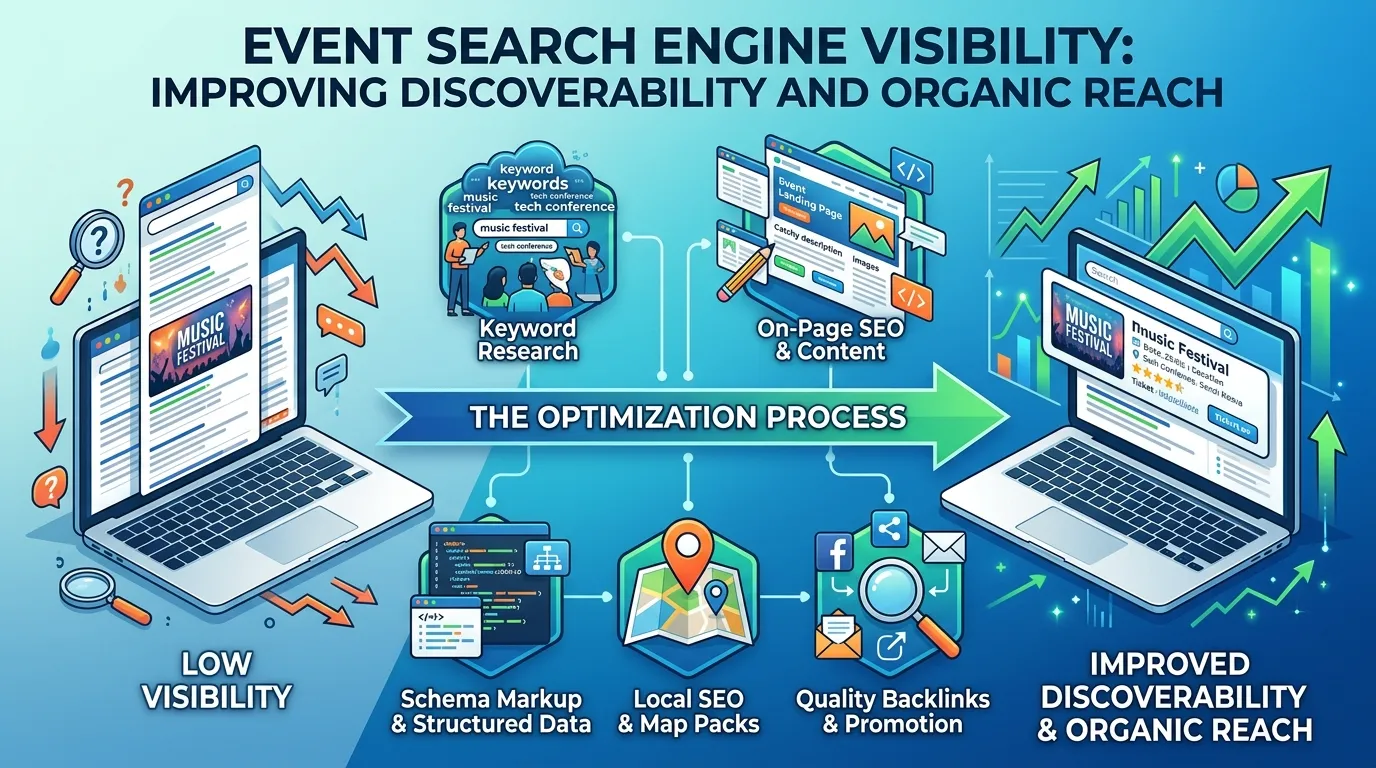
Event Search Engine Visibility refers to how easily people can discover an event through search engines when looking for relevant events, experiences, venues, topics, or activities. Strong visibility depends on factors such as event SEO strategy, keyword optimization, website structure, local search, event schema markup, useful content, and overall website quality. By improving event search optimization and creating relevant event information, organizers can increase organic search traffic, strengthen event website visibility, and make their events easier for potential attendees to discover.
Understanding Event Search Engine Visibility
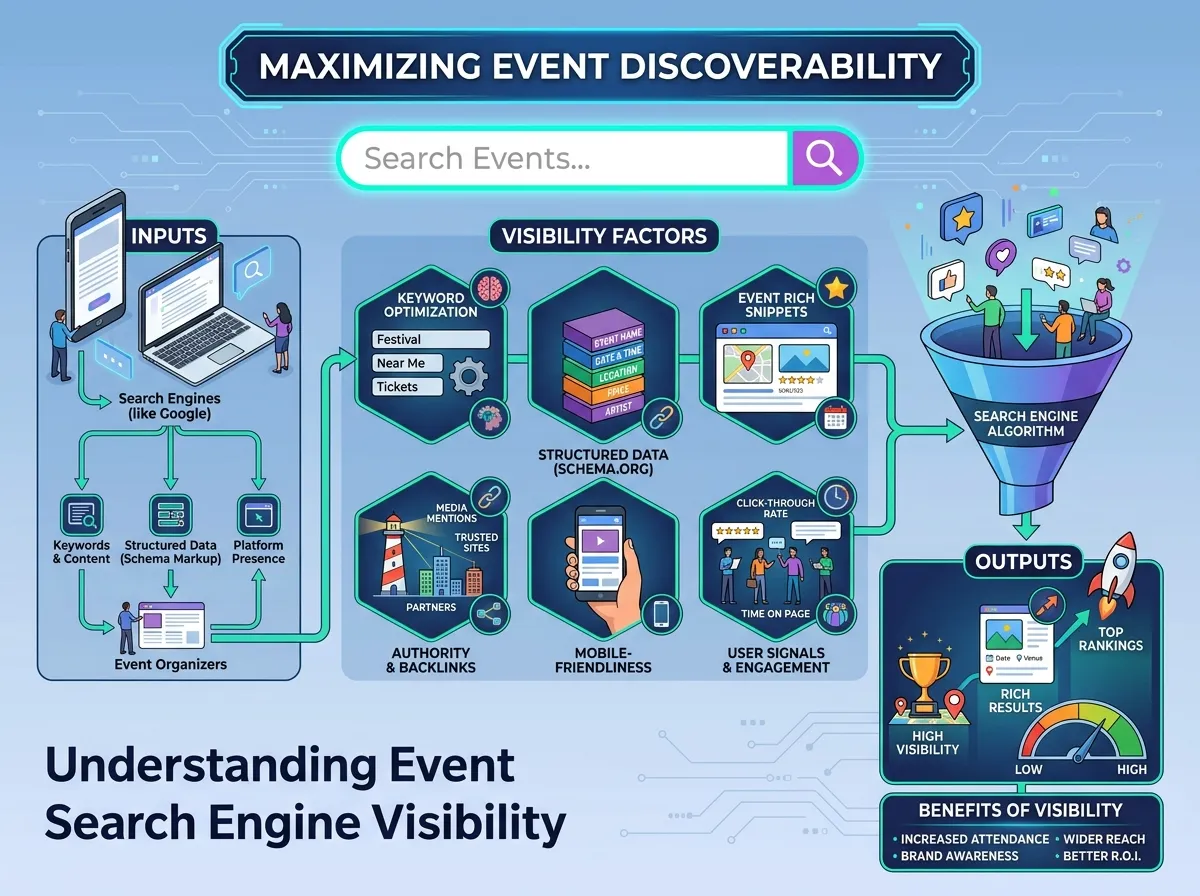
Events depend heavily on discoverability. An event may have an excellent lineup, valuable speakers, an attractive venue, or an engaging experience, but those qualities have limited marketing value if potential attendees cannot find information about the event online.
Event Search Engine Visibility describes the presence of event-related information in search engine results. When people search for conferences, workshops, exhibitions, concerts, networking events, community activities, or industry experiences, search visibility can influence which events they discover and explore.
Search engines evaluate many aspects of web content when determining which pages appear for particular searches. Event organizers therefore need to communicate essential information clearly through their websites and supporting digital content.
Event name, date, location, event category, speakers, topics, registration information, and relevant keywords can all contribute to how an event page communicates its purpose. Technical website quality and search-friendly content also influence the overall experience.
Strong visibility is not simply about appearing for the event’s exact name. It can also involve appearing for broader searches related to the event topic, location, audience, and experience.
Event SEO Strategy
An effective Event SEO Strategy connects an event’s marketing objectives with the way potential attendees search for information online. Search behavior can vary considerably depending on the type of event and the audience.
Someone searching for a technology conference may use different terms from someone searching for a local business networking event. Similarly, people may search by location, date, topic, speaker, venue, or event type.
Understanding these different search patterns allows event organizers to create content that reflects genuine audience interests. The event website can then provide relevant information that answers those searches naturally.
Event SEO can also support broader marketing efforts. Search-friendly event pages can complement social media promotion, email campaigns, paid advertising, public relations, and other channels.
A broader Digital Marketing for Events strategy can help connect organic search with engagement and registration activities, allowing search visibility to become part of a larger event marketing ecosystem.
Event Search Optimization
Event Search Optimization focuses on making event information easier for search engines and users to understand. It includes content relevance, keyword usage, page structure, internal linking, technical accessibility, and the clarity of event information.
A well-optimized event page should communicate the most important details without requiring visitors to search through unrelated information. Event dates, location, schedule, registration details, speakers, and key topics should be presented clearly.
Search optimization also involves maintaining accurate information. If an event date, venue, registration URL, or schedule changes, outdated information can create confusion for both search users and attendees.
The quality of the event website matters as well. Pages should provide useful information rather than relying solely on promotional language. Search visibility is more valuable when it brings visitors to pages that genuinely answer their questions.
Event SEO Marketing
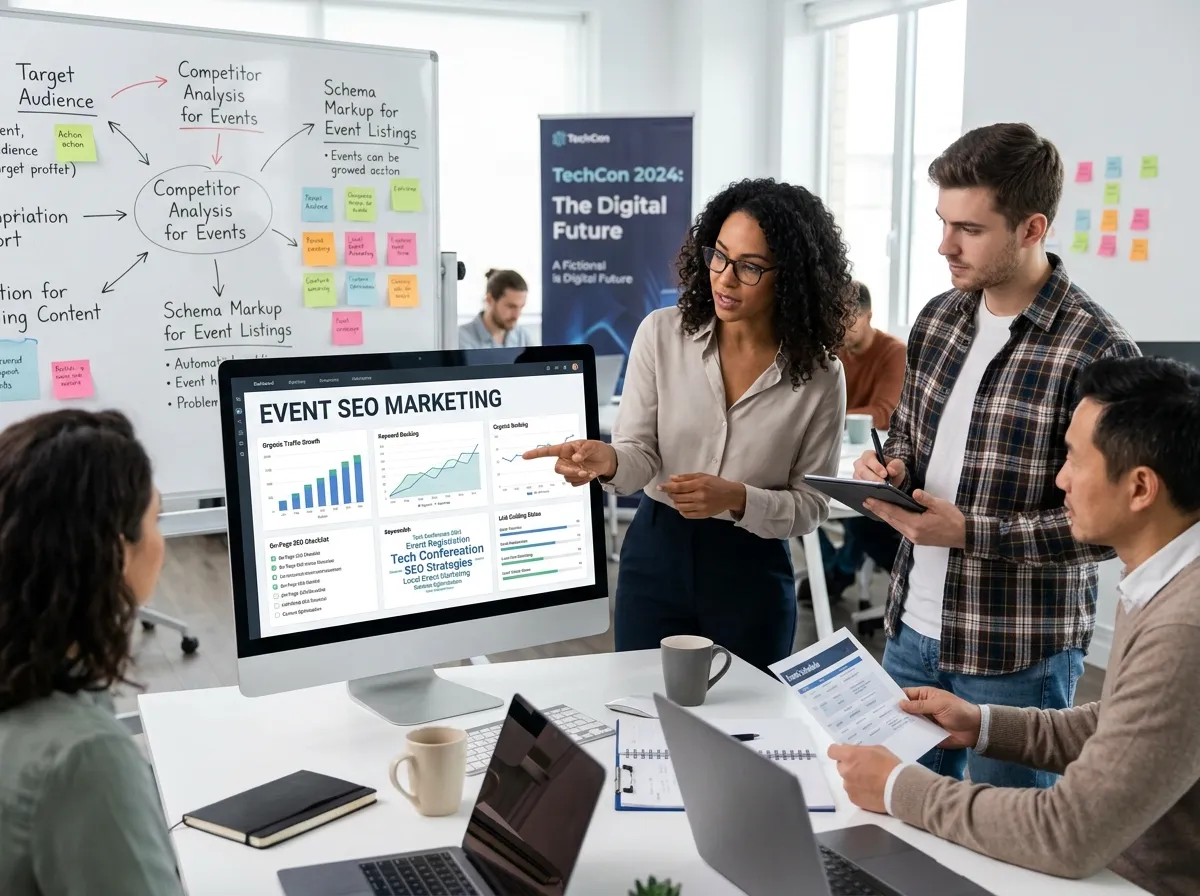
Event SEO Marketing combines search optimization with broader promotional objectives. Rather than treating SEO as a separate technical activity, organizers can use search-friendly content as part of the event’s overall marketing communication.
An event can generate organic visibility through its main registration page, speaker profiles, agenda content, blog articles, interviews, venue information, post-event content, and related resources.
For example, an industry conference may publish information about major topics that will be discussed at the event. These resources can attract people researching those topics and introduce them to the event.
This approach can extend the reach of event marketing beyond people who already know about the event. It allows organizers to reach audiences while they are actively researching subjects connected to the event.
Event Website Visibility
Event Website Visibility refers to how prominently an event website appears across relevant search results and how easily potential attendees can discover and access its information.
The event website is often the central destination for registration, schedules, speaker details, venue information, ticketing, FAQs, and other important resources. If the website has weak search visibility, potential attendees may encounter competing events before discovering the official source.
Website visibility can be influenced by the quality and relevance of event content, site structure, technical performance, mobile usability, internal links, and external references.
Creating supporting content can also strengthen the website’s overall topical relevance. Articles about event subjects, speakers, industry trends, venues, or attendee questions can create additional opportunities to attract organic visitors.
Event Search Rankings
Event Search Rankings describe the positions where event-related pages appear in search engine results for relevant queries. Rankings can vary based on the search phrase, location, user context, competition, and many other factors.
Organizers should avoid thinking about rankings only in terms of one event name. Search visibility can include queries around event categories, topics, locations, speakers, dates, and related experiences.
For example, an event might be relevant to searches such as industry conference in a particular city, marketing networking event, technology workshop, or business leadership conference.
Different searches represent different levels of awareness and intent. Some people already know the event, while others are discovering possible events for the first time.
Understanding these distinctions can help event marketers create content that addresses multiple stages of event discovery.
Event Schema Markup
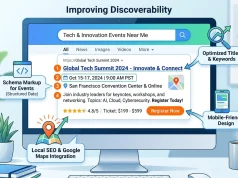
Event Schema Markup provides structured information that helps search engines understand key details about an event. Depending on the implementation and search engine eligibility, structured data can communicate information such as event name, date, location, offers, organizer information, and event status.
Structured data does not guarantee a particular search appearance or ranking position. However, accurately structured event information can make it easier for search engines to interpret the page.
Event schema is particularly relevant because event information contains structured characteristics that are useful to people searching for activities and experiences.
When event details change, the structured information should also remain accurate. Consistency between visible page information and structured data is important for maintaining reliable event information.
Event Local SEO
Event Local SEO becomes particularly important for physical events. People frequently search for events based on location, neighborhood, city, venue, or geographic area.
An event taking place in a specific city can benefit from clearly communicating its location and providing useful venue information. Searchers may be looking for conferences near them, workshops in a particular area, or activities taking place during a specific period.
Local relevance can also extend beyond the event itself. Venue pages, transportation information, nearby attractions, accommodation details, and local resources can provide additional value to potential attendees.
Local search visibility can be especially useful for community events, business networking sessions, exhibitions, workshops, festivals, and other events where geographic proximity influences attendance.
Event Keyword Optimization
Event Keyword Optimization involves incorporating relevant search terms into event content in a natural and useful way. Keywords can describe the event type, subject, audience, location, speakers, venue, and other characteristics.
Effective optimization begins with understanding how the intended audience describes what they are looking for. Search language should inform the content without making the page sound unnatural.
For example, an event organizer might naturally include terms describing the event’s industry, location, format, and primary subject. Supporting articles can then explore related topics in greater depth.
Keyword optimization should not mean repeatedly inserting the same phrase throughout a page. Relevance, clarity, context, and usefulness remain important aspects of search-friendly event content.
Event Organic Search Traffic
Event Organic Search Traffic represents visitors who discover event-related pages through unpaid search results. This traffic can provide an ongoing source of potential attendees, especially when an event website creates content that remains relevant over time.
Organic search traffic can come from branded queries as well as non-branded searches. Branded searches may involve people already familiar with the event, while non-branded searches can introduce the event to new audiences.
The quality of organic traffic matters as much as its volume. Visitors who are genuinely interested in the event’s subject, location, or experience may be more valuable than visitors who arrive through unrelated searches.
Tracking organic traffic alongside registrations and other meaningful actions can provide a clearer understanding of the contribution search visibility makes to event marketing.
Event Discoverability Strategy
An Event Discoverability Strategy considers how potential attendees encounter an event throughout the online research process. Search engines are one part of this process, alongside social platforms, email, event directories, media coverage, partnerships, and other promotional channels.
Search visibility can support discovery before people know about a particular event. Informational content can introduce audiences to an event topic, while event-specific pages can provide the details needed to make a registration decision.
Discoverability also extends beyond the event date. Post-event interviews, recordings, summaries, speaker content, and other resources can continue attracting search traffic and support future event promotion.
This creates an opportunity for event websites to become long-term information resources rather than temporary registration pages.
Connecting Event SEO With Audience Engagement
Search visibility brings potential attendees to event information, but the website experience influences what happens next. Visitors need clear information about why the event matters, who it is for, what they can expect, and how they can participate.
Event pages can support engagement by providing useful speaker information, agenda details, frequently asked questions, venue information, registration options, and relevant supporting content.
The relationship between search and engagement is particularly important because not every organic visitor arrives ready to register. Some may be researching an industry topic or comparing several events.
Useful content can help move these visitors from initial discovery toward greater awareness and eventual registration.
Event Search Visibility and Remarketing
Organic search can introduce new audiences to an event, but not every visitor will register during the first interaction. Event Remarketing can provide another opportunity to reconnect with people who have previously interacted with event-related content.
Remarketing can be used alongside organic search as part of a broader event acquisition strategy. Someone may discover an event through search, visit the website, leave without registering, and later encounter another relevant promotional message.
This relationship between discovery and continued engagement is explored in Event Remarketing, which focuses on reconnecting with audiences and supporting continued event promotion.
Search visibility and remarketing therefore serve different roles. Organic search can support discovery, while remarketing can maintain awareness among people who have already demonstrated interest.
Event SEO and Digital Promotion
Search should not operate independently from other event marketing activities. Social media, email, paid campaigns, content marketing, public relations, and partnerships can all influence how people discover and interact with an event.
For example, an event announcement promoted through social media may generate searches for the event name. Media coverage may create external references to the event website. Speaker promotion can introduce new audiences to the event and generate additional branded searches.
A broader Digital Marketing for Events approach can connect these channels and create a more consistent promotional presence across the customer journey.
This integrated approach can also create more opportunities for event-related content to be discovered, shared, referenced, and revisited.
Event Brand Activation and Search Visibility
Event Brand Activation can create experiences that generate interest beyond the physical event itself. When an activation is distinctive or closely connected with a brand’s audience, it can produce content opportunities across websites, social media, media coverage, and other channels.
Search visibility can benefit from this broader content ecosystem when relevant information is published on authoritative event or brand pages.
For example, an event activation may involve a unique experience that attracts online discussion. Supporting content can explain the concept, participants, purpose, and highlights while providing a useful destination for people looking for more information.
The relationship between experiential marketing and event promotion is explored in Event Brand Activation, which examines how memorable brand experiences can support audience engagement.
Measuring Event Search Engine Visibility

Measuring Event Search Engine Visibility requires more than checking where an event page appears for one keyword. A broader set of indicators can provide a more useful understanding of organic performance.
Organic impressions can show how frequently event pages appear in search results. Clicks can indicate whether those appearances generate website visits. Organic traffic can show how many users reach the website through search.
Search queries can provide additional insight into how people discover the event. Some searches may be branded, while others may relate to event topics, locations, speakers, or broader subjects.
The most meaningful measurement often connects search activity with event outcomes. Registrations, ticket purchases, inquiries, sign-ups, or other relevant actions can help show whether organic visitors are contributing to event objectives.
Maintaining Event Search Visibility Over Time
Event information changes frequently. Dates may be adjusted, speakers may change, venues can move, and registration details can be updated. Maintaining accurate information is therefore essential for long-term search visibility and user trust.
After an event ends, organizers can decide how the event page should evolve. Some pages may become historical resources, while others can direct visitors toward future events or related content.
Post-event content can include recordings, highlights, speaker interviews, presentation materials, summaries, photographs, and frequently asked questions. These resources can continue attracting visitors after the event has finished.
Maintaining this content ecosystem can make an event website more useful and create additional opportunities for organic discovery.
Final Thoughts
Event Search Engine Visibility plays an important role in helping potential attendees discover events through organic search. A strong Event SEO Strategy can connect relevant event information with the searches, interests, and locations of potential audiences.
Elements such as Event Search Optimization, Event Website Visibility, Event Search Rankings, Event Schema Markup, Event Local SEO, and Event Keyword Optimization can all contribute to a broader search presence. Organic traffic and discoverability then provide opportunities to connect interested audiences with event information and registration experiences.
Search visibility works best as part of a broader event marketing ecosystem. When SEO is combined with digital promotion, remarketing, engaging content, and meaningful event experiences, organizers can create more opportunities for audiences to discover and interact with their events. For organizers expanding their digital event strategies, exploring Virtual Event Production can also help create engaging online experiences for wider audiences.
Frequently Asked Questions
What is Event Search Engine Visibility?
Event Search Engine Visibility refers to how easily people can discover event-related websites and pages through search engines. It can include visibility for event names, topics, locations, speakers, venues, and other relevant searches.
Why is Event SEO important?
Event SEO can help potential attendees discover events while searching for relevant activities, topics, conferences, workshops, or experiences. It can also support organic website traffic and increase opportunities for event registration.
What is an Event SEO Strategy?
An Event SEO Strategy connects event content and website optimization with the search behavior of potential attendees. It can include keyword research, content optimization, technical SEO, local search, internal linking, and structured event information.
What is Event Schema Markup?
Event Schema Markup is structured data that helps search engines understand information about an event, such as its name, date, location, organizer, and other relevant details. It does not guarantee specific rankings or search features.
How does Event Local SEO help?
Event Local SEO can improve the visibility of events for location-based searches. Clear information about the city, venue, neighborhood, and surrounding area can help people searching for relevant events in a specific geographic location.
What is Event Keyword Optimization?
Event Keyword Optimization involves using relevant search terms naturally within event pages and supporting content. Keywords can relate to the event topic, type, audience, location, speakers, and other characteristics.
How can an event increase organic search traffic?
An event can increase opportunities for organic search traffic by creating useful, relevant content around the event topic, audience, location, speakers, and related subjects while maintaining a technically accessible and well-structured website.
What factors influence Event Search Rankings?
Event Search Rankings can be influenced by content relevance, website quality, technical accessibility, search intent, competition, links, location, and other search engine systems. Rankings can also vary between different search queries and users.
How can Event Search Engine Visibility be measured?
Visibility can be evaluated through search impressions, clicks, organic traffic, search queries, rankings, landing-page performance, and event-related conversions such as registrations or ticket purchases.
Can event SEO work with other marketing channels?
Yes. Event SEO can work alongside social media, email marketing, paid advertising, remarketing, public relations, content marketing, and partnerships. Combining these channels can create multiple opportunities for potential attendees to discover an event.