
Event Mobile SEO helps organizers improve mobile search visibility, attract relevant audiences, and create better experiences for potential attendees. Mobile-friendly pages, local SEO, technical performance, useful event content, and structured information all contribute to a stronger event website. By connecting organic search with mobile event marketing and registration processes, organizers can make event information easier to discover and encourage more visitors to take action.
Event Mobile SEO helps event organizers improve their visibility in mobile search results and make it easier for potential attendees to discover event information through smartphones and tablets. From mobile-friendly event pages and local search optimization to website speed and structured content, mobile SEO connects search visibility with a convenient browsing experience. As audiences increasingly use mobile devices to research events, compare schedules, check venues, and purchase tickets, businesses need websites that are both search-friendly and easy to navigate.
The Mobile Search Experience Is Changing How People Discover Events
Event discovery often begins with a quick search on a smartphone. Someone may look for a business conference happening nearby, search for a music festival during the weekend, or check the date and location of an upcoming exhibition. These searches frequently happen while people are travelling, making plans, or comparing several event options.
For event organizers, this creates an important opportunity. A well-optimized mobile website can help potential attendees find essential information without navigating complicated menus or waiting for slow pages to load.
Event Mobile SEO focuses on improving how event-related websites perform in mobile search environments. It combines technical website optimization, relevant content, local search signals, and a user experience designed for smaller screens.
However, mobile optimization is not simply about making a desktop website fit a phone screen. Event visitors often have immediate questions. They want to know when an event starts, where it takes place, how much tickets cost, and whether registration is still available. If these details are difficult to find, visitors may return to search results and choose another event.
Mobile SEO therefore connects two important objectives: helping search engines understand event information and making that information accessible to real visitors.
Event Websites Need to Reflect How Attendees Search
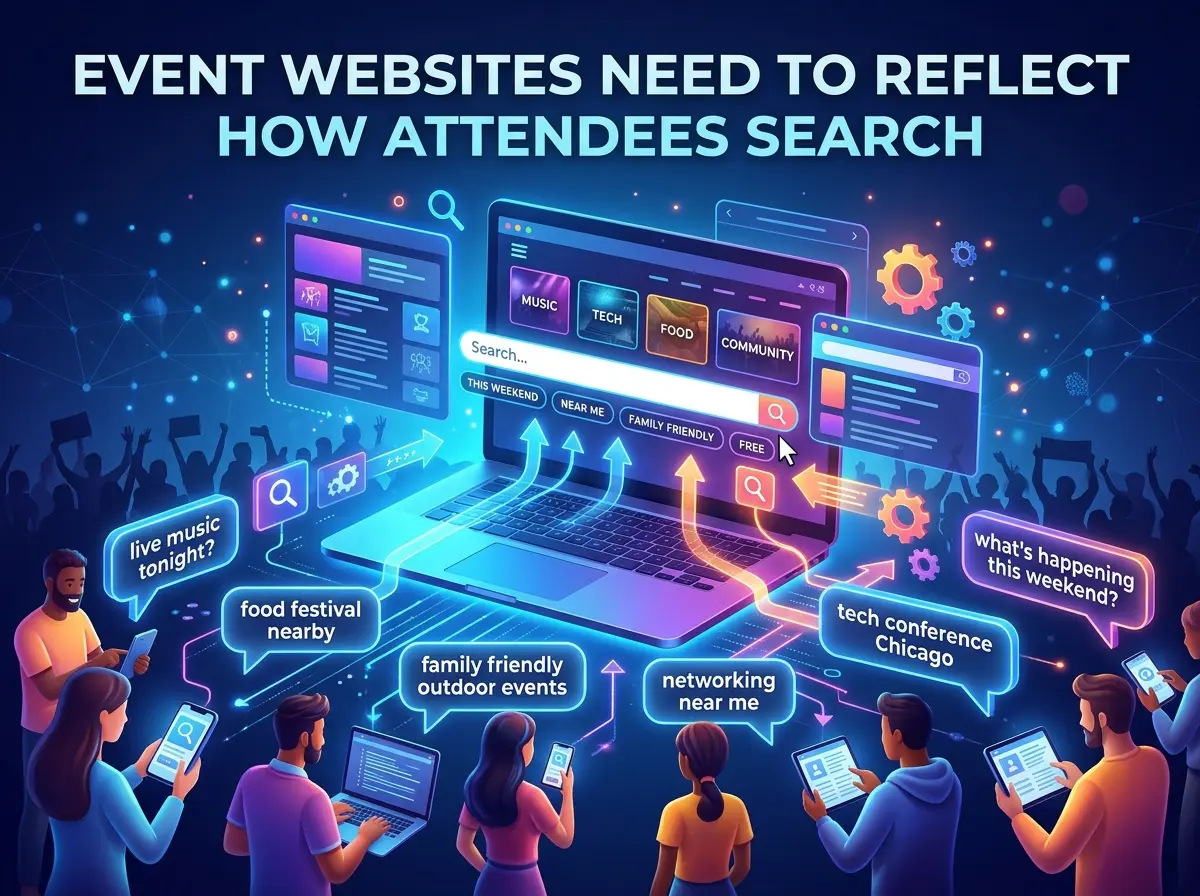
An event website serves several purposes. It introduces the event, communicates its value, provides practical information, and encourages visitors to register or purchase tickets. On mobile devices, these responsibilities become even more important because users have limited screen space and often expect quick answers.
A visitor searching for a technology conference may use phrases related to the event name, industry, location, speakers, or schedule. Someone looking for a local music event may search by city, venue, date, or music genre. These different search behaviors create opportunities for more focused Event Website SEO.
The website should provide relevant information for the subjects potential attendees are searching for. Event descriptions, speaker profiles, session details, venue information, ticket pages, and frequently asked questions can all contribute to a stronger search presence when they offer genuine value.
Content organization also matters. Important information should not be buried beneath lengthy introductions or unnecessary promotional sections. Visitors should be able to identify the event’s purpose and find practical details quickly.
This is particularly important when an event has a distinctive identity. Its positioning, audience, and value proposition influence the language used throughout the website. A clear Event Positioning strategy helps organizers communicate what makes an event different, while relevant website content connects that identity with the search terms potential attendees use.
Mobile-Friendly Event Pages Build a Better First Impression
A mobile-friendly event page should make important information easy to read, understand, and access. Small text, crowded navigation, oversized images, and difficult forms can make even a well-designed event website frustrating to use.
The layout should adapt naturally to different screen sizes. Text needs comfortable spacing, images should resize without creating horizontal scrolling, and navigation elements should remain easy to interact with using a touchscreen.
Event pages also need a logical content hierarchy. The event name, main description, date, venue, and registration information should be presented clearly. Visitors should not have to search through multiple sections to understand whether an event is relevant to them.
Registration forms deserve particular attention. A form that requires too many fields or uses difficult input controls can discourage mobile visitors from completing registration. Organizers should request only the information needed for the registration process and make the submission experience straightforward.
Calls to action should also be visible and understandable. Whether the desired action is purchasing a ticket, registering for a session, or requesting more information, the visitor should know exactly what happens after selecting the relevant option.
A good mobile experience supports the entire event discovery journey. It helps visitors move from initial interest to registration without unnecessary confusion.
Why Mobile Search Visibility Depends on Technical Performance
Search visibility is influenced by more than keywords and written content. Technical website performance affects how search engines access and evaluate pages, while also influencing whether visitors remain engaged.
Mobile Search Visibility requires attention to website accessibility, indexing, responsive design, loading behavior, and page structure. Event organizers should ensure that important pages can be crawled and that essential content is available to search engines.
A technically sound website also avoids unnecessary barriers. Broken internal links, redirect problems, inaccessible images, duplicate pages, and poorly configured mobile layouts can weaken the overall experience.
Page speed is especially relevant for event websites because visitors may arrive through social media links, search results, or shared messages while using mobile connections. Large image files, unnecessary scripts, and poorly optimized resources can make pages slow to load.
The relationship between performance and user experience is explored in Event Core Web Vitals. Core Web Vitals provide useful measurements related to loading performance, responsiveness, and visual stability. These metrics help organizers identify technical problems that may affect how visitors experience an event website.
Technical improvements should be evaluated alongside actual user behavior. A page that performs well in a testing environment may still create difficulties for visitors using older devices or slower network connections.
Local SEO Makes Nearby Events Easier to Discover
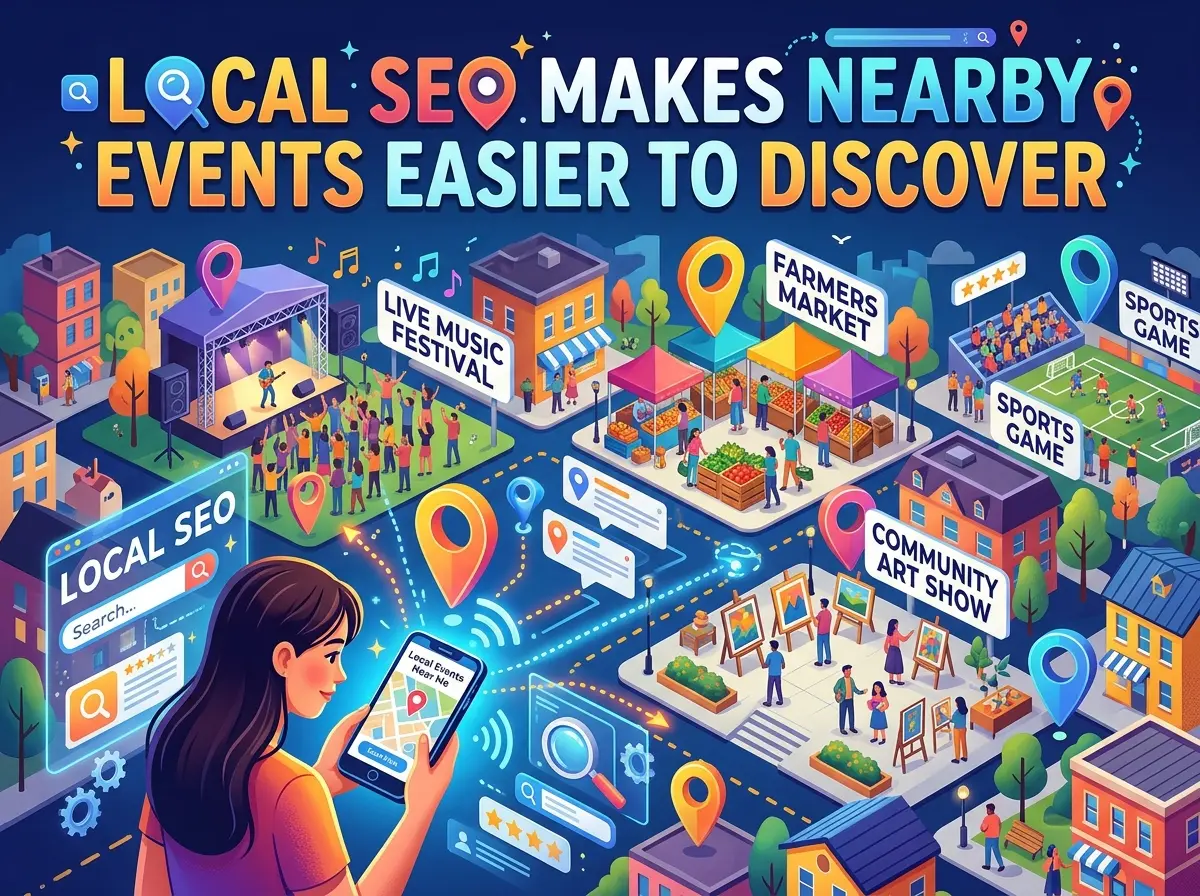
Many event searches have a geographic purpose. People often look for conferences, exhibitions, workshops, concerts, and business networking opportunities within a particular city or region.
Event Local SEO helps organizers connect their websites with these location-based searches. Accurate venue details, relevant local content, consistent business information, and appropriate location references can help search engines understand where an event takes place.
The event location should be presented clearly on the website. Visitors may need the full venue address, nearby transport information, parking details, and directions. These details improve the attendee experience while providing useful location context.
For recurring events, organizers can create dedicated pages that explain the event’s location and audience. However, each page should contain meaningful information rather than simply repeating the same description with a different city name.
Local search visibility can also benefit from a well-maintained business profile when the organizer or venue has an eligible business presence. Accurate opening information, contact details, photographs, and relevant updates help people evaluate the organization behind the event.
The importance of local visibility becomes particularly clear when an event targets a specific community. A business seminar in one city may attract a different audience from a national industry conference. Understanding that distinction helps organizers create content that reflects actual search intent.
Event Mobile Search and the Importance of Search Intent
Mobile searches are often short, direct, and connected to an immediate need. Someone may search for an event schedule while travelling to a venue, look for ticket availability before making a decision, or check the address shortly before leaving home.
Event Mobile Search should therefore account for the different reasons people look for event information.
Some visitors are discovering an event for the first time. They may search for industry conferences, local exhibitions, professional workshops, or entertainment activities. These users need introductory information that explains the event’s purpose and audience.
Others already know about the event but need specific details. Their searches may relate to speakers, ticket prices, registration deadlines, schedules, or venue facilities. Dedicated pages and clearly organized sections can help answer these questions.
There are also visitors who are ready to register. They may search directly for the event’s official website, booking page, or ticket information. A clear registration journey helps these visitors complete the action without unnecessary distractions.
Understanding these different search intentions helps organizers develop more relevant content. Instead of relying on one general event page to answer every possible question, the website can provide focused information that supports different stages of event discovery.
Mobile Event Marketing and Organic Search Should Work Together
Search optimization and event promotion are closely connected. An event may receive attention through influencer posts, social media announcements, email campaigns, and industry publications, but visitors still need a useful website when they decide to investigate further.
Mobile Event Marketing brings these promotional activities into the mobile browsing experience. A social media user who discovers an event through a creator’s video may immediately open the event website on a smartphone. If the landing page is slow or confusing, the interest generated by the promotion may not lead to registration.
This makes mobile landing pages an important part of campaign performance. The message visitors see in promotional content should match the information presented on the destination page. Event names, dates, locations, ticket details, and campaign offers should remain consistent.
Influencer promotion can also introduce new audiences to an event. When creators share relevant event information, their followers may search for the event directly or visit its website through a shared link. Organizers can connect these promotional activities with organic search by maintaining clear event information and accessible landing pages.
A coordinated Event Influencer Promotion strategy can help increase awareness and encourage audience engagement. Mobile optimization ensures that the attention generated through these partnerships leads to a website experience that supports further exploration.
The connection between promotion and search is especially valuable for events that depend on timely registrations. Every promotional channel should lead visitors toward a consistent and accessible information experience.
Event Search Rankings Require Relevant and Well-Organized Content
Search rankings are not determined by the number of times an event keyword appears on a page. Search engines consider multiple signals, including content relevance, technical accessibility, page experience, and the overall usefulness of information.
Event SEO Optimization begins with understanding what people want to know about an event. The website should answer relevant questions rather than repeat the same keyword throughout the content.
A conference page, for example, may explain the event’s subject, intended audience, participating speakers, major sessions, location, and registration options. These details give visitors a better understanding of the event while creating useful context for search engines.
Headings should organize information logically. Descriptive page titles and meta descriptions can communicate what each page offers in search results. Image descriptions can also help explain visual content, particularly when event photographs, speaker images, or venue graphics provide useful context.
Internal linking supports content discovery across the website. A main event page might connect visitors to speaker profiles, individual sessions, accommodation information, or registration details. These links make the website easier to navigate and help search engines discover related pages.
Organizers should also avoid creating multiple pages with nearly identical information. Each page should serve a clear purpose and provide distinct value. A focused website structure is more useful than a large collection of repetitive pages designed only to target additional keywords.
Mobile Website Performance and the Registration Experience
Website performance becomes particularly important when visitors are close to completing an action. A potential attendee may have already compared several events and decided to register. If the ticket page loads slowly or the payment process is difficult to use, that decision can change.
Mobile Website Performance should therefore be considered across the entire registration journey, not just the homepage.
Large promotional banners and background videos can make event websites visually impressive, but they should not prevent important information from loading efficiently. Images should be appropriately sized and compressed, while unnecessary scripts and third-party resources should be reviewed.
Registration pages should also remain stable during loading. Buttons and form fields should not shift unexpectedly, as this can cause visitors to select the wrong option or lose their place.
Payment and confirmation pages need similar attention. Input fields should be easy to use, error messages should explain what needs to be corrected, and visitors should receive clear confirmation after completing a registration.
Event websites often experience sudden increases in traffic when ticket sales open or popular speakers are announced. Organizers should consider hosting capacity, caching, and performance monitoring to reduce the risk of slowdowns during important campaign periods.
A fast website does not guarantee higher registrations, but a reliable and accessible experience removes avoidable barriers that could prevent interested visitors from completing the process.
The Role of Structured Event Information
Event information can be presented in a way that helps search engines understand important details more clearly. Structured data, including appropriate Event schema markup, can describe information such as an event’s name, start date, location, organizer, and ticket-related details.
When implemented correctly and in accordance with search engine requirements, structured data may make eligible event pages more understandable and potentially support enhanced search presentation.
Accuracy is essential. The information in structured data should match what visitors can see on the page. Incorrect dates, outdated ticket details, missing locations, or misleading event status information can create confusion.
Recurring events require particular care because each occurrence may have a different date, venue, or registration status. Organizers should ensure that the markup reflects the specific event being described rather than combining unrelated details.
Structured data should complement useful page content. It cannot replace a clear event description, accessible registration information, or a mobile-friendly design. Its role is to provide additional context about information already available to visitors.
Event Onsite Management Starts With Accurate Digital Information
Mobile SEO does not stop when someone completes registration. Event attendees may continue using their phones to check venue directions, session schedules, speaker information, entry instructions, and last-minute announcements.
This makes the connection between the website and actual event operations important. If the online schedule differs from the onsite program, attendees may become confused. If the venue information is outdated, visitors may arrive at the wrong location or experience unnecessary delays.
Effective Event Onsite Management depends on accurate communication before and during the event. Mobile-accessible schedules, updated announcements, venue information, and clear instructions can help attendees find what they need without relying entirely on printed materials or staff assistance.
Organizers should review important website information whenever event details change. This includes speaker updates, session times, room assignments, ticket instructions, accessibility information, and venue arrangements.
A mobile-friendly event website can also serve as a convenient information point during the event itself. Attendees may return to it several times, making accuracy and accessibility just as important after registration as they were during the discovery stage.
Measuring the Impact of Event Mobile SEO
Event Mobile SEO should be evaluated through more than keyword rankings. Search visibility is important, but organizers also need to understand how mobile visitors interact with the website and whether those interactions contribute to event objectives.
Organic search traffic from mobile devices can reveal whether the website is attracting people through relevant queries. Landing-page engagement can show whether visitors find the information they need, while registration activity helps connect search performance with actual business outcomes.
Technical monitoring provides another layer of insight. Search Console can help identify indexing issues and search performance trends, while website analytics can reveal device-based traffic patterns and user behavior. Performance testing tools can help locate loading and responsiveness problems.
The most useful measurements depend on the event’s goals. A ticketed conference may focus on completed purchases, while a free professional webinar may prioritize registrations and attendance. A local exhibition may place greater importance on directions, opening information, and visitor inquiries.
Organizers should also review the pages that attract the most mobile search traffic. If visitors frequently arrive through a speaker profile or session description, those pages may offer opportunities to improve internal navigation and registration visibility.
Consistent measurement helps event teams understand which improvements are making a difference. It also allows them to identify problems before they affect a major promotional campaign or event launch.
Making Mobile Search a Lasting Part of Event Strategy
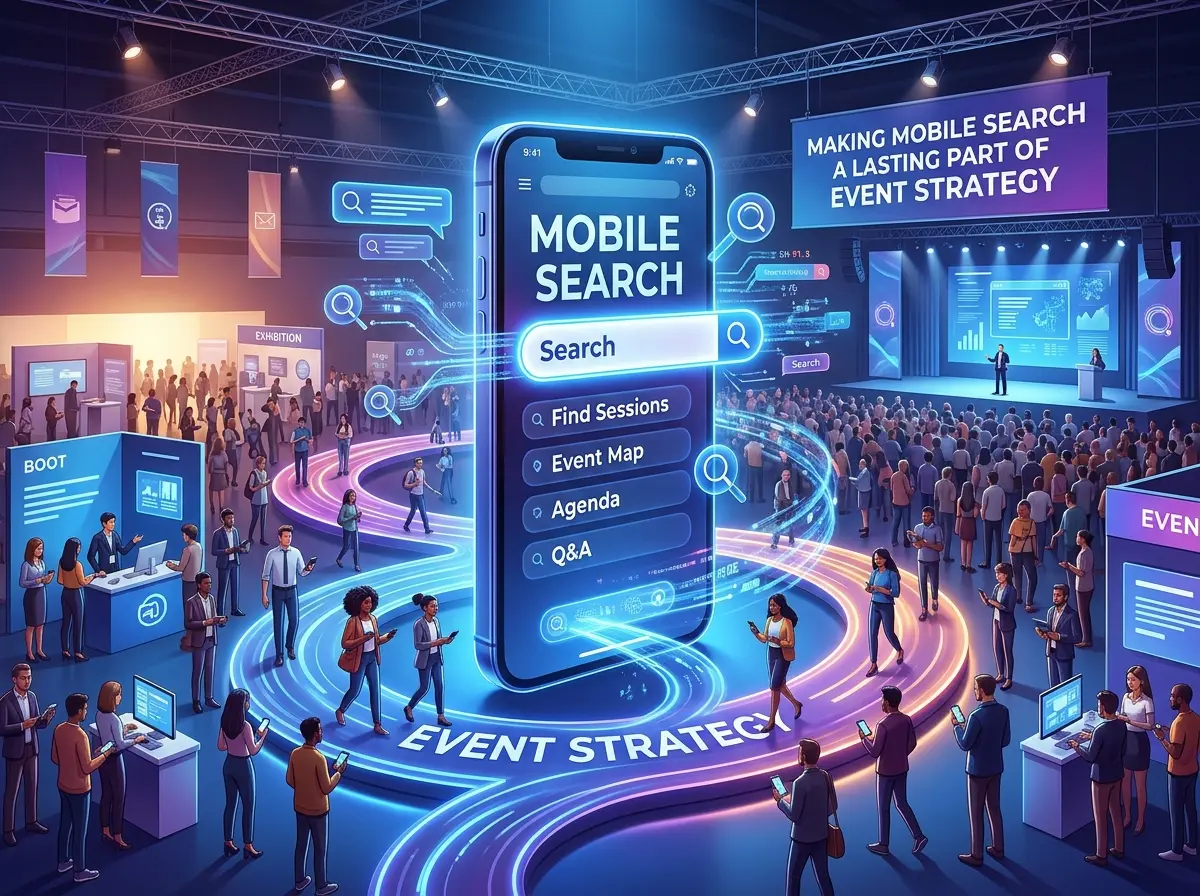
Event Mobile SEO is most effective when it is included throughout the event marketing process rather than treated as a final website adjustment. Search behavior, website structure, technical performance, local visibility, and registration experience all influence how people discover and evaluate an event.
Organizers that prioritize useful mobile content and reliable website performance create a stronger connection between search visibility and attendee experience. They make it easier for potential visitors to understand an event, compare its value, and take the next step.
The same approach continues to matter after registration. Accurate schedules, accessible venue details, and timely updates help attendees stay informed throughout the event journey.
As more event-related research and planning happens through mobile devices, businesses need websites that respond to those expectations. A well-optimized event website does more than attract search traffic. It supports the entire relationship between event discovery, registration, and attendance.
Frequently Asked Questions
1. What is Event Mobile SEO?
Event Mobile SEO is the process of optimizing event websites for mobile search visibility and smartphone user experiences. It includes responsive design, technical performance, relevant content, local search optimization, and accessible registration pages.
2. Why is mobile SEO important for event websites?
Many people use smartphones to discover events, check schedules, compare ticket options, and find venue information. Mobile SEO helps event websites become easier to find and provides visitors with a convenient browsing experience.
3. What makes an event website mobile-friendly?
A mobile-friendly event website uses responsive layouts, readable text, accessible navigation, appropriately sized images, and simple forms. Important information such as event dates, locations, schedules, and registration links should be easy to find.
4. How does Event Local SEO improve event visibility?
Event Local SEO helps organizers connect their websites with location-based searches. Accurate venue information, relevant local content, consistent business details, and appropriate local profiles can support discovery among nearby audiences.
5. What is the role of keywords in Event Website SEO?
Keywords help organizers understand how people search for events and related information. Using relevant terms naturally in page titles, headings, descriptions, and useful content can help search engines understand the subject of each page.
6. How can event organizers improve mobile website performance?
Organizers can improve performance by compressing images, reducing unnecessary scripts, using efficient hosting, enabling suitable caching, and reviewing page-loading behavior. Regular testing helps identify technical problems that affect mobile visitors.
7. Do Core Web Vitals matter for event websites?
Yes. Core Web Vitals measure important aspects of page experience, including loading performance, responsiveness, and visual stability. Monitoring these metrics can help organizers identify areas where their event websites need improvement.
8. Can social media promotion support Event Mobile SEO?
Social media promotion can increase event awareness and encourage people to visit event websites. Although social engagement is not a direct substitute for search optimization, relevant promotional activity can create additional discovery opportunities and website visits.
9. What type of content should an event website include?
An event website can include event descriptions, dates, venue information, speaker profiles, schedules, ticket details, registration information, accessibility details, and frequently asked questions. Each section should provide useful information for potential attendees.
10. How can organizers measure Event SEO Optimization results?
Organizers can monitor mobile organic traffic, search impressions, clicks, keyword performance, page experience, registration conversions, and visitor engagement. Combining search data with registration results provides a clearer picture of overall performance.