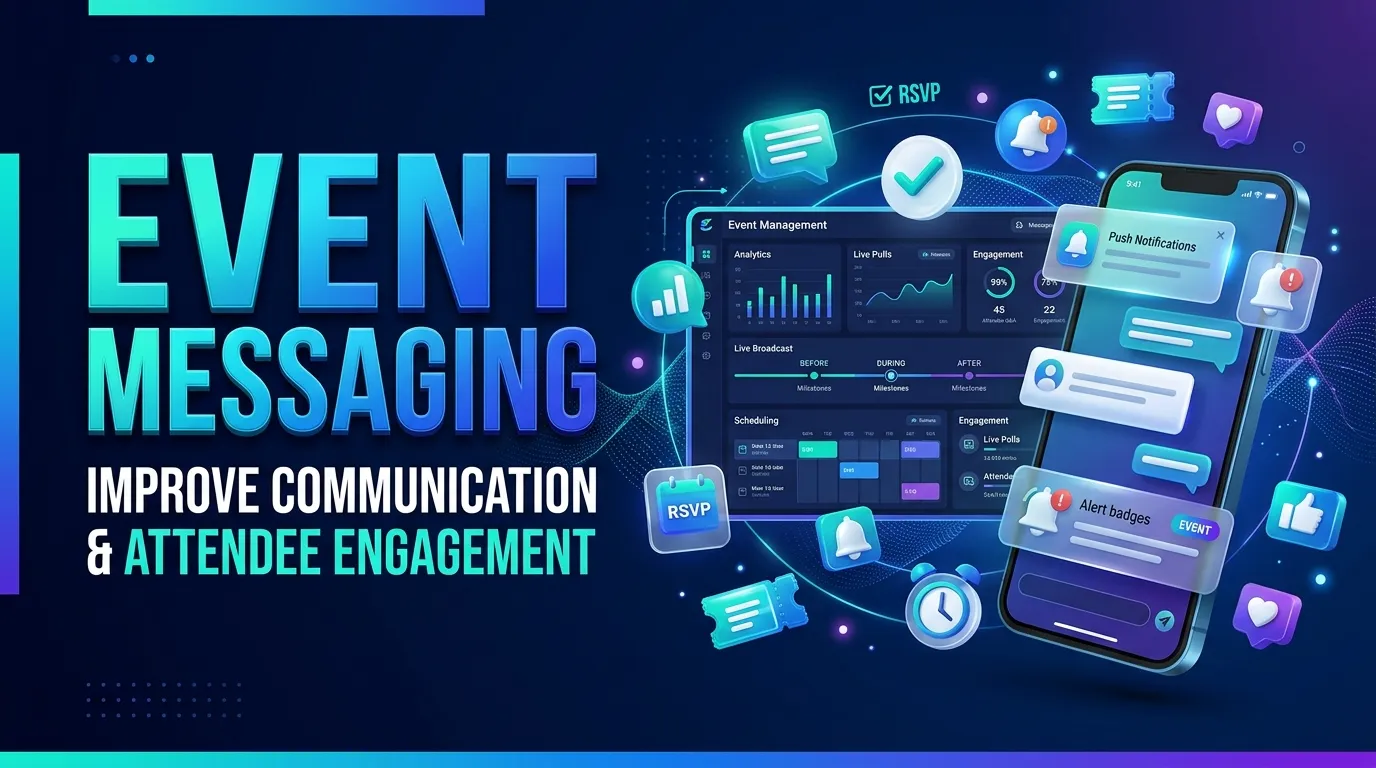
Event messaging helps organizers communicate with attendees before, during, and after an event through reminders, notifications, SMS, automated updates, and follow-up messages. A strong strategy focuses on timely information, relevant audience segmentation, consistent details, and appropriate communication channels. By combining automation with personalization, privacy awareness, and performance measurement, businesses can improve attendance, encourage participation, and build lasting attendee relationships.
Event messaging plays an important role in helping organizers communicate with attendees before, during, and after an event. Whether a business hosts a conference, networking session, product launch, exhibition, workshop, or virtual event, clear communication helps participants understand what to expect and how to get involved. From registration confirmations to schedule updates and follow-up messages, every communication can influence the attendee experience.
Modern audiences expect timely information that is relevant to their needs. An attendee may want to know when registration closes, where to arrive, how to access a virtual session, or whether an event schedule has changed. When this information is delivered through the right channels at the right time, organizers can reduce confusion, encourage participation, and build stronger relationships with their audiences.
An effective event communication strategy goes beyond sending occasional announcements. It requires a clear understanding of the attendee journey, appropriate messaging channels, well-planned timing, and consistent information across platforms. By combining email, SMS, event applications, and other communication tools, organizers can deliver useful updates without overwhelming participants.
What Is Event Messaging?
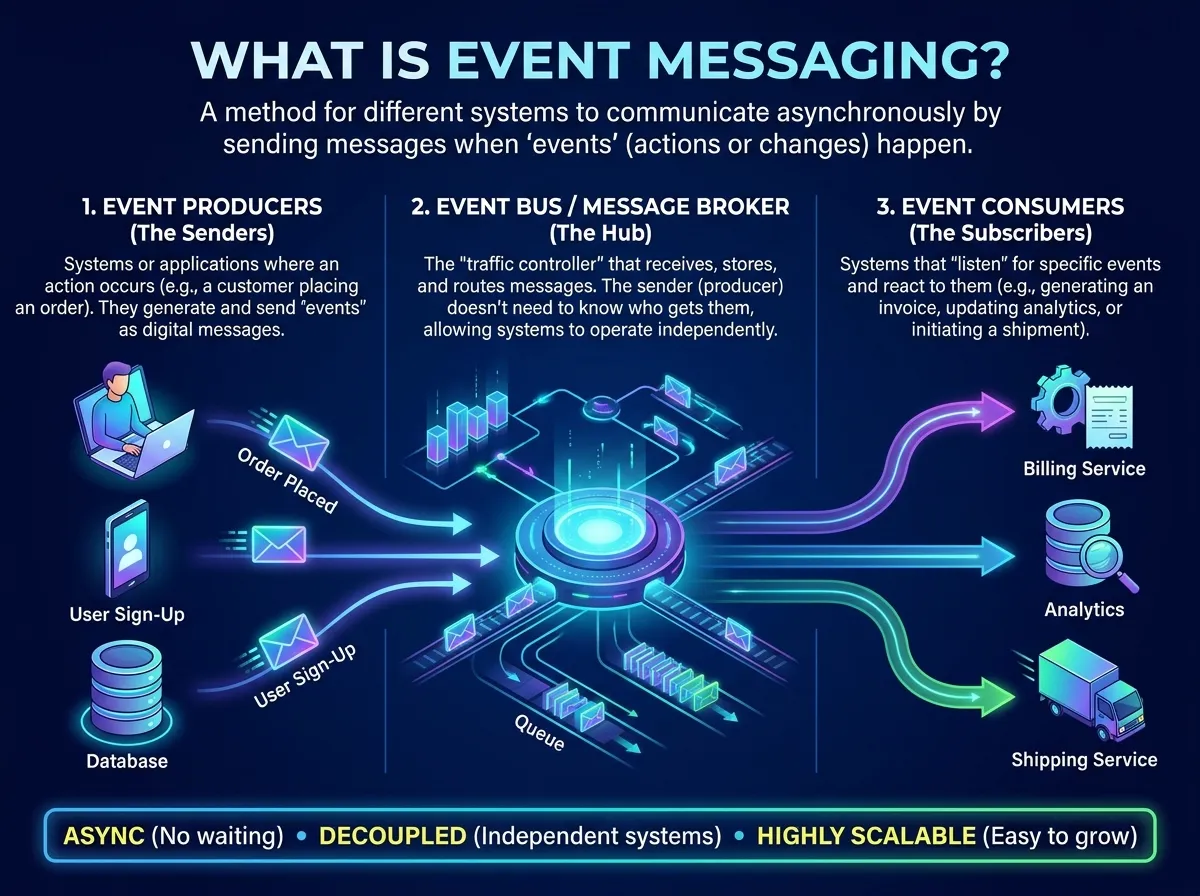
Event messaging refers to the communication businesses and organizers send to attendees, speakers, sponsors, and other participants throughout the event lifecycle. These messages may provide essential information, encourage attendance, explain event activities, answer common questions, or maintain relationships after the event has ended.
The format depends on the purpose and audience. An email might contain a detailed event agenda, while an SMS message could remind a registered attendee that a session begins in fifteen minutes. An event application notification may announce a room change, and a post-event message may provide access to presentation materials or request feedback.
The main objective is to make communication timely, useful, and easy to understand. Attendees should receive the information they need without having to search across multiple platforms or contact the organizing team for routine details.
Event messaging also helps organizers maintain a consistent experience. When registration confirmations, event updates, and follow-up communications share the same essential information and tone, participants are more likely to understand the event’s purpose and feel confident about taking part.
Building an Effective Event Communication Strategy
An event communication strategy establishes how information will be shared, who will receive it, which channels will be used, and when messages should be delivered. Without a structured approach, organizers may send duplicate announcements, overlook important reminders, or communicate schedule changes too late.
The first step is to understand the needs of different attendee groups. First-time visitors may require detailed arrival instructions, while returning participants might only need confirmation of the date and venue. Speakers may need technical instructions, and sponsors may require information about promotional opportunities or event arrangements. Segmenting communications helps organizers provide relevant information to each group.
Next, businesses should map communication to the event timeline. Before the event, messages can confirm registration, explain preparation requirements, and encourage attendance. During the event, updates should focus on schedules, navigation, session changes, and immediate announcements. After the event, communication can share resources, collect feedback, and maintain relationships.
Organizers should also establish responsibility for approving and sending messages. When multiple team members manage communications, a shared calendar and consistent message templates can reduce errors. Important details such as dates, locations, session times, access links, and contact information should be checked before distribution.
A thoughtful strategy supports the wider marketing process, especially when connected with a broader digital marketing strategy. Consistent messaging across promotional channels, registration pages, email, and attendee communications makes it easier for participants to understand the event and follow the next step.
Event Notification Messages That Keep Attendees Informed
Event notification messages deliver important information at the moment attendees need it. They may confirm successful registration, announce that tickets are available, provide access details, or communicate changes to the event schedule.
A useful notification should communicate its main purpose immediately. Attendees should not need to read a lengthy introduction to discover whether a message contains a registration confirmation, a venue change, or a reminder about an upcoming session. A clear subject line or opening sentence makes the information easier to recognize.
Notifications should also distinguish between essential updates and general promotional content. A cancellation, access problem, or room change deserves greater attention than a routine marketing announcement. Prioritizing important information helps prevent critical messages from being lost among less urgent communications.
Accuracy is equally important. Organizers should confirm the information before sending notifications and ensure that any linked event page contains the same details. If an event time changes, related schedules, automated reminders, and attendee instructions should be updated as well.
For larger events, notification systems can help deliver announcements to relevant groups. A change affecting one workshop should reach its registered participants rather than every person attending the event. Targeted notifications reduce unnecessary messages and make communication more useful.
Event Reminder Messaging and Attendance
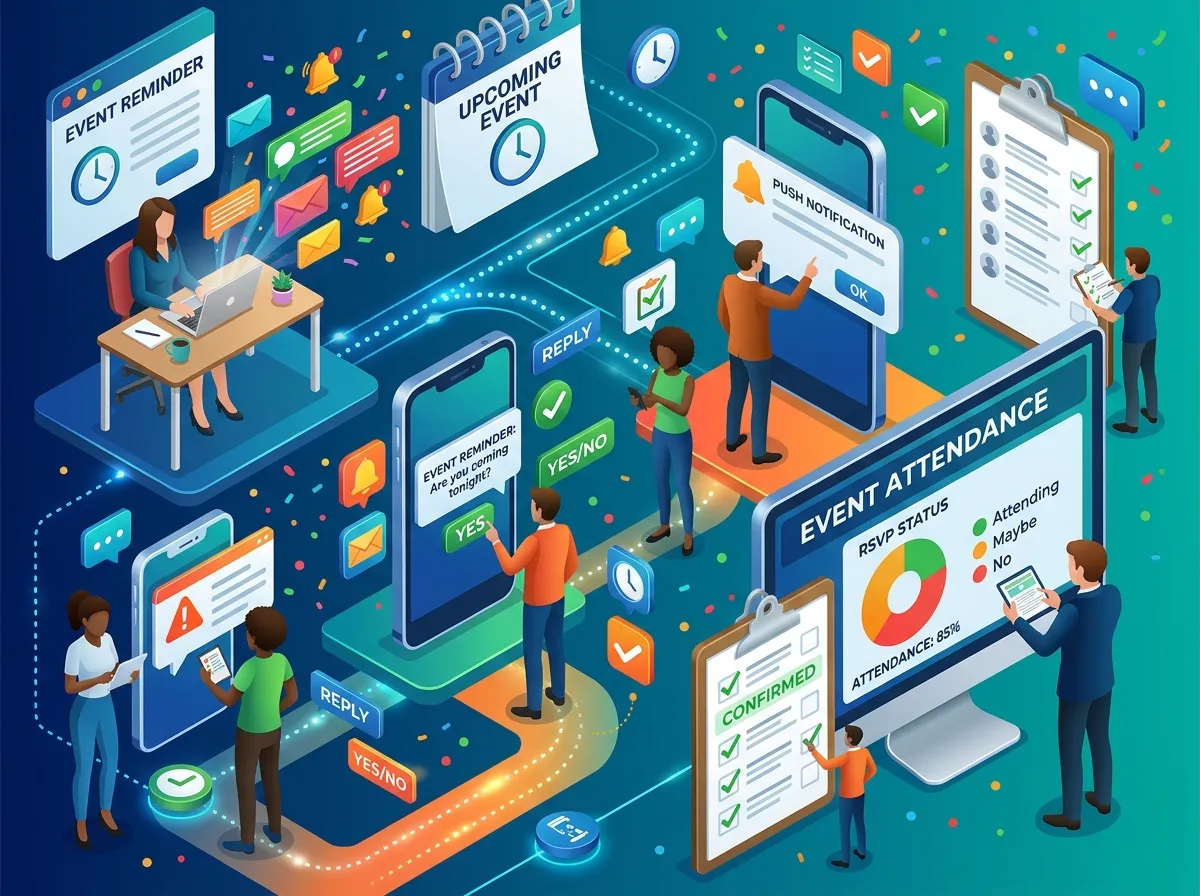
Event reminder messaging helps registered participants remember an upcoming event and prepare to attend. Even people who intend to participate may forget the date, overlook an email, or become uncertain about the start time. Timely reminders reinforce the commitment they made during registration.
The appropriate reminder schedule depends on the event type, audience, and registration process. A major conference may benefit from an initial reminder several days in advance, followed by a final message containing arrival instructions. A webinar might require a reminder the day before and another shortly before the session begins.
Each reminder should provide practical value. Instead of repeating the event title alone, organizers can include the date, start time, venue or access link, and any preparation requirements. For an in-person event, parking details or check-in instructions may be useful. For a virtual event, the message can explain how to join and where to find technical support.
Reminder frequency needs careful management. Sending too many messages can irritate recipients, while sending too few may leave them unprepared. Businesses should consider the importance of each update and avoid repeating information that attendees already have unless a timely reminder is genuinely helpful.
Organizers should also account for different time zones when communicating about virtual events. Clear time-zone labels can prevent misunderstandings, particularly when attendees join from different countries.
Automated Event Messages for Greater Efficiency
Automated event messages allow organizers to send communications in response to specific actions, registration details, or scheduled milestones. Rather than preparing and distributing every message manually, businesses can use event management and marketing platforms to manage routine communications.
For example, a registration confirmation can be triggered immediately after someone completes a sign-up form. A reminder can be scheduled for a particular time before the event, while a follow-up email can be sent after the event concludes. These automated messages help maintain consistent communication even when an event team is managing many participants.
Automation is particularly useful when messages depend on attendee behavior. Someone who registers but has not accessed the event platform may need different instructions from someone who has already confirmed attendance. Similarly, participants who register for a specific session should receive information relevant to that session rather than unrelated announcements.
However, automation should not replace careful planning. Incorrect triggers, outdated links, or poorly configured schedules can lead to confusing messages. Organizers should test workflows before launch and review them whenever the event details change.
Personalization can make automated communication more relevant. Using an attendee’s name, selected session, registration status, or preferred communication channel can improve clarity when the underlying information is accurate and collected appropriately.
The best automation systems combine efficiency with human oversight. Organizers should have a clear way to pause scheduled messages, correct mistakes, and respond personally when an attendee has a question that requires individual attention.
Event SMS Marketing and Direct Communication
Event SMS marketing uses text messages to share event information, promote attendance, and deliver timely updates. SMS can be useful when organizers need to communicate brief, time-sensitive information that attendees can access on their phones.
A text message might confirm registration, remind someone about an upcoming session, provide a check-in instruction, or notify participants of a last-minute schedule change. Because SMS messages are concise, the most important information should appear first. Any links should lead to relevant pages that work well on mobile devices.
Permission is essential when sending promotional or recurring text messages. Businesses should follow applicable laws, platform requirements, and consent rules, clearly explain what recipients are signing up for, and provide an appropriate way to stop receiving messages. Organizers should also avoid treating registration for an event as unlimited permission to send unrelated promotions.
SMS works best when it complements other channels rather than replacing them entirely. Email can carry detailed agendas and longer instructions, while text messages can highlight urgent changes or important reminders. An event application may provide schedules and interactive features, while a website can serve as the central source of event information.
Organizers should choose the channel according to the message’s purpose. A brief change to a session location may be suitable for SMS, while a complex explanation of event policies may be better delivered by email or a dedicated information page.
Event Attendee Communication Across the Event Journey
Event attendee communication should reflect the different stages of participation, from initial registration to post-event engagement. Attendees need different information as their relationship with the event develops, so a single message sequence may not suit every situation.
Before the event, communication should confirm registration, explain what participants can expect, and provide practical preparation details. Organizers can share the agenda, speaker information, venue instructions, or virtual access details when relevant. These messages help reduce uncertainty and encourage attendees to prepare.
During the event, communication should focus on participation and immediate needs. Participants may benefit from schedule reminders, session links, speaker announcements, networking opportunities, and information about available services. Any updates should be accurate and delivered quickly enough to help attendees respond.
After the event, communication can thank participants, share presentation materials, provide recordings where available, and invite feedback. Organizers may also explain future opportunities or share information related to the attendee’s interests, provided the communication is appropriate.
This process should be connected to the broader attendee journey rather than treated as a separate messaging task. Understanding the event digital customer journey helps organizers identify the moments when participants need information, reassurance, or a clear next step. When communication matches these moments, attendees can move through the experience with less confusion and greater confidence.
Event Message Automation and Personalization
Event message automation becomes more effective when it responds to attendee needs rather than sending the same content to everyone. Personalization allows organizers to adapt communications based on relevant details, such as registration status, selected sessions, event format, or previous interactions.
A participant attending a technical workshop may need preparation instructions that differ from those sent to someone attending a networking session. Similarly, virtual attendees may require platform access details, while in-person participants need venue and check-in information. These differences can be handled through carefully designed message segments and automated workflows.
Personalized messages should remain useful and respectful. Organizers do not need to use every available data point to create a relevant experience. Collecting and using only the information necessary for event communication helps reduce privacy risks and keeps messaging focused on attendee needs.
Message timing is another important consideration. Sending a confirmation immediately after registration makes sense, but a detailed reminder may be more useful closer to the event. Follow-up communications should arrive when attendees can reasonably act on them.
Automation should also support exceptions. If a session is cancelled or an attendee changes their registration, the system should update future messages accordingly. Reviewing these scenarios helps prevent outdated or contradictory information from reaching participants.
Event Updates and Alerts During Live Events
Event updates and alerts are especially important when information changes quickly. At conferences, exhibitions, festivals, and other live gatherings, organizers may need to communicate changes to room assignments, session times, access points, or available facilities.
The main requirement is speed without sacrificing accuracy. Before sending a high-priority alert, the team should verify the information and identify which participants are affected. A message that reaches the wrong audience or contains incorrect instructions can create unnecessary confusion.
Organizers should establish a clear approval process for urgent announcements. Staff members need to know who can authorize a message, which communication channel should be used, and how to correct an announcement if the situation changes. These responsibilities should be decided before the event begins.
Consistency across channels is also essential. If a schedule update is sent by SMS, the event website or application should reflect the same change. This helps attendees confirm the latest information without encountering conflicting instructions.
For events with several locations or simultaneous sessions, targeted alerts can reduce message overload. Attendees should receive updates relevant to their registration or current activity, while broader announcements should be reserved for information that affects the event as a whole.
Event Engagement Messaging That Encourages Participation
Event engagement messaging aims to help attendees participate more actively rather than simply remain informed. Messages can introduce networking opportunities, encourage questions during presentations, promote relevant sessions, or remind participants about interactive activities.
Engagement messages should be connected to the event’s purpose. A professional conference might encourage participants to join a discussion or connect with speakers, while a product launch could invite attendees to explore a demonstration. Messages that clearly explain the value of an activity are more likely to feel helpful than generic requests to participate.
Timing influences the outcome. A reminder about a networking session is most useful before the activity begins, while a request for feedback may be more appropriate after attendees have experienced the relevant session. Organizers should avoid interrupting important presentations or sending repeated prompts during periods when participants need to concentrate.
Engagement can also continue through referral opportunities. Attendees who have a positive experience may be willing to recommend the event to colleagues or peers. A suitable follow-up message can invite them to share information about a future event or refer someone who may benefit from attending. The approach described in event referral marketing can help organizers build these opportunities into their communication plans without making every message promotional.
Event Follow-Up Messages and Relationship Building
Event follow-up messages help extend the relationship beyond the event itself. They provide an opportunity to thank attendees, share useful resources, collect feedback, and communicate relevant next steps.
A strong follow-up message should reflect the event that the recipient attended. It might include presentation slides, a recording, links to related resources, or information about future sessions. If the event included multiple tracks or workshops, organizers can tailor the message to the participant’s selected activities.
Feedback requests can help businesses understand what worked well and what needs improvement. Short surveys are often easier to complete than lengthy questionnaires. Questions should focus on practical areas such as session relevance, organization, communication quality, and the overall attendee experience.
Follow-up communication may also support future event promotion. Attendees who expressed interest in a particular topic could receive information about a related event, while people who requested additional resources might appreciate content that answers their questions. Any promotional follow-up should respect communication preferences and applicable consent requirements.
Organizers should avoid sending a long series of follow-up messages without a clear purpose. Each communication should offer something useful or explain why the next interaction matters. This approach helps preserve trust and makes future event invitations more welcome.
Measuring Event Messaging Performance
Measuring event messaging performance helps organizers understand whether communications are reaching attendees and supporting the intended outcomes. Without measurement, it can be difficult to determine whether reminders are improving attendance, notifications are reducing confusion, or follow-up messages are generating useful engagement.
Useful metrics depend on the channel and the purpose of each message. Email campaigns may be evaluated through delivery, click-through, and conversion data. SMS performance can include delivery rates, link engagement, and opt-out rates. Registration confirmations and reminders can be assessed by looking at attendance rates, while post-event communications may be measured through survey participation or resource downloads.
Organizers should distinguish between activity and outcomes. A message receiving many clicks does not necessarily mean attendees found it useful. Comparing engagement with outcomes such as attendance, session participation, or completed registrations provides a more meaningful picture of performance.
Feedback from attendees is also valuable. Questions about unclear instructions, missed updates, or excessive messaging may reveal problems that standard analytics cannot explain. Reviewing both quantitative data and attendee feedback helps teams improve future communications.
Testing different subject lines, message formats, and delivery times can identify what works best for a particular audience. Changes should be evaluated carefully, with attention to both engagement and negative signals such as unsubscribes or complaints.
Common Event Messaging Mistakes to Avoid
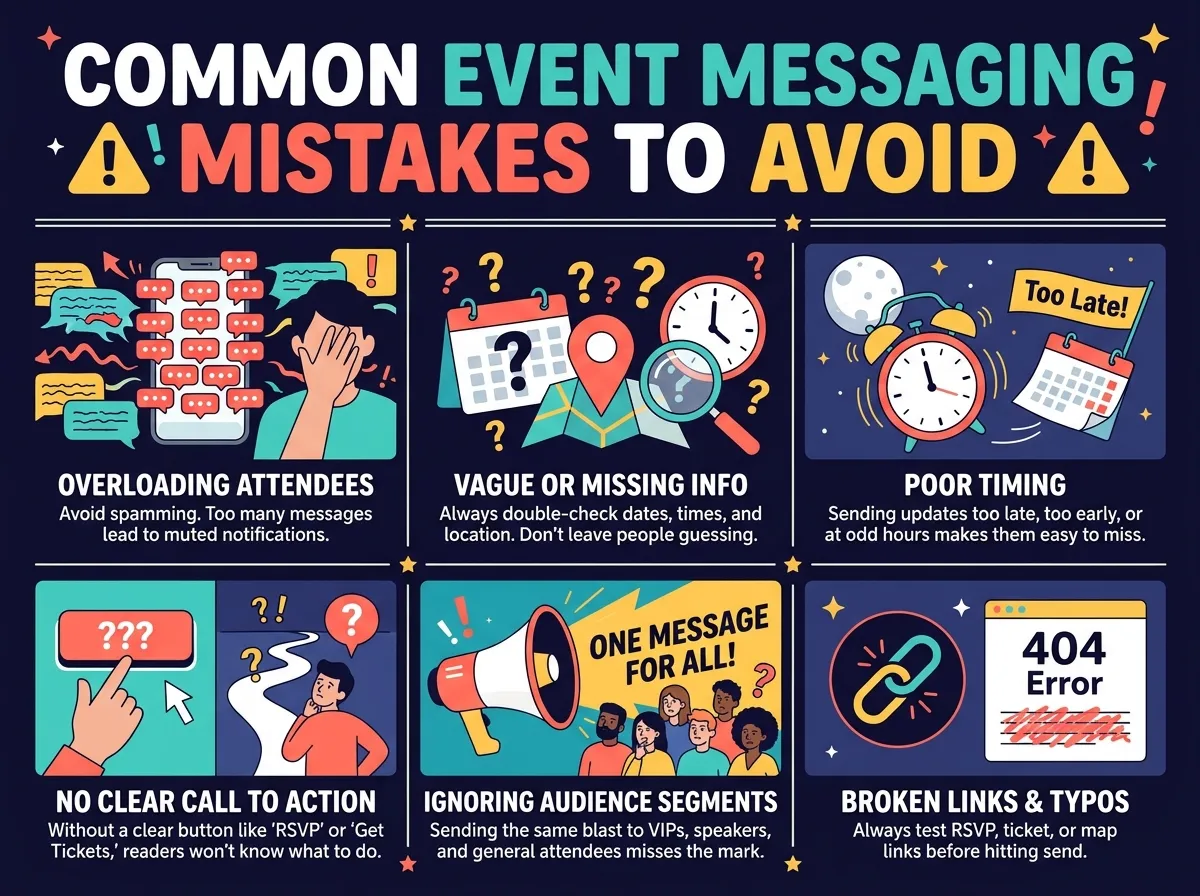
One frequent mistake is sending too many messages. When attendees receive repeated reminders, promotional announcements, and unrelated updates, they may begin ignoring all communications. Organizers should establish a messaging schedule and prioritize information according to its importance.
Another mistake is providing incomplete or inconsistent details. Different start times, outdated access links, or conflicting venue instructions can damage trust and create operational problems. A central source of event information and a clear update process help reduce these risks.
Generic communication can also weaken engagement. Messages that ignore the attendee’s registration status or selected sessions may feel irrelevant. Appropriate segmentation allows organizers to provide useful information without making the process unnecessarily complicated.
Some businesses also focus exclusively on promotion and overlook practical attendee needs. People need reliable instructions, timely reminders, and assistance when something changes. Event messaging should support the complete experience rather than only encourage registration.
Finally, organizations should not treat automation as a substitute for review. Automated systems can repeat mistakes quickly when their settings are incorrect. Testing workflows, monitoring delivery, and assigning responsibility for updates are essential parts of dependable event communication.
Conclusion
Event messaging helps organizers deliver timely information, encourage attendance, and create a more connected experience throughout the event lifecycle. From notification messages and automated reminders to SMS marketing, live alerts, and post-event follow-ups, each communication should serve a clear purpose.
An effective approach combines a well-defined communication strategy, suitable channels, relevant personalization, and careful message timing. Organizers should keep information accurate, respect attendee preferences, and ensure that important updates reach the people who need them. Automation can improve efficiency, but human oversight remains necessary for handling changes, questions, and unexpected situations.
By measuring performance and learning from attendee feedback, businesses can continually improve their messaging process. Consistent, helpful, and well-timed communication not only supports successful events but also builds trust and encourages attendees to maintain their relationship with the organization.
Frequently Asked Questions
1. What is event messaging?
Event messaging is the process of sending information and updates to attendees, speakers, sponsors, and other participants before, during, and after an event. It includes confirmations, reminders, announcements, and follow-up communications.
2. Why is event messaging important?
Event messaging keeps participants informed, reduces confusion, encourages attendance, and supports engagement. It also helps organizers communicate schedule changes and maintain relationships with attendees after an event.
3. Which channels are best for event messaging?
Email, SMS, event applications, messaging platforms, and event websites can all be useful. The best channel depends on the message’s urgency, length, audience, and communication preferences.
4. How often should event reminders be sent?
Reminder frequency depends on the event type and audience. Organizers may send an initial reminder several days in advance and another closer to the event, while avoiding unnecessary or repetitive messages.
5. What are automated event messages?
Automated event messages are communications triggered by a schedule, registration action, or attendee behavior. Examples include registration confirmations, scheduled reminders, access instructions, and post-event follow-ups.
6. How can SMS improve event communication?
SMS can deliver concise, time-sensitive information directly to attendees’ phones. It is useful for brief reminders, urgent schedule updates, and check-in instructions when recipients have appropriately agreed to receive messages.
7. How can event messaging increase attendee engagement?
Organizers can send relevant messages about sessions, networking opportunities, interactive activities, and useful resources. Timing messages appropriately and explaining the value of each activity can encourage participation.
8. What should an event follow-up message include?
A follow-up message may thank attendees, share presentation materials or recordings, request feedback, and provide relevant information about future events. Its content should reflect the recipient’s experience and interests.
9. Which metrics help measure event messaging success?
Useful metrics include delivery rates, click-through rates, registration conversions, attendance rates, survey participation, and opt-out rates. The most important measures depend on the objective of each message.
10. How can organizers avoid overwhelming attendees with messages?
Organizers should create a communication calendar, prioritize essential updates, segment audiences, and remove unnecessary repetition. They should also respect communication preferences and review engagement and opt-out data regularly.