
Event metadata is the structured information that describes an event, including its title, date, time, location, organizer, category, and registration details. When this information is accurate and consistently organized, it helps search engines interpret event pages, enables audiences to find relevant listings, and makes event information easier to manage across digital platforms. Effective event metadata management also supports structured data implementation, improves content consistency, and reduces confusion caused by outdated or incomplete event details.
An event can offer valuable speakers, engaging activities, useful networking opportunities, or an unforgettable experience, yet still struggle to attract the right audience if people cannot find accurate information about it. Visitors searching online need to understand what the event is, when it takes place, where it will be held, and how they can participate. Search engines also need clear information to interpret event pages and determine whether they are relevant to a particular search.
Event metadata helps connect these requirements. It describes the essential characteristics of an event through organized information that can be used across websites, registration systems, event directories, and promotional platforms. Instead of relying entirely on descriptive paragraphs, organizers can maintain consistent details about dates, locations, categories, registration links, and event status.
The value of metadata extends beyond search optimization. It helps teams coordinate information, update event listings, manage multiple sessions, and reduce inconsistencies across promotional channels. When an event changes venue or registration closes, properly managed metadata makes it easier to identify where the affected details need attention.
For event marketers, metadata is an important part of the digital infrastructure behind event discovery. It may not be the most visible element of a campaign, but it influences how information is organized, presented, maintained, and understood throughout the event lifecycle.
What Event Metadata Actually Contains
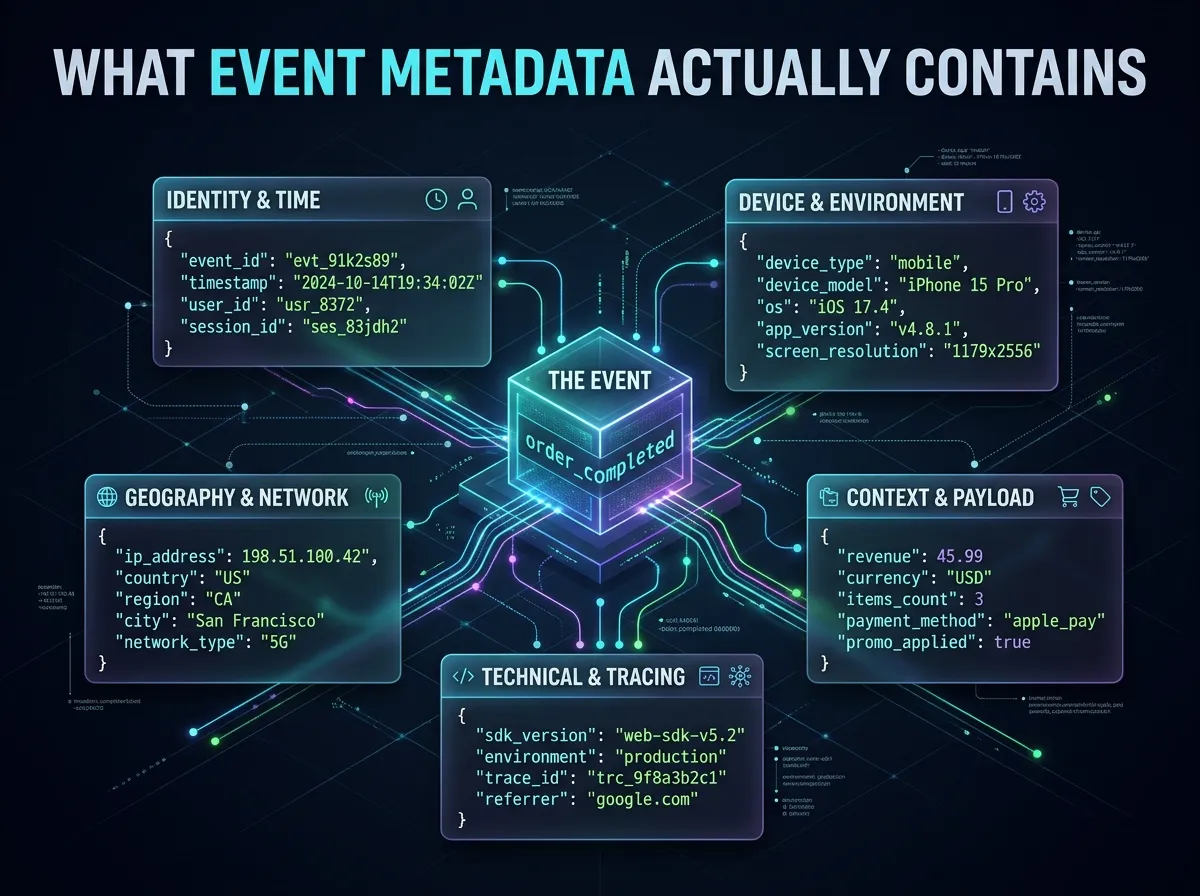
Event metadata consists of descriptive fields that explain an event’s identity, schedule, location, purpose, and participation requirements. The specific fields depend on the event format, the platform being used, and the needs of the audience.
A conference listing might include its official name, start and end dates, venue address, organizer, ticket information, featured topics, and registration page. A webinar may require a start time, time zone, online access information, speaker details, and a registration link. A recurring community event may need additional information to distinguish individual sessions from the overall event series.
These details help people make decisions quickly. Someone comparing several professional conferences should not have to search through long descriptions to determine the date or location of each event. Clear metadata places important information in a predictable structure and reduces the effort required to evaluate an opportunity.
Metadata can also include information that is not immediately visible to visitors. Search engines and other systems may use structured data to interpret details such as the event’s location, start date, organizer, and official URL. Internal event management systems may store identifiers, categories, status values, or relationships between sessions and parent events.
The important distinction is that metadata should describe the real event rather than simply contain keywords. Adding irrelevant phrases to an event title or filling descriptions with repeated search terms does not make the information more useful. Accurate, specific, and meaningful details provide a stronger foundation for discovery and event management.
Why Event Metadata Management Matters
Managing event information becomes more challenging as promotional activity expands. A single event might appear on the organization’s website, a registration platform, a partner’s calendar, a social media page, and several event directories. If each channel is updated independently, the same event can end up with conflicting dates, inconsistent titles, or outdated registration links.
Event metadata management provides a way to control these details more systematically. It establishes how event information is created, stored, reviewed, and updated, helping teams maintain consistency wherever the event is promoted.
A centralized event record can act as the primary reference for important information. When the schedule changes, the responsible team can update the source record and use it to check the other locations where the event appears. Depending on the platforms involved, integrations may automate some updates, while external listings may still require manual review.
Metadata management is particularly useful for organizations that handle multiple events at once. Standardized records make it easier to compare event details, identify missing information, distinguish upcoming events from completed ones, and coordinate responsibilities among marketing and operations teams.
It also supports continuity between promotion and delivery. Marketing teams may focus on attracting registrations, while event staff manage venues, schedules, and guest arrangements. Shared metadata helps both groups work from consistent information, reducing the risk of publishing details that no longer match the actual event.
The broader objective is not merely to maintain a database. It is to ensure that event information remains reliable as it moves between systems, teams, and audiences.
Building a Clear Event Information Structure
A useful event information structure gives every important detail a defined place. Without a consistent structure, one event page may place the date in its title, another may hide it in the description, and a third may use an unclear label that makes the information difficult to interpret.
A structured record separates key attributes into recognizable fields. These may include the event name, summary, start and end times, time zone, venue, online access details, organizer, event category, audience type, price, registration URL, and status. Not every event requires every field, but the structure should reflect the information people need to understand and attend it.
Field definitions are just as important as the fields themselves. If one team uses “event date” to mean the opening day while another uses it to represent registration deadlines, the resulting records can become confusing. Clear definitions reduce interpretation errors and improve consistency across departments.
Event formats also need to be represented correctly. An in-person event requires a meaningful physical location, while an online event may need platform or access details. A hybrid event can require both. A multi-session conference may need separate records for individual sessions, linked to the main event so that audiences can distinguish the overall program from a specific activity.
The structure should also support changes. Events may be postponed, moved online, rescheduled, or canceled. A clear status field and a reliable process for updating the corresponding dates and registration information can help prevent obsolete details from remaining visible.
When event information follows a consistent structure, it becomes easier to publish, search, compare, analyze, and maintain. That consistency is valuable for both visitors and the teams responsible for delivering the event.
Event Schema Markup and Search Engines
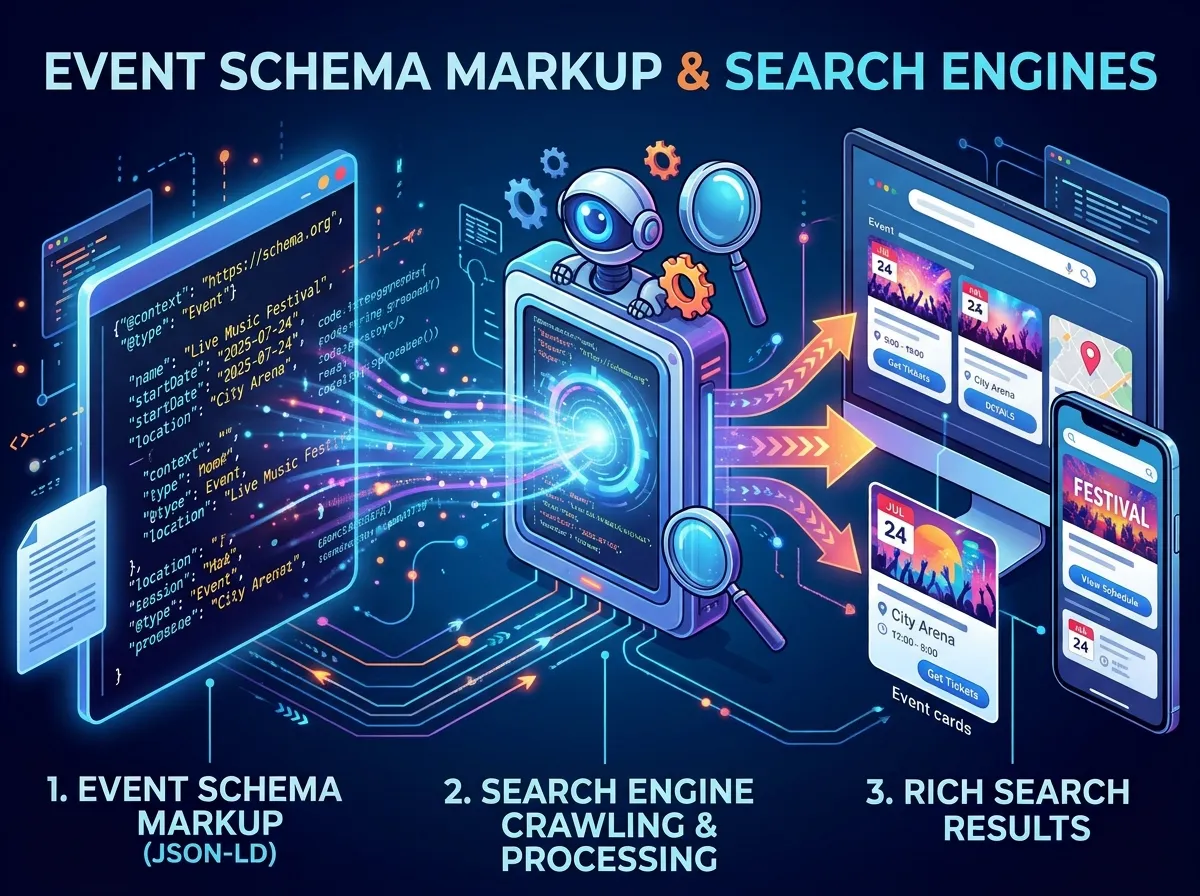
Search engines need to interpret event information correctly before they can consider presenting it in specialized search features. Event schema markup helps communicate the meaning of important event details through structured data added to a webpage.
Schema.org provides an Event vocabulary that can describe attributes such as the event name, start date, location, organizer, image, and official URL. When implemented appropriately, this markup gives search engines a clearer representation of the event than unstructured text alone may provide.
However, structured data does not guarantee a special search result or higher ranking. Search engines apply their own eligibility requirements, quality checks, and display decisions. The event page must also provide useful information to visitors, and the structured data should accurately reflect the content presented on the page.
For example, an event page should not mark a past event as upcoming, use a misleading date, or include registration details that do not match the visible page. If a conference is rescheduled, the structured data should be reviewed alongside the displayed schedule. Inconsistent information can make the page less reliable for both users and search systems.
The technical format matters as well. Many websites use JSON-LD to add structured data, but the implementation should follow the current requirements of the search engine and the event’s actual characteristics. Testing tools can help identify syntax problems and missing properties, while manual review confirms that the information itself is correct.
Schema markup should therefore be treated as a way to clarify event information, not as a shortcut around useful content. Accurate details, accessible pages, and consistent metadata remain essential to a strong event search presence.
Improving Event Metadata for Search Visibility
Event metadata optimization involves making event details more descriptive, consistent, and useful for both search engines and potential attendees. The goal is to help the right people understand the event and decide whether it meets their needs.
The event title is a useful starting point. It should clearly identify the event and, where appropriate, communicate its subject or audience. A title that is too vague may be difficult to distinguish from other listings, while an excessively long title can become awkward across search results and promotional platforms.
Descriptions should explain the event’s purpose, main topics, intended audience, and practical value. Relevant phrases can appear naturally when they reflect what the event actually offers. Repeating the same keyword several times does not improve clarity and can make the listing feel artificial.
Dates and locations deserve particular attention because they influence whether an event is useful to a searcher. A clear start date, correct time zone, and specific venue information help visitors evaluate the event without having to search elsewhere. For online events, the listing should communicate the format and explain how access information will be provided.
Metadata should also match the wider page experience. If the event title promises a marketing conference, the description and agenda should reflect that subject. If a listing advertises registration, the link should lead to the appropriate registration process rather than a generic homepage.
Technical performance contributes to the overall experience as well. Visitors who find an event through search still need a page that loads reliably and works across devices. Improving Event Core Web Vitals can support a smoother experience by addressing loading performance, responsiveness, and visual stability.
Metadata optimization works best when it supports a genuinely useful event page. Clear information helps audiences understand the opportunity, while a reliable page makes it easier to take the next step.
Organizing Event Listings Across Multiple Platforms
Event listings are often distributed across event directories, community calendars, industry websites, partner pages, and social platforms. Each channel may have different field requirements, character limits, or publishing rules. This creates a challenge when businesses want to maintain one consistent identity across all listings.
Event listing metadata should preserve the essential facts even when the presentation changes from platform to platform. The official title, date, location, organizer, and registration destination should remain consistent wherever possible. Short descriptions may need to be adapted to fit a platform, but the underlying meaning should not change.
A master event record can help teams manage these variations. It can contain the approved event details, the current description, official images, registration links, and notes about platform-specific requirements. Staff can use this record when creating or updating listings rather than reconstructing information from previous posts.
It is also important to distinguish the event itself from its promotional content. An announcement post, reminder, ticket offer, and post-event recap may all refer to the same event, but they serve different purposes and should not be confused with the main event record. Keeping these relationships clear helps prevent duplicate listings and inconsistent status information.
When an event is postponed or canceled, organizers should review the main event page and external listings. Some platforms may support direct updates, while others may require a correction, cancellation notice, or replacement listing. Old information should not be left untouched simply because the original campaign has ended.
This kind of consistency helps audiences trust what they find and gives organizers greater control over the event’s digital presence.
Event Data Classification and Content Metadata
As event programs grow, information becomes easier to manage when it is classified consistently. Event data classification involves assigning meaningful categories or labels to event records so that teams can organize them according to purpose, audience, format, subject, or status.
An organization might classify events as conferences, workshops, product demonstrations, networking sessions, webinars, or community gatherings. Additional labels could identify industry topics, target audiences, regions, or business units. These categories help users filter listings and help internal teams identify related events.
Classification should remain manageable. If every event receives dozens of overlapping labels, the system can become harder to maintain. Clear category definitions and a controlled set of approved values make it easier for different employees to classify events in the same way.
Event content metadata can also describe the supporting materials associated with an event, including agendas, speaker biographies, presentation files, recordings, and recap articles. These assets may need their own titles, publication dates, authors, categories, and relationships to the original event.
This connection is valuable after the event concludes. A completed conference may generate recordings, educational resources, and follow-up content that continue to attract visitors. Clear metadata helps audiences discover these materials without confusing them with registration pages for future sessions.
Classification can also improve internal reporting. Teams may compare performance by event type, subject, audience segment, or region, provided those categories are applied consistently. Over time, these insights can inform decisions about which events to repeat, expand, or redesign.
A well-organized classification system turns a growing collection of event records into a resource that can support discovery, coordination, and future planning.
Establishing Consistent Event Metadata Standards
Event metadata standards define how information should be recorded, formatted, and maintained across an organization. These standards help prevent each team or platform from developing its own interpretation of the same fields.
Date formatting is a common example. Teams should distinguish the event’s local start time from the time zone used to display or store it. This is especially important for virtual events that attract attendees from different countries. A consistent approach reduces the chance that participants arrive at the wrong time.
Naming conventions are equally useful. An official event title should be identifiable across the website, registration system, and promotional materials. If an event series contains several sessions, the naming structure should make the relationship clear without making individual sessions indistinguishable.
Standards should also cover status values. Terms such as upcoming, postponed, canceled, and completed should have defined meanings and clear rules for when they are applied. This allows teams to manage listings more reliably and reduces the chance that outdated events continue to appear as active opportunities.
Ownership should be explicit. Someone needs to be responsible for verifying key details, approving significant changes, and ensuring that published information remains accurate. For large programs, different teams may manage different fields, but the responsibilities should be documented.
These standards should be reviewed when platforms or workflows change. A format that works for one registration system may not transfer cleanly to another, and new search requirements may affect how structured data is implemented. Regular review keeps the standards useful without requiring unnecessary complexity.
How Metadata Supports the Complete Event Experience
Although metadata is closely associated with search and digital organization, its influence extends into the practical event experience. Accurate information helps attendees prepare, understand what to expect, and find the resources they need before arriving.
For an in-person event, the correct venue, accessibility details, schedule, and registration information can reduce uncertainty. For a virtual session, clear start times and access instructions help participants join successfully. When this information is inconsistent, even a well-promoted event can create avoidable frustration.
Metadata can support coordination between marketing and operations, too. The promotional team needs reliable dates and registration details, while the delivery team needs the approved agenda, venue information, and session schedule. A shared information structure makes it easier for both teams to work from the same source.
This connection becomes particularly valuable during event setup and delivery. Teams responsible for Event Setup Management rely on accurate operational information to coordinate spaces, resources, and schedules. While event metadata does not replace operational planning, it helps ensure that essential details are organized and available to the people who need them.
Guest experience also depends on information quality. Clear arrival instructions, event timings, and service details can help participants navigate an event with greater confidence. Thoughtful Event Guest Services work alongside accurate information to create a smoother experience from arrival through departure.
The same principle applies to promotion. When an event launches, consistent metadata helps ensure that the details shared across channels match the official event page. This supports Event Launch Promotion by giving prospective attendees a dependable source of information as awareness and registration activity grow.
Measuring the Quality of Event Metadata

Metadata quality can be evaluated by examining whether event records are complete, accurate, consistent, current, and easy to use. These qualities are more informative than simply counting how many fields exist in a database.
Completeness measures whether essential information is present. Accuracy considers whether the recorded details match the actual event. Consistency examines whether the same facts appear across connected systems, while timeliness reflects how quickly changes are applied.
Organizations can review these qualities through scheduled checks and practical reports. Missing dates, broken registration links, inconsistent event names, expired listings, and conflicting locations are useful indicators of metadata problems. Automated checks can detect some of these issues, but human review remains important when the meaning of the information requires judgment.
Search performance can provide additional context. Teams may examine whether event pages are indexed, whether relevant search queries attract visitors, and whether people continue from the event page to registration. However, metadata alone does not determine these outcomes. Page quality, competition, technical accessibility, brand awareness, and the event’s relevance all influence performance.
A sensible review process focuses on correcting problems that affect users and business objectives. It is more valuable to maintain accurate dates and functional registration links than to collect large amounts of information that no one uses.
When quality checks become part of routine operations, metadata remains useful throughout the event lifecycle rather than deteriorating as schedules and promotional campaigns change.
Conclusion
Event metadata provides the organized information that helps audiences discover events and helps businesses manage event details consistently. From titles, dates, and locations to structured data, categories, and event status, each field contributes to a clearer digital representation of the event.
Effective event metadata management combines accurate information, consistent standards, thoughtful classification, and regular maintenance. Structured data can help search engines interpret event pages, while reliable listings and accessible website experiences make it easier for people to evaluate and attend events.
Metadata also supports the work behind the scenes. Marketing, guest services, and event operations can coordinate more effectively when they share dependable information and understand who is responsible for keeping it current.
By treating metadata as an ongoing part of event management rather than a one-time publishing task, organizations can reduce information errors, improve event discovery, and create a more reliable experience from the first search to the final session.
Frequently Asked Questions
1. What is event metadata?
Event metadata is structured information that describes an event, including its title, date, time, location, organizer, category, registration details, and status. It helps people and digital systems understand the event.
2. Why is event metadata important for SEO?
Accurate metadata helps search engines interpret event information and can support relevant event discovery. Structured data may make a page eligible for certain search features, but it does not guarantee enhanced results or higher rankings.
3. What information should event metadata include?
Common fields include the event name, description, start and end dates, time zone, location or online format, organizer, official URL, registration details, image, and current status.
4. What is event schema markup?
Event schema markup is structured data that describes event information using a recognized vocabulary such as Schema.org. It helps search engines interpret details like the event name, date, and location.
5. How does event metadata management help organizers?
It helps organizers maintain consistent records, update changes, coordinate information across platforms, reduce duplicate listings, and keep event details accurate throughout the event lifecycle.
6. What is the difference between event metadata and event content?
Event content is the material audiences read or watch, such as an event description, agenda, or recording. Event metadata describes and organizes that content through fields such as title, date, category, author, and event relationship.
7. How can businesses improve event listing metadata?
They can use descriptive titles, accurate dates and locations, useful summaries, functional registration links, consistent naming conventions, and regular reviews of listings across promotional platforms.
8. Should event metadata be updated after an event changes?
Yes. Rescheduled, postponed, canceled, or completed events should have their relevant dates, status, registration information, and structured data reviewed so that visitors do not rely on outdated details.
9. Can event metadata improve the attendee experience?
Yes. Clear and accurate event details help attendees understand the schedule, location, access arrangements, and registration process, reducing confusion before and during the event.
10. How often should event metadata be reviewed?
Important details should be checked whenever an event changes and before major promotional activity. Organizations should also schedule regular reviews to identify outdated listings, broken links, missing fields, and inconsistencies across systems.