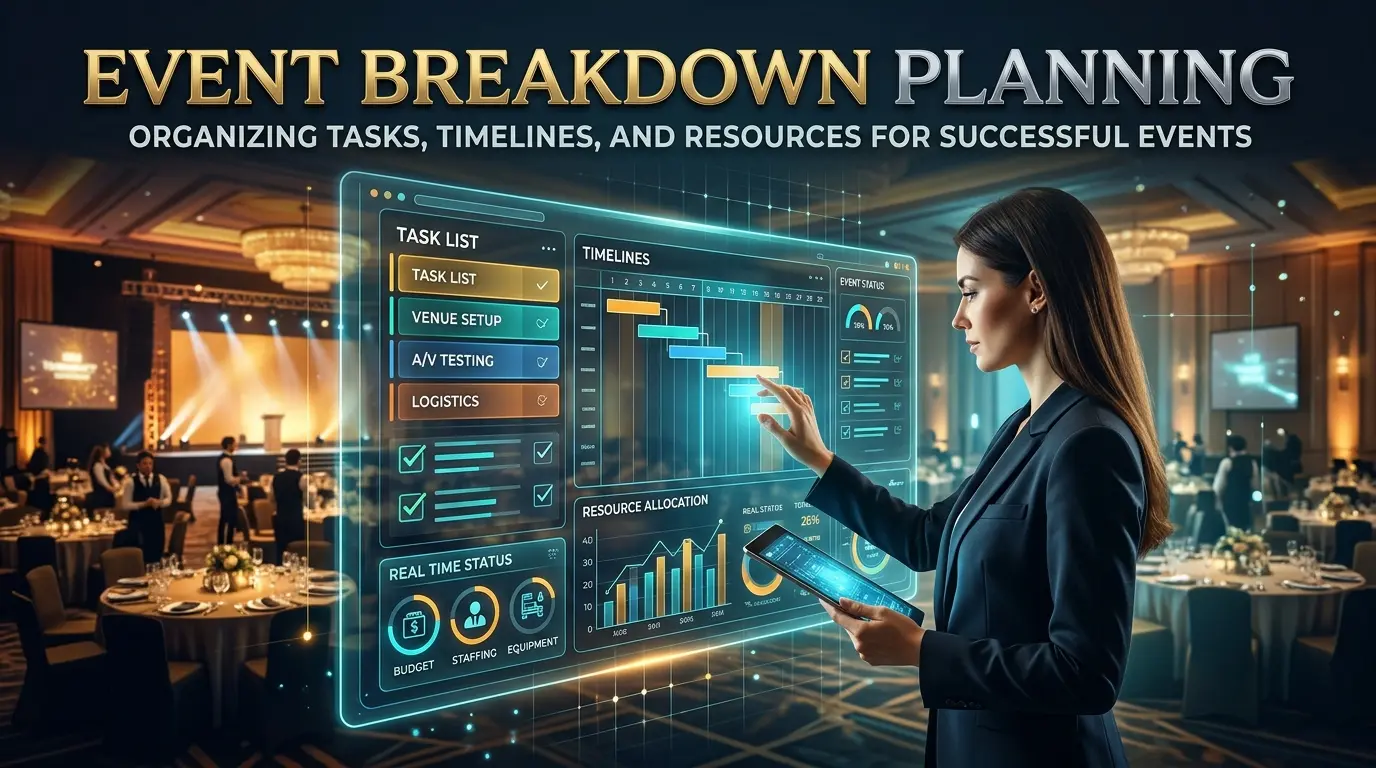
Event breakdown planning helps organizers divide complex event projects into manageable tasks, establish realistic schedules, and coordinate team responsibilities. By combining task management, resource allocation, timeline coordination, and execution planning, businesses can improve event organization, reduce operational challenges, and deliver more successful events.
Planning an event involves much more than selecting a venue, arranging speakers, or inviting attendees. Every successful event depends on numerous activities that must be completed in the right order and coordinated across different teams. From budgeting and vendor communication to registration, promotion, equipment preparation, and on-site management, even a relatively small event can involve a considerable amount of work. Without a clear structure, these responsibilities can become difficult to manage, leading to missed deadlines, duplicated efforts, and unexpected operational problems. Event breakdown planning provides a practical way to organize these responsibilities into manageable activities.
Event breakdown planning is the process of dividing a larger event project into smaller tasks, assigning responsibilities, establishing deadlines, and identifying the resources required for each activity. It gives organizers a clearer understanding of what needs to happen before, during, and after an event. Instead of managing an entire project as one complicated responsibility, teams can work through individual activities while maintaining a shared understanding of the overall objective.
This approach is valuable for conferences, exhibitions, corporate meetings, product launches, festivals, workshops, and other gatherings. By connecting task management with scheduling, resource allocation, and coordination, event organizers can create a more organized workflow and improve the overall execution of their events.
Understanding the Structure Behind Event Breakdown Planning
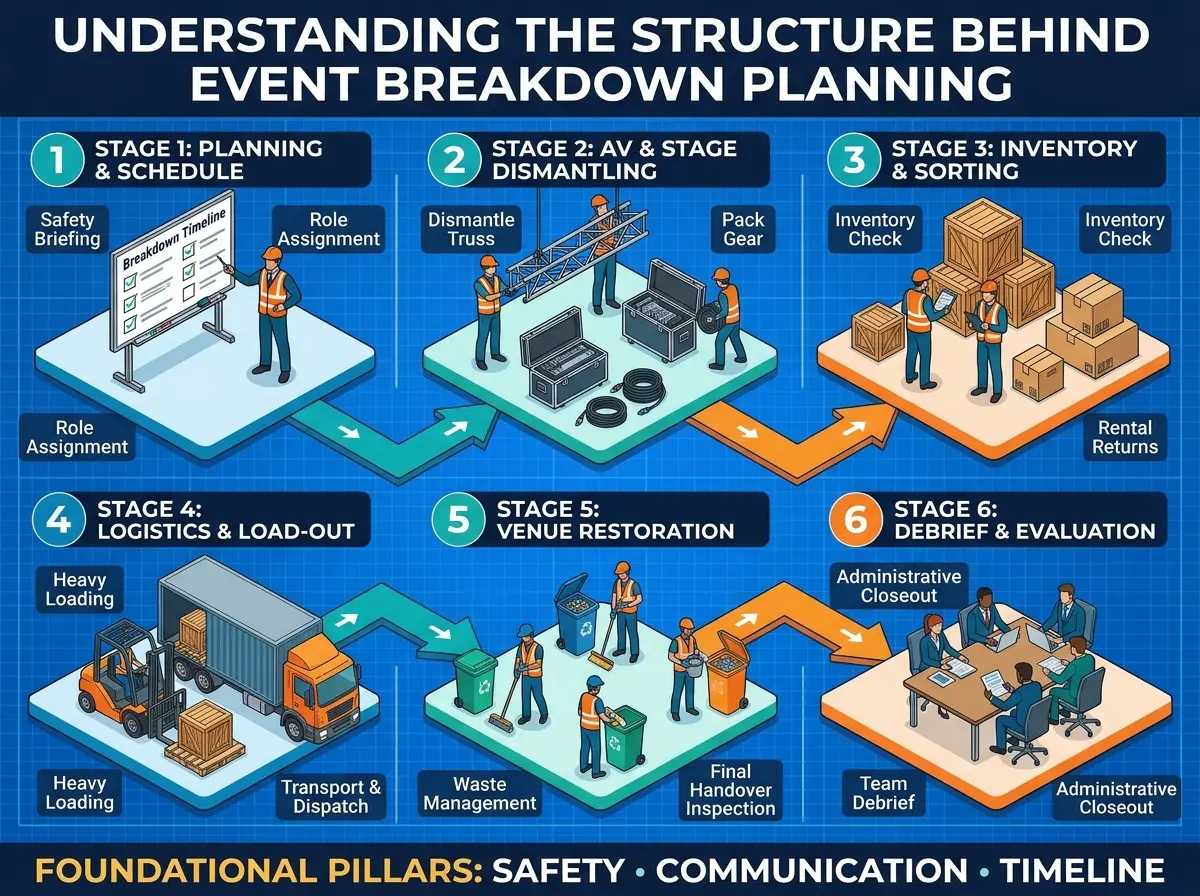
Every event contains several interconnected responsibilities. Venue selection depends on the expected attendance, equipment requirements, budget, and event format. Promotional activities depend on confirmed event details, while registration management requires coordination with marketing and attendee support teams.
These relationships make event planning more complicated than simply preparing a list of activities.
Event breakdown planning creates structure by separating the larger project into smaller areas of responsibility. Each area can then be divided into individual tasks that have clear objectives and completion requirements.
For example, a corporate conference may include venue management, speaker coordination, attendee registration, technical preparation, catering, sponsorship, and promotional activities. Each category contains additional responsibilities that need to be completed before the event begins.
Breaking down these activities allows organizers to understand how different responsibilities connect. It also helps teams recognize which tasks depend on other activities and which can be completed independently.
The result is a more transparent planning process where everyone understands their responsibilities and how individual contributions support the larger event.
Event Task Breakdown: Turning Large Projects Into Manageable Activities
An event task breakdown is one of the central elements of an organized planning process. It transforms broad responsibilities into smaller activities that can be assigned, monitored, and completed within a defined period.
For instance, arranging a venue is a major event responsibility, but it involves several individual tasks. Organizers need to research suitable locations, compare prices, inspect facilities, review contracts, confirm availability, and coordinate setup requirements.
When these activities are treated separately, it becomes easier to monitor progress and identify delays before they affect the overall schedule.
The same approach applies to other event responsibilities. Speaker management may involve invitations, agreements, presentation collection, travel arrangements, and session scheduling. Registration management may include form creation, payment processing, confirmation emails, attendee lists, and check-in preparation.
A detailed event task breakdown also improves accountability. Rather than assigning an entire department a broad responsibility without clear expectations, organizers can identify specific deliverables and establish who is responsible for completing them.
This structure is particularly useful when several teams or external suppliers contribute to the same event. It reduces confusion and makes communication more focused throughout the planning process.
Creating an Event Planning Checklist That Reflects Real Priorities
An event planning checklist helps organizers maintain visibility over the responsibilities involved in preparing an event. However, an effective checklist should do more than collect a large number of tasks in one document. It should reflect the actual requirements, priorities, and dependencies of the event.
A conference, for example, may require speaker agreements and venue confirmation several months before the event. Promotional graphics, registration updates, and attendee communication may become more important as the event approaches.
A checklist organized around these different stages provides a clearer picture of what requires attention at each point.
It also helps prevent smaller responsibilities from being overlooked. Tasks such as confirming accessibility arrangements, preparing directional signage, checking presentation formats, and arranging emergency contacts may not appear as important as venue booking or marketing, but they can significantly influence the attendee experience.
Digital checklists offer additional flexibility because team members can update task status, attach documents, and communicate changes without repeatedly exchanging separate files.
For larger projects, an event planning checklist can become part of a broader project management system, connecting individual responsibilities with deadlines and progress reporting.
Event Work Schedule and the Importance of Timing
An event work schedule establishes when individual activities should begin and when they need to be completed. It connects the task breakdown with the actual timing of the project.
Without a clear schedule, teams may understand what needs to happen but remain uncertain about when their responsibilities should be addressed.
A well-structured event work schedule considers the size of the event, the number of people involved, supplier availability, approval requirements, and the amount of preparation each activity requires.
For example, a promotional campaign cannot always begin immediately after an event idea is approved. Organizers may first need to confirm the venue, establish the event date, finalize the program, and prepare registration information.
Similarly, technical rehearsals should take place after the necessary equipment and presentation materials are available.
Timing becomes especially important when multiple activities depend on one another. Delays in one area can affect several other responsibilities, potentially creating pressure throughout the planning process.
A coordinated work schedule gives organizers an opportunity to identify these relationships and provide enough time for essential activities.
Event Activity Planning Across Different Event Stages
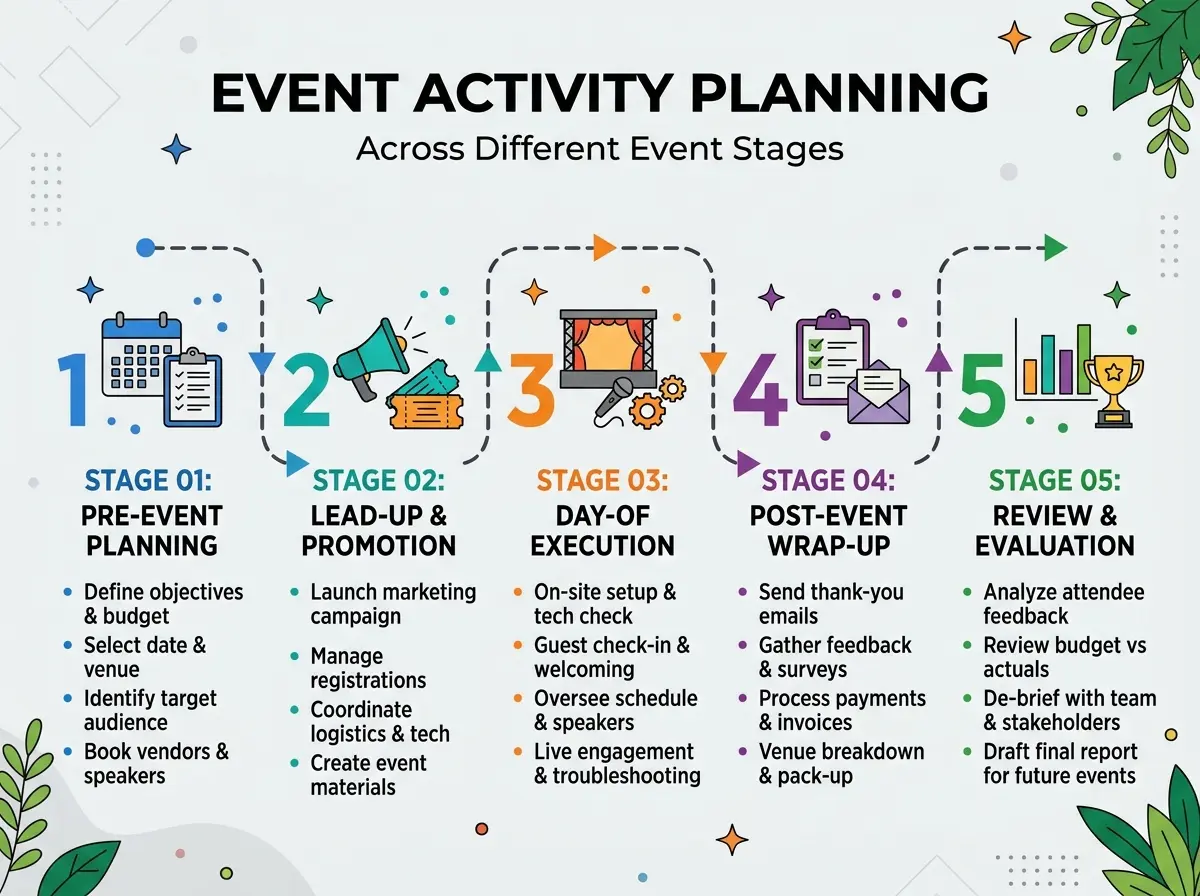
Event activity planning focuses on the individual actions that make up the overall event experience. These activities can include registration, presentations, networking sessions, entertainment, product demonstrations, audience engagement, and post-event communication.
Although these activities may appear separate, they need to work together to support a consistent event experience.
For example, a business exhibition may include keynote presentations, demonstration areas, sponsor booths, networking opportunities, and visitor registration. Each activity requires a different combination of staff, equipment, space, and scheduling.
Organizers need to consider how attendees move between these activities and whether the program provides enough time for transitions.
An overcrowded schedule can create unnecessary pressure, while long gaps between sessions may reduce audience engagement. Activity planning therefore involves finding an appropriate balance between the event’s objectives and the practical needs of attendees.
It also requires consideration of unexpected situations. A speaker may arrive late, a presentation may require additional time, or an activity may need to be adjusted because of venue limitations.
When event activities are planned as connected parts of a larger experience, organizers can respond to these changes without losing sight of the overall program.
Event Task Management and Team Accountability
A detailed task breakdown becomes useful only when responsibilities are properly managed. Event task management connects individual assignments with team members, deadlines, progress updates, and completion requirements.
In many events, responsibilities are shared across internal departments and external suppliers. Marketing teams handle promotion, technical teams manage equipment, operations teams coordinate venue requirements, and registration teams communicate with attendees.
Without clear task ownership, several people may assume that someone else is handling an important responsibility. This can result in unfinished work or duplicated efforts.
Task management helps prevent these situations by establishing clear ownership.
For example, one team member may be responsible for collecting speaker presentations, while another handles presentation equipment and technical testing. Although these responsibilities are related, they require different actions and should be monitored separately.
Regular progress updates also help organizers understand whether the project is moving according to plan. When a task becomes delayed, the responsible team can communicate the issue and identify how it may affect other activities.
This creates a more accountable working environment and makes it easier for event managers to coordinate people without becoming involved in every individual task.
Event Timeline Management and Managing Dependencies
An event timeline connects individual activities through their deadlines and dependencies. It helps organizers understand the sequence in which work should happen and identify important milestones throughout the project.
Some tasks can begin immediately, while others depend on earlier decisions.
For instance, promotional materials may require approved event branding, confirmed speakers, and finalized registration details. Similarly, printing attendee badges depends on receiving accurate registration information before the production deadline.
These relationships are known as task dependencies. Recognizing them is essential because a delay in one activity can affect the completion of several others.
Event timeline management helps organizers identify important milestones, such as venue confirmation, registration opening, promotional campaign launches, supplier approvals, final rehearsals, and event-day preparation.
A timeline also provides a shared reference for everyone involved. Instead of relying on individual reminders or informal conversations, teams can understand how their responsibilities fit into the broader project schedule.
For complex events, timeline management can be supported by Gantt charts and project management platforms that display task durations, deadlines, and relationships between activities.
This makes it easier to recognize scheduling conflicts and adjust responsibilities before they become serious problems.
Event Resource Allocation and Managing Available Budgets
Every event depends on resources, and these resources must be distributed according to actual requirements. Event resource allocation involves assigning people, equipment, materials, facilities, and financial resources to different activities.
A conference may require audiovisual equipment, stage lighting, microphones, registration systems, catering services, security personnel, and temporary staff. Each resource has a cost and an availability requirement that needs to be considered during planning.
Poor allocation can create unnecessary expenses or operational shortages. For example, assigning too few staff members to attendee registration may create long queues, while ordering more technical equipment than necessary can increase the event budget without providing meaningful benefits.
Resource allocation becomes more effective when it is connected to the event task breakdown. Organizers can identify what each activity requires and compare those needs with the available budget and resources.
It also helps businesses understand the financial relationship between individual activities and overall event performance.
This is particularly relevant for marketing events where organizers need to evaluate the commercial value of their investments. Understanding Event Cost Per Lead can help businesses connect event-related expenses with the number and quality of leads generated.
By considering financial requirements alongside operational responsibilities, event teams can make more informed allocation decisions and maintain better control over spending.
Event Coordination Tasks That Keep Teams Connected
Event coordination tasks involve managing communication and collaboration between everyone responsible for delivering the event.
Even when individual teams complete their assignments successfully, the overall event can experience problems if their activities are not properly coordinated.
For example, the marketing team may announce a registration deadline that does not match the operations team’s preparation schedule. A catering supplier may need updated attendance information, while the venue team requires an accurate equipment layout.
These situations demonstrate why communication must remain consistent throughout the planning process.
Coordination also extends to external partners, including speakers, sponsors, caterers, decorators, technical suppliers, and venue representatives. Each partner may have different requirements, deadlines, and communication preferences.
A shared planning document or event management platform can help maintain consistent information. It allows relevant team members to access updated schedules, task assignments, supplier details, and important project changes.
Regular coordination meetings are also valuable when important decisions need approval or several departments are working toward the same milestone.
The objective is to create a connected working environment where information reaches the appropriate people at the right time.
Developing an Event Execution Plan for the Actual Event Day
The planning process eventually leads to event execution, when preparation becomes practical activity. An event execution plan translates the previously organized tasks into responsibilities that must be carried out during the actual event.
This stage requires careful coordination because several activities may happen simultaneously.
For example, while attendees are entering a conference venue, technical staff may be preparing presentation systems, registration teams may be checking participant details, and event coordinators may be communicating with speakers.
Without an organized execution structure, these simultaneous responsibilities can become difficult to manage.
An event execution plan should reflect the actual event schedule and the responsibilities of each team. It should also identify important contact persons, equipment requirements, setup arrangements, and procedures for handling unexpected situations.
Communication becomes especially important during this stage. Team members need a reliable way to receive updates when session timings change, equipment requires attention, or attendee-related issues arise.
The execution plan should also account for activities that take place after the main program, including equipment removal, venue inspection, supplier coordination, and attendee follow-up.
When these responsibilities are connected to the original task breakdown, the event can move from preparation to completion with greater consistency.
Event Planning Workflow: Connecting Every Responsibility
An effective event planning workflow brings all the individual activities together into a coordinated process. Rather than treating budgeting, scheduling, promotion, staffing, and execution as separate projects, it establishes relationships between them.
The workflow generally develops through several connected stages.
-
Event objectives and initial planning
The organizing team establishes the event purpose, expected audience, format, scope, and important requirements.
-
Task identification and breakdown
Major responsibilities are divided into smaller activities, with clear deliverables and ownership.
-
Scheduling and resource planning
Deadlines, task dependencies, staffing requirements, equipment, and budget allocations are established.
-
Coordination and preparation
Teams work through their assigned responsibilities while communicating progress and resolving operational issues.
-
Event execution
The event takes place according to the established schedule, with teams managing their respective responsibilities.
-
Post-event evaluation
Organizers review performance, collect feedback, settle outstanding responsibilities, and identify improvements for future events.
This connected workflow provides a clearer understanding of how individual tasks contribute to the final outcome. It also makes it easier to identify where changes may be necessary when an event’s requirements evolve.
How Event Technology Is Changing Planning and Coordination
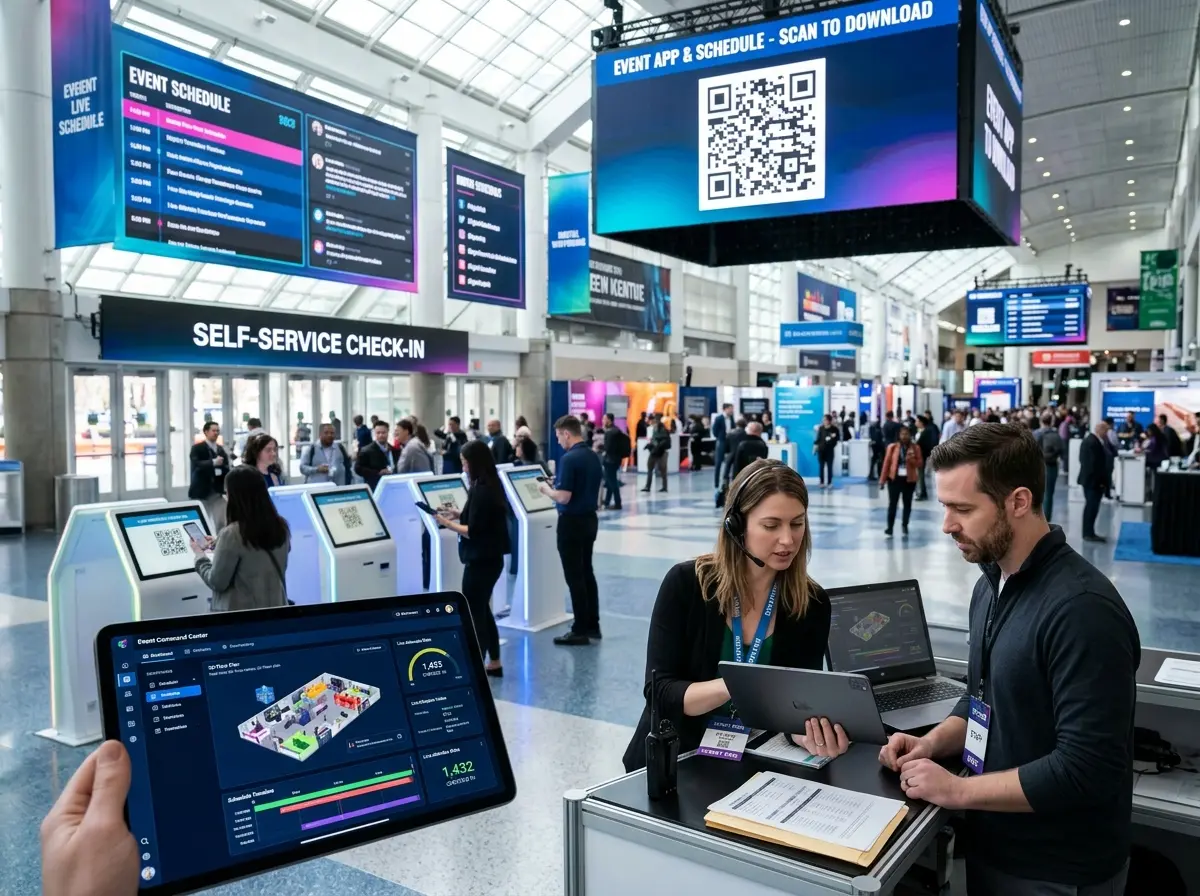
Event technology is changing how organizers manage tasks, communicate with teams, and coordinate different parts of an event. Digital platforms now allow planners to manage registration, scheduling, attendee information, communication, and operational responsibilities within connected systems.
Project management applications can display task assignments and deadlines, while event management platforms support registration, ticketing, attendee communication, and reporting.
Some systems also provide automated notifications that alert team members when deadlines approach or responsibilities change. This reduces dependence on manual follow-ups and makes project information easier to maintain.
Emerging technologies are creating additional opportunities for event organizers. Artificial intelligence can support scheduling decisions, analyze attendee information, and assist with administrative tasks. Data analytics can also help teams understand attendance patterns and evaluate event performance.
These developments are part of broader Event Technology Trends that are influencing how modern events are planned, managed, and delivered.
However, technology should support a well-defined planning structure rather than replace it. A digital platform cannot automatically solve unclear responsibilities, unrealistic deadlines, or poor communication between teams.
The greatest value comes when organizers combine suitable technology with a practical event breakdown and a coordinated management approach.
Connecting Event Breakdown Planning With Promotion and Audience Engagement
Event preparation does not end with operational arrangements. Promotion and audience engagement are also essential parts of the overall event structure.
Marketing responsibilities may include developing promotional content, managing social media announcements, coordinating email campaigns, publishing event details, and communicating with potential attendees.
These activities need to align with the event schedule. Promotional messages should reflect confirmed information, while registration updates and attendee communication should remain consistent with operational decisions.
A coordinated promotional process can also improve event visibility and audience participation.
Businesses using Digital Marketing for Events can connect different online channels to attract relevant audiences and communicate important event information.
Search visibility is another consideration. When event pages contain accurate dates, locations, descriptions, and structured information, search engines can better understand their content. This is where Event Schema Optimization becomes relevant, helping event information become more understandable to search engines and supporting event discovery.
By including marketing and visibility activities in the broader event breakdown, organizers can ensure that promotional responsibilities receive the same attention as venue arrangements, staffing, and technical preparation.
Evaluating Event Performance After Completion
The completion of an event does not mean that the planning process has nothing more to offer. Post-event evaluation helps organizers understand which responsibilities were completed successfully and where improvements may be needed.
Teams can review attendance figures, registration performance, budget utilization, audience feedback, session participation, and operational issues.
Comparing the original task breakdown with actual completion records can reveal whether deadlines were realistic and resources were distributed effectively.
For example, an event may achieve its attendance target but experience delays during registration. This information can help organizers identify whether additional staff, improved check-in technology, or a different registration arrangement would improve future events.
Supplier performance and team communication should also be evaluated. Delayed deliveries, unclear instructions, and last-minute changes can provide useful insights for future planning.
Post-event evaluation turns individual experiences into practical knowledge. Instead of repeating the same planning problems, organizations can use previous results to improve their workflows and develop more reliable event management processes.
Conclusion
Event breakdown planning creates a structured foundation for managing the many responsibilities involved in organizing successful events. By dividing larger projects into manageable tasks, establishing clear schedules, allocating resources, and coordinating team activities, organizers can maintain better control over the entire process. From initial preparation and promotional activities to event-day execution and post-event evaluation, every responsibility contributes to the overall outcome. Combining effective task management with suitable event technology and consistent communication helps businesses reduce operational confusion, use resources more efficiently, and deliver more organized and successful events.
Frequently Asked Questions (FAQs)
1. What is event breakdown planning?
Event breakdown planning is the process of dividing a larger event project into smaller tasks, assigning responsibilities, setting deadlines, and identifying the resources required to complete each activity.
2. Why is event breakdown planning important?
It helps organizers manage complex responsibilities, maintain clear schedules, coordinate teams, prevent missed tasks, and improve overall event execution.
3. What is an event task breakdown?
An event task breakdown separates major responsibilities, such as venue management, registration, promotion, and technical preparation, into smaller activities that are easier to assign and monitor.
4. How does an event planning checklist help organizers?
An event planning checklist keeps important responsibilities organized, tracks task completion, and helps teams identify outstanding activities before important deadlines.
5. What is included in an event work schedule?
An event work schedule includes task deadlines, activity durations, important milestones, team responsibilities, and the timing of different preparation activities.
6. What is event resource allocation?
Event resource allocation involves distributing budgets, staff, equipment, materials, and facilities according to the requirements of different event activities.
7. How does event timeline management improve coordination?
It establishes task sequences, identifies dependencies, and helps organizers understand how individual deadlines affect the overall event schedule.
8. What is an event execution plan?
An event execution plan explains how responsibilities will be carried out during the actual event, including staffing, scheduling, technical arrangements, and communication procedures.
9. Can event management software support event breakdown planning?
Yes. Event management and project management software can help teams organize tasks, assign responsibilities, monitor deadlines, share updates, and coordinate different event activities.
10. What happens after an event is completed?
Organizers evaluate attendance, budget performance, audience feedback, team coordination, and task completion. These findings help identify improvements for future events.