Digital Event Marketing helps brands attract the right audience, turn interest into registrations, and guide attendees toward meaningful action. This guide shows how to promote events with clarity, build trust through relevance, and improve attendance, engagement, and revenue without sounding pushy or generic.
In a crowded online world, events do not win attention by being louder; they win by being more relevant, more useful, and easier to join. That is why this strategy has become essential for brands that want to move beyond random promotion and create real audience momentum. Whether you are hosting a webinar, virtual summit, product launch, workshop, or hybrid conference, your success depends on how clearly you communicate value and how smoothly you guide people from curiosity to registration.
The method is not just about ads or social posts. It is a full system that connects audience insight, message clarity, landing page psychology, email timing, social proof, and follow-up experience. When these pieces work together, attendance rises naturally, and ROI becomes easier to improve because each stage of the journey supports the next. In this guide, you will find practical methods to build that system from the ground up.
Why Digital Event Marketing Matters
People attend events when they believe the experience will help them solve a problem, learn something useful, save time, or gain a new opportunity. This approach gives you the tools to communicate that value in a way that feels personal and timely. Instead of hoping people notice your event, you can create a structured path that meets them where they already spend time online.
Another reason the strategy matters is flexibility. You can promote to different audience segments, test headlines, refine offers, and improve messaging quickly. Traditional event promotion often depends on broad awareness, but it allows you to identify which channels produce the strongest engagement and which messages convert best. That makes it easier to spend budget wisely and reduce wasted effort.
A strong campaign also supports trust. People are more likely to register when they see consistency across your landing page, email sequence, speakers, and social content. That consistency helps build trust so your audience feels confident that the event is worth their time.
Start With Audience Psychology

Before you publish a single post, you need to understand what your audience really wants. Digital Event Marketing performs best when it is built around emotional and practical needs instead of generic features. People usually register because they want clarity, confidence, inspiration, or a shortcut to a result they care about. Your task is to uncover which of those motivations matters most.
Think about the main pain points your audience faces and the outcome they hope to achieve. Are they trying to learn a skill faster? Are they looking for industry insights? Do they want networking opportunities or a roadmap for a business challenge? Once you know the underlying motivation, your message becomes far more persuasive because it speaks to the decision behind the click. How to boost attendance using Digital Event Marketing strategies works best when the offer is specific, the form is simple, and the reminders are timely.
This is where audience research becomes powerful. Best Digital Event Marketing strategies to increase ROI usually combine segmentation, retargeting, and post-event follow-up so the campaign keeps earning value after the live session. Review past event data, survey your email list, read comments on social platforms, and check which topics already earn attention. Small clues often reveal the message angle that will work best. When your promotion reflects real audience language, the campaign feels less like advertising and more like a helpful invitation.
Build a Clear Value Proposition
A weak event promise makes even good promotion fail. People need to understand why they should register now instead of later. Your event promise works best when it is specific, believable, and outcome-driven. Avoid vague phrases such as “join us for an exciting event” and replace them with a concrete benefit.
The most effective value propositions answer three questions quickly: What will attendees learn or gain? Why is this event useful now? Who is it for? When these answers are clear, your audience can judge the offer with less effort, which increases the chance that they will sign up. This is one of the simplest ways to improve event conversion without increasing ad spend.
Your speakers, topics, format, and takeaways all need to support the promise. If the event is about growth, show the practical frameworks. If it is about networking, explain how attendees will connect. The experience succeeds when the promise and the event delivery match, because people remember consistency more than hype.
Create a Conversion-Focused Registration Page
Your landing page is where interest turns into action. Even the strongest event campaign can underperform if the registration page is unclear, cluttered, or slow. The page should load quickly, explain the event in plain language, and make the next step obvious. Every extra distraction reduces the likelihood that a visitor will complete the form.
Place the most important details above the fold: event name, date, format, key benefit, and a visible registration button. Then support that section with speaker highlights, agenda points, and short trust elements like testimonials or brand logos. The page should help visitors make a confident decision in a few seconds.
This is also where friction matters. Keep the form short and ask only for information you truly need. A shorter form usually improves registration rates because it removes mental resistance. In this strategy, reducing friction often matters more than adding more persuasive copy.
Use urgency without pressure
People respond to deadlines when they feel real. Early-bird offers, limited seats, bonus resources, and time-based reminders can improve sign-ups when used honestly. The key is to create gentle urgency, not fear. Digital Event Marketing should make the next step feel timely, not forced.
Use Email as a Relationship Channel
Email remains one of the most reliable tools in Digital Event Marketing because it allows direct communication with people who already know your brand. A thoughtful sequence can build anticipation before the event and maintain interest if someone has not registered yet. It also helps you turn passive interest into committed attendance.
A strong email strategy should include announcement emails, reminder messages, speaker spotlights, agenda previews, and final call messages. Each email should serve a different purpose. The first builds awareness, the second creates curiosity, and the later messages remove hesitation. Over time, the sequence should feel like a conversation that helps the reader move closer to a decision.
For best results, keep the tone human and useful. Focus on why the event matters and what the attendee will walk away with. This is one of the best digital event marketing strategies to increase ROI because email can nurture interest at a very low cost while supporting stronger registration quality.
Promote Across Social Channels Intelligently
Social platforms can spread awareness fast, but only when your content is designed for how people actually browse. Digital Event Marketing on social media should not rely on one generic graphic repeated everywhere. Different platforms reward different formats, so adapt the message to each space while keeping the core promise consistent.
Short clips, quote cards, countdown posts, behind-the-scenes previews, and speaker introductions can all help build momentum. The point is not to post more for the sake of activity. The point is to create reasons for people to care, share, and remember. Consistency matters because repeated exposure often turns mild interest into action.
Online strategies to promote virtual events successfully work best when they blend organic and paid channels. Use organic posts to build trust and paid distribution to reach new audiences with precision. When the two support each other, Digital Event Marketing becomes easier to scale without losing authenticity.
Strengthen the Event Story
People remember stories more than feature lists. In Digital Event Marketing, your event should feel like part of a larger story with a clear beginning, problem, and transformation. That story can center on a challenge your audience faces, a shift in the market, or a change they need to prepare for.
A story gives your event emotional structure. Instead of saying the event includes sessions and panels, explain how each part helps attendees move from confusion to clarity. Instead of listing topics, show how those topics connect to a bigger result. This approach makes your communication more memorable and easier to share.
When people understand the narrative, they are more likely to identify with the event. Digital Event Marketing becomes stronger because the audience is not just joining a session; they are entering a meaningful experience that feels relevant to their goals.
Add Social Proof Everywhere It Matters

Trust is a major factor in attendance. People often hesitate because they do not know whether the event will truly be valuable. Digital Event Marketing can reduce that hesitation by adding proof that others have benefited before. Testimonials, speaker credibility, attendee quotes, partner logos, past event highlights, and registration milestones can all help.
Social proof works because it lowers perceived risk. When a visitor sees that others found the event worthwhile, the event feels safer to join. This is especially important for first-time audiences who have not yet built a relationship with your brand.
Use proof strategically rather than stuffing it everywhere. Put a short testimonial near the registration button, mention speaker authority in the agenda section, and show attendance numbers where they reinforce trust. In Digital Event Marketing, proof should support the promise, not distract from it.
Optimize Timing and Frequency
Many campaigns lose momentum because they either start too late or overwhelm people too quickly. Digital Event Marketing should follow a pace that matches attention cycles. Build awareness early, increase intensity as the event approaches, and then make final reminders simple and action-oriented.
Timing also depends on audience behavior. Some groups respond best during work hours, while others engage more after hours or on weekends. Test different send times and posting patterns to learn when your audience is most responsive. Small timing improvements can lead to meaningful changes in registration rates.
A smart schedule also protects attention fatigue. Too many messages can reduce interest, while too few can make the event easy to forget. Effective Digital Event Marketing balances visibility and restraint so the message stays present without becoming annoying.
Make reminders feel helpful
Your reminders should answer practical questions such as when the event starts, how to join, what people will learn, and what to prepare. Helpfulness is more persuasive than repetition. When reminders remove uncertainty, attendance rises.
Focus on Engagement Before the Event Begins
Attendance is not only about registration. It is also about emotional commitment. Digital Event Marketing should keep people engaged before the event starts so they are less likely to ignore it later. Pre-event interaction creates anticipation and makes the event feel real rather than abstract.
You can build engagement through polls, Q&A prompts, teaser videos, community discussions, and live countdown updates. These touchpoints invite participation and make people feel involved before the session begins. That sense of involvement often increases the chance that people actually show up.
This is also where how to increase event engagement and attendance online becomes practical. The more your audience interacts with event content ahead of time, the more mentally invested they become. That investment can reduce drop-off and improve live participation once the event starts.
Segment Your Audience for Better Relevance
Not everyone should receive the same message. Digital Event Marketing improves when you divide your audience by role, interest, behavior, or stage in the buying journey. A new visitor may need education, while a warm lead may need reassurance or urgency. Segmentation lets you speak to both groups more effectively.
For example, one segment might care most about learning outcomes, while another cares about networking or product relevance. When each group sees messaging that matches its priority, the campaign feels more personal and less generic. That usually leads to better engagement and stronger response rates.
Segmentation is one of the proven event marketing strategies for higher conversion because it reduces mismatch. Rather than trying to persuade everyone with one broad message, you meet each audience with the reason they are most likely to care.
Use Retargeting to Recover Lost Interest
Most people will not register the first time they see your event. That is normal. Digital Event Marketing becomes more efficient when you use retargeting to bring interested visitors back. Someone who viewed the event page, watched a teaser, or engaged with a social post has already shown intent.
Retargeting ads can remind those people about the value they saw earlier. You can use fresh angles such as speaker highlights, countdowns, testimonials, or limited-seat reminders. This keeps the event top of mind without starting the conversation from zero.
Because retargeting focuses on warmer audiences, it often improves ROI. The audience is already familiar with the event, so the cost of persuasion tends to be lower. That makes Digital Event Marketing more efficient and easier to scale.
Measure the Right Metrics
Attendance numbers matter, but they do not tell the full story. Digital Event Marketing should be measured across the whole funnel so you can see where interest grows or breaks down. Registration rate, landing page conversion, open rate, click-through rate, attendance rate, engagement rate, and post-event actions all provide useful insight.
When you track the right metrics, you can identify whether the problem is awareness, interest, trust, or follow-through. Maybe the ad is strong but the landing page is weak. Maybe people register but do not attend because reminders are too generic. Data helps you fix the real issue instead of guessing.
This approach supports long-term improvement. Each event becomes a learning opportunity, and each campaign teaches you how to make the next one stronger. Digital Event Marketing works best when it is treated as a repeatable system, not a one-time promotion.
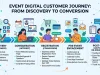
A Practical Planning Framework
Below is a simple framework you can use to organize your campaign.
| Stage | Goal | Best Tactics |
|---|---|---|
| Audience research | Understand needs | Surveys, analytics, comments |
| Positioning | Clarify value | Outcome-based messaging |
| Registration | Convert interest | Short form, clear CTA |
| Promotion | Reach audience | Email, social, paid ads |
| Nurture | Build commitment | Reminders, proof, teasers |
| Event day | Maximize attendance | Live support, simple access |
| Follow-up | Extend ROI | Replay, offers, feedback |
This table makes Digital Event Marketing easier to manage because it turns a broad idea into a practical workflow. When every stage has a purpose, the campaign stays focused and easier to improve.
Common Mistakes to Avoid
Many event campaigns struggle for predictable reasons. They use vague messaging, overload the audience with information, or promote too late. Others focus only on awareness and forget that people also need reassurance before registering. Digital Event Marketing should reduce confusion, not add to it.
Another common mistake is ignoring mobile behavior. Many people discover events on their phones, so the registration experience must be mobile-friendly. Forms, buttons, images, and text should all work smoothly on small screens. A poor mobile experience can quietly damage attendance.
Finally, do not treat the event as a single day of promotion. Digital Event Marketing is strongest when it starts early, builds trust gradually, and continues after the event with valuable follow-up. That continuity is often what separates average campaigns from high-performing ones.
Conclusion
Digital Event Marketing succeeds when it respects how people make decisions. Most attendees are not looking for more noise; they are looking for a clear reason to care, a trustworthy reason to register, and a simple reason to show up. When your campaign combines strong positioning, audience-focused messaging, useful reminders, and a friction-free registration experience, attendance becomes easier to grow and ROI becomes easier to defend. The smartest strategy is not to push harder, but to guide better. That is how you create events people actually want to join, remember, and act on.
FAQs
1. What is Digital Event Marketing?
Digital Event Marketing is the use of online channels such as email, social media, landing pages, ads, and retargeting to promote events and increase registrations.
2. How can I boost attendance using digital event marketing strategies?
You can boost attendance using digital event marketing strategies by clarifying the event value, simplifying registration, sending timely reminders, and using social proof to reduce hesitation.
3. What is the best way to improve ROI for online events?
The best way to improve ROI is to focus on targeting, segmentation, conversion-friendly pages, and follow-up offers that extend value after the event ends.
4. How far in advance should I promote a virtual event?
Promotion should usually start early enough to build awareness and trust, often several weeks before the event, with increased intensity closer to the date.
5. Why is audience segmentation important?
Audience segmentation helps you send more relevant messages to different groups, which usually increases interest, registrations, and attendance.
6. What content works best for promoting events online?
Short videos, speaker clips, testimonials, agenda previews, countdown posts, and clear benefit-driven emails often perform well in Digital Event Marketing.
7. How can I increase event engagement before the event starts?
You can increase engagement by using polls, teaser content, Q&A prompts, and community updates that make people feel involved before event day.
8. What should a strong event landing page include?
A strong landing page should include the event title, date, format, value proposition, key speakers, agenda highlights, social proof, and a clear registration button.
9. Does retargeting help with event attendance?
Yes. Retargeting helps recover interested visitors who did not register the first time, making Digital Event Marketing more efficient.
10. How do I know if my event campaign is working?
Track registration rate, click-through rate, attendance rate, engagement, and post-event actions to see which parts of your campaign are performing well.