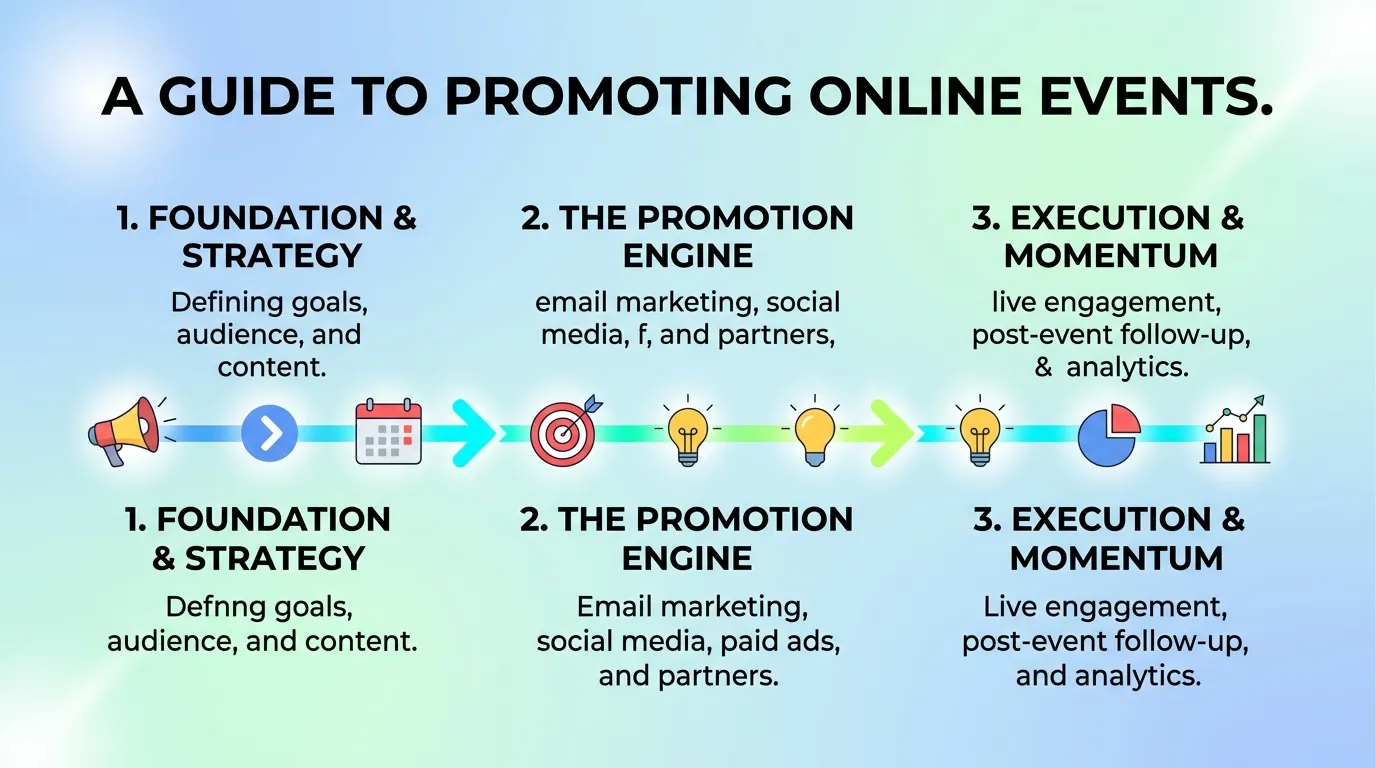
Online event marketing is the process of promoting virtual events through digital channels to attract attendees, increase registrations, build brand awareness, and generate business opportunities. It helps businesses effectively promote webinars, conferences, workshops, product launches, and networking events while reaching and engaging the right audience.
A successful online event requires more than simply creating a registration page and sending a few emails. Businesses need to understand their target audience, create a compelling event message, promote the event across multiple channels, and maintain engagement before, during, and after the event.
From social media and email marketing to search engine optimization, paid advertising, content marketing, and automation, businesses can use a variety of digital channels to increase event visibility and registrations.
This guide explains how online event marketing works, how to develop an effective strategy, which promotional tactics to use, and how to generate leads and engagement from virtual events.
What Is Online Event Marketing?
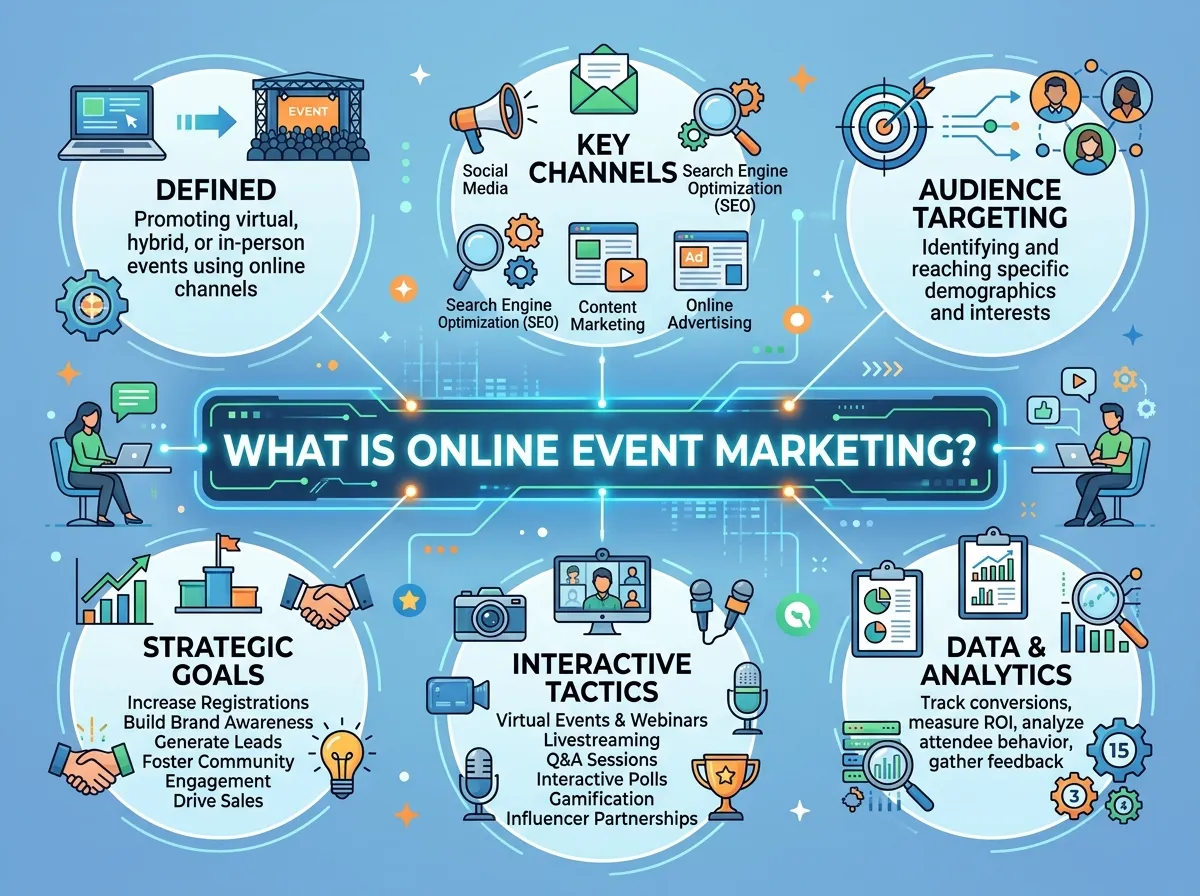
Online event marketing is the use of digital marketing channels and promotional techniques to attract people to events that take place online. These events can include webinars, virtual conferences, online seminars, workshops, training sessions, product demonstrations, networking events, and live-streamed presentations.
The goal is not simply to get people to register. Effective event marketing should attract the right audience and encourage them to attend, participate, and take action after the event.
For example, a B2B software company might organize a webinar explaining how businesses can automate a particular process. The company can promote the webinar through email newsletters, LinkedIn, blog content, paid advertising, and its website. During the event, attendees can ask questions and interact with speakers. Afterward, the company can follow up with attendees and offer additional resources or a product demonstration.
This makes online events useful for both audience engagement and lead generation.
Why Is Online Event Marketing Important?
Online events provide businesses with an opportunity to connect with audiences without the geographical limitations of physical events. Attendees can participate from almost anywhere, which can make virtual events easier to scale and promote.
One of the biggest advantages is accessibility. People who may not be able to travel to a physical conference can attend an online session from their home or office. This can allow businesses to reach a broader audience.
Online events can also provide valuable first-party information. Registration forms can collect details such as names, email addresses, job roles, industries, and business interests. This information can help marketers understand their audience and develop more relevant follow-up campaigns.
Another advantage is content repurposing. A webinar or virtual conference can generate additional content such as blog posts, short videos, social media posts, email newsletters, recordings, and downloadable guides.
When planned properly, a single online event can therefore support marketing activities long after the live session has ended.
How to Create an Online Event Marketing Strategy
An effective online event marketing strategy starts well before the event date. Businesses should define their goals, understand their target audience, develop a strong event message, choose promotional channels, and create a timeline for promotion.
Define Your Event Goals
The first step is determining what the event should accomplish. A business may want to generate leads, increase brand awareness, educate customers, launch a product, build a community, or establish industry authority.
Clear goals help determine the right promotional strategy and performance metrics. For example, a lead-generation webinar may focus on registrations, qualified attendees, demo requests, and sales opportunities, while an educational event may prioritize attendance, engagement, and content consumption.
The goals should be specific enough to measure. Instead of simply aiming to “get more attendees,” a company could establish a target for registrations, attendance rate, qualified leads, or post-event conversions.
Understand Your Target Audience
Understanding the audience is essential for creating an event that people actually want to attend. Marketers should consider who the event is for, what problems the audience faces, what information they need, and why they would spend time attending the event.
The event topic, messaging, speakers, format, and promotional channels should all reflect the audience’s interests.
For example, a webinar designed for marketing managers should use different messaging from a technical webinar aimed at software developers. When promotional content speaks directly to the audience’s needs, it is more likely to attract qualified registrations.
Create a Strong Event Landing Page
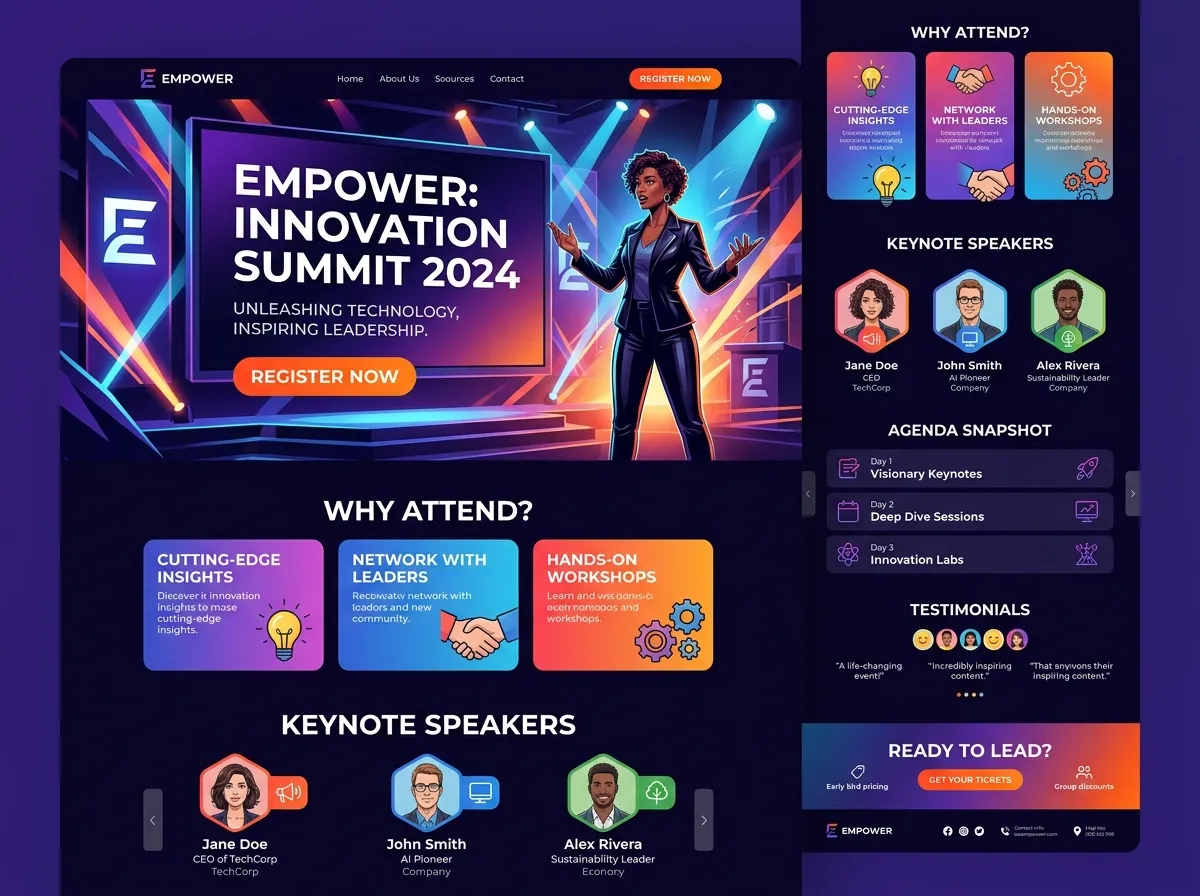
A dedicated landing page should provide all the information potential attendees need before registering. The headline should clearly explain what the event is about and why it is worth attending.
The page should communicate the event topic, date, time, speakers, key benefits, and registration process. It should also explain what attendees will learn or gain from participating.
Avoid making the registration form unnecessarily complicated. Request only the information that is genuinely useful for event planning, audience segmentation, or lead generation.
Adding speaker information can also increase credibility. Include relevant experience, expertise, and professional background so potential attendees understand why the speakers are qualified to discuss the topic.
Online Event Promotion
Online event promotion involves using digital channels to create awareness and encourage registrations. Businesses should start promotion early enough to give potential attendees time to learn about the event and add it to their schedules.
Email is one of the most effective channels because businesses can communicate directly with an existing audience. A promotional email can introduce the event, explain its value, introduce speakers, and provide a clear registration call to action.
Social media can expand reach beyond the existing email database. Businesses can publish event announcements, speaker introductions, topic highlights, countdown posts, short videos, and audience questions.
The company website should also support promotion. Relevant blog posts, homepage banners, resource pages, and pop-ups can direct visitors toward the registration page.
Virtual Event Marketing
Virtual event marketing requires more than promoting the event itself. Businesses need to create a complete experience that keeps attendees interested before, during, and after the event.
Before the event, marketers can provide useful information about the topic, introduce speakers, share preparation resources, and encourage attendees to submit questions.
During the event, interactive features such as polls, Q&A sessions, live chats, quizzes, and audience discussions can make the experience more engaging.
Afterward, marketers can share recordings, presentation slides, summaries, additional resources, and follow-up offers.
This approach turns a single event into an extended marketing experience instead of treating it as a one-time activity.
Digital Event Marketing Channels
Digital event marketing can involve several channels working together. Email marketing can reach existing subscribers, while social media can help attract new audiences.
Search engine optimization can also contribute to event discovery. Businesses can create event-related blog content targeting relevant search queries and connect those pages to the registration page.
Paid advertising can help reach specific audiences based on professional interests, demographics, industries, job roles, or previous website interactions.
Partnership marketing can also be useful. Businesses can collaborate with industry publications, influencers, associations, speakers, or complementary companies to expand the event’s reach.
Using multiple channels reduces dependence on a single promotional source and increases the number of opportunities for potential attendees to discover the event.
Online Event Promotion Strategies
Effective online event promotion strategies should combine multiple promotional activities rather than relying on a single announcement.
One approach is to create a promotional timeline. Initial promotion can begin several weeks before the event, followed by reminder campaigns as the date approaches.
Email subscribers who have not registered can receive reminder messages with different subject lines and value propositions. Registered attendees can receive confirmation emails, preparation information, speaker details, and reminders.
Social media promotion can follow a similar schedule. Early posts can introduce the topic, while later posts can highlight speakers, key takeaways, attendee benefits, and the approaching event date.
Creating short video clips can also increase attention. Speakers can record brief messages explaining what attendees will learn, which can be shared across social platforms.
Online Event Advertising
Online event advertising can accelerate registration by placing the event in front of targeted audiences.
Paid search advertising can reach people actively searching for information related to the event topic. Social media advertising can target specific industries, job titles, interests, or audience characteristics.
Retargeting can also be useful. People who visit the registration page but do not complete the form can be shown follow-up advertisements reminding them about the event.
Advertising should focus on the value of the event rather than simply saying that the event exists. The advertisement should communicate what attendees will learn, why the topic matters, and what makes the event worth their time.
Online Event Marketing Campaigns
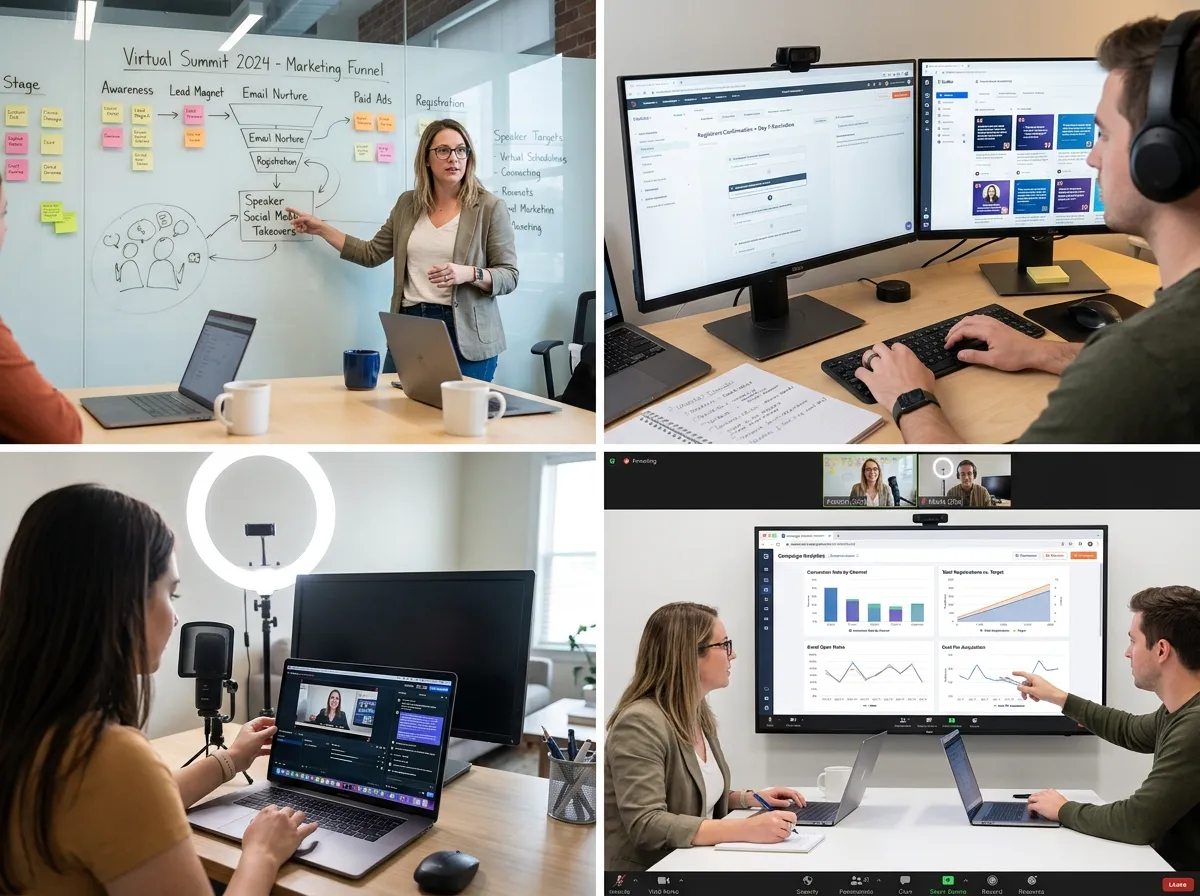
Online event marketing campaigns work best when all promotional activities support one central message.
For example, a company launching a virtual industry conference could create a campaign that includes a dedicated landing page, announcement emails, speaker interviews, blog articles, social media posts, paid advertisements, and reminder campaigns.
Each channel can communicate a slightly different aspect of the event while maintaining consistent branding and messaging.
Campaigns should also include post-event activities. Attendee recordings, highlights, quotes, presentation materials, and follow-up content can continue generating engagement after the event has ended.
Online Event Lead Generation
Online event lead generation is one of the most important reasons businesses organize webinars and virtual events.
Registration itself can become a lead-generation opportunity because businesses can collect information from people interested in the event. However, the quality of those leads depends on the relevance of the event and the information collected during registration.
During the event, businesses can identify highly engaged attendees through questions, polls, session participation, and interactions. These engagement signals can help sales and marketing teams understand which prospects may have stronger buying intent.
After the event, attendees can be segmented based on their interests and engagement. Highly interested prospects may receive sales outreach, while others can enter an educational email sequence.
Online Event Engagement Strategies
Strong online event engagement strategies help prevent attendees from becoming passive viewers.
Interactive features can encourage participation throughout the session. Polls can be used to collect opinions, Q&A sessions allow attendees to ask questions, and live chat can create a sense of community.
Speakers should also avoid presenting continuously without interaction. Short discussions, audience questions, demonstrations, and practical examples can help maintain attention.
Gamification can be another useful approach. Businesses can use quizzes, challenges, polls, leaderboards, or rewards to encourage participation when appropriate.
The goal is to make attendees feel involved rather than simply watching a presentation.
Online Event Marketing Ideas
There are many online event marketing ideas businesses can use to increase registrations and engagement.
A business could create a short teaser video featuring the speaker, publish a preview article about the event topic, release an industry statistic, host a pre-event discussion, or invite attendees to submit questions in advance.
Another approach is to create an event-specific hashtag and encourage speakers and attendees to use it on social media.
Businesses can also partner with speakers and sponsors to expand reach. Each partner can promote the event to its own audience, creating additional exposure without requiring the organizer to rely entirely on paid advertising.
After the event, the recording can become an evergreen resource that continues attracting visitors and leads.
Post-Event Marketing
The marketing process should not stop when the event ends. Post-event communication can be just as important as pre-event promotion.
Send attendees a thank-you email and provide access to the recording, presentation materials, or additional resources. This gives attendees another opportunity to interact with the brand.
Businesses can also create follow-up content based on questions asked during the event. For example, common audience questions can become new blog articles, videos, or social media posts.
Leads should be segmented based on engagement. Someone who attended the entire event and requested a product demonstration should receive different follow-up messaging from someone who registered but never attended.
This approach makes post-event marketing more relevant and can improve conversion opportunities.
How to Measure Online Event Marketing Success
Measuring results helps businesses understand whether their event marketing efforts are working.
Registration numbers provide an initial indication of interest, but they should not be the only metric. Attendance rate shows how many registrants actually participated, while engagement metrics reveal how actively attendees interacted with the event.
Lead-generation metrics can include the number of qualified leads, demo requests, consultations, or sales opportunities generated from the event.
Businesses should also evaluate the performance of individual promotional channels. Understanding which sources generated the most registrations and qualified leads can help improve future campaigns.
Over time, marketers can compare event performance and identify which topics, formats, speakers, and promotional channels generate the strongest results.
Common Online Event Marketing Mistakes
One common mistake is starting promotion too late. Potential attendees need enough time to learn about the event and decide whether it is worth attending.
Another mistake is focusing entirely on registration numbers. A large number of registrations does not necessarily mean the event was successful if attendance and engagement are poor.
Businesses can also make the mistake of using overly promotional messaging. Attendees are more likely to register when the event clearly promises useful information, practical insights, or meaningful value.
Poor follow-up is another missed opportunity. Without post-event communication, businesses may lose the chance to nurture attendees and turn event engagement into long-term customer relationships.
Conclusion
Online event marketing provides businesses with a powerful way to attract audiences, generate leads, educate customers, and build stronger relationships online. From webinars and workshops to virtual conferences and product demonstrations, online events can support multiple marketing and sales objectives.
The key is to create a structured strategy that combines audience research, compelling event content, email marketing, social media, SEO, advertising, engagement activities, and post-event follow-up.
By measuring registrations, attendance, engagement, lead quality, and conversions, businesses can continuously improve their events and create a repeatable marketing process. With the right approach, an online event can become more than a single virtual session—it can become a valuable long-term content and growth asset.
Frequently Asked Questions
What is online event marketing?
Online event marketing is the use of digital channels such as email, social media, SEO, and advertising to promote virtual events and attract attendees.
Why is online event marketing important?
It helps businesses reach wider audiences, increase registrations, generate leads, build brand awareness, and engage customers without geographical limitations.
What is an online event marketing strategy?
An online event marketing strategy is a plan for promoting an event, attracting attendees, increasing engagement, generating leads, and measuring results.
What are the best online event promotion channels?
Email marketing, social media, SEO, paid advertising, websites, partnerships, and speaker promotion are effective channels for promoting online events.
How can online events generate leads?
Businesses can collect registration information and identify highly engaged attendees through questions, polls, downloads, demo requests, and other interactions.
How can I increase online event engagement?
Use interactive features such as live Q&A, polls, quizzes, chat, discussions, demonstrations, and audience participation to keep attendees involved.
What is the difference between virtual event marketing and digital event marketing?
Virtual event marketing focuses primarily on promoting and managing online events, while digital event marketing can include the broader use of digital channels and technologies throughout the event experience.
How early should I promote an online event?
Businesses should generally begin promotion several weeks before the event and increase reminders as the event date approaches.
How do you measure online event marketing success?
Important metrics include registrations, attendance rate, engagement, qualified leads, conversions, demo requests, and revenue generated from the event.
What should I do after an online event?
Send follow-up emails, share recordings and resources, nurture leads, analyze attendee engagement, and repurpose event content into blogs, videos, and social media posts.