Lead intent signals help businesses understand when prospects are showing genuine interest in a product or service. By analyzing actions such as website visits, content engagement, searches, webinar participation, and repeated interactions, marketers can identify potential buying interest and prioritize leads more effectively. Understanding these signals can improve lead generation, sales outreach, and customer targeting while making marketing efforts more relevant.
People increasingly discover events through search engines. Someone looking for a conference, webinar, workshop, networking opportunity, exhibition, or local experience may begin with a simple search rather than visiting a specific event website. For event organizers, this creates an important opportunity to reach potential attendees at the moment they are actively looking for something relevant.
Event Search Visibility describes how easily an event can be discovered through search engines and other online discovery channels. An event may offer valuable speakers, useful sessions, and an engaging experience, but those advantages have limited impact if potential attendees cannot find the event online.
Search visibility is influenced by many factors, including website quality, content relevance, keywords, technical SEO, structured data, local search signals, event information, and the overall authority of the website hosting the event. These elements work together to help search engines understand what an event is about and determine when it may be relevant to a user’s search.
Strong visibility can also support other marketing activities. Searchers who discover an event organically may later encounter social content, remarketing campaigns, email promotions, or related resources. As a result, search should be considered part of the broader event marketing ecosystem rather than an isolated promotional channel.
What Is Event Search Visibility?
Event Search Visibility is the ability of an event, event website, registration page, or related content to appear prominently when people search for information related to the event.
Visibility can occur through traditional organic search results as well as other search features and discovery surfaces. Depending on the event and search query, people may encounter event pages, informational articles, local results, images, or other relevant search features.
The quality of the event information presented online matters as much as simply appearing in search. Potential attendees generally want to know the event name, date, location, speakers, topics, registration details, format, and reasons for attending.
When this information is clear and easy for search engines and users to understand, an event has a stronger foundation for online discoverability.
Event visibility also changes over time. A conference taking place several months from now may need to build visibility gradually, while an event happening next week may benefit from stronger promotional activity around registration and attendance.
Event SEO Strategy and Discoverability
An Event SEO Strategy connects search engine optimization with the specific needs of event marketing. Unlike a standard website page, an event has a time-sensitive nature. Its relevance can increase as the event approaches and decline after the event ends.
This makes timing an important consideration. Search engines need enough information and signals to understand the event before potential attendees begin searching heavily for it.
An event SEO strategy can involve optimizing the event page, developing related content, building relevant internal links, improving technical accessibility, and ensuring that important event details are clearly presented.
The strategy can also connect the event with broader topics that potential attendees are already searching for. For example, a business conference may publish content related to industry trends, speaker topics, common challenges, or professional development. These resources can attract relevant audiences before they are ready to register.
Event SEO therefore works best when it supports the entire discovery journey rather than focusing exclusively on the registration page.
Event Search Optimization
Event Search Optimization involves improving event-related content so search engines can better understand its subject and users can easily find useful information.
Search optimization should begin with relevance. An event page should clearly communicate what the event is, who it is for, where it takes place, and what attendees can expect.
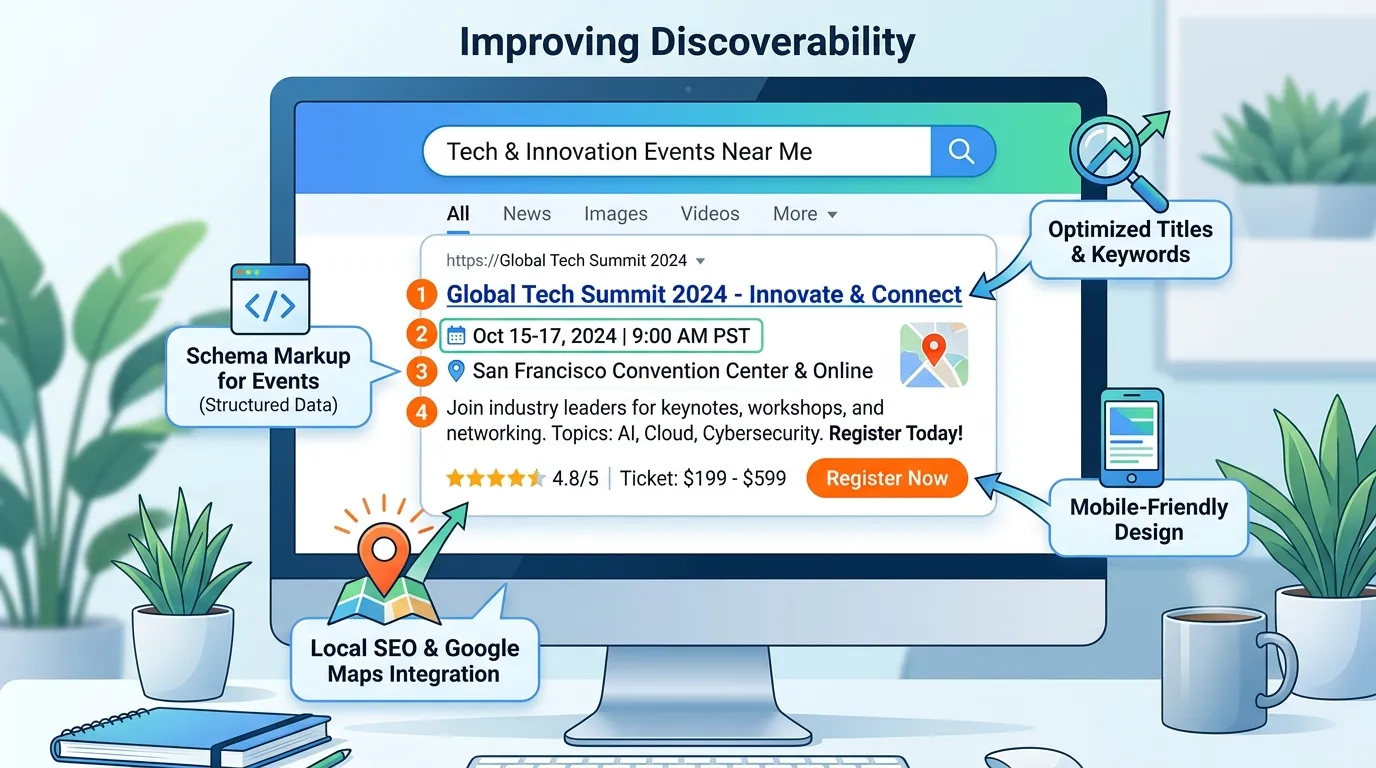
Page titles and headings can reinforce the event’s main topic, while descriptive content can provide search engines with additional context. Important information should not be hidden behind unnecessary interfaces that make it difficult for users or search systems to access.
The event’s supporting content also matters. Speaker profiles, session descriptions, FAQs, venue information, and related educational content can create additional opportunities for search visibility.
Optimization should always maintain a natural reading experience. Repeating keywords excessively can make content difficult to read and may reduce the quality of the page. Search optimization is most useful when it helps both search engines and people understand the event more clearly.
Event SEO Marketing
Event SEO Marketing combines organic search visibility with broader promotional activity. Search can complement social media, email, paid advertising, influencer marketing, partnerships, and other event promotion channels.
For example, a potential attendee may first discover an event through a search result and later see a social advertisement reminding them about registration. Another person may encounter a speaker-related article and then discover the event through an internal link.
This relationship between channels makes search especially valuable for event marketers. Organic visibility can continue bringing relevant visitors while other promotional channels create additional awareness.
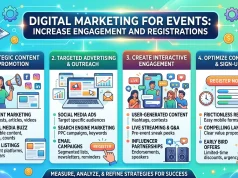
Resources such as Digital Marketing for Events explore the broader role of digital marketing in event engagement and registrations. Search visibility can work alongside these activities by making the event easier to discover when people actively search for related topics.
Event Website Optimization
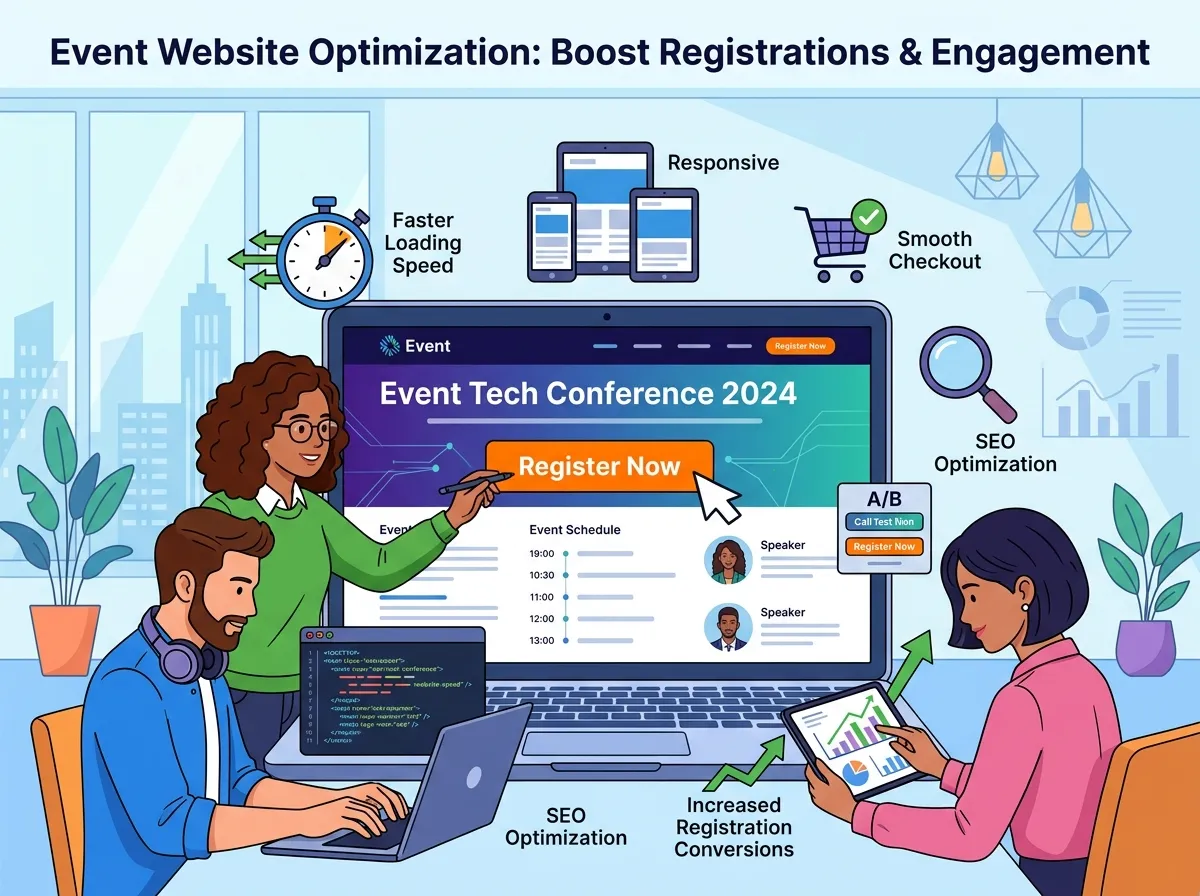
An event website often serves as the main source of information for potential attendees. Event Website Optimization therefore plays a major role in search visibility.
The website should make important event information easy to find and understand. Visitors may want immediate answers about dates, times, locations, speakers, schedules, ticket options, pricing, and registration.
A well-structured event website can also improve the user experience on mobile devices. Many event searches happen while people are away from their computers, making mobile usability particularly important.
Page speed, navigation, readable content, clear headings, and accessible registration paths all contribute to the overall quality of the experience.
Event websites should also avoid unnecessary duplication. If several pages contain nearly identical event information, it can become harder to determine which page should receive search visibility. A clear information architecture can help both users and search engines understand the relationship between pages.
Improving Event Discoverability
Event Discoverability extends beyond ranking for the exact name of an event. People may search for topics, locations, speakers, industries, event types, or problems that the event addresses.
For instance, someone interested in digital marketing may search for marketing conferences in a particular city without knowing the name of a specific event. An optimized event page can potentially reach that person if its content clearly communicates the event’s relevance.
This makes descriptive content particularly important. Event organizers can explain the topics covered, the audience served, the expertise of speakers, and the practical value of attending.
Discoverability can also improve through related content. Articles about event speakers, industry subjects, session topics, and attendee questions can create additional entry points into the event website.
The broader the relevant discovery ecosystem becomes, the more opportunities an event has to reach potential attendees before they have already chosen another event.
Event Search Rankings and Competition
Event Search Rankings can be influenced by the relevance and quality of the event page, the authority of the website, search intent, competition, and many other factors.
Ranking for a highly competitive generic term may be difficult, particularly for a new event website. More specific searches can sometimes provide opportunities to reach highly relevant audiences.
For example, an event may have a better opportunity to appear for a specific combination involving its subject, format, location, or audience than for an extremely broad term such as “business event.”
Search rankings should therefore be viewed within context. Visibility for highly relevant searches can be valuable even when overall search volume is smaller.
Event organizers should also recognize that rankings can change. Search results are dynamic, and competing events may publish new content, update their pages, or gain additional authority.
Event Schema Markup
Event Schema Markup provides structured information that helps search engines understand important details about an event. Event-related structured data can communicate information such as the event name, date, location, and other relevant properties when implemented appropriately.
Structured data does not guarantee a particular search appearance or ranking position. Its value comes from making event information easier for search engines to interpret.
Accurate information is particularly important. If structured data contains details that do not match the visible event information, it can create confusion and potentially undermine the usefulness of the markup.
Event organizers should also keep structured information current when event dates, locations, ticket information, or other important details change.
For recurring or frequently updated events, maintaining accurate structured data becomes an ongoing part of website management.
Event Local SEO
Event Local SEO becomes particularly important for physical events. People frequently search for activities and events in specific cities, neighborhoods, or geographic areas.
Local optimization can help communicate where an event takes place and why it is relevant to people in that area. Location information should be clear across the event website and related promotional content.
Venue information can also provide useful context. Details about transportation, parking, nearby accommodations, and the surrounding area may help potential attendees while creating additional relevant content opportunities.
Local search visibility can be especially useful for community events, conferences, exhibitions, workshops, networking events, and other activities where geographic proximity influences attendance.
For events with both physical and online components, the website should make the format clear so visitors understand whether they need to travel or can participate remotely.
Event Keyword Optimization
Event Keyword Optimization helps align event content with the language potential attendees use when searching.
Keyword research can identify terms related to event topics, locations, speakers, industries, formats, and audience interests. These terms can then inform titles, headings, descriptions, supporting content, and other relevant page elements.
The focus should remain on search intent rather than simply inserting as many keywords as possible. Someone searching for “digital marketing conference in Dhaka” has a different intent from someone searching for “digital marketing trends.”
The first search may indicate interest in attending an event, while the second may indicate a desire to learn about a topic. Event websites can potentially address both types of intent through different pages and content.
Keyword optimization is most effective when the resulting content answers the searcher’s actual question. Natural language and useful information should remain more important than repetitive keyword placement.
Event Online Visibility Across the Customer Journey
Event Online Visibility can influence people at different stages of their decision-making process. Some users may be actively looking for an event, while others may simply be researching a topic associated with the event.
A person may initially search for educational information and later become interested in attending a related conference. Another person may discover an event through a speaker’s name and then investigate the schedule before registering.
This is why event websites benefit from having more than a single registration page. Useful supporting content can provide information at different stages of the audience journey.
Relationship-focused event marketing can strengthen this process as well. Event Relationship Marketing explores how event businesses can build stronger connections with attendees, and search visibility can help bring those audiences into the relationship earlier.
Search Visibility Before, During, and After an Event
Event SEO is not limited to the period before registration opens. Search visibility can continue to provide value during and after an event.
Before the event, search content can build awareness and attract potential attendees. During the event, pages can support participants with schedules, speaker information, venue details, or session resources.
After the event, content can extend the event’s digital presence through recordings, summaries, speaker insights, photographs, presentations, and related educational material.
This post-event content can also create a foundation for future event promotion. A successful session may generate an article, video, interview, or downloadable resource that attracts search traffic long after the original event has ended.
Remarketing can complement this longer content lifecycle. Event Remarketing discusses re-engaging audiences, and search-driven content can provide another way to maintain interest after someone has initially interacted with an event.
Event Webinars and Search Visibility
Webinars can also benefit from search optimization because people frequently search for information about specialized topics before deciding whether to attend an online event.
A webinar page can provide details about the topic, speakers, audience, date, format, and expected value. Related articles can answer common questions and create additional paths toward registration.
Event Marketing Webinars provides broader context on promoting webinars as part of event marketing. Search visibility can support those promotional efforts by helping relevant audiences discover webinar opportunities through organic search.
For recurring webinar programs, each event can also contribute to a larger content ecosystem. Over time, speaker interviews, session summaries, recordings, and related articles can build a library of searchable resources.
Measuring Event Search Visibility
Measuring search visibility involves looking beyond rankings alone. Organic impressions, clicks, traffic, engagement, registration activity, and conversions can provide a broader understanding of how search contributes to event marketing.
For example, an event page may receive substantial organic traffic but generate relatively few registrations. This could indicate that visitors are interested in the topic but need more information before committing.
Another event may attract fewer visitors but a highly relevant audience that converts at a stronger rate. This demonstrates why search traffic should be interpreted alongside business outcomes.
Search performance can also be evaluated across different types of content. Registration pages, speaker profiles, educational articles, FAQs, and post-event resources may all attract different audiences and serve different purposes.
Common Challenges With Event Search Visibility
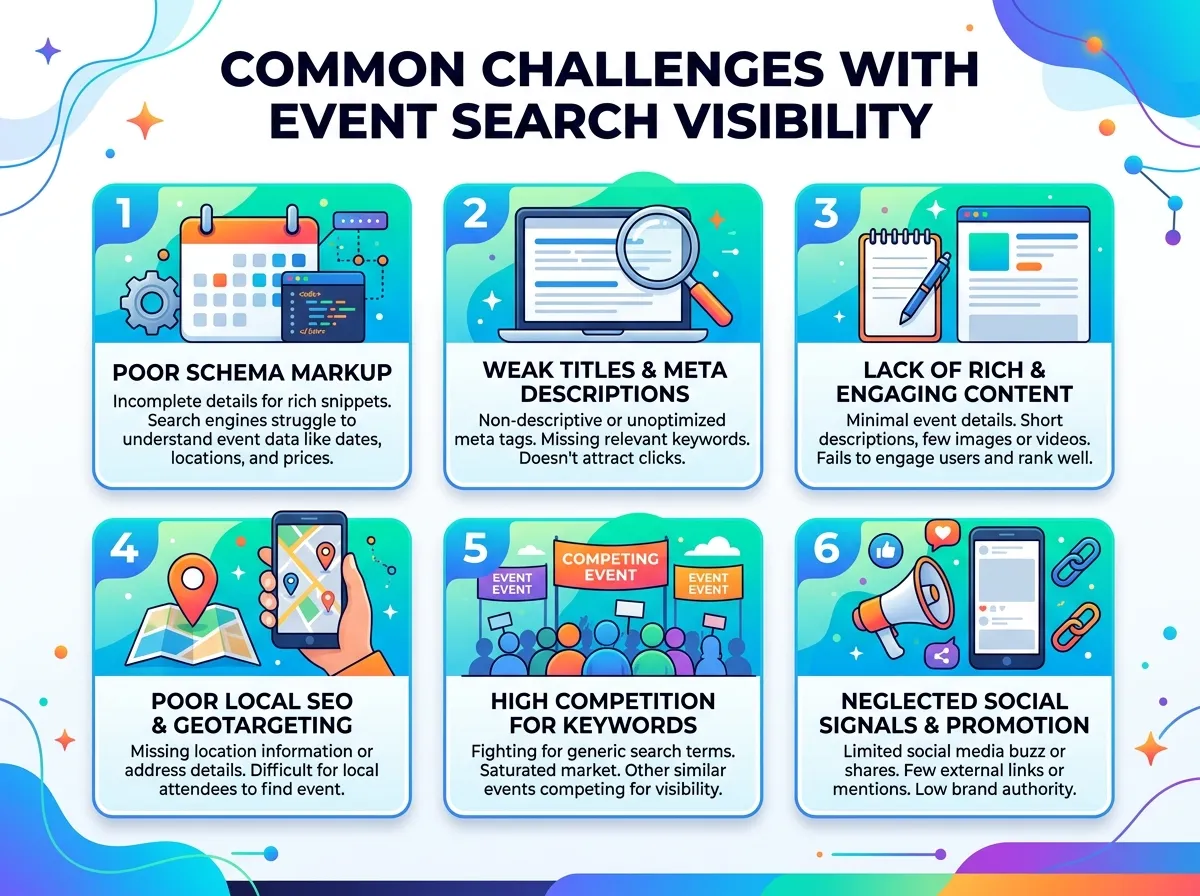
Event websites face several challenges that ordinary evergreen websites may not encounter. Time sensitivity is one of the most important.
An event has a specific date, which means its search relevance can change quickly. Information can also become outdated when speakers change, venues move, registration closes, or event details are updated.
Competition is another challenge. Multiple events may target the same audience and similar keywords, particularly in popular industries and large cities.
Event websites also need to balance marketing language with useful information. Promotional copy alone may not provide enough context for searchers who are still researching their options.
A successful search presence therefore depends on accurate information, useful content, technical quality, and a clear understanding of what potential attendees actually search for.
Final Thoughts
Event Search Visibility can play an important role in helping conferences, webinars, workshops, exhibitions, and other events reach relevant audiences online. Strong visibility depends on more than placing an event name on a website. It requires useful information, search-focused content, a well-optimized website, relevant keywords, structured data, and appropriate local signals.
When event SEO becomes part of the broader marketing strategy, search can support awareness, registration, engagement, and continued visibility after the event has finished.
The strongest event websites are not built only for search engines. They are built to answer the questions potential attendees have. When useful information and search optimization work together, an event becomes easier to discover and easier for people to understand.
Frequently Asked Questions
What is Event Search Visibility?
Event Search Visibility refers to how easily an event can be discovered through search engines and other online search experiences. It can include visibility for the event itself, related topics, speakers, locations, and supporting content.
Why is event SEO important?
Event SEO can help potential attendees discover an event when they are searching for relevant conferences, webinars, workshops, exhibitions, or other experiences. It can complement other promotional channels such as email, social media, and paid advertising.
What is an Event SEO Strategy?
An Event SEO Strategy connects search engine optimization with event marketing objectives. It can involve event website optimization, keyword research, technical SEO, content development, internal linking, structured data, and local search considerations.
How can an event website improve search visibility?
An event website can improve visibility by providing useful and accurate event information, targeting relevant search intent, maintaining strong website structure, optimizing important pages, using appropriate keywords, and implementing relevant technical SEO practices.
What is Event Schema Markup?
Event Schema Markup is structured data that helps search engines understand information about an event. Depending on implementation and search-engine eligibility, it can help search systems interpret details such as event dates and locations.
Does event schema guarantee higher rankings?
No. Structured data does not guarantee higher rankings or a particular search result appearance. Its primary purpose is to provide structured information that can help search engines understand the event.
How does local SEO help events?
Event Local SEO can help physical events become more discoverable for people searching for activities or events in a specific geographic area. Clear location and venue information can support this type of discovery.
What keywords should an event website target?
Event websites can target relevant terms related to the event topic, format, location, audience, speakers, and specific attendee needs. The best keywords depend on what potential attendees actually search for and the intent behind those searches.
Should an event continue using SEO after it ends?
Yes. Post-event content such as recordings, summaries, interviews, presentations, and educational resources can continue attracting search traffic and supporting future event promotion.
How can event search performance be measured?
Event search performance can be evaluated through metrics such as impressions, organic clicks, search traffic, engagement, registrations, and conversions. Looking at several metrics provides more context than rankings alone.