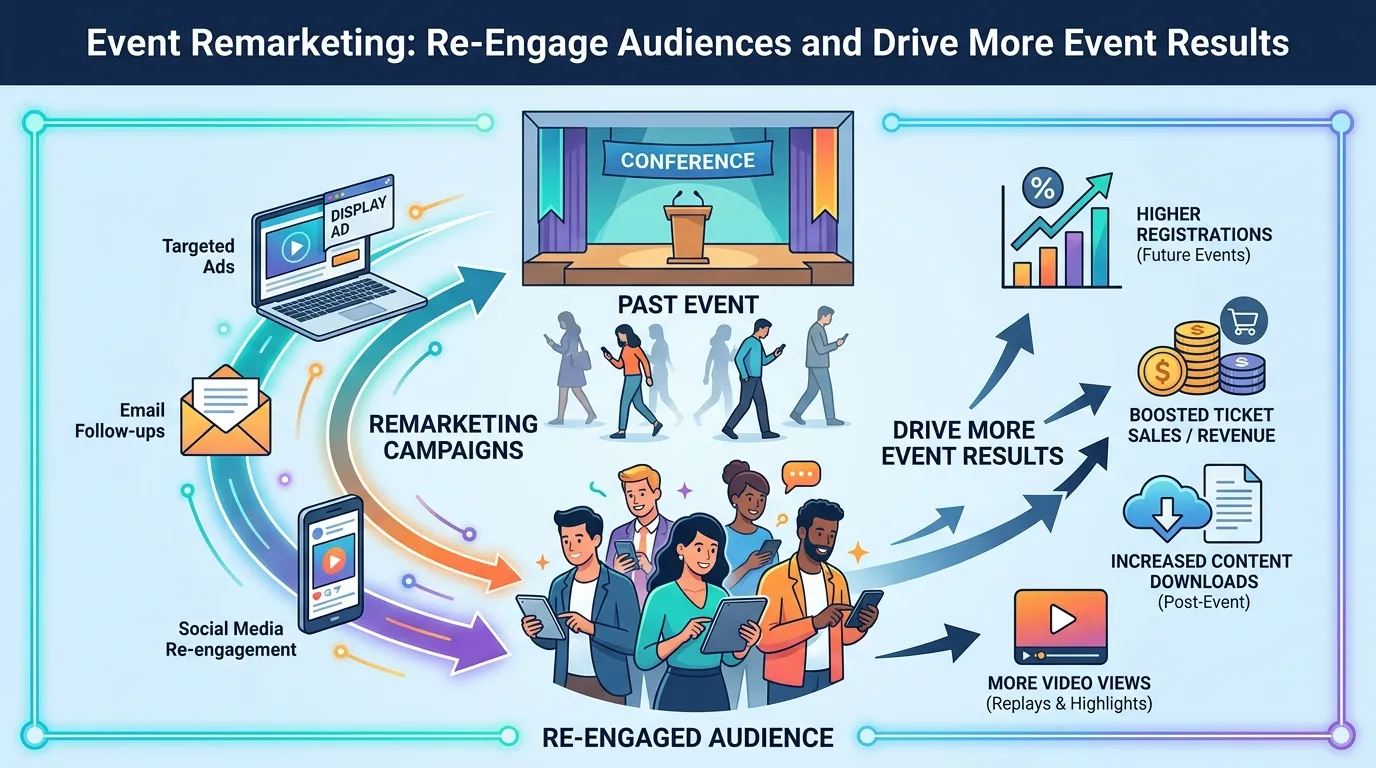
Event remarketing helps businesses reconnect with people who have already interacted with an event, website, advertisement, registration page, or event content. Instead of continually searching for new audiences, marketers can use previous interactions to deliver relevant messages that encourage registration, attendance, engagement, or follow-up action. With the right targeting, personalization, and timing, event remarketing can improve conversions and make event marketing campaigns more efficient.
Promoting an event does not end when someone visits the registration page or interacts with an advertisement. Many potential attendees need several reminders before they decide to register. Some may visit an event website without completing registration, while others may register but fail to attend. Previous attendees may also be interested in future events, related webinars, products, or services.
This is where event remarketing becomes valuable. It allows marketers to reconnect with audiences who have already shown some level of interest. Rather than starting the customer journey from the beginning, remarketing continues the conversation based on an individual’s previous interaction.
A well-planned remarketing approach can support event registrations, increase attendance, encourage repeat participation, and generate additional leads after an event has ended. It can also help businesses get more value from the traffic and audience data generated by their event promotion efforts.
What Is Event Remarketing?
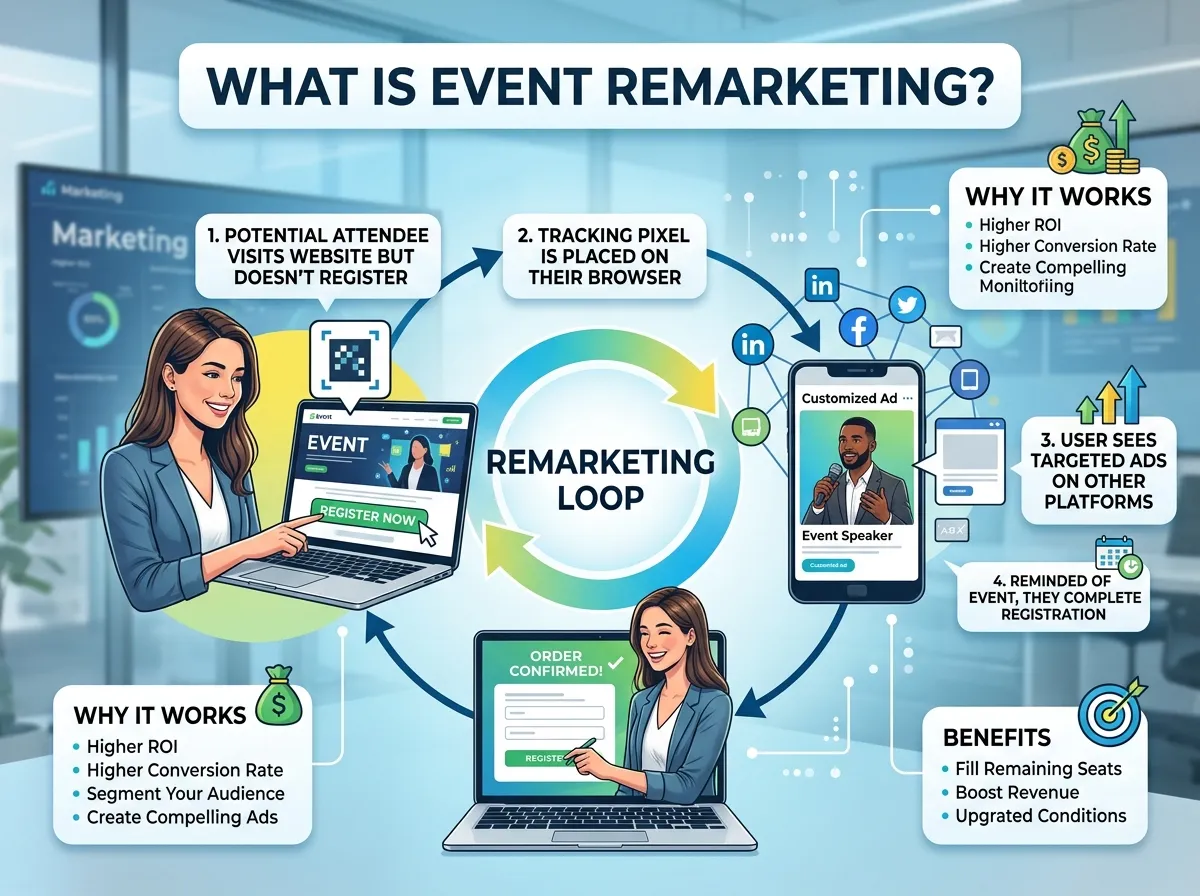
Event remarketing is the process of reaching people who have previously interacted with an event or its promotional content. These interactions can include visiting an event landing page, clicking an advertisement, watching event-related videos, opening an email, registering for an event, or engaging with social media content.
Instead of presenting the same message to everyone, marketers can create audiences based on specific behaviors. Someone who visited a registration page but did not sign up may receive a reminder about the event. Someone who already registered may receive attendance information rather than another registration advertisement.
This makes remarketing more relevant and helps businesses communicate with audiences according to where they are in the event journey.
Why Event Remarketing Matters
Traditional event promotion focuses heavily on reaching new people. While attracting new audiences is important, businesses should not overlook people who have already demonstrated interest.
These users are often more valuable because they have already interacted with the event or brand. A person who visited an event page has shown more intent than someone who has never heard about the event.
An effective event remarketing strategy can therefore help businesses make better use of existing traffic. It can remind potential attendees about registration deadlines, highlight important event benefits, promote speakers, and address questions that may have prevented registration.
Remarketing can also support post-event communication. After the event, marketers can reconnect with attendees and non-attendees using recordings, presentations, surveys, related content, or future event invitations.
Building an Effective Event Remarketing Strategy
A successful event remarketing strategy begins with audience segmentation. Not every person who interacts with an event should receive the same message.
For example, marketers can create separate audiences for people who visited the event website, viewed the registration page, started registration but did not finish, registered successfully, attended the event, and engaged with event content.
This segmentation allows businesses to create messages that match audience intent.
Timing is equally important. Someone who abandoned registration yesterday may need a simple reminder, while someone who attended an event several weeks ago may be more interested in related educational content or an upcoming event.
The strongest strategies combine audience behavior, timing, personalization, and clear calls to action.
Event Retargeting Campaigns That Convert
Event retargeting campaigns can be used throughout the event lifecycle. Before an event, they can encourage registration. During the event period, they can increase participation and engagement. After the event, they can turn event interactions into additional marketing opportunities.
Pre-event campaigns can target people who visited the event page without registering. Ads might highlight a keynote speaker, limited availability, networking opportunities, or a registration deadline.
Another useful approach is to retarget people who interacted with promotional content but did not visit the registration page. These users may need additional information before they are ready to take action.
After registration, advertising messages should change. Continuing to show registration advertisements to someone who has already signed up can waste budget and create a poor experience. Instead, registered users can receive reminders about the event schedule, speakers, sessions, or attendance instructions.
Event Marketing Remarketing Across Multiple Channels
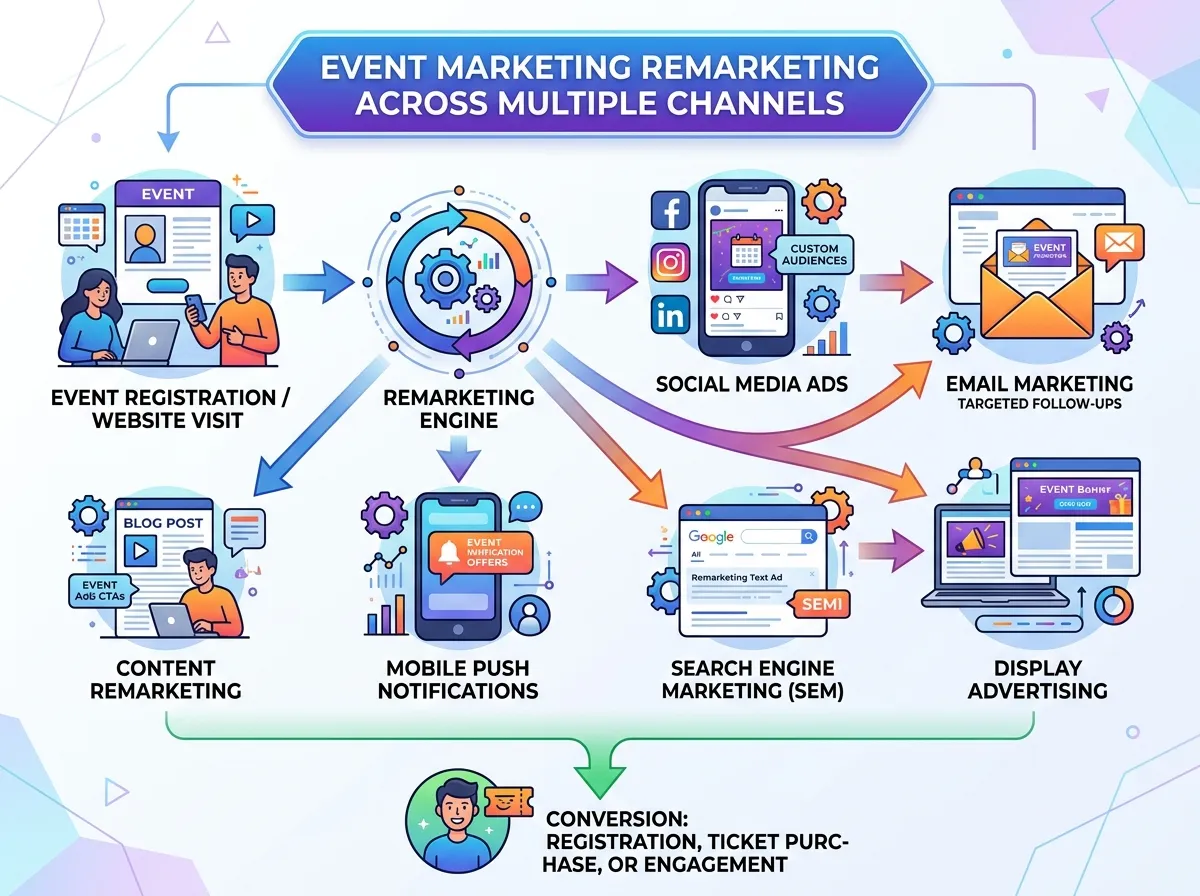
Event marketing remarketing does not need to depend on one platform. Businesses can create coordinated campaigns across email, search advertising, social media, display advertising, and other digital channels.
Email is especially useful because registered users and existing leads can receive highly relevant communications. Social platforms can help businesses reconnect with users who interacted with event-related content. Display advertising can keep the event visible to people who previously visited the website.
The key is to maintain consistent messaging while adjusting the content for each channel.
For example, an event may first attract attention through social media. A visitor then checks the event website but does not register. A remarketing advertisement can remind that visitor about the event. Later, an email or another personalized message can provide additional information.
This creates a connected journey rather than a collection of unrelated advertisements.
Understanding Event Audience Retargeting
Event audience retargeting becomes more effective when audiences are divided according to their actions.
Website visitors can form one audience, while people who reached the registration page can form another. Users who completed registration should be moved into a different communication group.
Marketers can also segment audiences based on content engagement. Someone who watched a video featuring a particular speaker may respond well to another message about that speaker or session.
Another valuable segment includes previous event attendees. These people have already demonstrated interest in the event brand, which makes them strong candidates for future event promotions.
Audience segmentation reduces irrelevant advertising and gives marketers greater control over the customer journey.
Event Attendee Remarketing After Registration
Event attendee remarketing can be particularly useful because registered attendees have already taken a significant step.
Before the event, communications can focus on attendance and preparation. Reminders can include event dates, access details, schedules, speaker information, and important updates.
After the event, the messaging should shift toward engagement and retention. Attendees may be invited to watch session recordings, download resources, complete feedback forms, connect with the organization, or register for another event.
This approach helps businesses build relationships instead of treating event registration as the final conversion.
Event Retargeting Strategy for Different Audiences
An effective event retargeting strategy should recognize that different audience groups have different needs.
People who visited an event page but did not register may need more convincing information. They could receive content explaining the event’s benefits, speakers, topics, or networking opportunities.
People who started registration but abandoned the process may need a direct reminder and a simplified path back to the registration page.
Registered attendees require a completely different message. Instead of encouraging registration, marketers should focus on attendance and preparation.
People who attended the event can be moved into a post-event campaign focused on follow-up content, related offers, future events, and long-term engagement.
This audience-specific approach makes remarketing more relevant and can improve both conversion rates and customer experience.
Post-Event Remarketing
The end of an event should not mean the end of marketing activity. Post-event remarketing gives businesses an opportunity to continue conversations with attendees, registrants, and interested prospects.
For attendees, businesses can promote recordings, presentation slides, resources, surveys, or follow-up discussions. These communications can extend the value of the event and encourage deeper engagement.
People who registered but could not attend can receive a recording or summary of important sessions. This helps maintain their relationship with the event brand.
Non-registrants who showed strong interest can also be included in future campaigns. Their previous engagement indicates that they may be interested in another event covering a related topic.
Post-event remarketing can therefore transform a single event into an ongoing marketing opportunity.
Event Lead Retargeting
Event lead retargeting focuses on people who have demonstrated interest but have not yet completed a desired conversion.
For example, an event may generate hundreds of leads through website visits, content downloads, social media interactions, and registration forms. Not every lead will immediately become an attendee or customer.
Retargeting allows marketers to continue nurturing these prospects.
The content should provide additional value instead of simply repeating the original advertisement. Educational content, event highlights, speaker interviews, testimonials, case studies, and related resources can help build confidence.
For B2B events, lead retargeting can continue beyond attendance. Businesses can use event engagement data to identify high-interest prospects and provide relevant sales or educational content.
Event Advertising Retargeting
Event advertising retargeting can help businesses use their advertising budget more efficiently by focusing on people who have already interacted with the event.
Instead of repeatedly targeting broad audiences, marketers can create campaigns based on previous actions. Someone who visited a registration page, for example, can receive a more direct conversion-focused message.
Creative variation is also important. Showing exactly the same advertisement repeatedly can lead to ad fatigue. Businesses can rotate headlines, images, speakers, event benefits, testimonials, and calls to action.
Frequency should also be monitored. Remarketing should keep the event visible without overwhelming the audience.
Digital Event Remarketing Strategy
A digital event remarketing strategy is particularly important for webinars, virtual conferences, online workshops, and other digital events.
Online events create many measurable interactions. Marketers can track page visits, registrations, email engagement, video views, session attendance, and content downloads.
These interactions can help create highly specific audience segments.
For example, someone who registered for a webinar but did not attend could receive a recording. Someone who attended most of the webinar could receive advanced resources. Someone who watched only a short portion may receive a follow-up message addressing the event’s main topic.
For businesses running virtual events regularly, these audience insights can become an important part of the broader marketing strategy.
Businesses looking to improve online event engagement can also explore Virtual Event Marketing Strategies for Better Online Engagement for additional ideas.
Connecting Remarketing With the Event Promotion Timeline
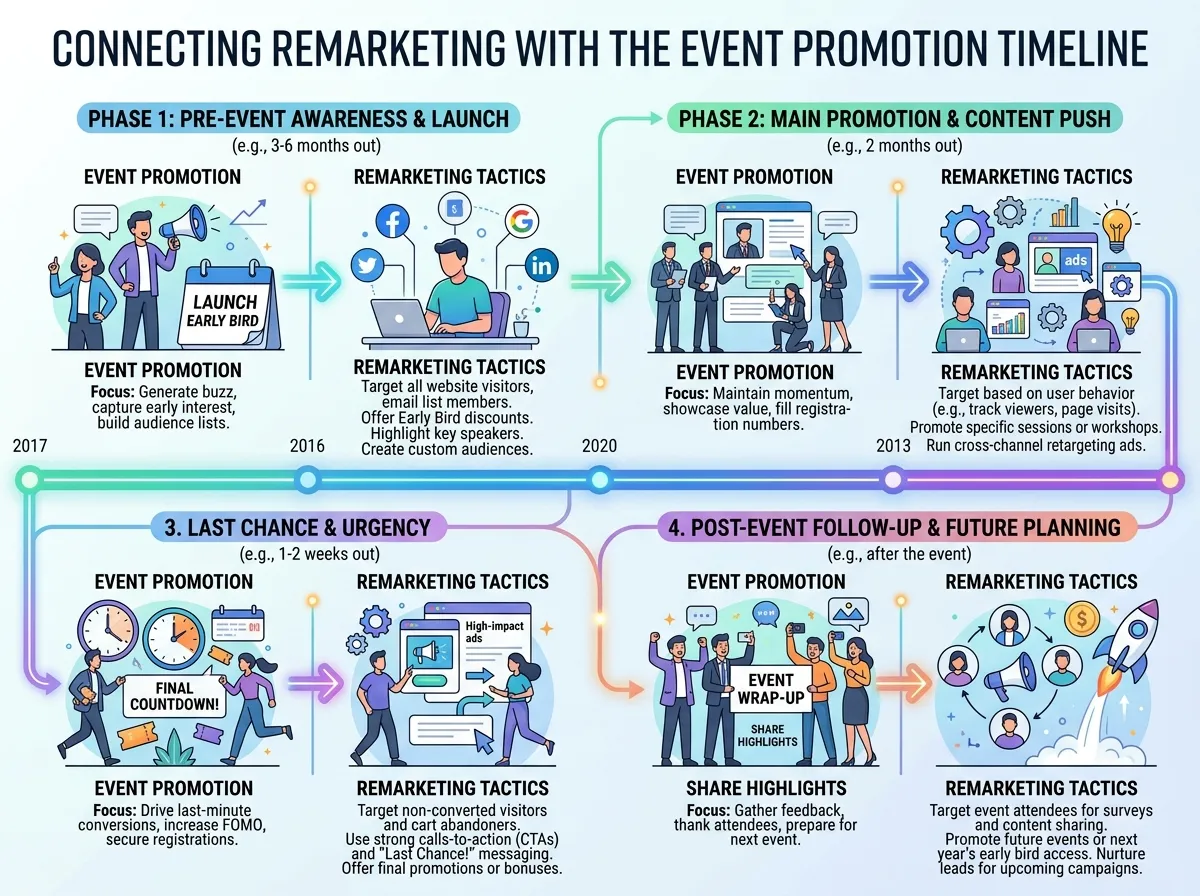
Remarketing works best when it is integrated into the overall promotional process rather than treated as a separate advertising activity.
A well-structured event promotion timeline can identify when audiences should receive awareness messages, registration reminders, deadline notifications, and post-event communications.
Businesses can use their Event Promotion Timeline to coordinate remarketing with other promotional activities.
Early campaigns can focus on awareness, while later campaigns can emphasize registration. As the event approaches, messages can create urgency around deadlines or limited availability.
After the event, the strategy should shift toward follow-up and relationship building.
Combining Event Remarketing With Other Marketing Campaigns
Remarketing becomes more powerful when it supports broader event marketing activities.
Businesses can use event marketing campaign ideas to attract initial attention and then use remarketing to reconnect with people who showed interest but did not convert. This creates a two-stage approach: first attract the audience, then nurture and convert them.
Businesses can also combine remarketing with online event promotion. Content published on social media, blogs, email newsletters, and other channels can introduce the event, while retargeting keeps it visible to people who have already interacted with that content.
For more promotional ideas, businesses can explore Event Marketing Campaign Ideas for Businesses.
Personalization in Event Remarketing
Personalization can make remarketing messages significantly more relevant.
A person who viewed a specific event session should not necessarily receive the same advertisement as someone who only visited the homepage. Similarly, an attendee should receive different post-event content from someone who registered but did not attend.
Personalization can include the event topic, audience segment, session interest, registration status, previous attendance, or content interaction.
The goal is not to make every message highly complex. Even simple personalization can make communication feel more relevant.
Measuring Event Remarketing Performance
Measuring performance is essential for improving an event remarketing program.
Important metrics can include click-through rate, conversion rate, registration rate, cost per registration, return on advertising spend, email engagement, event attendance, and post-event engagement.
Businesses should also compare different audience segments. A campaign targeting abandoned registrations may perform differently from one targeting general website visitors.
Testing different headlines, creative formats, offers, landing pages, and calls to action can reveal which messages generate the strongest results.
The most useful measurement approach connects advertising activity with meaningful business outcomes rather than focusing only on impressions or clicks.
Common Event Remarketing Mistakes
One common mistake is using the same message for every audience. People at different stages of the event journey require different information.
Another problem is excessive frequency. Showing the same advertisement too many times can frustrate users and reduce engagement.
Failing to exclude converted users is another issue. Someone who has already registered should not continue seeing advertisements designed specifically to generate registrations.
Businesses should also avoid ending their campaigns immediately after the event. Valuable leads and attendees can continue to generate opportunities through thoughtful follow-up.
Finally, remarketing should provide value. A constant stream of promotional messages is less effective than useful content that helps the audience make informed decisions.
How to Create a Stronger Event Remarketing Program
A strong remarketing program starts with clear goals. Businesses should decide whether they want more registrations, higher attendance, better engagement, additional leads, or repeat event participation.
Next, audience segments should be created according to meaningful behaviors. Campaigns can then be developed around each segment’s needs.
The messaging should evolve as the event approaches and continue changing after the event. Testing and measurement should be ongoing so that underperforming campaigns can be adjusted.
Most importantly, remarketing should complement the entire event marketing strategy. When awareness, promotion, registration, attendance, and follow-up work together, businesses can create a smoother audience journey and gain more value from every event.
Conclusion
Event remarketing gives businesses a practical way to reconnect with people who have already shown interest in an event. From website visitors and abandoned registrations to attendees and previous participants, these audiences can be reached with messages that match their specific stage in the event journey.
By using audience segmentation, personalized messaging, strategic timing, and consistent measurement, businesses can develop effective event retargeting campaigns that support registrations, attendance, engagement, and long-term relationships.
Remarketing should not be viewed simply as another advertising technique. When integrated with broader event promotion and follow-up activities, it can turn one-time interactions into valuable ongoing connections.
Frequently Asked Questions
1. What is event remarketing?
Event remarketing is the process of reconnecting with people who have previously interacted with an event, event website, advertisement, registration page, email, or related content. It helps businesses encourage registration, attendance, engagement, or future action.
2. Why is event remarketing important?
Event remarketing helps businesses reach audiences who have already shown interest. These users may be more likely to convert than completely new prospects because they already have some awareness of the event or organization.
3. How does event retargeting work?
Event retargeting works by creating audience segments based on previous interactions. Businesses can then deliver relevant advertisements or messages to those audiences based on actions such as website visits, registrations, content engagement, or event attendance.
4. When should event remarketing begin?
Event remarketing can begin as soon as people start interacting with event content. Pre-event remarketing can encourage registrations, while later campaigns can focus on reminders, attendance, and post-event engagement.
5. Can event remarketing be used after an event?
Yes. Post-event remarketing can promote recordings, resources, surveys, related content, future events, and other offers. It can also help reconnect with people who registered but were unable to attend.
6. What audiences should be included in event remarketing?
Useful audiences can include event website visitors, registration-page visitors, abandoned registrations, registered attendees, event attendees, previous event participants, content viewers, and people who interacted with event advertisements.
7. How can businesses improve event retargeting campaigns?
Businesses can improve campaigns through audience segmentation, personalized messaging, creative testing, appropriate advertising frequency, clear calls to action, and regular performance measurement.
8. What channels can be used for event remarketing?
Businesses can use email, social media advertising, display advertising, search advertising, website personalization, and other digital marketing channels. Combining several channels can create a more consistent audience journey.
9. What metrics should be measured for event remarketing?
Important metrics include click-through rate, registration conversion rate, cost per registration, attendance rate, return on advertising spend, email engagement, lead quality, and post-event engagement.
10. Is event remarketing useful for virtual events?
Yes. Virtual events can provide extensive engagement data, including registrations, page visits, video views, session attendance, and content interactions. This information can be used to create highly relevant remarketing audiences and follow-up campaigns.