Event Guest Services help create welcoming, convenient, and professional experiences for attendees. From guest support and hospitality to attendee assistance, accessibility, technology, and experience strategy, these services influence how people perceive and engage with an event. Strong guest services combine effective communication, capable staff, thoughtful hospitality, and appropriate technology to create a smoother experience before, during, and after an event.
Event Guest Services refers to the range of support, hospitality, communication, and assistance provided to guests before, during, and after an event. These services play an important role in shaping how attendees experience an event, from their first interaction with event information to their arrival, participation, and departure. Effective guest services help create a welcoming environment while making it easier for attendees to find information, receive assistance, navigate the venue, and engage comfortably with the event.
Modern events involve more than simply providing a venue and schedule. Guests increasingly expect convenient communication, responsive support, clear information, comfortable facilities, and personalized experiences. Whether the event is a conference, exhibition, corporate gathering, festival, product launch, networking event, or virtual experience, strong guest services can influence satisfaction and overall perceptions of the event. For organizers, this makes guest support an important part of event planning, hospitality, and attendee engagement.
What Are Event Guest Services?

Event Guest Services encompass the people, processes, communication channels, and resources that help attendees have a positive and convenient experience. This can include registration assistance, information desks, wayfinding, accessibility support, hospitality, transportation information, seating assistance, technical support, customer service, and communication throughout the event.
The purpose of guest services is not limited to solving problems. It also involves creating an environment where attendees feel welcomed, informed, and supported. A well-organized guest service experience can reduce confusion and frustration while helping attendees focus on the purpose of the event.
The quality of these services often becomes part of the overall perception of an event. When guests can quickly find answers, receive assistance when needed, and interact with helpful staff, the event can feel more professional and organized. In contrast, unclear communication, difficult registration processes, poor signage, or limited assistance can negatively affect the attendee experience even when other aspects of the event are well planned.
The Importance of Event Guest Experience
Event Guest Experience covers the complete journey an attendee has with an event. It can begin before arrival through event websites, invitations, registration pages, emails, social media communication, and digital event platforms. Once attendees arrive, their experience continues through registration, venue navigation, sessions, networking opportunities, hospitality, entertainment, and departure.
Guest services contribute directly to this experience because they provide the human and operational support that attendees may need throughout their journey. Friendly staff, accessible information, efficient registration, and timely assistance can make guests feel more comfortable and valued.
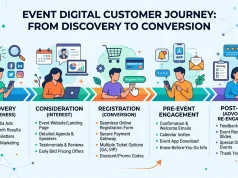
The digital part of the attendee journey is also increasingly connected to the physical event experience. Understanding the relationship between online discovery, registration, communication, and attendance is important for creating consistency across the entire customer journey. A strong Event Digital Customer Journey can help event teams connect digital interactions with the experiences guests receive after they arrive.
Event Guest Management and Attendee Support
Event Guest Management involves coordinating the different interactions and services that guests require throughout an event. It can include registration, check-in, attendee communication, seating, transportation information, guest inquiries, special requests, and coordination between event staff.
Good guest management depends on communication and organization. Attendees should be able to understand where they need to go, what they need to do, and where to receive assistance when questions arise. Staff members also need access to accurate event information so they can provide consistent answers.
Event Attendee Support becomes particularly important when an event has a large or diverse audience. Different attendees may have different requirements based on their schedules, accessibility needs, professional interests, language preferences, or familiarity with the venue. A responsive support structure allows organizers to accommodate these differences while maintaining a consistent event experience.
Guest management can also help event teams identify recurring questions and service issues. When organizers understand what attendees commonly ask for or struggle with, they can improve communication, signage, registration systems, and other parts of the event experience.
Event Guest Support and Assistance
Event Guest Support provides attendees with help when they encounter questions, difficulties, or unexpected situations. Support may be delivered through information desks, event staff, mobile applications, chat systems, email, phone support, or designated service areas.
The most effective support is accessible and easy to understand. Guests should not have to search extensively to find assistance. Clearly identified service points, visible staff members, useful event information, and responsive communication can make support more convenient.
Event Guest Assistance also extends to unexpected situations. Guests may lose belongings, arrive late, have difficulty locating a session room, need accessibility assistance, experience technical problems, or require clarification about event schedules. Having capable staff available to respond to these situations can prevent small problems from becoming major disruptions.
Technology can complement human support, particularly at larger events. Mobile event applications, digital maps, automated notifications, QR codes, chat support, and self-service information can provide fast answers while allowing staff to focus on more complex guest needs.
Event Hospitality Services
Event Hospitality Services focus on creating a welcoming and comfortable environment for attendees. Hospitality can include guest reception, refreshments, seating, lounges, concierge-style assistance, VIP services, transportation information, and personalized attention.
Hospitality is particularly important for events where relationships and networking are central to the experience. A comfortable environment can encourage guests to stay longer, communicate with other attendees, and engage more actively with the event.
The hospitality experience should also reflect the identity and purpose of the event. A corporate conference may require a professional and efficient atmosphere, while a festival or social gathering may emphasize warmth, entertainment, and accessibility. The most effective hospitality services are aligned with audience expectations rather than relying on a one-size-fits-all approach.
Event Attendee Services and Comfort
Event Attendee Services cover many practical aspects of the guest experience. These services can include registration support, information access, venue assistance, seating arrangements, accessibility resources, food and beverage information, transportation guidance, and communication support.
Comfort can have a significant influence on how guests perceive an event. Even small details such as clear directions, comfortable seating, accessible facilities, adequate information, and responsive staff can contribute to a more positive experience.
Attendee services should also account for the different stages of participation. Guests may need different types of support before arrival, during check-in, while attending sessions, during networking periods, and when leaving the venue. Maintaining consistency across these interactions helps create a smoother overall experience.
For online and hybrid events, attendee services can extend into digital platforms. Virtual participants may need technical assistance, platform navigation support, session access information, or help with networking features. This makes guest service relevant across both physical and digital event environments.
Guest Services Management
Guest Services Management brings together the people, systems, and processes responsible for supporting attendees. It requires coordination between event organizers, venue teams, hospitality staff, registration personnel, technical teams, security, and other service providers.
Strong management helps ensure that guest-facing teams understand their responsibilities and have access to accurate information. It also helps create consistency in how questions and requests are handled.
Communication between departments is especially important. A change to a session schedule, venue room, transportation arrangement, or event activity can affect multiple guest services. When internal teams communicate effectively, they can provide attendees with accurate information and reduce confusion.
Technology can also improve guest services management by providing real-time attendee information, registration data, communication tools, event analytics, and support systems. Event teams can use these capabilities to understand attendance patterns and identify areas where service improvements may be needed.
Event Hospitality Management and Personalized Experiences

Event Hospitality Management focuses on coordinating hospitality activities while maintaining a consistent standard of service. It can be especially important for premium conferences, business events, exhibitions, corporate gatherings, and events with VIP attendees.
Personalization is becoming increasingly relevant to hospitality. Guests may appreciate communication that reflects their interests, personalized recommendations, tailored schedules, or specific assistance based on their requirements. However, personalization should remain useful and respectful rather than becoming excessive.
A thoughtful hospitality experience can also strengthen the emotional connection between attendees and the event brand. When guests feel that their needs are understood and their participation is valued, they may be more likely to remember the event positively and engage with the organizer again.
Digital marketing and event technology can support this personalization. For virtual or hybrid experiences, Virtual Event Marketing Strategies can help connect audience communication, digital engagement, and event participation across different stages of the attendee experience.
Guest Experience Strategy
A Guest Experience Strategy provides a broader framework for creating consistent and meaningful interactions with attendees. Rather than treating guest services as isolated tasks, event organizers can consider how every touchpoint contributes to the overall experience.
This includes event communications, registration, venue design, staff interactions, hospitality, technology, accessibility, networking, entertainment, and post-event communication. When these elements work together, guests are more likely to experience the event as a connected journey rather than a collection of unrelated activities.
An effective guest experience strategy should also consider feedback. Surveys, conversations with attendees, support requests, engagement data, and staff observations can reveal what guests appreciated and where friction occurred. These insights can inform future event planning and help organizations continuously improve their services.
Technology is becoming an important part of this process. Event marketing platforms, registration systems, mobile applications, analytics tools, digital communication systems, and attendee management platforms can help event teams understand and support guest behavior. The broader role of Event Marketing Technology demonstrates how technology can connect event promotion, communication, engagement, and attendee experience.
Event Guest Services and Event Planning
Guest services should be considered alongside the wider event planning process rather than treated as an isolated operational function. Venue selection, event scheduling, staffing, logistics, technology, communication, and hospitality all influence the quality of guest support.
A strong Event Planning Strategy can provide the broader structure needed to coordinate these elements effectively. When guest services are considered early in the planning process, organizers have more opportunities to identify attendee needs, allocate resources, prepare staff, and establish communication systems.
Planning also allows teams to consider different attendee scenarios. Events may experience unexpected schedule changes, large registration volumes, technical issues, accessibility requests, transportation delays, or changes in attendance. Preparing the guest service function for these possibilities can make the overall event more resilient.
The Role of Technology in Event Guest Services
Technology has changed how event organizers communicate with and support attendees. Digital registration, event applications, automated notifications, QR-code check-in, digital maps, chat support, personalized agendas, and real-time updates can make guest services faster and more convenient.
Technology does not necessarily replace human interaction. Instead, it can reduce repetitive inquiries and give staff better information for handling more complex situations. For example, an event application can provide schedules and venue information while guest service staff remain available for personalized assistance.
Data can also help event teams understand attendee behavior. Registration information, session attendance, engagement activity, feedback, and support requests can reveal patterns that may influence future event decisions. When used responsibly, this information can help organizers improve both operational efficiency and guest satisfaction.
Accessibility and Inclusive Guest Services
Inclusive guest services ensure that different types of attendees can participate comfortably. Accessibility can involve physical facilities, communication, seating, transportation, digital platforms, dietary considerations, and assistance for attendees with different requirements.
An inclusive approach begins with understanding that attendees do not all experience an event in the same way. Providing accessible information and support can help remove unnecessary barriers and create a more welcoming environment.
Clear communication is particularly important. Guests should know where to find accessibility information and how to request assistance. Staff should also understand the available resources so that support can be provided respectfully and efficiently.
Measuring Event Guest Services
Evaluating guest services can help organizers understand whether their efforts are meeting attendee expectations. Feedback surveys, satisfaction scores, support requests, registration experience data, event engagement, repeat attendance, and qualitative comments can all provide useful insights.
Measurement should not focus exclusively on the number of problems reported. A low number of complaints may not always mean guests had an excellent experience if they lacked an easy way to provide feedback. Combining quantitative information with direct attendee feedback can provide a more complete picture.
Over time, this information can reveal recurring patterns. If attendees repeatedly mention registration delays, unclear directions, insufficient information, or difficulties with technology, event organizers can address these areas in future planning.
Why Event Guest Services Matter for Event Success
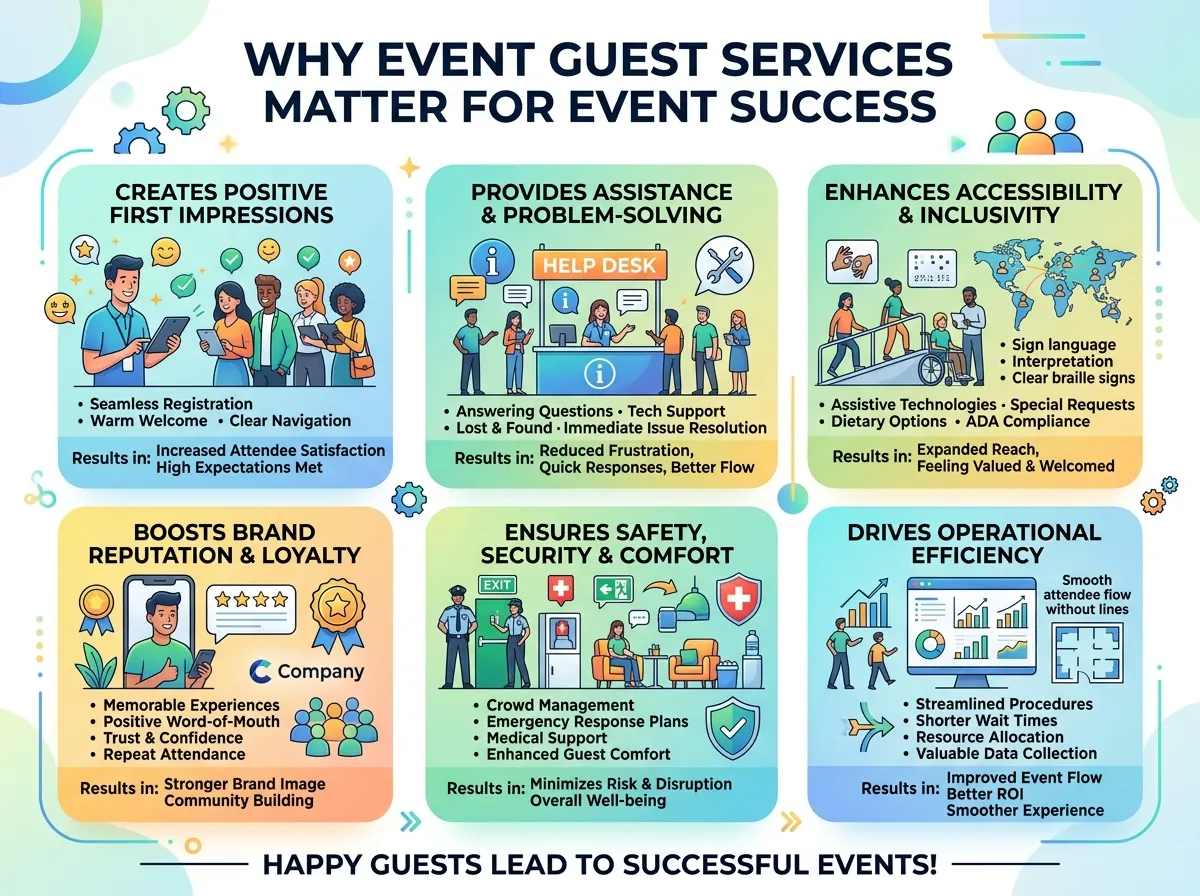
Event Guest Services contribute to the overall quality, professionalism, and memorability of an event. They influence how attendees interact with organizers, navigate the event environment, access information, and respond to unexpected challenges.
A successful event experience is often built from many small interactions. A helpful welcome, clear information, quick assistance, comfortable hospitality, accessible facilities, and responsive communication can collectively create a stronger impression.
As events become increasingly connected across physical and digital environments, guest services will continue to evolve. Organizations that treat attendee support as an important part of the complete event experience can create more consistent relationships with their audiences while improving satisfaction and long-term engagement.
Frequently Asked Questions
1. What are Event Guest Services?
Event Guest Services include the support, hospitality, communication, and assistance provided to attendees before, during, and after an event. They can include registration support, information desks, wayfinding, accessibility assistance, hospitality, technical support, and general attendee assistance.
2. Why are Event Guest Services important?
Event Guest Services are important because they directly influence attendee satisfaction and the overall event experience. Helpful staff, clear information, convenient support, and good hospitality can make attendees feel comfortable and valued while reducing confusion and frustration.
3. What is included in Event Guest Support?
Event Guest Support can include answering attendee questions, assisting with registration, providing directions, helping with technical issues, supporting accessibility needs, explaining schedules, and responding to unexpected problems during an event.
4. How do Event Guest Services improve attendee experience?
Strong guest services make it easier for attendees to navigate an event, find information, receive assistance, and participate comfortably. Consistent communication and responsive support can reduce friction and create a more positive perception of the event.
5. What is Event Hospitality Management?
Event Hospitality Management involves coordinating services and experiences designed to make attendees feel welcome and comfortable. It can include guest reception, refreshments, seating, lounges, VIP assistance, transportation information, and other hospitality-related services.
6. What is the difference between guest services and attendee services?
Guest services generally focus on supporting and assisting guests throughout their event experience, while attendee services can refer more broadly to the practical resources and facilities available to participants. In many events, the two functions overlap significantly.
7. How can technology improve Event Guest Services?
Technology can improve guest services through digital registration, mobile event applications, QR-code check-in, automated notifications, digital maps, chat support, personalized schedules, and real-time communication. These tools can make information more accessible while helping staff manage attendee needs more efficiently.
8. How does accessibility affect Event Guest Services?
Accessibility affects how comfortably different attendees can participate in an event. Accessible facilities, clear communication, appropriate seating, digital accessibility, transportation support, and responsive assistance can help create a more inclusive attendee experience.
9. What is a Guest Experience Strategy?
A Guest Experience Strategy considers the complete attendee journey and the different interactions that shape it. It can include communication, registration, hospitality, venue experience, technology, staff interactions, networking, accessibility, and post-event engagement.
10. How can event organizers measure guest service quality?
Organizers can evaluate guest service quality through attendee surveys, satisfaction feedback, support requests, registration data, engagement information, repeat attendance, and qualitative comments. Combining different sources can help identify strengths and recurring areas for improvement.