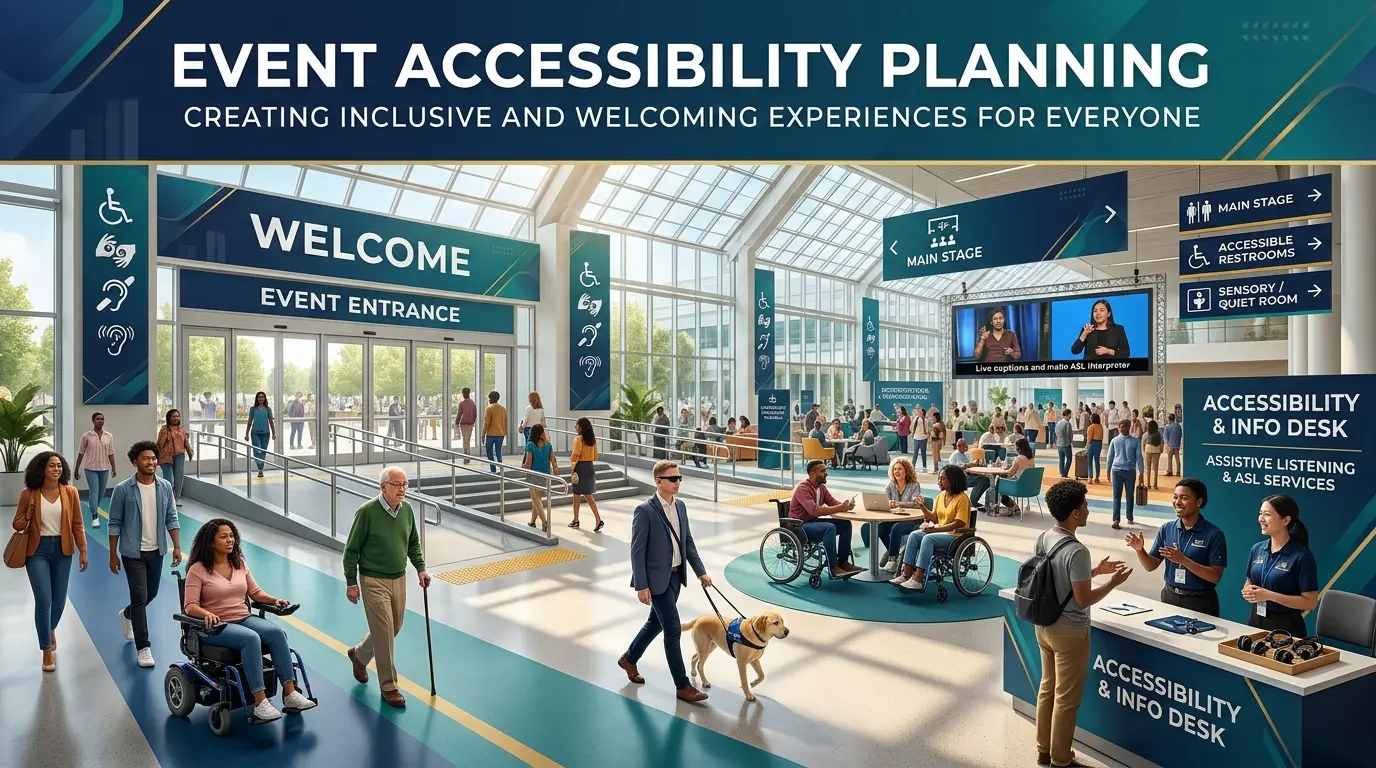
Event Accessibility Planning focuses on making events welcoming, comfortable, and usable for people with different abilities and access requirements. It involves thoughtful venue selection, accessible facilities, transportation arrangements, communication support, inclusive event design, and appropriate accommodations. By considering accessibility throughout the event process, organizers can reduce participation barriers and create better experiences for attendees, speakers, staff, and guests. Effective planning also helps events meet relevant accessibility requirements while demonstrating a genuine commitment to inclusion.
An event can bring people together for learning, networking, entertainment, business, and shared experiences. However, not everyone experiences an event space in the same way. A staircase without an alternative route, unclear directional signs, inaccessible registration forms, or a lack of communication support can prevent some attendees from participating comfortably.
These challenges show why Event Accessibility Planning needs to be considered from the beginning rather than treated as a last-minute adjustment. Accessibility influences every part of an event, including how people discover it, register, travel to the venue, enter the building, move between activities, access information, and participate in sessions.
Creating an accessible event does not simply mean installing ramps or reserving a few seats. It requires understanding different access needs and designing an experience that allows people to participate with dignity and independence wherever possible.
Whether an organization is arranging a conference, exhibition, corporate gathering, public festival, or community event, accessibility should be part of its overall planning approach. When organizers consider these needs early, they can make better decisions, reduce unexpected barriers, and create an environment that welcomes a wider audience.
Accessibility Begins Before the Event Takes Place
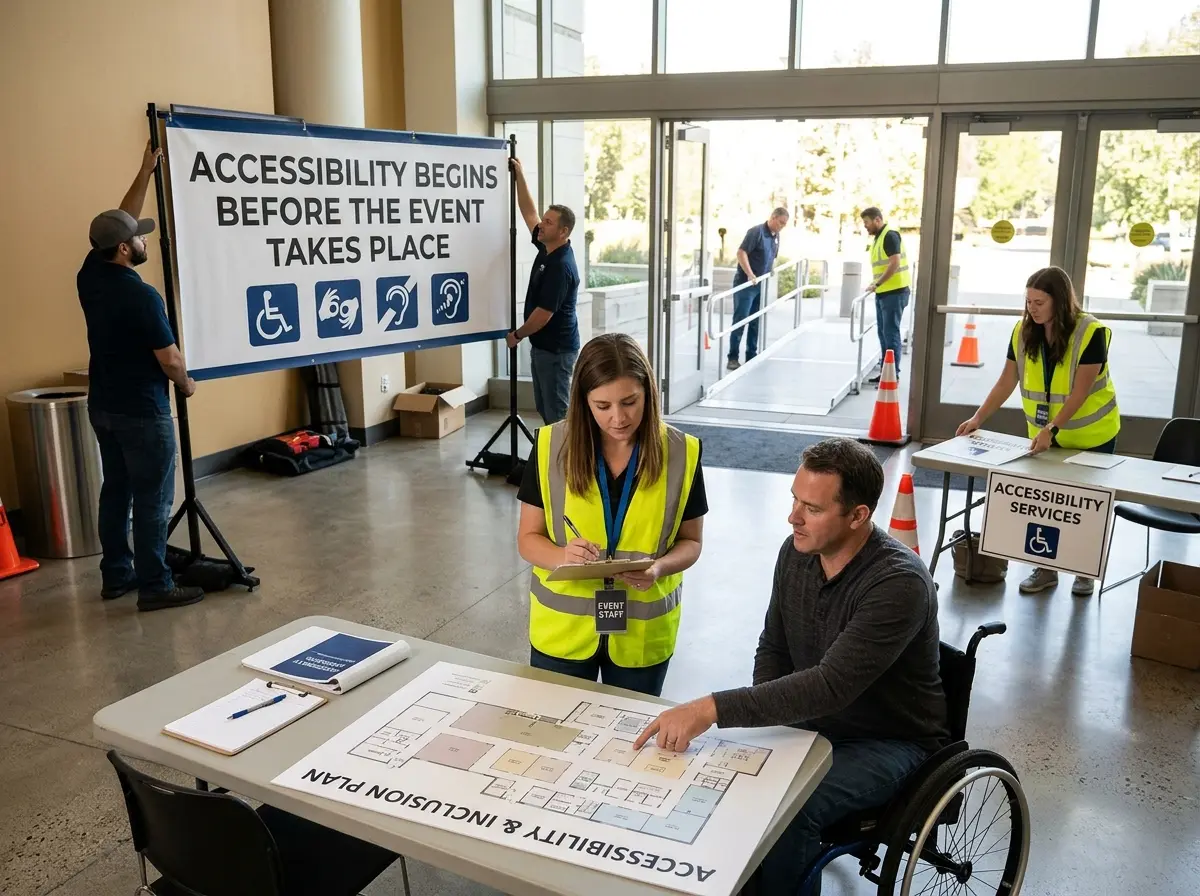
The attendee experience often begins long before someone arrives at the venue. People first encounter an event through advertisements, websites, invitations, registration forms, schedules, and communication with organizers. If these early interactions are difficult to access, potential attendees may decide not to participate.
This is why accessible planning should extend beyond the physical event space. Registration pages should be compatible with assistive technologies, information should be presented in clear language, and important details should be easy to locate. Attendees should also have a straightforward way to communicate accommodation requests without unnecessary complications.
For example, someone who uses a wheelchair may need to confirm whether the venue has step-free access. A person with hearing loss may want to know whether captioning or sign language interpretation will be available. Providing this information before registration helps people make informed decisions.
Organizers should also avoid assuming that every attendee has the same requirements. Some people may need mobility assistance, while others may benefit from quiet spaces, accessible digital materials, additional time, or communication support.
The earlier these needs are considered, the easier it becomes to include them in the event design rather than making rushed arrangements later.
Accessible Event Design Is About the Complete Experience
Accessible Event Design considers how people interact with every part of an event. It brings together physical layouts, communication methods, digital resources, schedules, and participation opportunities to reduce unnecessary barriers.
A conference, for example, may have an accessible entrance but still create difficulties if the registration desk is too high, the stage has no accessible route, or the seating arrangement leaves insufficient space for wheelchair users. Accessibility needs to be consistent throughout the attendee journey.
The same principle applies to presentations and activities. Speakers should use microphones, presentation materials should have readable text, and videos should include captions where appropriate. Important visual information should not be communicated through color alone, while audio-dependent content may need alternative formats.
Accessible design also considers comfort and sensory experiences. Bright lighting, loud background music, crowded spaces, and long sessions without breaks can create difficulties for some attendees. Providing quieter areas, clear schedules, and flexible participation options can make the experience more comfortable.
These decisions do not benefit only people with disabilities. Clear signs, comfortable seating, readable materials, and straightforward navigation can improve the event experience for many participants.
Inclusive Event Management Requires Coordination
Accessibility cannot be managed effectively by one department working independently. It requires coordination between event planners, venue representatives, technical teams, suppliers, registration staff, security personnel, and guest service professionals.
Inclusive Event Management makes accessibility a shared responsibility throughout the planning and delivery process. Everyone involved should understand the arrangements relevant to their role and know how to respond when an attendee requests assistance.
For instance, registration staff should understand how to support people who need additional time or an alternative registration method. Venue personnel should know the accessible routes, elevator locations, and designated seating areas. Technical teams should be prepared to manage captioning equipment, microphones, and other communication services.
Organizers should also establish a clear process for handling accommodation requests. Information about an attendee’s requirements should be shared only with the people who need it to provide the requested support.
A coordinated approach helps prevent situations in which an accessibility feature exists but event staff do not know how to use it. It also creates a more consistent experience from registration through departure.
Understanding Event Accessibility Requirements
Accessibility requirements vary depending on the event location, venue type, audience, and applicable laws. Organizers should understand the standards and legal responsibilities relevant to their particular event rather than assuming that one general checklist covers every situation.
Event Accessibility Requirements may relate to entrances, routes, elevators, restrooms, seating, emergency procedures, signage, communication access, and digital information. Depending on the jurisdiction, additional requirements may apply to public accommodations, temporary structures, or specific types of events.
In the United States, for example, the Americans with Disabilities Act (ADA) establishes accessibility obligations for many public accommodations and other covered entities. Other countries have their own accessibility legislation, standards, and building requirements.
Compliance should be treated as a baseline rather than the complete definition of inclusion. An event may satisfy certain minimum requirements and still create practical difficulties for attendees. A technically accessible route, for instance, may be poorly signposted or difficult to navigate during a crowded event.
Organizers should therefore combine legal review with practical accessibility assessments. Consulting qualified accessibility professionals and people with relevant lived experience can help identify barriers that might otherwise be overlooked.
Choosing a Venue That Supports Different Access Needs
Venue selection can determine how successfully an event accommodates its audience. A location may look attractive, offer suitable capacity, and provide modern facilities while still presenting accessibility challenges.
Accessible Venue Selection should consider the complete route from arrival to participation. This includes parking, public transportation access, entrances, reception areas, elevators, meeting rooms, stages, restrooms, dining spaces, and emergency exits.
The distance between different event areas is also important. A venue with several floors may provide elevators, but long travel distances or poorly positioned facilities can make movement difficult. Organizers should examine whether attendees can reach essential areas without relying on unnecessary assistance.
Seating arrangements deserve particular attention. Wheelchair spaces should be integrated into the audience layout rather than isolated from other attendees. Companion seating, accessible viewing positions, and suitable routes to the stage should also be considered.
Before confirming a venue, planners should ideally conduct a physical inspection and discuss specific requirements with the venue management team. Photographs and written assurances may be useful, but they should not replace direct verification of important access features.
A suitable venue supports more than entry. It allows people to participate in the event without encountering avoidable obstacles at every stage.
Event Accommodation Services and Individual Requirements
Even a carefully designed venue may not meet every attendee’s individual needs. Some participants require specific accommodations that depend on their disability, communication preferences, or personal circumstances.
Event Accommodation Services can include sign language interpretation, live captioning, assistive listening systems, accessible presentation materials, reserved seating, personal assistance arrangements, and alternative communication formats.
The right accommodation depends on the person and the event. A participant with hearing loss may request real-time captions, while someone with low vision may need accessible digital documents or large-print materials. A person with a sensory disability may benefit from a quiet room away from crowded areas.
Organizers should provide a clear way to request accommodations during registration or through a dedicated contact channel. Requests should be handled respectfully, and attendees should not be required to share unnecessary personal information.
Planning also needs to account for timing and coordination. Interpreters, captioning providers, and other specialists may require advance notice. Presentation materials should be shared early enough for accessible preparation, and technical arrangements should be tested before the event begins.
When accommodation services are planned properly, attendees can focus on the event itself rather than spending their time trying to overcome avoidable barriers.
Creating an Inclusive Audience Experience
An event may provide accessible facilities and still feel unwelcoming if its communication and participation practices exclude certain people. Inclusion depends on how attendees are treated, how information is shared, and whether people can contribute comfortably.
An Inclusive Audience Experience begins with respectful communication. Event staff should speak directly to attendees rather than automatically addressing companions or support persons. They should also ask before offering physical assistance instead of assuming that someone needs help.
The language used in event materials matters as well. Organizers should use respectful, clear wording and avoid presenting accessibility as an inconvenience or an exceptional burden. Information about available facilities should be practical and easy to understand.
Participation formats should offer flexibility wherever possible. Attendees may need microphones for questions, accessible polling tools, written alternatives to spoken activities, or additional time to contribute. Online participation options can also support people who cannot travel to the venue.
Event guest services play an important role in delivering this experience. Clear responsibilities and well-prepared staff help ensure that accessibility arrangements are reflected in everyday interactions. Strong Event Guest Services can make it easier for attendees to receive assistance, find information, and feel welcomed throughout the event.
Accessible Event Facilities and Practical Details
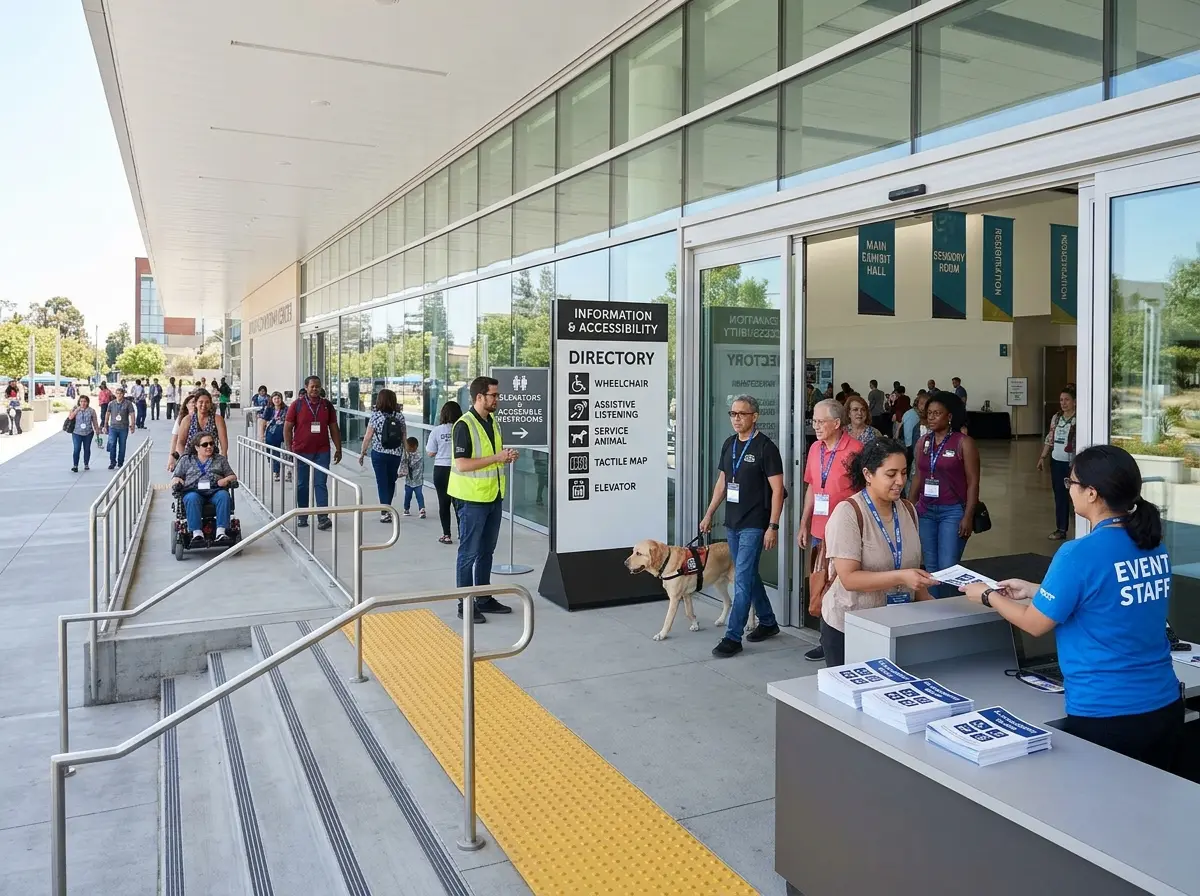
Facilities influence whether attendees can participate comfortably for the full duration of an event. Accessible entrances and meeting rooms are important, but organizers should also examine the smaller details that affect everyday movement and independence.
Accessible Event Facilities may include suitable restrooms, accessible seating, elevators, ramps, reception counters, clear pathways, and appropriately positioned assistance points. The availability of these facilities should be communicated before attendees arrive.
Restrooms need particular attention because their accessibility can be overlooked during general venue planning. Organizers should confirm that accessible facilities are available, unlocked, clearly marked, and located within a reasonable distance of the main event areas.
Food and refreshment arrangements can also create barriers. Buffet layouts should allow adequate movement space, food labels should be readable, and staff should be prepared to explain ingredients or provide assistance when requested. Accessible dining arrangements should allow attendees to participate with others rather than being separated unnecessarily.
Signage should use readable text, clear symbols, and consistent placement. Important directions should be visible at decision points, such as entrances, elevators, corridors, and room transitions.
These details may appear small individually, but together they influence how comfortable and independent attendees feel.
Event Mobility Support and Transportation Access
Reaching an event can be as challenging as navigating the venue itself. Transportation arrangements therefore deserve a place in accessibility planning, particularly for large conferences, outdoor festivals, and events held in unfamiliar locations.
Event Mobility Support may involve accessible parking, drop-off areas, transportation information, step-free routes, shuttle arrangements, and assistance with navigating the venue grounds.
Organizers should provide accurate information about nearby public transportation and its accessibility features where that information is available. If shuttle services are offered, planners should confirm that suitable vehicles can accommodate attendees with different mobility requirements.
The route between parking areas, transportation points, and the venue entrance should also be examined. Uneven surfaces, steep slopes, temporary construction, and long distances can create unexpected barriers.
For outdoor events, weather conditions may introduce additional challenges. Mud, loose gravel, temporary cables, and poorly maintained pathways can make movement difficult. Appropriate flooring, clear routes, and regular site inspections help reduce these problems.
Event mobility support should be communicated in advance so attendees can plan their journeys confidently. Clear arrival instructions can make a meaningful difference to the overall experience.
Accessibility Compliance for Events and Emergency Preparedness
Safety arrangements must account for people with different access requirements. An emergency plan that assumes every attendee can use stairs, hear announcements, or move quickly without assistance may leave some participants at risk.
Accessibility Compliance for Events should therefore include emergency communication and evacuation planning. Organizers need to understand the venue’s emergency procedures and confirm how they address people who may require additional support.
Visual alarms, audible announcements, accessible evacuation routes, and appropriate assistance procedures may be relevant depending on the venue and local requirements. Staff should know their responsibilities and understand how to provide support without creating unnecessary risks.
Emergency information should also be available in accessible formats. Important instructions need to be understandable and communicated through appropriate channels.
Temporary event structures require particular attention. Outdoor stages, exhibition areas, temporary seating, and portable facilities should be inspected to ensure that accessibility and safety arrangements remain effective after setup.
Compliance is not only a matter of documentation. Organizers need to confirm that the arrangements work in practice and that staff understand how to respond during an emergency.
Using Event Marketing Technology to Improve Accessibility
Digital tools influence how people discover, register for, navigate, and participate in events. When selected thoughtfully, technology can make event information more accessible and reduce communication barriers.
Modern event platforms can support accessible registration forms, digital schedules, captioned presentations, live-streaming options, and mobile event information. However, these features need to be evaluated rather than assumed to be accessible by default.
For example, a registration platform should be usable with keyboard navigation and compatible with assistive technologies. Digital documents should have meaningful headings and readable structures. Videos should include captions, while essential visual information should have appropriate text alternatives.
Event Marketing Technology can also help organizers communicate practical accessibility information before and during an event. Attendees may use event applications to locate facilities, review schedules, receive updates, or contact support teams.
Technology should complement rather than replace human assistance. Some attendees may prefer direct communication, printed information, or support from event staff. Offering multiple ways to access important details creates a more flexible experience.
The most effective digital approach is one that removes barriers without making participation dependent on a single device or platform.
Making Accessibility Part of Event Operations
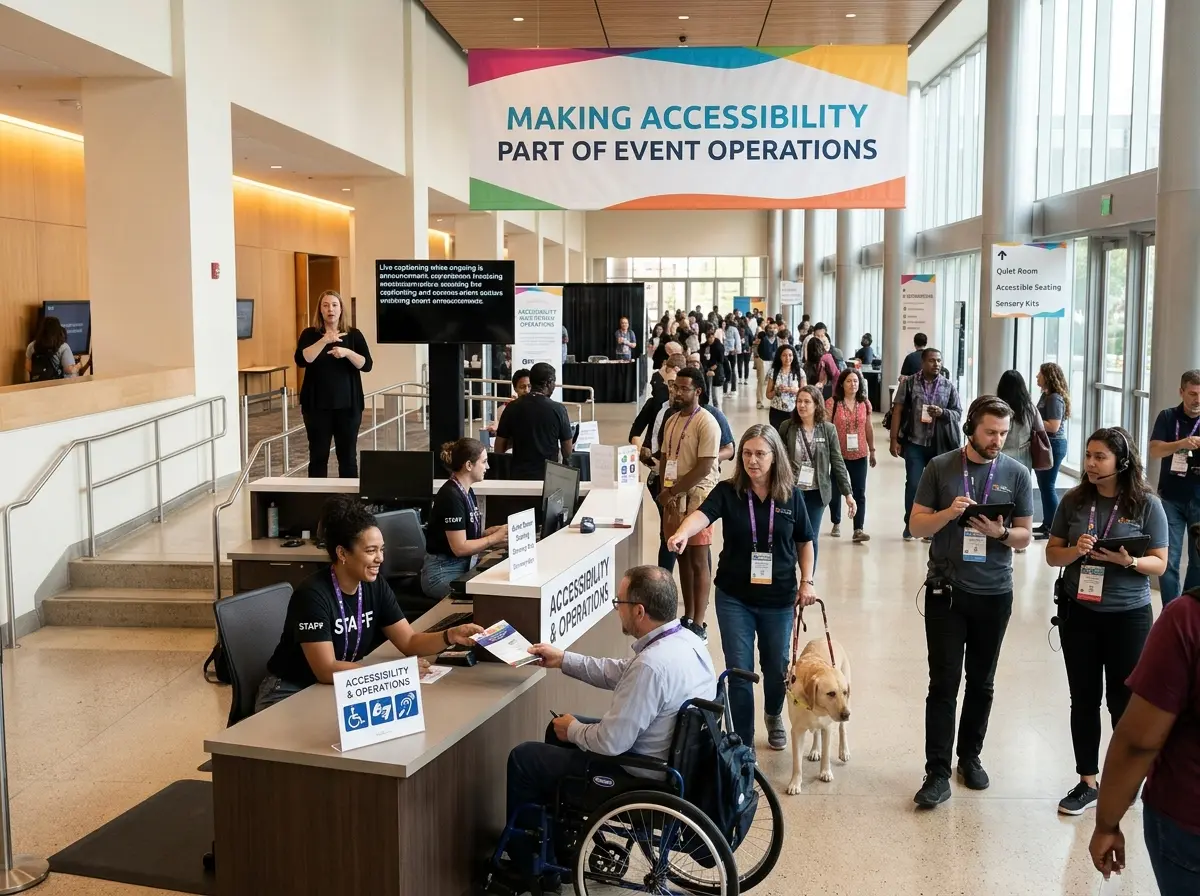
Accessibility arrangements need to remain effective after the planning stage. Venue layouts may change, equipment may stop working, schedules may shift, and unexpected attendee requests may arise during the event.
This is why accessibility should be included in operational planning and event breakdown activities. Organizers need to identify who is responsible for checking facilities, coordinating accommodations, communicating updates, and resolving problems.
A well-structured Event Breakdown Planning process can help teams assign responsibilities and ensure that important accessibility arrangements are not overlooked during setup and preparation.
Before opening the event, teams should verify routes, signs, seating, restrooms, communication equipment, and assistance points. Staff should know where accessible facilities are located and how to contact the person responsible for accommodation requests.
After the event, feedback can reveal whether the arrangements worked as expected. Attendees may identify barriers that were not visible during the initial venue inspection. Organizers should review this feedback and use it to improve future events.
Accessibility becomes more reliable when it is treated as a continuing operational responsibility rather than a separate task completed before event day.
Conclusion
Event Accessibility Planning is an essential part of creating events where people with different abilities and access requirements can participate comfortably. It involves much more than meeting physical access standards. Registration, communication, venue selection, facilities, transportation, technology, staff preparation, and emergency procedures all influence the attendee experience.
Organizers who consider accessibility from the beginning can identify barriers earlier and make more effective decisions throughout the planning process. They can also provide clearer information, coordinate accommodations, and create an environment where attendees feel respected and included. Providing reliable Event Guest Services can further support this process by helping attendees receive appropriate assistance and enjoy a more comfortable event experience.
An accessible event is not simply one that allows people to enter a venue. It is one that gives them meaningful opportunities to participate, connect, learn, and enjoy the experience. By making inclusion part of everyday event operations, organizations can create more welcoming and successful events for everyone.
Frequently Asked Questions
1. What is Event Accessibility Planning?
Event Accessibility Planning is the process of identifying and reducing barriers that may prevent people with disabilities or different access requirements from participating in an event. It includes venue access, communication, facilities, transportation, technology, and attendee support.
2. Why is accessibility important when organizing an event?
Accessibility allows more people to participate comfortably and independently. It improves the attendee experience, supports inclusion, helps organizers meet relevant requirements, and reduces the risk of avoidable participation barriers.
3. What are the main elements of accessible event design?
Accessible event design considers entrances, seating, pathways, restrooms, signage, communication formats, presentation materials, registration systems, and opportunities for participation. These elements should work together throughout the attendee journey.
4. How can organizers choose an accessible event venue?
Organizers should inspect entrances, elevators, pathways, restrooms, seating arrangements, parking, transportation access, and emergency routes. They should also confirm specific requirements directly with venue management before making a booking.
5. What are common event accommodation services?
Common accommodations include sign language interpretation, live captions, assistive listening systems, accessible presentation materials, reserved seating, alternative communication formats, and appropriate mobility assistance.
6. How can event organizers make registration more accessible?
They can use accessible website forms, clear instructions, readable text, keyboard-friendly navigation, and simple registration processes. Attendees should also have an easy way to request accommodations before the event.
7. What role does technology play in event accessibility?
Technology can support accessible registration, digital schedules, live captions, streaming, accessible documents, and event navigation. These tools should be tested with different access needs in mind and supported by alternative ways to obtain assistance.
8. What is the difference between event accessibility and event inclusion?
Accessibility focuses on removing practical barriers that prevent participation. Inclusion is broader and also considers whether people feel respected, welcomed, represented, and able to participate meaningfully.
9. How can organizers prepare accessible emergency procedures?
They should review the venue’s evacuation plans, provide accessible emergency communication, identify suitable assistance procedures, and ensure staff understand their responsibilities. Emergency arrangements should account for different mobility, sensory, and communication needs.
10. How can event organizers evaluate accessibility after an event?
Organizers can collect attendee feedback, review accommodation requests, examine reported barriers, and assess whether facilities and communication arrangements worked effectively. These findings can guide improvements for future events.