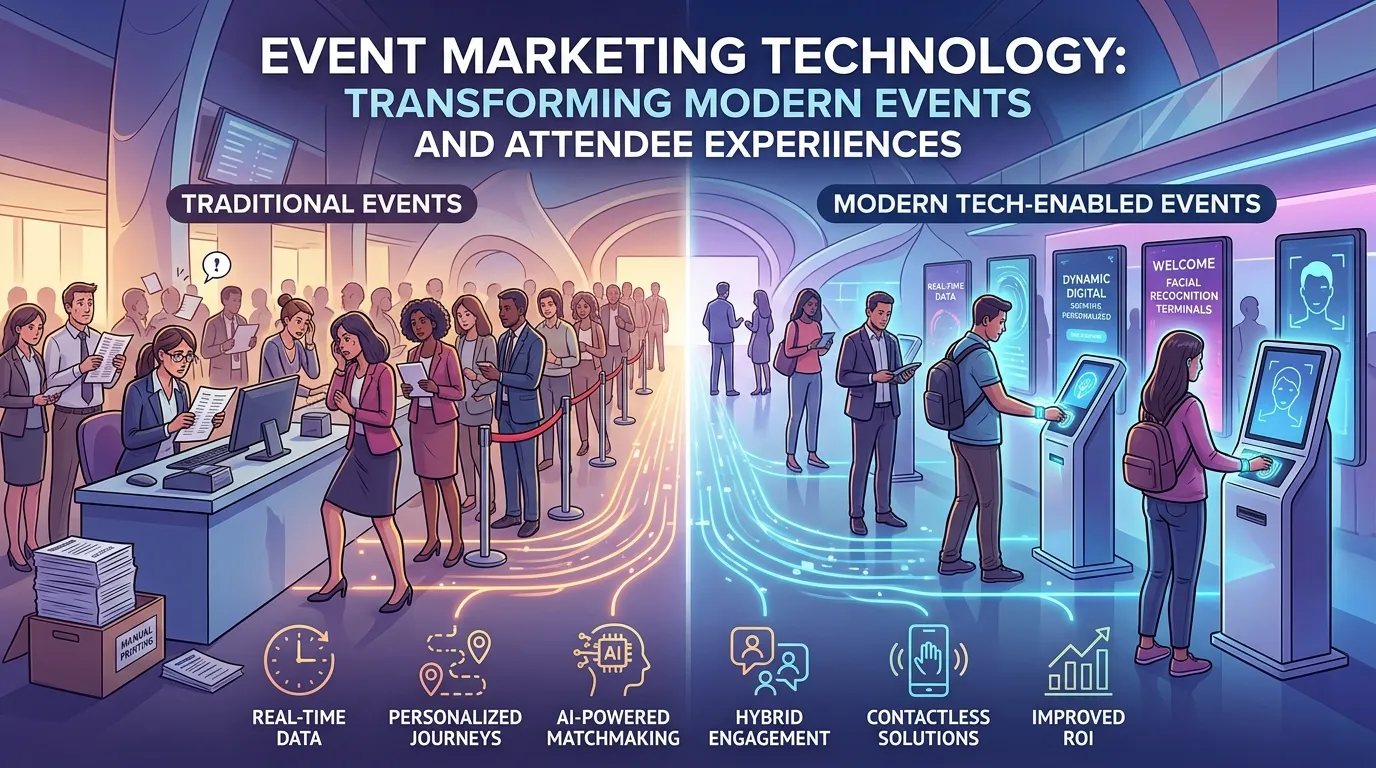
Event marketing technology has become an important part of how businesses plan, promote, manage, and measure events. As audiences become more digitally connected, event organizers are using technology to create experiences that are easier to discover, simpler to attend, more engaging, and easier to measure.
Events have traditionally depended on physical venues, printed materials, manual registration, email communication, and in-person networking. While these methods can still play an important role, modern technology allows organizers to connect different parts of the event experience through digital platforms and automated processes.
From event registration and promotional campaigns to attendee engagement and post-event analytics, technology can support nearly every stage of an event lifecycle. It can also help marketing teams understand audience behavior and make better decisions based on measurable data.
The value of event technology, however, is not simply about using more digital tools. Technology should support clear marketing objectives and improve the experience for both organizers and attendees.
Understanding Event Marketing Technology
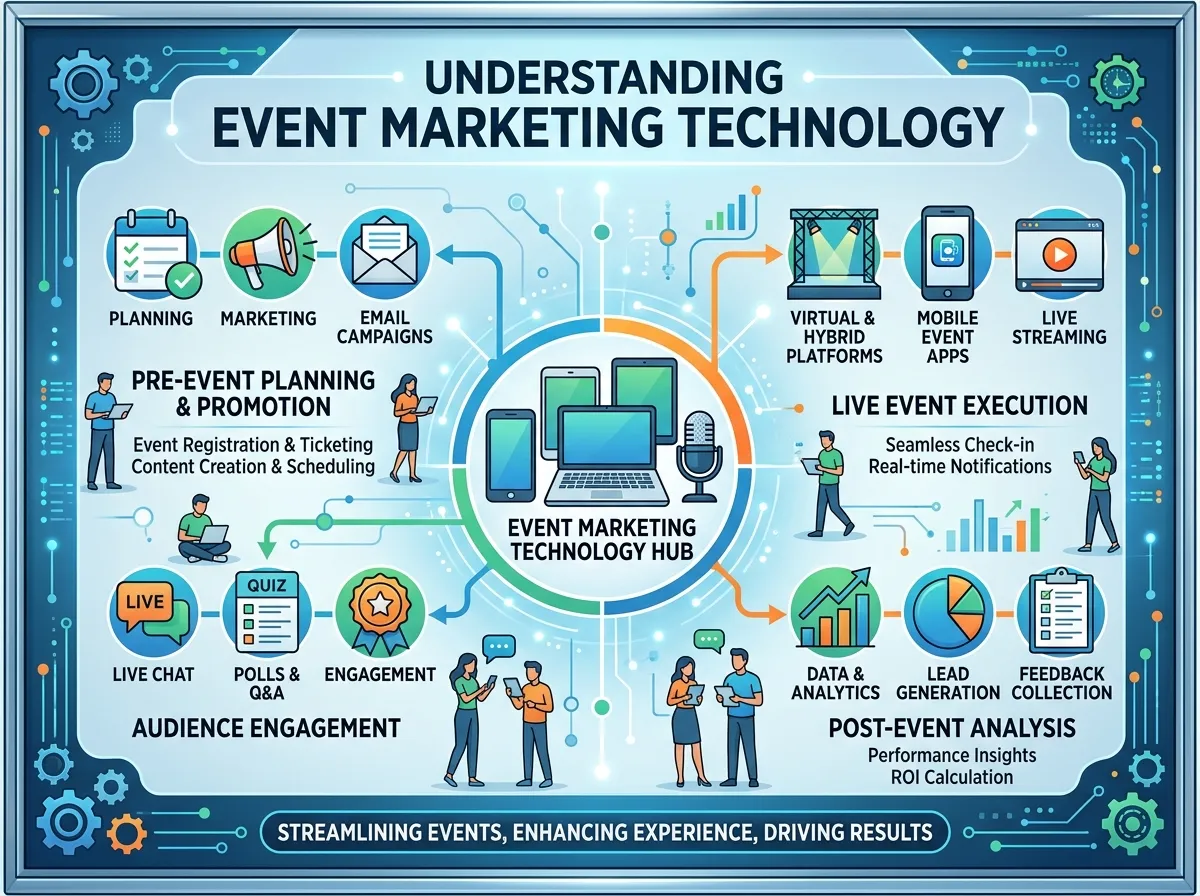
Event marketing technology refers to the digital platforms, software, systems, and tools used to support event marketing activities. These technologies can help businesses promote events, attract attendees, manage registrations, communicate with audiences, facilitate engagement, and evaluate performance.
The technology landscape includes event websites, registration platforms, email marketing systems, social media tools, event applications, virtual event platforms, analytics systems, customer relationship management platforms, and marketing automation solutions.
These tools can work independently, but their value can increase when they are integrated. For example, registration information can connect with a CRM platform, while attendee engagement data can inform post-event marketing campaigns.
This creates a more connected event ecosystem where marketing and event teams can understand the attendee journey more effectively.
The Role of Event Marketing Software
Event marketing software helps organizations manage different aspects of event promotion and audience communication from digital platforms. Depending on the system, it may support event websites, email campaigns, registration, ticketing, audience segmentation, social promotion, reporting, and integrations.
For marketing teams, centralized software can reduce the need to manage multiple disconnected processes.
Event marketing software can also help maintain consistency across promotional channels. Event information such as dates, speakers, descriptions, schedules, and registration details can be managed more efficiently when the relevant systems are connected.
The right software depends on the event’s size, format, audience, budget, and marketing requirements. A small networking event may need relatively simple registration and email tools, while a large conference may require a comprehensive technology ecosystem.
Event Technology Solutions for Modern Events
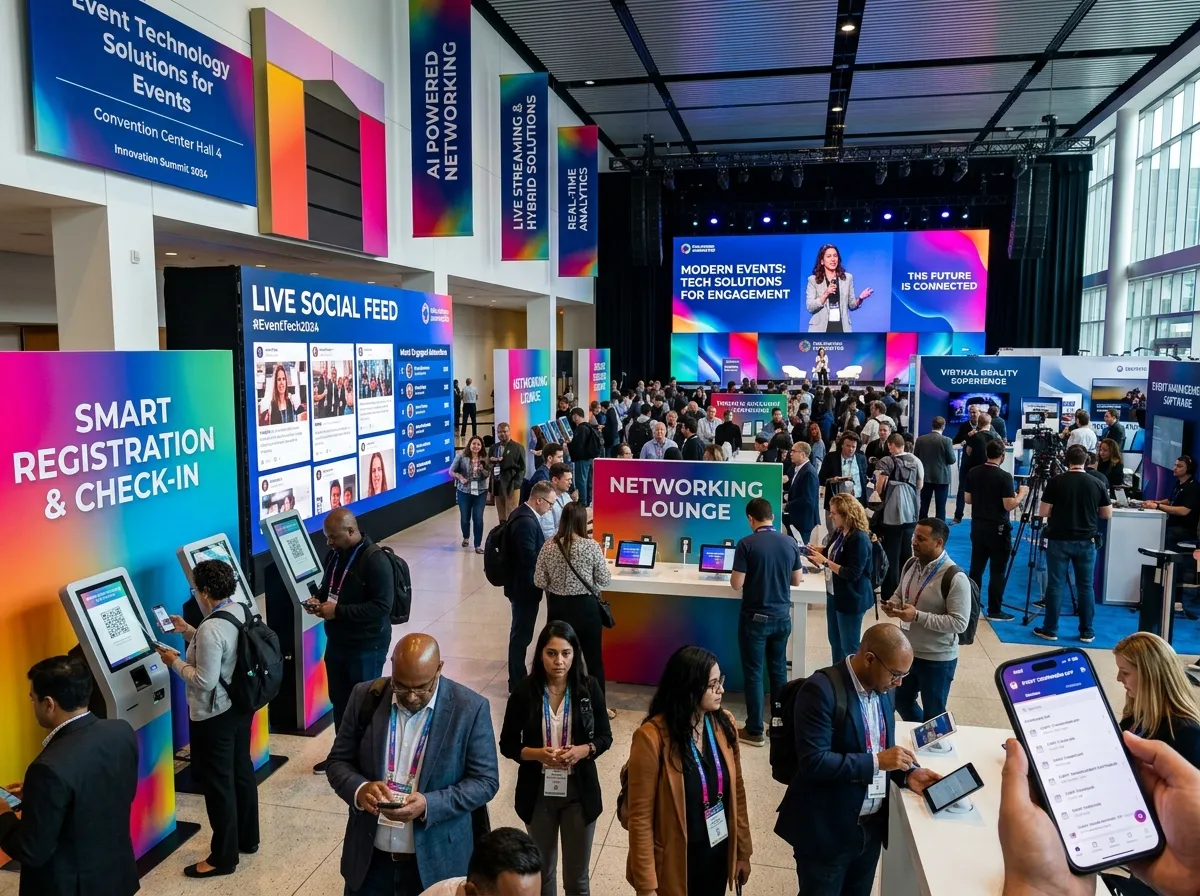
Event technology solutions are increasingly designed to support both physical and digital experiences. Technology can influence how attendees discover an event, register, receive information, interact with speakers, network with other participants, and engage with sponsors.
For physical events, technology may include mobile applications, digital check-in, QR codes, interactive displays, digital signage, networking platforms, and audience polling.
For virtual events, technology can support streaming, digital networking, live chat, audience questions, breakout sessions, recordings, and interactive content. These capabilities are particularly important when organizations use event marketing webinars to reach audiences remotely and maintain engagement before, during, and after the session.
Hybrid events can combine both environments, allowing people to participate either physically or remotely.
The most effective technology solutions are those that solve genuine event challenges rather than adding unnecessary complexity.
Event Management Technology
Event management technology supports the operational side of event planning while also contributing to the marketing experience. Registration, ticketing, scheduling, communication, check-in, attendee management, and reporting can all be supported through digital systems.
Centralized event management can improve coordination between marketing, operations, speakers, sponsors, and other stakeholders.
Automation can also reduce repetitive administrative tasks. Registration confirmations, reminders, schedule updates, and other communications can be delivered automatically based on attendee information.
This can give event teams more time to focus on strategy, content, partnerships, and attendee experience.
Technology can also help organizers manage changes more efficiently. If a schedule, speaker, or venue detail changes, digital communication channels can distribute updates more quickly than traditional printed materials.
Digital Event Marketing Tools
Digital event marketing tools have expanded the ways organizations attract and communicate with attendees. Search engine optimization, social media, email marketing, content marketing, paid advertising, webinars, landing pages, and digital communities can all contribute to event promotion.
Digital tools allow marketers to segment audiences and create more relevant campaigns.
For example, previous attendees can receive different messaging from people who have never attended an event. A potential attendee interested in a particular topic may also receive content related to that subject.
Digital promotion can continue throughout the event lifecycle. Before the event, marketers focus on awareness and registration. During the event, digital channels can encourage participation and interaction. After the event, content and follow-up campaigns can maintain relationships with attendees.
This creates a continuous marketing cycle rather than treating the event as a single isolated occasion.
Event Automation Software
Event automation software can reduce repetitive marketing and administrative activities. Automated workflows can support registration confirmations, reminders, speaker communications, attendee notifications, follow-up emails, and post-event campaigns.
Automation can also respond to attendee behavior. For example, someone who registers but does not attend may receive different communication from someone who participated in multiple sessions.
Similarly, an attendee who interacts heavily with a particular topic may receive relevant follow-up content after the event.
Automation is most effective when it is based on useful audience information. Excessive or irrelevant automated messages can make the event experience feel impersonal.
The objective should be to provide timely communication while maintaining a human and relevant experience.
Event Engagement Technology
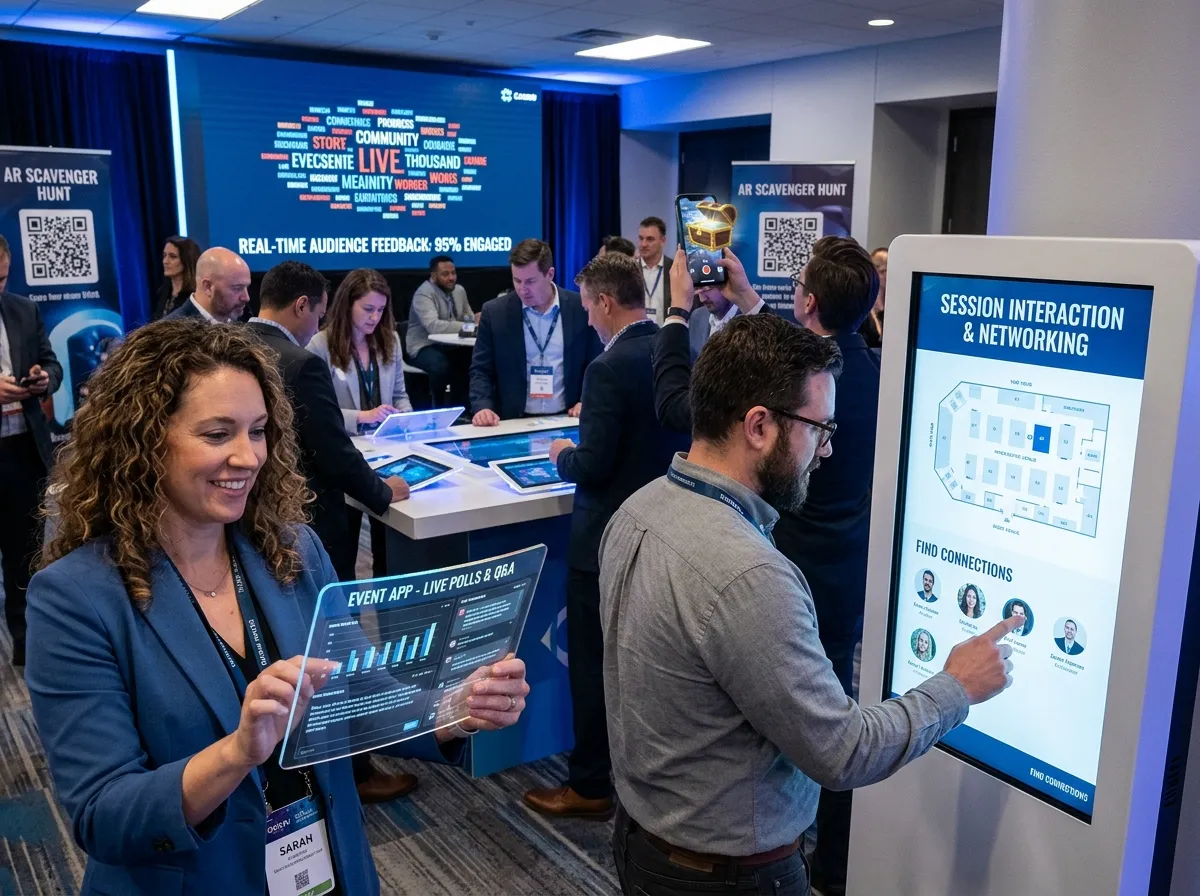
Event engagement technology focuses on encouraging attendees to participate rather than simply attend.
Engagement can include live polling, audience questions, interactive sessions, gamification, networking platforms, mobile applications, digital content, social media integration, and real-time feedback.
For physical events, interactive screens and mobile applications can help attendees navigate the venue and discover relevant sessions.
For virtual events, chat features, polls, Q&A sessions, breakout rooms, and networking tools can help reduce the passive nature of online attendance.
Engagement technology can also provide valuable data. Organizers may be able to understand which sessions attract the most interaction, which topics generate questions, and where attendees spend their time.
Artificial intelligence can add another layer of interaction and personalization. For example, organizers can explore benefits of AI in event marketing to identify ways AI can support attendee engagement, content recommendations, and event operations.
This information can help improve future events.
Virtual Event Technology
Virtual event technology has expanded opportunities for organizations to reach audiences beyond geographic limitations. Online events can allow people to participate without traveling to a physical venue.
Virtual platforms can support live presentations, recorded sessions, interactive discussions, networking, Q&A, polls, chat, digital booths, and other features.
However, virtual events require more than simply streaming a presentation online. Digital audiences can become distracted easily, making interaction and content quality especially important.
Technology can help create a more dynamic environment by allowing participants to ask questions, communicate with speakers, network with other attendees, and access additional resources.
Recorded content can also extend the value of the event by allowing registered participants to revisit sessions after the live experience.
Event Registration Software
Event registration software is one of the most important technology components for many events. Registration is often the first significant interaction between an attendee and the event brand.
A well-designed registration experience should make it easy for people to understand the event, select appropriate options, provide necessary information, and complete registration.
Modern registration systems can support ticketing, payment processing, confirmation emails, attendee information, promotional codes, waitlists, and check-in.
Registration data can also become useful for marketing. Understanding who registers, where registrations originate, and which campaigns produce attendees can help marketing teams evaluate promotional performance.
The registration experience should therefore be considered both an operational process and a marketing touchpoint.
Event Analytics Tools
Event analytics tools provide information about attendee behavior and marketing performance. Data can help organizers understand what happened during an event and identify opportunities for improvement.
Useful information can include registrations, attendance, session participation, engagement, website traffic, email performance, social activity, lead generation, and post-event conversions.
For physical events, analytics may also provide insights into check-in patterns, session attendance, networking activity, or interactions with sponsors.
Virtual events can generate additional digital engagement data, such as viewing duration, chat activity, poll responses, and content downloads.
Analytics become most useful when connected to clear objectives. Collecting large amounts of data does not automatically improve decision-making. Organizers need to identify which metrics actually matter to the event’s goals.
Event Marketing Automation
Event marketing automation connects event promotion and communication with automated marketing workflows. This can help marketers maintain consistent communication before, during, and after an event.
Automation can support invitation campaigns, registration follow-ups, reminders, audience segmentation, lead nurturing, and post-event communication.
For example, an attendee who registers for a webinar can automatically receive confirmation, preparation information, reminders, and a follow-up message containing relevant resources.
Marketing automation can also connect event engagement with broader customer relationship management. Attendee behavior may provide useful signals for sales and marketing teams when handled appropriately.
This makes events part of a broader customer acquisition and relationship-building strategy.
Personalization in Event Marketing Technology
Personalization can make event communication more relevant. Instead of sending every attendee the same information, organizers can use audience data to tailor messaging.
Different groups may have different interests. Speakers may need logistical information, sponsors may need partnership communications, and attendees may want session recommendations or networking opportunities.
Personalized event experiences can extend to registration pages, email campaigns, event applications, session recommendations, and follow-up content.
Artificial intelligence can increasingly support this process by helping analyze audience behavior and identify relevant content or communication opportunities.
Immersive experiences can also make personalization more engaging. Approaches such as immersive event marketing can combine technology, interactive environments, and storytelling to create more memorable attendee experiences.
However, personalization should remain transparent and respectful. Businesses need to consider privacy, consent, data security, and appropriate use of attendee information.
Technology and Event Sponsorship
Event technology can also create new opportunities for sponsors. Digital platforms can provide measurable interactions that go beyond traditional event signage.
Sponsors may participate through branded digital content, interactive sessions, virtual booths, sponsored networking experiences, mobile application placements, or lead-generation activities.
Technology can also provide sponsors with more detailed engagement information. Depending on the event and privacy framework, organizers may be able to report impressions, interactions, session participation, leads, or other relevant outcomes.
This can make sponsorship more measurable and potentially increase its value.
Integrating Event Technology With CRM and Marketing Platforms
Integration is one of the most important developments in event marketing technology. Connecting event systems with CRM and marketing platforms can create a more complete view of attendee relationships.
Registration information, engagement data, and post-event interactions can contribute to audience profiles.
Marketing teams can then use these insights for relevant follow-up campaigns, while sales teams may be able to identify prospects who demonstrated meaningful interest.
Integration can also reduce manual data transfer and improve consistency.
However, organizations should carefully manage permissions, privacy, data quality, and access controls when connecting different systems.
Measuring Event Marketing Technology Success
The success of event marketing technology should ultimately be evaluated through outcomes rather than the number of tools being used.
Marketing teams may evaluate registration volume, attendance rate, conversion rate, engagement, lead generation, customer acquisition, sponsor value, attendee satisfaction, and revenue.
Operational metrics can also be useful. Faster registration, lower administrative workload, reduced communication errors, and improved event coordination may represent meaningful benefits.
Post-event analysis can reveal which technologies contributed most effectively to the event experience.
This allows organizations to invest in technology based on actual performance rather than following trends simply because a particular platform is popular.
Improving the Attendee Experience Through Technology
Technology should ultimately make events more useful and convenient for attendees.
A smooth digital registration process can reduce friction before the event. Mobile applications can make schedules easier to access. Digital networking tools can help attendees find relevant people. Interactive sessions can encourage participation, while automated reminders can help participants stay informed.
Technology can also improve accessibility. Remote participation, recorded sessions, digital resources, captions, and flexible communication options can make events available to broader audiences.
The best event technology is often the technology that attendees barely notice because it makes the experience feel easier and more natural.
The Future of Event Marketing Technology
The future of event marketing technology will likely involve greater personalization, artificial intelligence, automation, immersive experiences, real-time analytics, and deeper integration between event and marketing systems.
Artificial intelligence may help organizers understand attendee interests, personalize recommendations, analyze feedback, and automate routine communication.
Hybrid event technology is also likely to remain important as organizations continue to serve audiences across physical and digital environments.
Data will become increasingly valuable as organizers seek to understand the complete attendee journey. At the same time, privacy and responsible data management will remain essential.
Technology will continue to evolve, but the central objective will remain the same: creating valuable event experiences that support both business and attendee goals.
Conclusion
Event marketing technology has transformed the way organizations plan, promote, deliver, and measure events. From event marketing software and registration platforms to engagement systems, automation tools, virtual event technology, and analytics solutions, digital technology can support almost every part of the event lifecycle.
Event technology solutions can make event management more efficient, while digital event marketing tools can expand promotional reach. Event automation software can reduce repetitive tasks, and event engagement technology can create more interactive experiences.
At the same time, successful event technology is not about using the largest number of tools. It is about selecting solutions that address genuine audience and organizational needs.
When technology is integrated thoughtfully, it can improve attendee experiences, strengthen marketing performance, support sponsors, generate valuable data, and create more connected event experiences.
As digital expectations continue to evolve, organizations that combine technology with strong content, strategic marketing, meaningful engagement, and customer-focused event design will be better positioned to create events that deliver lasting value.
Frequently Asked Questions
1. What is event marketing technology?
Event marketing technology refers to digital platforms, software, and tools used to promote, manage, deliver, engage audiences, and measure the performance of events.
2. What is event marketing software used for?
Event marketing software can support event promotion, registration, audience communication, campaign management, attendee engagement, reporting, and integrations with other marketing systems.
3. How does event technology improve attendee experiences?
Event technology can simplify registration, provide convenient event information, enable networking, support interactive sessions, deliver personalized communication, and make it easier for attendees to participate.
4. What is event automation software?
Event automation software helps automate repetitive event-related tasks such as registration confirmations, reminders, notifications, follow-up campaigns, and attendee communications.
5. What is event engagement technology?
Event engagement technology includes digital tools such as polls, Q&A systems, mobile applications, networking platforms, gamification, interactive displays, and chat features that encourage attendee participation.
6. What is virtual event technology?
Virtual event technology consists of platforms and tools used to deliver online events, including live streaming, digital networking, chat, audience interaction, breakout sessions, recorded content, and virtual event spaces.
7. Why is event registration software important?
Event registration software creates a centralized way to manage registrations, attendee information, payments, confirmations, ticketing, and other registration-related processes.
8. How do event analytics tools help organizers?
Event analytics tools provide information about registrations, attendance, engagement, session participation, marketing performance, leads, and other metrics that can help organizers evaluate event success.
9. How does event marketing automation work?
Event marketing automation uses automated workflows to deliver relevant communications based on registration, attendee behavior, event participation, and other audience signals.
10. What is the future of event marketing technology?
The future is likely to include greater use of artificial intelligence, personalization, automation, hybrid event platforms, real-time analytics, immersive experiences, and integrated event marketing ecosystems.