
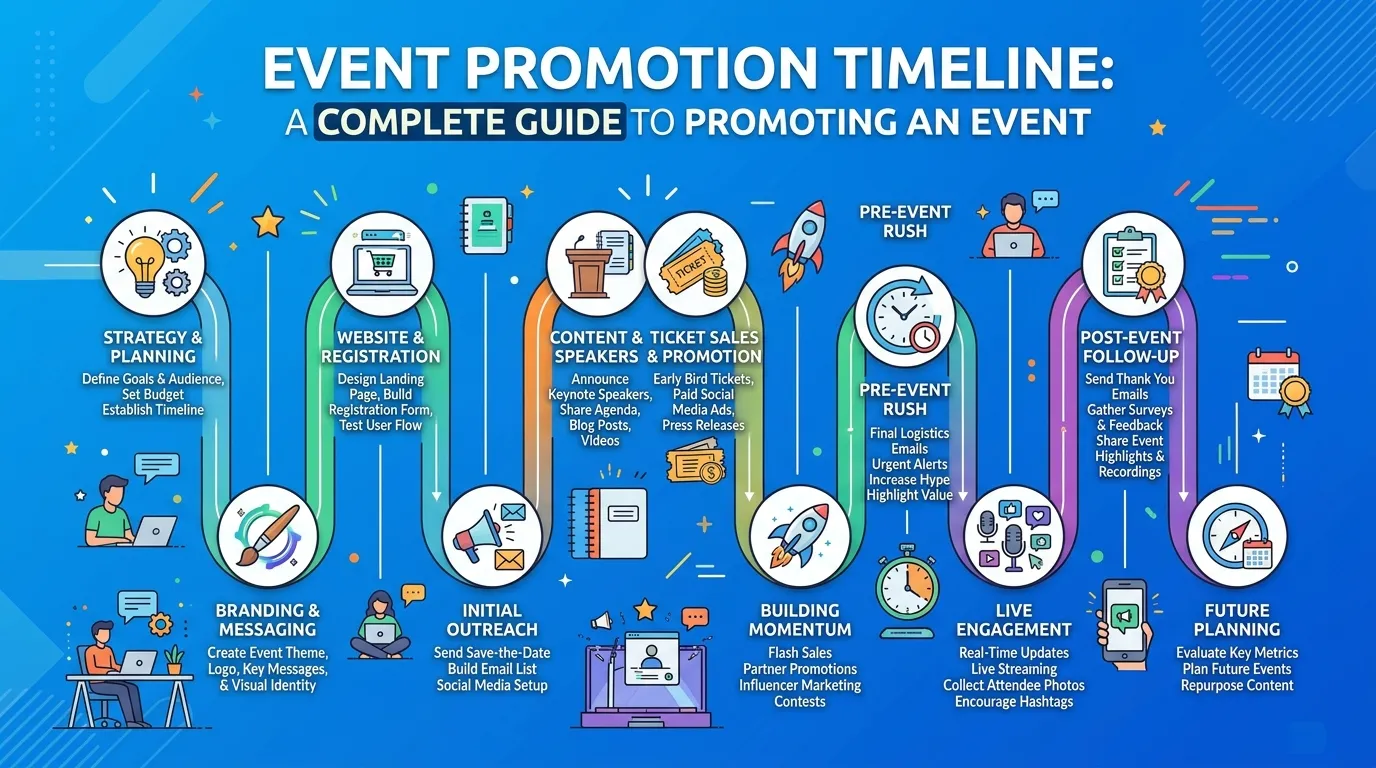
An event promotion timeline helps marketers organize promotional activities before, during, and after an event. By combining email marketing, social media, advertising, reminders, and post-event follow-up, businesses can build awareness, increase registrations, engage attendees, and measure event performance more effectively.
A successful event does not happen simply because you have a great topic, speaker, or venue. People need to know about the event, understand its value, and have enough reasons to register and attend. This is why creating an effective event promotion timeline is an important part of event marketing.
An event promotion timeline gives your marketing team a clear schedule for building awareness, generating registrations, engaging potential attendees, and maintaining interest until the event begins. It also helps ensure that promotional activities are completed at the right time instead of being rushed during the final days.
Whether you are organizing a conference, webinar, workshop, networking event, product launch, or corporate event, a structured event marketing timeline can help you create a more consistent and organized promotional campaign.
What Is an Event Promotion Timeline?
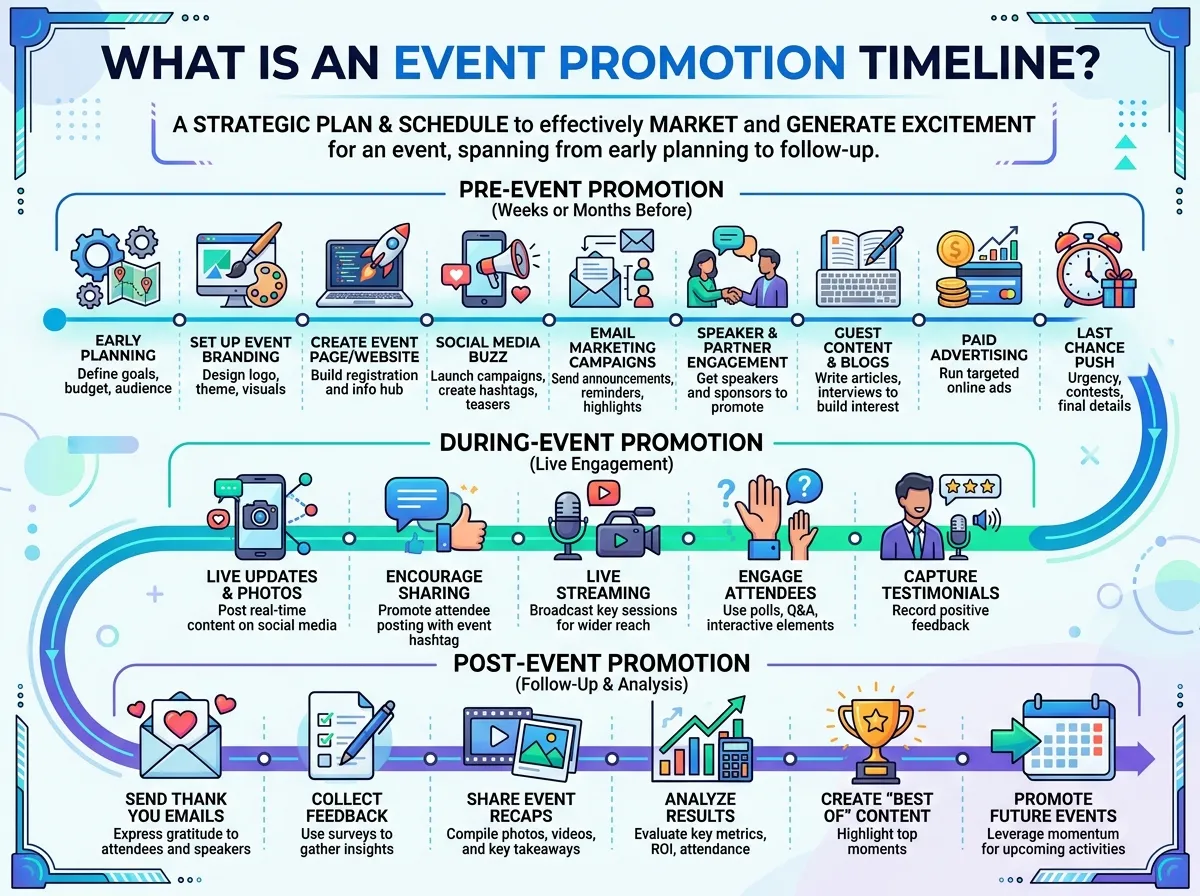
An event promotion timeline is a planned schedule that shows when different marketing activities should happen before, during, and after an event. It connects your content, email marketing, social media, advertising, registration campaigns, and follow-up activities into one organized process.
Rather than publishing an announcement and waiting for people to register, marketers can gradually build awareness and interest. Early promotion introduces the event, middle-stage promotion explains its value, and final-stage promotion creates urgency.
The length of the timeline depends on the type and size of the event. A small webinar may need four to six weeks of promotion, while a large conference may require several months.
Why Do You Need an Event Marketing Timeline?
An event marketing timeline helps your team understand what needs to happen and when. Without a timeline, important promotional tasks can easily be forgotten or completed too late.
A timeline also makes it easier to coordinate multiple marketing channels. For example, your email campaign can promote the same speaker that you are highlighting on social media, while your advertising campaign can target people who visited the event registration page but did not register.
Most importantly, a timeline gives your campaign enough time to build momentum. Potential attendees may not register after seeing one announcement. Repeated communication can gradually increase awareness and help them make a decision.
For more ideas about creating event awareness, see How to Market an Event And Get People Talking.
6–8 Weeks Before the Event: Build Your Foundation
Your pre-event marketing timeline should begin by establishing the basic assets required for promotion. Before actively promoting the event, make sure you have a clear landing page, registration process, event description, speaker information, visual assets, and promotional messaging.
The landing page should quickly explain what the event is, who it is for, when it will take place, and why someone should attend. Avoid making visitors search for important information. Your registration call to action should also be easy to find.
This is also the right time to define your marketing objectives. You might want to achieve a certain number of registrations, generate leads, increase brand awareness, or drive attendance from a particular audience segment.
These objectives will influence your overall event marketing plan and help you determine which promotional channels deserve the most attention.
4–5 Weeks Before: Launch Your Event Promotion
Once the foundation is ready, begin your main event promotion strategy. Start with an official announcement explaining the event and its primary value.
Your initial promotion can focus on the problem your event addresses and what attendees will gain from participating. Instead of simply saying that registration is open, explain what people can learn, who they can meet, what questions will be answered, or what experience they can expect.
Your announcement can be distributed through email, social media, your website, industry communities, partners, and relevant advertising channels.
At this stage, consistency is important. Your event name, date, messaging, branding, and registration link should remain consistent across promotional channels.
Start Your Event Email Marketing Campaign
An event email marketing campaign can be one of the most effective ways to communicate directly with people who are already familiar with your organization.
Your first email should introduce the event and provide enough information for the recipient to understand its value. Later emails can focus on speakers, sessions, benefits, attendee stories, reminders, and registration urgency.
Avoid sending the same message repeatedly. Each email should give the audience a new reason to pay attention.
For a more detailed approach, read Event Email Marketing.
3 Weeks Before: Increase Awareness and Engagement
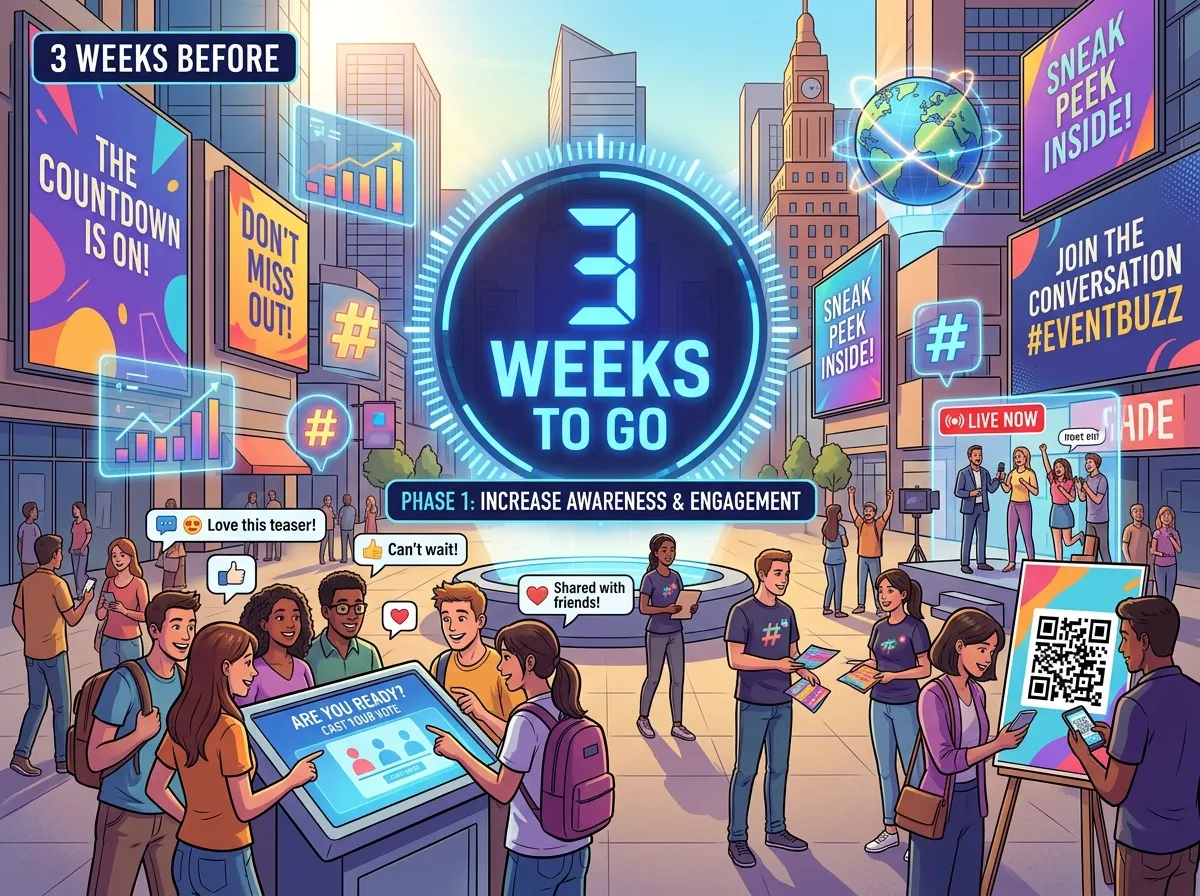
Around three weeks before the event, your event promotion schedule should shift toward engagement and visibility.
This is an excellent time to increase event social media promotion. Rather than only sharing registration links, create content that gives people a reason to interact with your event.
For example, you can introduce speakers, discuss important topics that will be covered, share industry insights, publish short videos, answer common questions, or show behind-the-scenes preparation.
Speaker promotion can be particularly useful because audiences may recognize individual experts even if they are unfamiliar with the event itself. Encourage speakers, sponsors, partners, and team members to share event content with their own audiences.
Social media should support the broader campaign rather than operate separately from it. If an email highlights a particular speaker, consider publishing related social content around the same time.
2 Weeks Before: Strengthen Your Event Advertising Strategy
Two weeks before the event is a good time to review your advertising performance and adjust your event advertising strategy.
If you are using paid advertising, focus on audiences that are most likely to register. Retargeting can also be useful for people who visited your event website but did not complete registration.
Your advertising messages should become increasingly specific as the event approaches. Early advertisements can focus on awareness, while later advertisements can emphasize important speakers, limited availability, event benefits, or the approaching event date.
At this stage, review which channels are producing registrations rather than focusing only on impressions or clicks. A channel that generates many visitors but few registrations may require a different message or audience.
1 Week Before: Focus on Event Registration Promotion
During the final week, event registration promotion becomes a major priority.
Some people may have seen your event several times but postponed their decision. Others may have only recently discovered it. Your messaging should therefore communicate both value and urgency.
Explain what attendees will gain and remind them that the event is approaching. You can also address practical questions about attendance, such as how to join a virtual event, where to park, what time to arrive, or what attendees should prepare.
If registrations are below your target, consider increasing promotional frequency. Send a reminder email, increase social activity, encourage speakers and partners to share the event, and adjust paid advertising where appropriate.
For more strategies, explore Event Marketing Tips to Increase Attendance.
24–48 Hours Before: Send Final Reminders
Your final reminder should be simple and useful. At this point, people do not need a long promotional message. They need clear information that makes attending easy.
Include the event date, starting time, location or access information, and any important instructions. For virtual events, make sure the joining information is easy to find.
A final reminder can also help registered attendees remember the event and reduce the chance of people forgetting about it.
Event Day: Continue the Event Launch Timeline
Your event launch timeline should continue into the event itself. Promotion does not necessarily stop when the event begins.
During the event, you can share speaker quotes, photographs, short video clips, audience reactions, important insights, and session highlights. These updates can encourage people who are not attending to become interested in future events.
For social media events, encourage attendees to share their experiences. This can create additional organic exposure and help extend the reach of your event beyond the registered audience.
After the Event: Follow Up and Measure Results
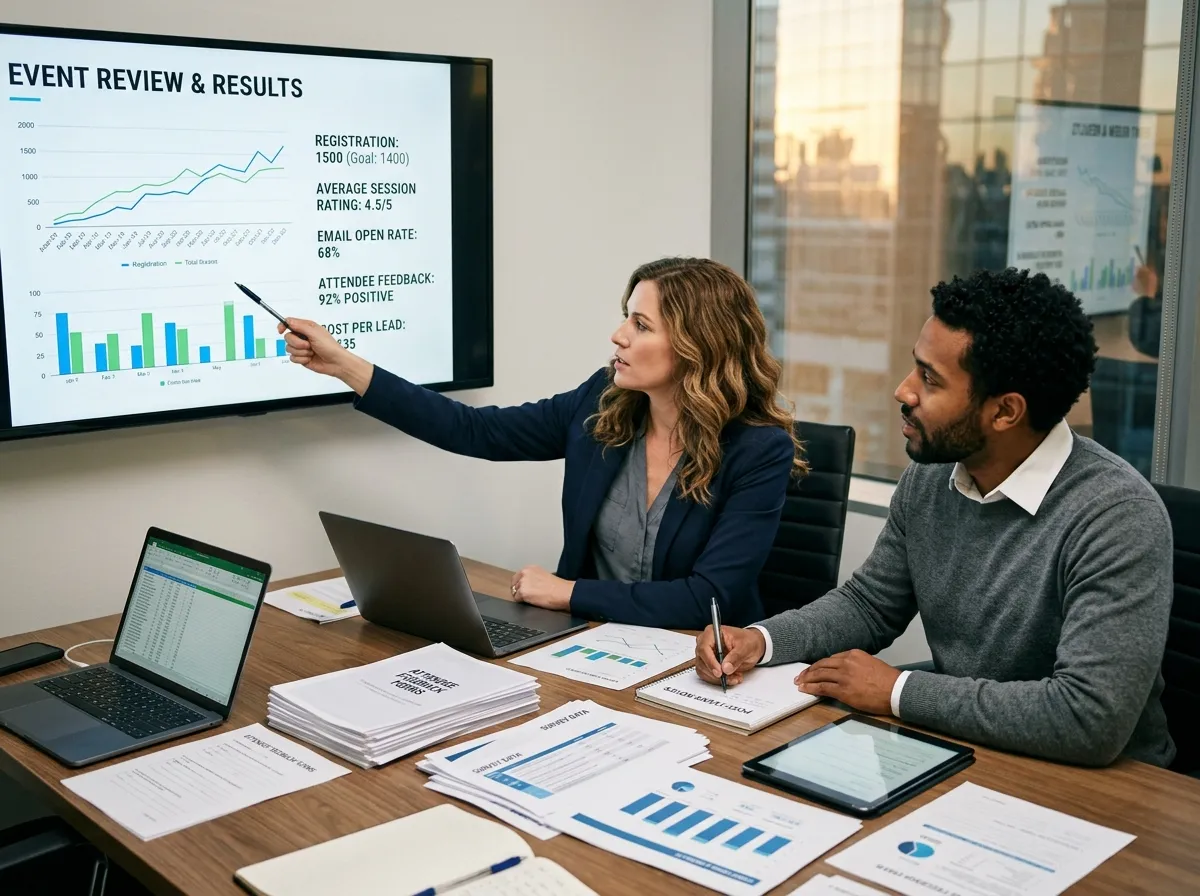
The final stage of your event promotion schedule is post-event marketing.
Send attendees a thank-you message and provide useful resources when appropriate. Depending on the event, these could include recordings, presentations, summaries, or additional educational materials.
You can also ask attendees for feedback. Their responses can help you understand what worked and what should be improved.
Post-event content can also be repurposed into blog posts, social media content, videos, newsletters, and future promotional materials.
Measure Your Event Promotion Performance
An effective event marketing campaign should be measurable. Review registration numbers, attendance rates, website traffic, email engagement, social media activity, advertising performance, and conversions.
You should also compare results between different channels. For example, determine whether email generated more registrations than social media or whether retargeting produced better results than general advertising.
For a more detailed approach to measurement, read Event Analytics and Reporting.
Simple Event Promotion Timeline
A practical timeline might look like this:
| Time | Main Focus |
|---|---|
| 6–8 weeks before | Build landing page, registration system, messaging, and marketing plan |
| 4–5 weeks before | Launch event announcement and email campaign |
| 3 weeks before | Increase social media promotion and speaker content |
| 2 weeks before | Strengthen advertising and retarget interested visitors |
| 1 week before | Focus heavily on registration and urgency |
| 24–48 hours before | Send final attendee reminders |
| Event day | Engage attendees and promote event highlights |
| After the event | Follow up, collect feedback, and analyze results |
Final Thoughts
A well-planned event promotion timeline gives your marketing campaign structure and allows you to build interest gradually. Instead of relying on last-minute promotion, you can introduce the event early, educate your audience, increase engagement, create urgency, and maintain communication through the event.
The best approach is to combine your event marketing plan, email campaigns, social media activity, advertising, registration promotion, and performance measurement into one coordinated strategy. When every activity has a clear purpose and timeline, your team can make better use of its time and improve the chances of reaching its attendance goals.
Small Summary
An event promotion timeline organizes promotional activities before, during, and after an event. By combining email marketing, social media, advertising, registration campaigns, reminders, and analytics into a structured schedule, businesses can build awareness, increase registrations, and create stronger event engagement.
10 Frequently Asked Questions
1. How far in advance should you create an event promotion timeline?
Ideally, you should create your timeline as soon as the event details are confirmed. For many events, four to eight weeks provides enough time to build awareness and encourage registrations. Larger conferences, corporate events, and major launches may need several months because they involve more speakers, partners, advertising, and audience outreach.
2. What should an event promotion timeline include?
An event promotion timeline should include all major marketing activities connected to the event. This can include landing-page development, registration setup, email marketing, social media content, speaker promotion, advertising, reminders, attendee communication, event-day promotion, and post-event follow-up. Assigning deadlines and responsibilities can make the timeline easier for a team to manage.
3. When should I start promoting an event?
The ideal starting point depends on the event. For a standard webinar or small event, promotion can begin four to eight weeks beforehand. Larger events may benefit from much earlier promotion. Starting early gives potential attendees more time to discover the event, evaluate its value, and make arrangements to attend.
4. How does email marketing help promote an event?
Email marketing allows you to communicate directly with an existing audience and provide multiple reminders throughout the promotional period. Instead of sending one announcement, you can create a sequence that introduces the event, highlights speakers and benefits, answers questions, and encourages registration as the event approaches.
5. How can social media increase event registrations?
Social media can increase registrations by creating repeated exposure and encouraging audience engagement. Sharing speaker information, event benefits, videos, countdowns, useful insights, and attendee-focused content can make the event more interesting than simply publishing registration links repeatedly.
6. Should event promotion include paid advertising?
Paid advertising can be useful when you need to reach audiences beyond your existing followers or email subscribers. It can also support retargeting campaigns for people who have already visited the event website. However, advertising should be monitored carefully so that spending is connected to meaningful results such as registrations and conversions.
7. What should I do if event registrations are low?
If registrations are lower than expected, review your campaign before simply increasing promotional volume. Check whether the event value is clear, whether the registration process is easy, and which channels are generating results. You can then increase email reminders, improve social content, use retargeting, involve speakers and partners, or adjust your advertising strategy.
8. How often should I promote an event on social media?
There is no single frequency that works for every event. Promotion can gradually increase as the event gets closer. Early content can focus on awareness and education, while the final week can emphasize reminders and urgency. The key is to vary your content instead of repeatedly posting the same registration message.
9. What should I do after an event ends?
Post-event marketing should include attendee follow-up, feedback collection, performance analysis, and content repurposing. Sending a thank-you message and providing useful resources can continue the relationship with attendees. You can also use event recordings, presentations, insights, and questions to create content for future marketing campaigns.
10. How do I know whether my event promotion was successful?
Success should be measured against the goals established at the beginning of your campaign. Important metrics can include registrations, attendance rate, website traffic, email engagement, social media engagement, advertising results, cost per registration, leads, and conversions. Comparing these results across channels can show which parts of your event marketing strategy were most effective.







[…] can use their Event Promotion Timeline to coordinate remarketing with other promotional […]
[…] marketing team makes this process more effective. Event promotion can complement an established Event Promotion Timeline by aligning influencer publications with other campaign activities. This helps avoid conflicting […]