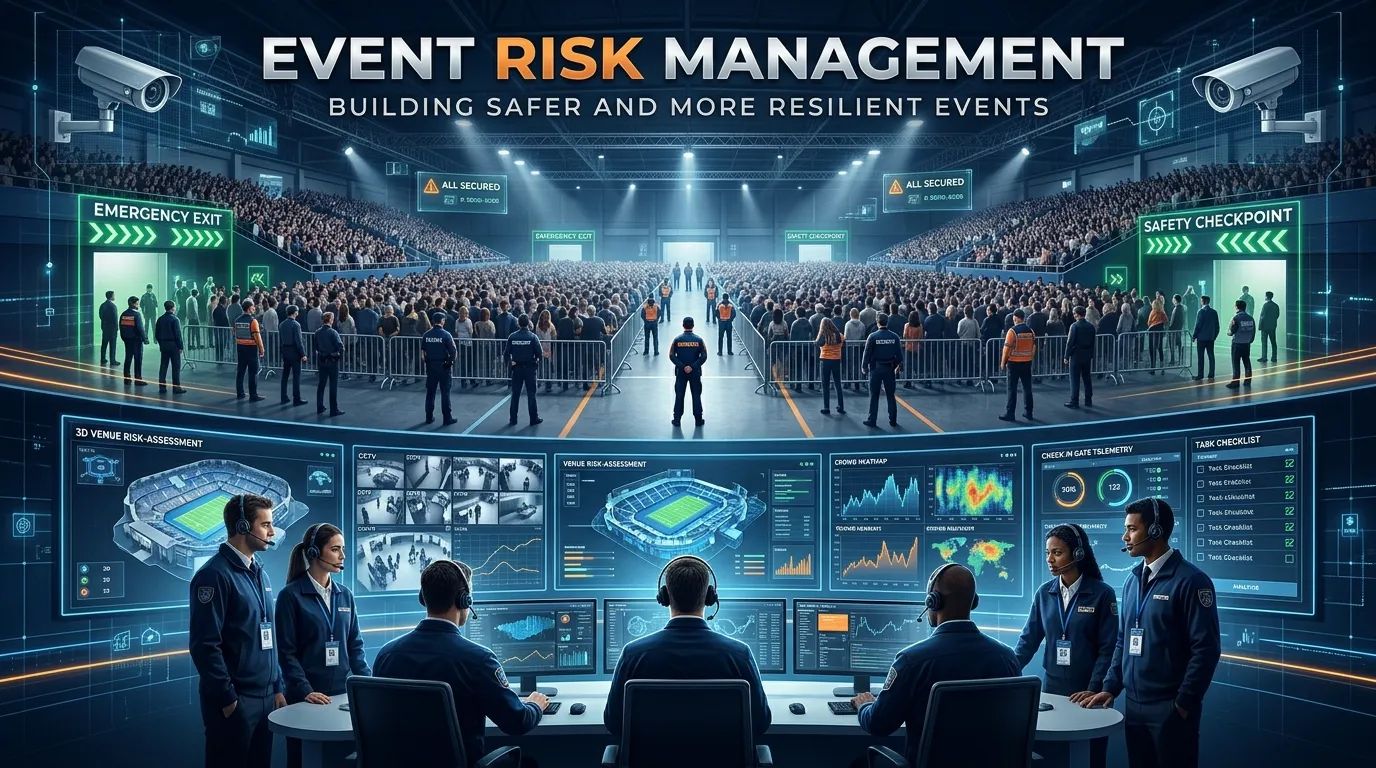
Event Risk Management helps organizers identify potential hazards, prepare for emergencies, and reduce disruptions before and during an event. Through effective risk assessment, venue inspections, crowd safety management, contingency planning, and security procedures, event teams can protect attendees, improve operational reliability, and create safer event experiences.
Every successful event depends on more than an attractive venue, engaging speakers, or a well-planned schedule. Behind the scenes, organizers must consider the unexpected situations that could affect attendees, employees, suppliers, performers, and the overall event experience. A sudden weather change, technical failure, medical emergency, overcrowded entrance, or security concern can quickly disrupt even the most carefully organized occasion.
This is why Event Risk Management is an essential part of professional event planning. It helps organizers identify potential problems before they occur, understand their possible consequences, and prepare suitable responses. Rather than waiting for an incident to happen, a well-developed risk management approach creates a safer environment and gives event teams greater control over unexpected situations.
Risk management also supports better decision-making. Organizers can evaluate venues more carefully, allocate resources effectively, communicate responsibilities, and prepare alternative arrangements. Whether planning a business conference, music festival, exhibition, sporting event, or community gathering, understanding potential risks can make a significant difference to the outcome.
The Hidden Risks Behind a Successful Event
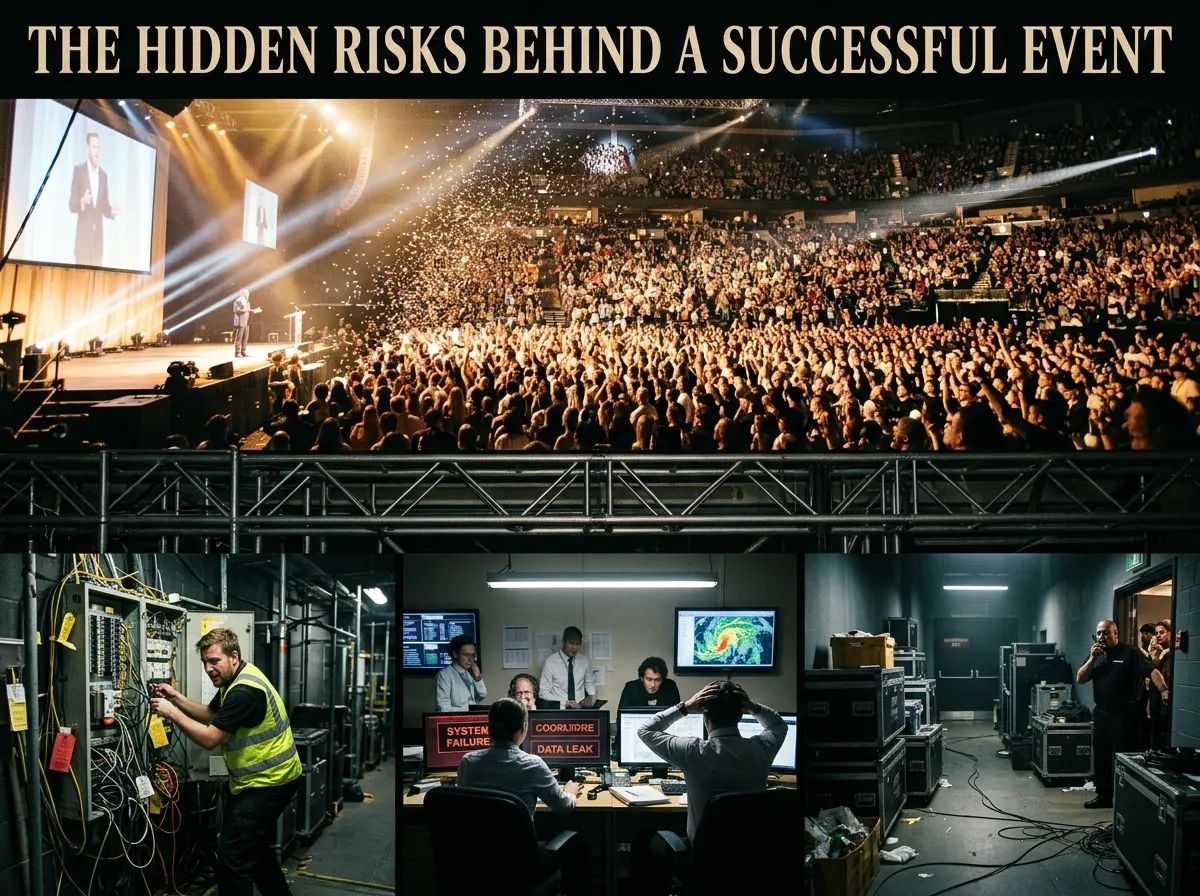
Events bring together people, equipment, services, and activities in a shared environment. Each element introduces different responsibilities and potential challenges. A conference may depend heavily on reliable audiovisual equipment and accessible emergency exits, while an outdoor festival may face additional concerns involving weather, temporary structures, crowd movement, and medical assistance.
Some risks are immediately visible. Poor lighting, damaged flooring, blocked walkways, and unstable equipment can create obvious safety concerns. Others develop gradually. Inadequate staffing, unclear communication, insufficient crowd control, or an unrealistic schedule may not become serious problems until the event is underway.
The challenge is that risks rarely appear in isolation. For example, heavy rain can create slippery surfaces, delay transportation, affect electrical equipment, and increase congestion around indoor entrances. A single weather-related issue can therefore create several operational problems.
Organizers need to understand these connections instead of treating every possible incident as a separate concern. A broader view helps them prepare for situations that could affect multiple parts of the event at once.
Event Risk Management Begins With Understanding the Event
Effective Event Risk Assessment starts with a clear understanding of the event itself. Organizers need to consider its size, location, audience, activities, duration, infrastructure, and operational requirements before deciding which risks deserve attention.
A small indoor workshop may have relatively straightforward requirements. A large public festival involving thousands of attendees, temporary stages, food vendors, and outdoor activities will require a much more detailed assessment.
The audience also influences the planning process. Events attended by families, older people, children, or individuals with accessibility requirements may need additional arrangements. Similarly, events involving live performances, physical activities, or specialized equipment can introduce risks that are not present in ordinary business gatherings.
Risk assessment should examine both the likelihood of an incident and the potential severity of its consequences. A minor issue that happens frequently may deserve attention, while a less likely event with serious consequences may require extensive preparation.
This process allows organizers to prioritize their resources. Instead of spending the same amount of time on every possible problem, they can focus on the risks that could have the greatest impact on safety and operations.
Event Safety Planning Is More Than a Checklist
An effective Event Safety Planning process connects safety decisions with the practical details of event operations. It considers how people will enter the venue, move between areas, access facilities, receive assistance, and leave safely when necessary.
For example, entrance arrangements should account for expected attendance and arrival patterns. If most guests are expected to arrive within a short period, organizers need to consider queue management, ticket verification, accessible entry routes, and the availability of trained staff.
The same attention should be given to the event environment. Walkways should remain clear, temporary structures should be appropriately installed, cables should be managed safely, and signs should be visible where people need direction.
Safety planning should also consider the responsibilities of everyone involved. Venue personnel, security teams, contractors, event coordinators, and emergency responders may all have different roles. If responsibilities are unclear, important actions can be delayed during an incident.
A strong safety plan connects these responsibilities into one coordinated approach. It should be practical enough for staff to understand and use, rather than becoming a document that is prepared only to satisfy administrative requirements.
The Venue Can Determine the Level of Risk
A venue influences nearly every aspect of event safety. Its layout, capacity, facilities, access routes, and surrounding environment can either support a smooth event or introduce significant challenges.
A detailed Venue Risk Assessment should examine the suitability of the location before organizers commit to using it. This includes checking the condition of the building, available exits, emergency access, electrical infrastructure, lighting, ventilation, sanitation facilities, and accessibility arrangements.
Outdoor venues require additional consideration. Uneven ground, exposed electrical connections, temporary installations, nearby roads, and changing weather conditions can all affect safety. Organizers should also understand whether the location has suitable shelter or alternative indoor arrangements if conditions become unfavorable.
Venue capacity deserves particular attention. A space that appears large enough during an empty site visit may become difficult to navigate once seating, equipment, exhibition stands, food areas, and audience movement are considered.
Organizers should also review the venue’s existing safety procedures and understand which responsibilities belong to the venue operator and which remain with the event team. This avoids gaps in accountability and helps everyone work from the same expectations.
Preparing for Emergencies Before They Happen
Unexpected incidents require quick and coordinated decisions. Without preparation, even a relatively manageable problem can become more serious because staff do not know whom to contact or what actions to take.
Event Emergency Preparedness gives organizers a structured way to respond to situations such as medical emergencies, fires, severe weather, power failures, structural concerns, or security incidents.
The preparation process should begin with identifying the types of emergencies that are realistic for the event. Organizers can then determine the resources, communication channels, personnel, and external assistance needed to respond.
Medical arrangements are particularly important at events involving large crowds, physical activities, long operating hours, or outdoor conditions. The location of first-aid facilities, access for emergency vehicles, and procedures for requesting medical assistance should be understood by relevant staff.
Emergency communication is equally important. Staff need to know how instructions will be shared, who has authority to make urgent decisions, and how attendees will receive accurate information.
Organizers should also consider how people with mobility, hearing, visual, or other accessibility requirements will receive assistance during an evacuation or emergency response. A plan that works only for some attendees is not a complete safety plan.
Preparedness does not guarantee that incidents will never happen. Its purpose is to reduce confusion, improve response times, and limit the potential consequences when something goes wrong.
Why Event Contingency Planning Protects Operations
Safety preparation focuses on protecting people and reducing harm, while operational resilience also requires organizers to consider how the event can continue when normal arrangements are disrupted.
Event Contingency Planning provides alternative arrangements for situations that could affect the schedule, venue, suppliers, technology, or delivery of the event.
For example, an outdoor conference may need an alternative indoor location if severe weather develops. A hybrid event may require backup internet access or an alternative streaming arrangement if the primary connection fails. A performance event may need replacement equipment or a revised schedule if a critical technical component stops working.
The quality of contingency planning depends on identifying realistic alternatives in advance. A backup option is not particularly useful if it has not been checked, approved, or made available when required.
Organizers should also understand how one disruption might affect other parts of the event. A delayed supplier could affect setup, registration, catering, and the opening schedule. Planning for these connections helps teams make more informed decisions under pressure.
For a deeper look at preparing alternatives when unexpected disruptions occur, organizers can explore Event Contingency Planning. It offers a closely related perspective on building responses that help events remain manageable when original plans cannot proceed as expected.
Crowd Safety Management Requires an Understanding of Movement
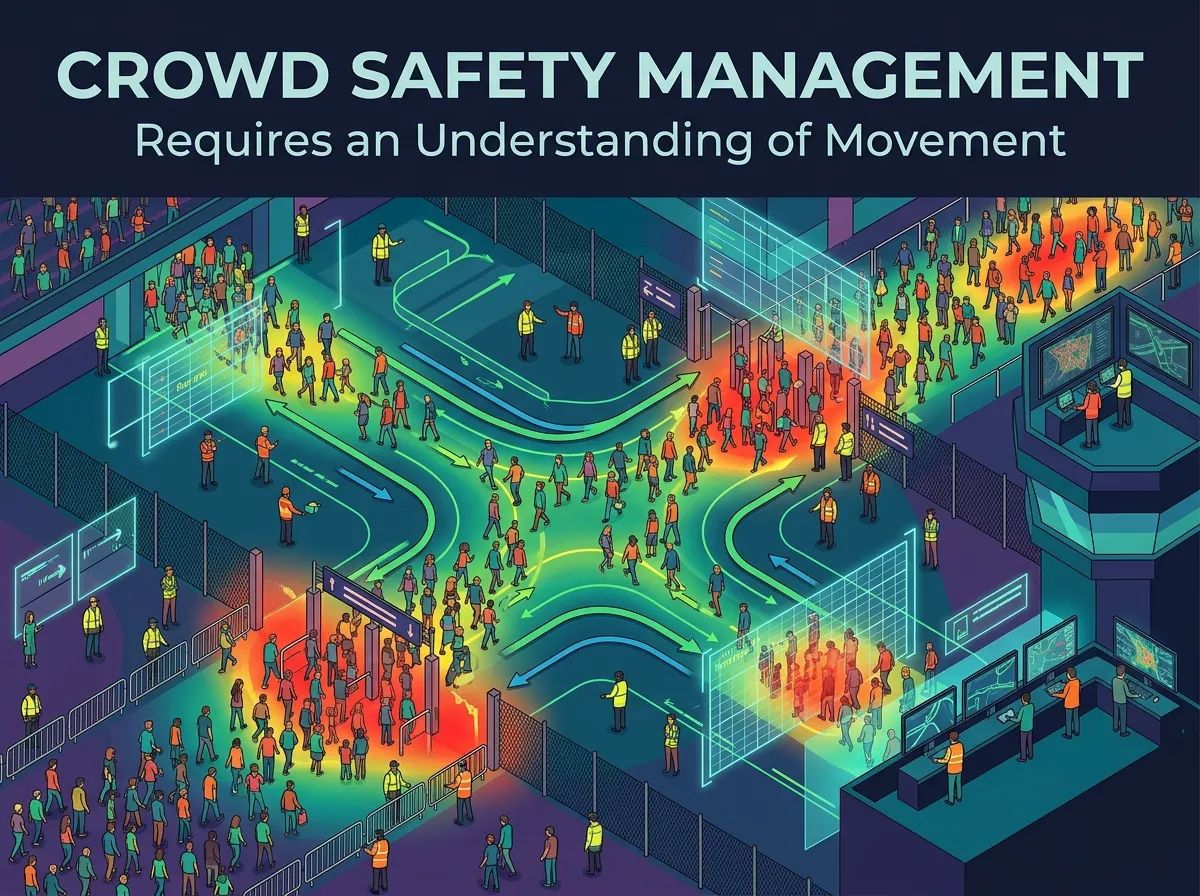
Crowd-related risks can develop quickly, especially when large numbers of people move through limited spaces. Entrances, exits, registration desks, food stations, performance areas, and transport points can become congested if their layouts do not support the expected flow of attendees.
Crowd Safety Management involves understanding how people arrive, move, gather, and leave throughout an event. It is not simply about having security personnel present. The physical arrangement of the venue and the behavior of attendees also influence crowd conditions.
Organizers should pay attention to narrow passageways, bottlenecks, competing movement routes, and areas where people may gather unexpectedly. Clear signage, suitable barriers, organized entry procedures, and trained staff can help reduce confusion.
Attendance estimates should be realistic, and event capacity should reflect the usable space rather than the venue’s maximum advertised occupancy. Organizers also need to consider how crowd movement may change during popular performances, keynote sessions, breaks, or sudden schedule changes.
Staff should be able to recognize early signs of congestion and know how to communicate concerns to the event control team. Waiting until a crowd becomes difficult to manage can make the situation much harder to resolve.
Event Security Procedures and Coordinated Responsibilities
Security is an important part of event safety, but it works best when it is integrated with the wider operational plan.
Event Security Procedures should reflect the type of event, expected attendance, venue environment, and potential security concerns. Depending on the circumstances, arrangements may include controlled entry, credential checks, restricted areas, monitoring, incident reporting, and coordination with relevant authorities.
The purpose is to reduce the likelihood of unauthorized access, disruptive behavior, theft, and other security-related incidents while maintaining a welcoming environment for attendees.
Security teams should understand their responsibilities and how they connect with event management, venue personnel, and emergency responders. A concern identified by a security officer may require action from a different team, so communication channels must be clear.
Organizers should also consider the balance between security and accessibility. Entry procedures should be appropriate to the event without creating unnecessary barriers for guests who require additional assistance.
A well-managed security environment is not always the most visible one. It is often the result of careful preparation, clear responsibilities, and staff who understand how to respond professionally when concerns arise.
Event Hazard Prevention Through Continuous Observation
Some hazards can be identified before an event begins, but others emerge during setup and live operations. Deliveries, equipment movement, temporary installations, changing weather, and attendee behavior can create conditions that were not present during the initial inspection.
Event Hazard Prevention therefore needs to continue throughout the event lifecycle.
During setup, teams should pay attention to electrical connections, lifting activities, temporary structures, trip hazards, and the movement of vehicles or equipment. Before attendees arrive, a final inspection can help identify issues that may have developed during installation.
Once the event is underway, staff should continue observing the environment. A spill near an entrance, a damaged barrier, an obstructed exit, or a malfunctioning piece of equipment should be reported and addressed promptly.
Clear reporting procedures make this process more effective. Employees and contractors should know how to communicate hazards, who is responsible for resolving them, and how to confirm that corrective action has been completed.
This creates a more proactive safety culture. Instead of relying entirely on managers to identify every concern, the entire event team becomes involved in maintaining a safe environment.
Event Crisis Management When Plans Are Put to the Test
Even carefully prepared events can experience incidents that require immediate leadership and coordinated communication. A medical emergency, serious security concern, major technical failure, or severe weather warning may require organizers to make decisions that affect the entire event.
Event Crisis Management focuses on controlling the situation, protecting people, coordinating the response, and communicating reliable information.
The first priority should always be the safety of attendees, staff, and other people involved. Depending on the incident, this may involve stopping an activity, restricting access to an area, requesting emergency services, or initiating an evacuation.
Decision-making authority should be established before the event begins. If several people attempt to issue conflicting instructions, the response can become confusing. A designated incident lead and clear reporting structure help maintain coordination.
Communication also requires careful attention. Attendees should receive clear and accurate instructions without unnecessary speculation. Staff should know where to obtain verified updates and how to share information through approved channels.
After the immediate situation is under control, organizers should document what happened and review how the response was managed. This can reveal weaknesses in preparation and help prevent similar problems at future events.
Event Safety Compliance and Professional Accountability
Safety responsibilities are not limited to internal event policies. Organizers may also need to meet legal, regulatory, venue-specific, and industry requirements depending on the location and nature of the event.
Event Safety Compliance involves understanding the applicable obligations and ensuring that relevant arrangements are properly managed. These may relate to occupancy limits, fire safety, temporary structures, accessibility, food handling, electrical installations, security, and workplace safety.
Requirements can vary significantly between countries, regions, venue types, and event categories. Organizers should therefore consult the appropriate local authorities, venue operators, and qualified safety professionals rather than assuming that one general checklist applies everywhere.
Documentation can support accountability. Risk assessments, inspection records, staff training information, emergency procedures, supplier agreements, and incident reports can help demonstrate that safety responsibilities have been considered.
Compliance should not be treated as the final measure of safety, however. Meeting minimum requirements does not automatically mean that every event-specific risk has been addressed. Organizers still need to consider the actual conditions, activities, and people involved.
How Event Risk Management Supports Better Event Experiences
Risk management may appear separate from the creative and promotional side of event planning, but it directly influences how attendees experience an event.
When entrances are organized, facilities are accessible, staff understand their responsibilities, and emergency arrangements are clear, visitors can focus on the purpose of attending. They are less likely to experience unnecessary delays, confusion, or avoidable disruptions.
A well-prepared event can also strengthen audience confidence. People are more comfortable attending when they can see that organizers have considered practical needs and created a professional environment.
This operational foundation supports the wider goals of event marketing. For example, Event Marketing for Customer Engagement explores how events can build stronger relationships with audiences. Those relationships are easier to develop when attendees have a positive experience and feel that the event is professionally managed.
Risk management can also protect the resources invested in promotion and attendance generation. Organizers who understand operational costs and performance can make better planning decisions, while Event Cost Per Lead provides a related perspective on evaluating event marketing expenditure and lead generation.
Similarly, effective Event Launch Promotion can generate awareness and registrations, but increased attendance must be supported by suitable capacity, staffing, security, and safety arrangements. Promotion and risk management should therefore be considered connected parts of the same event strategy.
Learning From Incidents and Improving Future Events
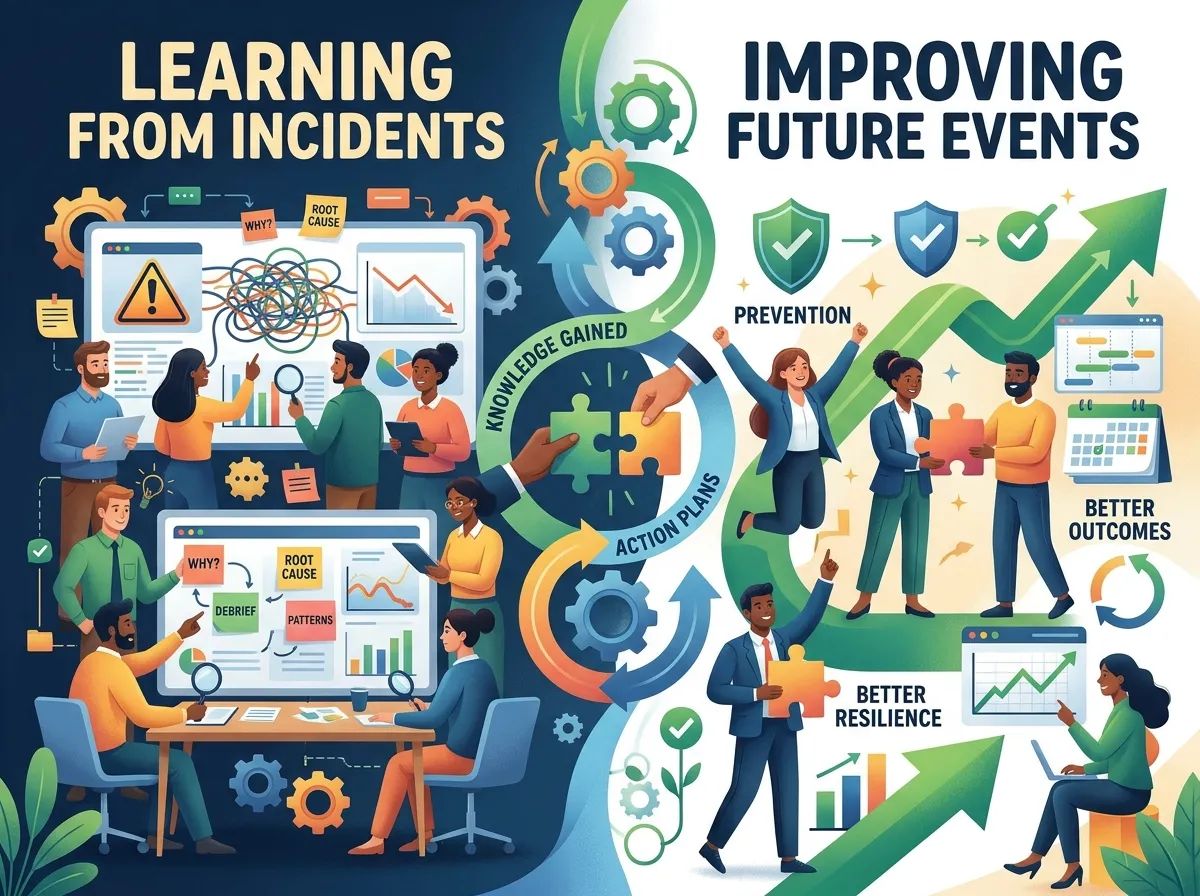
Risk management should not end when the final attendee leaves the venue. Reviewing the event provides an opportunity to understand which preparations worked and where improvements are needed.
Organizers can examine incident reports, staff feedback, attendee comments, security observations, equipment problems, and emergency response records. Even small issues can reveal weaknesses that deserve attention.
For example, repeated congestion at registration may indicate that the entrance layout needs improvement. Delays in contacting medical assistance may suggest that communication procedures require revision. Frequent technical interruptions could reveal a need for better equipment checks or backup systems.
The review should focus on understanding the causes of problems rather than simply identifying who was involved. This makes it easier to develop practical improvements and encourage staff to report concerns honestly.
Lessons should be incorporated into future risk assessments, supplier arrangements, training sessions, and operational plans. Over time, this creates a more reliable approach that develops with the organization’s experience.
Conclusion
Event Risk Management is a fundamental part of organizing safe, reliable, and professionally managed events. It helps organizers understand potential hazards, assess their consequences, prepare emergency responses, and protect attendees and staff from avoidable harm.
From venue inspections and crowd safety to contingency planning, security procedures, and compliance, every element contributes to a stronger operational environment. The most effective approach also recognizes that risk management is an ongoing process. Conditions can change during preparation and live operations, so teams need to remain observant and ready to respond.
Ultimately, successful events are not defined only by what goes according to plan. They are also defined by how effectively organizers prepare for situations that do not. By making risk management part of the entire event planning process, businesses can protect people, reduce disruption, and create experiences that audiences can enjoy with greater confidence.
Frequently Asked Questions
1. What is Event Risk Management?
Event Risk Management is the process of identifying, assessing, and controlling potential risks that could affect an event. It helps protect attendees, staff, suppliers, and event operations while reducing the likelihood and impact of unexpected incidents.
2. Why is risk management important in event planning?
It helps organizers prepare for safety concerns, operational disruptions, emergencies, and security issues. Effective planning can reduce injuries, prevent unnecessary delays, protect resources, and improve attendee confidence.
3. What is an event risk assessment?
An event risk assessment examines potential hazards, considers how likely they are to occur, and evaluates their possible consequences. Organizers use the findings to prioritize risks and decide what preventive measures are needed.
4. What should an event safety plan include?
An event safety plan should address venue conditions, emergency procedures, crowd movement, access arrangements, staff responsibilities, hazard reporting, medical assistance, and communication during incidents.
5. What is event contingency planning?
Event contingency planning involves preparing alternative arrangements for unexpected disruptions. Examples include backup venues, alternative suppliers, replacement equipment, revised schedules, and plans for severe weather.
6. How can organizers improve crowd safety management?
Organizers can improve crowd safety through realistic capacity planning, organized entry and exit routes, visible signage, trained staff, suitable barriers, and continuous monitoring of areas where congestion may develop.
7. What is included in a venue risk assessment?
A venue risk assessment examines factors such as building conditions, emergency exits, electrical systems, lighting, accessibility, capacity, temporary structures, surrounding hazards, and emergency vehicle access.
8. How should event organizers prepare for emergencies?
They should identify realistic emergency scenarios, establish response responsibilities, arrange appropriate medical support, prepare communication procedures, and ensure staff understand how to respond to incidents.
9. What is the difference between event risk management and event crisis management?
Event risk management focuses on identifying and reducing potential risks before incidents occur. Event crisis management focuses on coordinating decisions and responses when a serious incident or disruption happens.
10. How can event organizers improve safety for future events?
Organizers can review incident reports, collect staff and attendee feedback, evaluate emergency responses, identify recurring problems, and update risk assessments and operational procedures based on what they learn.