Event experiential marketing uses live and interactive experiences to create stronger connections between brands and audiences. Through immersive event marketing, experiential brand activations, interactive experiences, and live brand experiences, businesses can increase engagement, generate memorable interactions, and strengthen brand relationships. When combined with digital promotion and effective follow-up, experiential marketing campaigns can deliver value before, during, and after an event.
What Is Event Experiential Marketing?
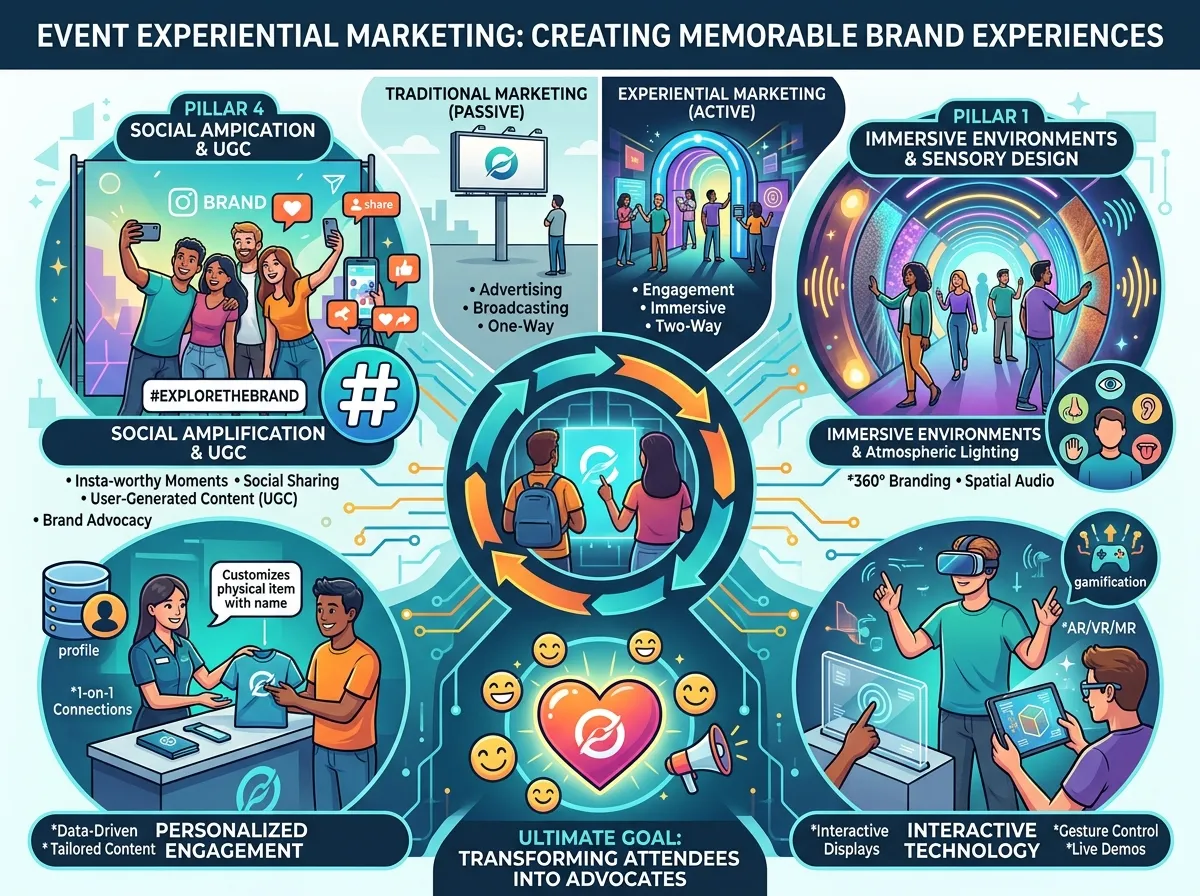
Event experiential marketing is a marketing approach that uses live events and memorable experiences to create meaningful connections between brands and their audiences. Instead of relying only on traditional advertising, it allows people to interact directly with a brand, its products, services, values, and community.
An experiential event might involve a product demonstration, interactive installation, pop-up experience, branded conference activity, product launch, festival activation, or immersive digital experience. The objective is to make the audience an active participant rather than simply a passive recipient of a marketing message.
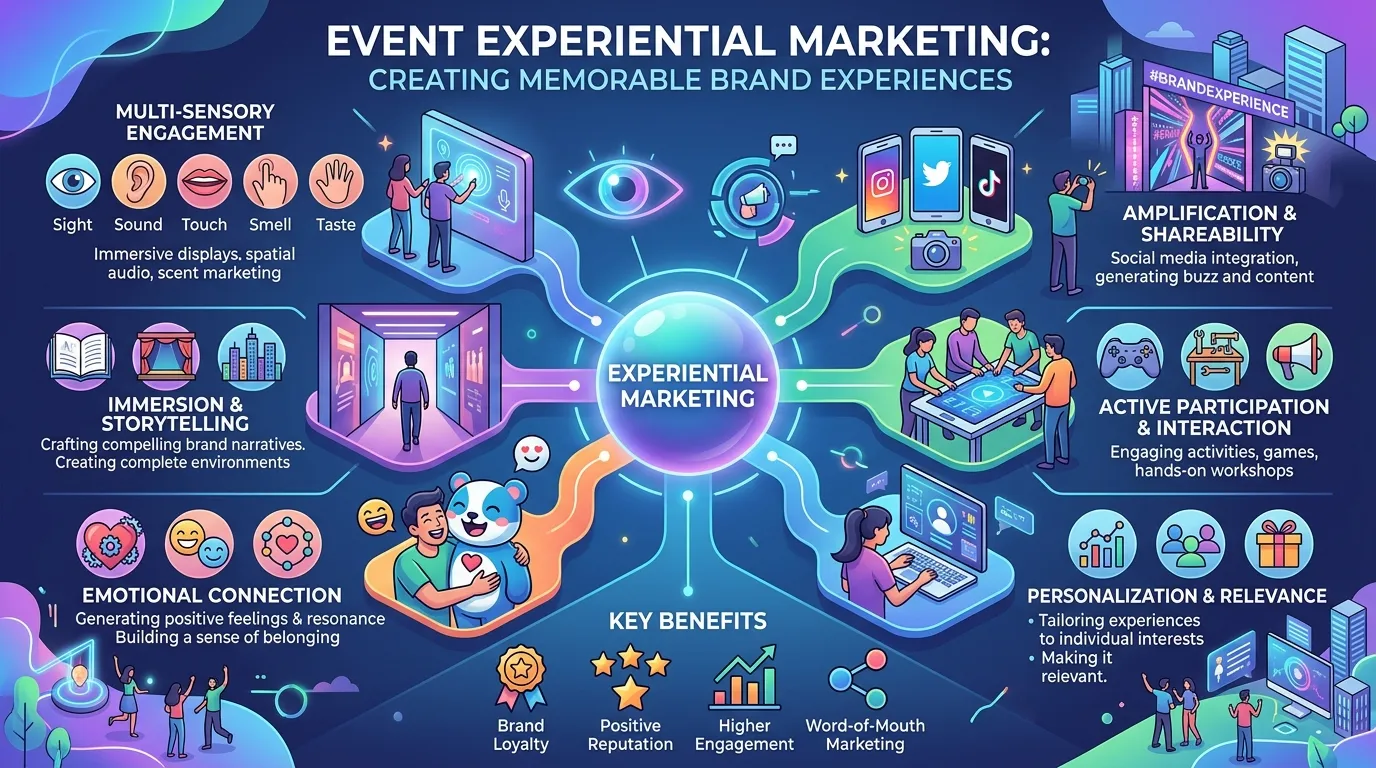
The strongest experiences are designed around something the audience can see, hear, touch, explore, discuss, or remember. When the experience is relevant and valuable, it can strengthen brand awareness while encouraging conversations and long-term relationships.
Why Experiential Event Marketing Matters
Experiential event marketing can give brands an opportunity to build relationships in ways that conventional advertising cannot always achieve. A person may forget an advertisement they saw online, but an engaging experience with a brand can create a stronger emotional association.
Events also create opportunities for direct interaction. Attendees can ask questions, test products, meet representatives, participate in activities, and share their opinions. These interactions can help businesses understand their audiences while giving customers a more personal experience.
The value does not necessarily end when an event finishes. Photos, videos, social media posts, testimonials, user-generated content, and follow-up campaigns can extend the experience to people who were not physically present.
Building an Experiential Marketing Strategy
An experiential marketing strategy should connect the event experience with a clear brand objective. A company may want to introduce a new product, increase awareness, generate leads, strengthen customer loyalty, or create a stronger emotional connection with its audience.
The experience should support that objective naturally. For example, a product launch might allow visitors to test the product rather than simply look at promotional displays. A technology company might create an interactive demonstration that allows attendees to experience how its solution solves a real problem.
Audience understanding is equally important. An experience designed for industry professionals may need a different tone and structure from one created for consumers at a public festival.
When the experience reflects audience interests and expectations, participation becomes more natural and meaningful.
Event Experience Marketing
Event experience marketing focuses on the complete experience people have before, during, and after an event. Every interaction can influence how attendees perceive the brand.
The experience begins before someone enters the venue. Registration pages, invitations, confirmation emails, event information, and pre-event communication can establish expectations.
During the event, everything from venue design and staff interactions to demonstrations, activities, signage, technology, and content contributes to the overall experience.
Afterward, follow-up communication can reinforce the most important messages and encourage attendees to continue their relationship with the brand.
This broader perspective prevents businesses from treating experiential marketing as simply a collection of activities inside a venue.
Brand Experience Events
Brand experience events are designed to immerse audiences in a company’s identity, products, values, or story. Rather than focusing exclusively on promotional messaging, these events allow people to experience what makes the brand distinctive.
For example, a sports brand might create a hands-on performance experience, while a technology company could allow visitors to interact with a new product through demonstrations and simulations.
Strong brand experience events should feel authentic. If an activity has little connection to the brand, attendees may remember the activity but forget the company behind it. Every major element should therefore contribute to a recognizable and coherent brand experience.
Businesses can also connect event experiences with broader marketing efforts. A useful resource such as Event Marketing from Start to Finish provides additional context on how planning, promotion, and results work together throughout the event lifecycle.
Immersive Event Marketing
Immersive event marketing takes audience participation further by creating environments that encourage people to become part of the experience.
Immersive experiences can use physical environments, interactive technology, storytelling, projection, sound, virtual reality, augmented reality, gamification, or live demonstrations. The technology itself is not the main objective, however. It should support the story or experience rather than become a distraction.
An immersive environment can make a complicated product easier to understand by allowing people to experience its benefits directly. It can also create highly shareable moments that encourage attendees to create and distribute their own content.
The most effective immersive experiences are purposeful. They give participants a reason to explore and connect that exploration with the brand.
Experiential Brand Activation
Experiential brand activation turns a marketing concept into a physical or interactive experience that encourages people to engage with a brand.
A brand activation might involve a pop-up shop, product sampling experience, interactive display, contest, live demonstration, community event, or branded installation.
The goal is usually to generate a specific response. That response could be product trial, sign-ups, social sharing, lead generation, purchases, or simply deeper brand engagement.
Successful activations often provide something valuable to participants. Entertainment, education, access, personalization, exclusive experiences, or practical demonstrations can give people a genuine reason to participate.
Interactive Event Experiences
Interactive event experiences encourage audiences to actively participate rather than simply watch presentations or promotional content. This can make events more engaging and memorable.
Interactive activities can include live polls, games, product demonstrations, challenges, workshops, quizzes, networking activities, digital installations, and audience-controlled experiences.
Interaction can also generate useful information. Businesses may learn about attendee preferences through questions, surveys, participation data, or conversations with staff.
The experience should remain accessible, however. If participation is complicated or requires too much effort, attendees may choose not to engage.
Event Engagement Strategy
An event engagement strategy focuses on maintaining audience interest throughout the event journey. Engagement should not depend on a single activity.
Different attendees may prefer different forms of participation. Some may enjoy demonstrations, others may prefer discussions, networking, workshops, competitions, or educational sessions.
Personalization can strengthen engagement by making experiences more relevant. Attendees can be given opportunities to choose sessions, activities, content, or experiences that match their interests.
Businesses can also use digital channels to continue engagement after the event. Social media, email, communities, and personalized follow-up can turn a short event interaction into a longer customer relationship.
Live Brand Experiences
Live brand experiences create opportunities for customers to interact with companies in real-world environments. These experiences can create a sense of authenticity because people are engaging with the brand directly rather than only encountering it through digital content.
Live experiences are particularly useful for products that benefit from demonstration or physical interaction. Customers can see how something works, ask questions, compare options, and receive immediate assistance.
They can also strengthen community. Events give customers opportunities to meet employees, experts, creators, partners, and other customers who share similar interests.
This community aspect can continue beyond the event when attendees share experiences online or participate in future brand activities.
Experiential Marketing Campaigns
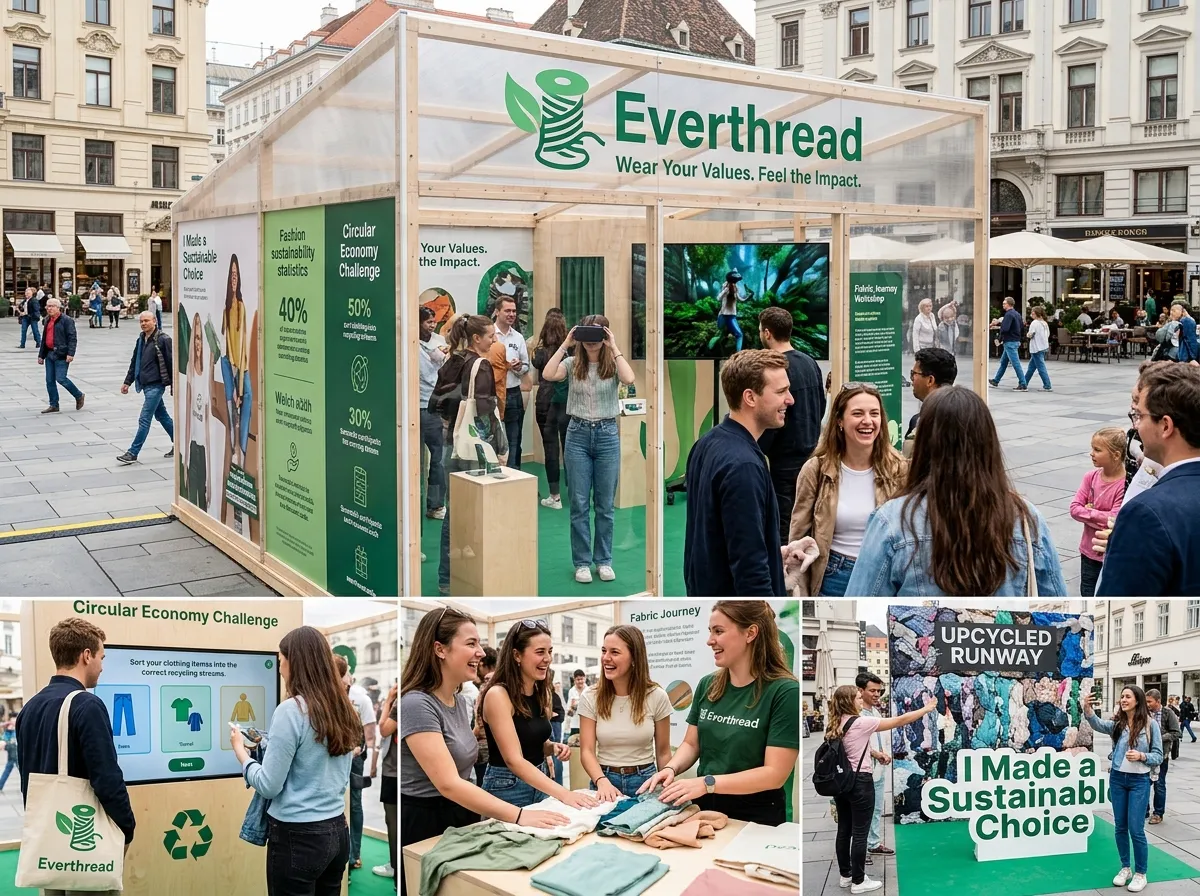
Experiential marketing campaigns often combine live experiences with digital marketing to maximize reach and impact. An event may serve as the central experience while social media, email, video, influencer partnerships, paid advertising, and content marketing extend its visibility.
For example, a company might create an interactive event installation, encourage attendees to share content, capture professional video, and then use that content across its digital channels.
This creates a cycle in which the live experience generates content and engagement, while digital promotion brings additional attention to the experience.
Businesses looking for additional event promotion ideas can explore Event Marketing Ideas for ways to create interest and increase event visibility.
Extending Experiential Marketing Beyond the Event
The relationship between a brand and its audience should not end when attendees leave the venue. Post-event communication can help reinforce the experience and move participants toward the next stage of the customer journey.
Businesses can share event highlights, recordings, photos, educational resources, special offers, surveys, or personalized recommendations.
Follow-up can also provide valuable feedback. Attendee surveys and conversations can reveal which parts of the experience were most memorable and which areas could be improved.
This long-term approach reflects the idea that event marketing is about more than short-term promotion. Beyond Promotion explores how events can help businesses create lasting brand connections.
Sponsorship and Experiential Events
Sponsors can add significant value to experiential events when their involvement complements the audience experience. A relevant sponsor can provide products, technology, entertainment, expertise, or resources that improve the event.
For organizers, sponsorship can help offset event costs while giving sponsors access to a relevant audience. The partnership works best when the sponsor’s role feels integrated into the experience rather than appearing as unrelated advertising.
Businesses seeking sponsorship opportunities can explore How to Attract Sponsors for an Event for additional information on developing valuable event partnerships.
Measuring Experiential Marketing Success
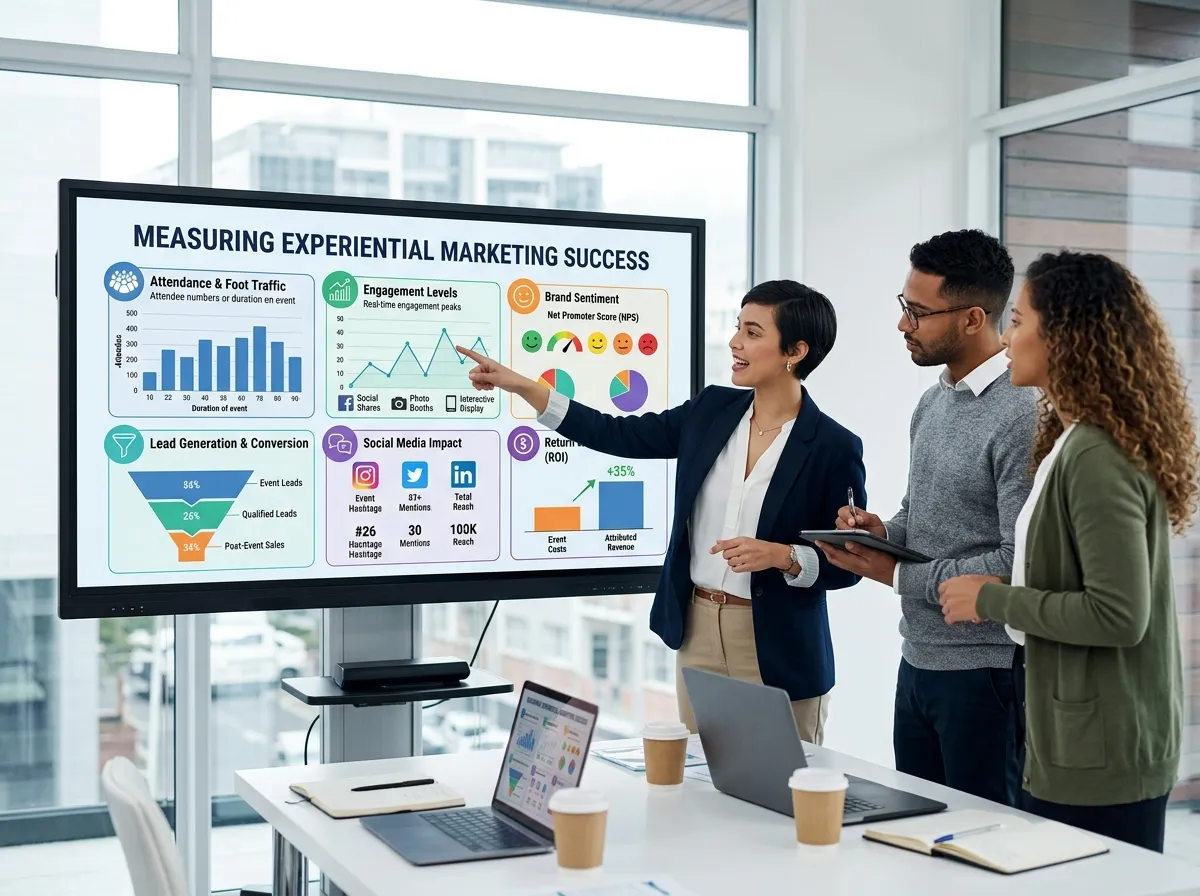
Measuring experiential marketing requires looking at both engagement and business outcomes. Attendance numbers can indicate reach, but they do not tell the entire story.
Businesses can evaluate participation, leads generated, product trials, social mentions, user-generated content, website traffic, sales, customer feedback, and post-event engagement.
Brand-related outcomes can also be important. An event may strengthen awareness, perception, trust, or loyalty even when immediate sales are limited.
The right metrics depend on the purpose of the campaign. A product launch may prioritize trials and sales, while a brand-building event may focus more heavily on awareness, engagement, sentiment, and reach.
Final Thoughts
Event experiential marketing allows businesses to create meaningful connections by turning audiences into active participants. Through experiential event marketing, immersive environments, interactive activities, live demonstrations, and memorable brand experiences, companies can create stronger relationships than traditional promotional messages alone may achieve.
The most effective experiences are not simply impressive. They are relevant, purposeful, authentic, and connected to the brand. When live experiences are supported by digital promotion and thoughtful follow-up, an event can continue generating value long after it ends.
For businesses looking to stand out in crowded markets, experiential marketing provides an opportunity to transform an ordinary event into a memorable customer experience.
Frequently Asked Questions
1. What is event experiential marketing?
Event experiential marketing is an approach that allows audiences to interact directly with a brand through live, memorable, and engaging experiences. Instead of relying only on advertising, businesses create activities, demonstrations, environments, or events that allow people to experience the brand and its products or services.
2. Why is experiential event marketing effective?
Experiential event marketing can be effective because it encourages active participation and creates opportunities for direct human interaction. When people physically or digitally interact with a brand, the experience can become more memorable and emotionally meaningful than a traditional promotional message.
3. What is an experiential marketing strategy?
An experiential marketing strategy connects a brand’s objectives with a planned audience experience. It determines what the audience should experience, how that experience reflects the brand, and what business outcome it should support. The strategy can focus on awareness, engagement, product trial, lead generation, customer loyalty, or another measurable objective.
4. What are examples of experiential marketing?
Examples include product demonstrations, pop-up stores, interactive installations, branded workshops, product sampling, immersive environments, competitions, live performances, virtual reality experiences, augmented reality activities, and branded community events. The specific format depends on the audience, brand, budget, and marketing objective.
5. What makes a brand experience event successful?
A successful brand experience event is relevant to the audience and clearly connected to the brand. It should give participants a genuine reason to engage rather than simply presenting promotional messages. Strong experiences are usually memorable, easy to participate in, authentic, and supported by effective communication before and after the event.
6. How does immersive event marketing work?
Immersive event marketing creates an environment where attendees become active participants in the experience. It may use storytelling, interactive technology, physical installations, games, demonstrations, virtual reality, augmented reality, or sensory elements. The technology should support the experience rather than being used simply for visual impact.
7. What is experiential brand activation?
Experiential brand activation is a campaign or activity designed to encourage direct interaction between people and a brand. It can include pop-ups, demonstrations, product trials, contests, interactive displays, and community activities. The objective is usually to generate a specific response such as engagement, leads, product trials, or brand awareness.
8. How can businesses increase engagement at experiential events?
Businesses can increase engagement by offering activities that encourage participation, personalization, discovery, and interaction. Demonstrations, games, live polls, workshops, challenges, networking opportunities, and interactive technology can all encourage participation. The experience should remain simple enough that attendees can understand how to participate without unnecessary barriers.
9. How do you measure experiential marketing campaigns?
Experiential marketing campaigns can be measured through attendance, participation, leads, product trials, sales, social engagement, content sharing, website traffic, customer feedback, and brand-related metrics. The most appropriate measurements depend on the campaign’s objectives and whether the primary goal is awareness, engagement, lead generation, or revenue.
10. Can experiential marketing work for B2B businesses?
Yes. B2B businesses can use experiential marketing through conferences, industry exhibitions, product demonstrations, workshops, executive events, networking experiences, and interactive technology showcases. B2B audiences can benefit from experiences that demonstrate solutions, explain complex products, facilitate expert conversations, and create opportunities for meaningful business relationships.