Effective event marketing combines early promotion, multi-channel outreach, and audience-focused messaging to drive registrations and build anticipation. The most successful events use a mix of social media, email campaigns, partnerships, and content marketing — starting at least 6–8 weeks before the event date.
Getting people to show up is half the battle. You can plan the most compelling event imaginable, but if your marketing falls flat, those empty seats will tell a story you didn’t intend to write.
Event organizers across industries face the same core challenge: how do you cut through the noise and make people feel like they absolutely cannot miss what you’re putting together? The answer lies in how you build momentum before a single attendee walks through the door.
This guide covers actionable event marketing tips drawn from proven promotional strategies — from the first teaser post to the final registration push. You’ll learn how to craft a campaign that creates genuine anticipation, reaches the right audience on the right platforms, and converts interest into confirmed attendance.
Whether you’re organizing a corporate conference, a local community event, a product launch, or a virtual summit, these strategies apply. The principles of great event promotion don’t change — only the execution does.
Let’s get into it.
Why Event Marketing Strategy Matters More Than the Event Itself
It sounds counterintuitive, but the quality of your event marketing strategy often determines success more than the event program itself. An average event with exceptional promotion will outperform a brilliant event with poor visibility — every single time.
Research consistently shows that most attendees make their decision to register within the first two weeks of hearing about an event. That means your promotional window is narrower than you think, and the impression you make early on carries significant weight.
A strong event marketing strategy does three things:
- Creates awareness among people who don’t yet know the event exists
- Builds desire by communicating the value of attending
- Drives action by making registration feel urgent and easy
Without a deliberate plan, even the most well-resourced events struggle to fill seats. With one, even modest-budget events can punch well above their weight.
How Early Should You Start Promoting Your Event?
Timing is one of the most overlooked variables in event promotion. Start too late, and you’re competing with already-full calendars. Start too early without enough content, and people forget about you.
As a general rule:
|
Event Size |
Recommended Promotion Start |
|---|---|
|
Small local event (under 100 attendees) |
4–6 weeks before |
|
Mid-size event (100–500 attendees) |
6–10 weeks before |
|
Large conference or summit (500+) |
3–6 months before |
|
Virtual event or webinar |
3–4 weeks before |
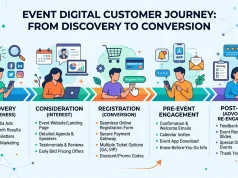
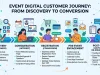
The key is to build a promotional arc — not just a flurry of posts in the final week. Your event marketing campaign should have phases: awareness, consideration, and conversion. Each phase serves a different purpose and reaches attendees at different stages of their decision-making process.
Event Marketing Tips That Actually Drive Registrations

1. Define Your Target Audience Before You Write a Single Post
This is the foundation everything else is built on. Your event promotion tips will land differently depending on whether you’re speaking to senior executives, first-time attendees, residents, or global professionals.
Start by asking:
- Who benefits most from attending this event?
- What problems does this event solve for them?
- Where do they spend their time online?
- What kind of language resonates with them?
Once you have a clear picture of your ideal attendee, every piece of marketing content becomes sharper. Your email subject lines, social captions, and ad copy all improve when they’re written with a specific person in mind — not a generic audience.
2. Craft a Compelling Event Value Proposition
Most event promotions focus on logistics: the date, the venue, the lineup. What they miss is the transformation. Attendees don’t just want information — they want outcomes.
Your value proposition should answer one question: What will attendees be able to do, know, or become after attending this event that they couldn’t before?
Instead of: “Join us for a two-day marketing conference.”
Try: “Leave with a 90-day marketing roadmap you can implement immediately.”
The second version speaks to an outcome. It triggers a different emotional response. This shift in framing is a small change with a measurable impact on your event marketing campaign performance.
3. Build a Multi-Channel Promotional Calendar
Relying on one platform to carry your entire event promotion strategy is one of the most common mistakes organizers make. A multi-channel approach ensures you reach your audience wherever they are — and reinforces your message through repetition.
Your promotional calendar should span:
- Email marketing: Start with a save-the-date, follow up with speaker or agenda reveals, and send reminder sequences as the date approaches
- Social media: Mix organic content with paid promotion across the platforms your audience uses most
- Content marketing: Publish blog posts, interviews, or behind-the-scenes content that gives people a reason to pay attention before registration even opens
- Partnerships and co-promotion: Collaborate with speakers, sponsors, or industry partners to extend your reach to their audiences
- PR and media outreach: Pitch your event to relevant publications, newsletters, and podcasts
Consistency across all these channels reinforces credibility. People are far more likely to register for an event they’ve encountered multiple times across different touchpoints.
4. Use Social Proof to Build Trust and Urgency
Nothing persuades like other people’s enthusiasm. Social proof is one of the most powerful psychological levers in event marketing, and most organizers underuse it.
Effective social proof tactics include:
- Testimonials from past attendees: Short quotes or video clips work especially well on landing pages and email campaigns
- Speaker credibility: Highlight the credentials and reach of your speakers — their existing audience becomes your potential audience
- Registration milestones: “500 people have already registered” creates urgency and signals that the event is worth attending
- Media mentions: If your event has been covered or endorsed by recognizable publications, feature those prominently
When someone on the fence sees that people they respect are attending or have attended in the past, the decision to register becomes much easier. This principle sits at the heart of smart increase event attendance strategies.
5. Optimize Your Event Landing Page for Conversions
Your event landing page is where interest becomes action. Every piece of promotional content you create — every email, every social post, every ad — ultimately points back to this page. It needs to convert.
A high-performing event landing page includes:
Above the fold
- A clear, benefit-driven headline
- The event date, location (or virtual format), and a single call-to-action button
Body content
- A compelling description of what attendees will experience and gain
- Speaker lineup with photos and short bios
- Agenda highlights or session topics
- Testimonials or past event highlights
- FAQs addressing common objections (cost, time commitment, format)
Trust signals
- Logos of sponsors or media partners
- Registration numbers or waitlist indicators
- Security badges for payment processing
The page should load fast, work perfectly on mobile, and have one clear goal: registration. Remove anything that distracts from that action.
6. Leverage Email Marketing as Your Highest-Converting Channel
Email consistently outperforms social media for event promotion. The average email open rate for event invitations sits between 20–30%, compared to organic social reach that often falls below 5% for business pages.
A high-performing email sequence for event promotion looks like this:
|
|
Timing |
Purpose |
|---|---|---|
|
Save the Date |
6–8 weeks out |
Announce the event and secure calendar space |
|
Registration Open |
5–6 weeks out |
Drive initial sign-ups with early-bird incentive |
|
Speaker/Agenda Reveal |
4 weeks out |
Build excitement with new information |
|
Social Proof Email |
3 weeks out |
Share testimonials and registration numbers |
|
Last Chance Reminder |
1 week out |
Urgency-driven push for remaining spots |
|
Final Reminder |
24–48 hours out |
Last call for late registrants |
Personalization improves results significantly. Even simple personalization — using the recipient’s first name, segmenting by past attendance, or tailoring content to their industry — can lift open rates by 20% or more.
7. Create Shareable Content That Spreads Organically
The best event promotion ideas tap into your existing audience’s networks. When attendees, speakers, and partners share your event, they’re essentially giving it a personal endorsement to their followers.
Strategies to encourage organic sharing:
- Create social media graphics that are visually branded and easy to repost — speaker quote cards, countdown graphics, and agenda snapshots all perform well
- Build a referral incentive: offer a discount or upgrade for attendees who bring a friend
- Launch a hashtag early: a consistent event hashtag gives content a home and makes it easier for people to find and share posts organically
- Give speakers promotion kits: pre-written posts, graphics, and email copy that make it easy for them to promote their participation
Every share extends your event marketing campaign reach without additional ad spend. That’s compounding value.
8. Run Paid Promotion Strategically
Organic promotion has limits. Paid promotion on platforms like Facebook, Instagram, LinkedIn, and Google removes those limits — but only when used strategically.
Effective paid event promotion follows a few key principles:
Retarget website visitors first. People who have already visited your event page are your warmest audience. Retargeting ads remind them to complete registration and typically deliver a lower cost-per-registration than cold audience campaigns.
Use lookalike audiences. Upload your existing attendee or email list to create lookalike audiences on social platforms. These are new users who share characteristics with your existing audience — and are therefore more likely to be interested in attending.
A/B test your creative. Run multiple versions of your ad copy, headlines, and visuals to identify what resonates. Small improvements in click-through rates compound into significant savings over a full campaign.
Scale what’s working. Once you identify which ad sets are converting, shift budget toward them. Don’t spread your spend evenly across underperforming campaigns.
9. Activate Your Speakers and Partners as Promotional Allies
Your speakers and sponsors have audiences of their own — and those audiences overlap significantly with the people you’re trying to reach. Activating them as promotional allies is one of the highest-leverage tactics in your event marketing toolkit.
Provide each speaker and partner with a personalized promotion kit that includes:
- Customized social media posts (with their name or session highlighted)
- Email copy they can send to their own list
- A unique referral or tracking link to measure the registrations they drive
- Branded graphics they can use without additional editing
When speakers promote their own participation, it signals credibility to their audience. That endorsement carries more weight than almost any paid ad you could run — and it costs nothing beyond the time it takes to put the kit together.
10. Use Countdown Timers and Scarcity to Drive Urgency
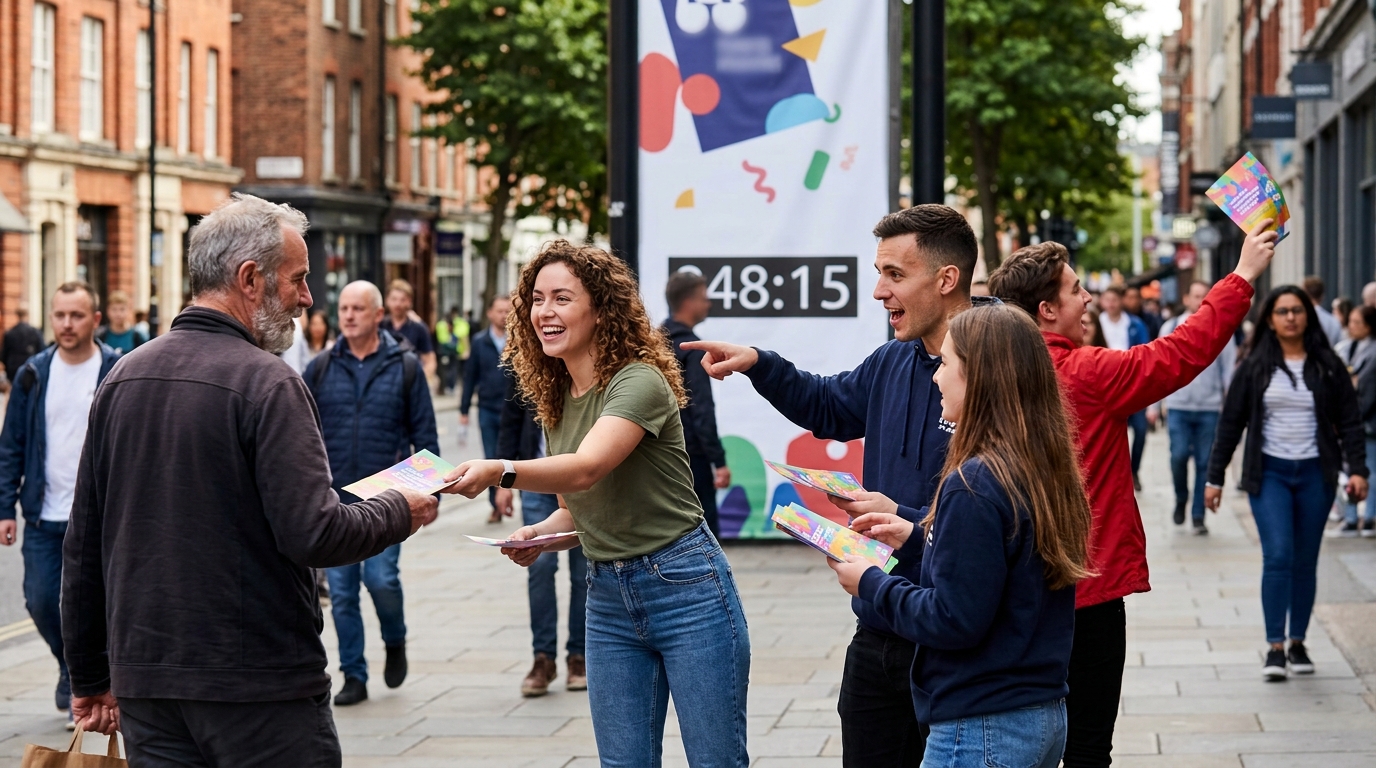
Human psychology responds strongly to scarcity and deadlines. Countdown timers on your event landing page and in email campaigns create a visual reminder that time — or space — is running out.
Tactics that work:
- Early-bird pricing: A discounted rate that expires on a specific date drives early registrations and creates a natural deadline
- Limited capacity messaging: “Only 50 spots remaining” encourages hesitant prospects to act before they miss out
- Tiered pricing: Multiple pricing tiers (early bird, standard, last-minute) create multiple urgency windows throughout your campaign
These aren’t manipulative tactics — they reflect genuine constraints. Most events do have limited capacity, and early registrations genuinely do help organizers plan better. Communicating that reality clearly is good marketing.
How to Measure the Success of Your Event Marketing Campaign
Tracking performance throughout your promotional campaign allows you to adjust in real time — not just after the event is over.
Key metrics to monitor:
|
Metric |
What It Tells You |
|---|---|
|
Registration rate |
How effectively your landing page converts visitors |
|
Email open and click rates |
How well your messaging resonates with your list |
|
Social media engagement |
How much organic reach your content is generating |
|
Paid ad cost-per-registration |
How efficiently your budget is being spent |
|
Referral source breakdown |
Which channels are driving the most registrations |
Use UTM parameters on all links so you can attribute registrations to specific campaigns, emails, and social posts. This data becomes invaluable when planning your next event.
Common Event Promotion Mistakes to Avoid
Even experienced organizers fall into predictable traps. Here are the most common errors — and how to sidestep them:
Starting too late. A last-minute surge of promotion rarely compensates for a slow start. Build your campaign timeline backward from the event date.
Focusing on features, not outcomes. Listing your agenda isn’t the same as selling the value of attending. Always lead with what attendees will gain.
Ignoring past attendees. Your most likely future attendees are people who’ve attended before. Segment them and speak to them differently than first-timers.
Neglecting mobile optimization. A significant portion of email opens and social browsing happens on mobile devices. Your landing page and emails must work flawlessly on smaller screens.
Sending the same message repeatedly. Repetition builds awareness — but only if each message adds something new. Vary your angle, highlight different speakers, share behind-the-scenes content, or address different objections across your campaign.
Building Long-Term Momentum: Beyond One-Off Events
A single event is an opportunity. A series of well-marketed events is a brand.
Organizations that treat event marketing as a continuous effort — rather than a one-time sprint — build audiences that grow with each event. Every attendee becomes a potential ambassador. Every piece of content extends the life of the event beyond the day itself.
Post-event marketing matters too. Sharing highlights, recording sessions, publishing recap articles, and collecting testimonials all contribute to building the credibility that makes your next increase event attendance effort easier.
The most successful event organizers think of their event marketing campaign as a year-round function — not a six-week push before the next date on the calendar.
Your Next Steps to a Fully Booked Event
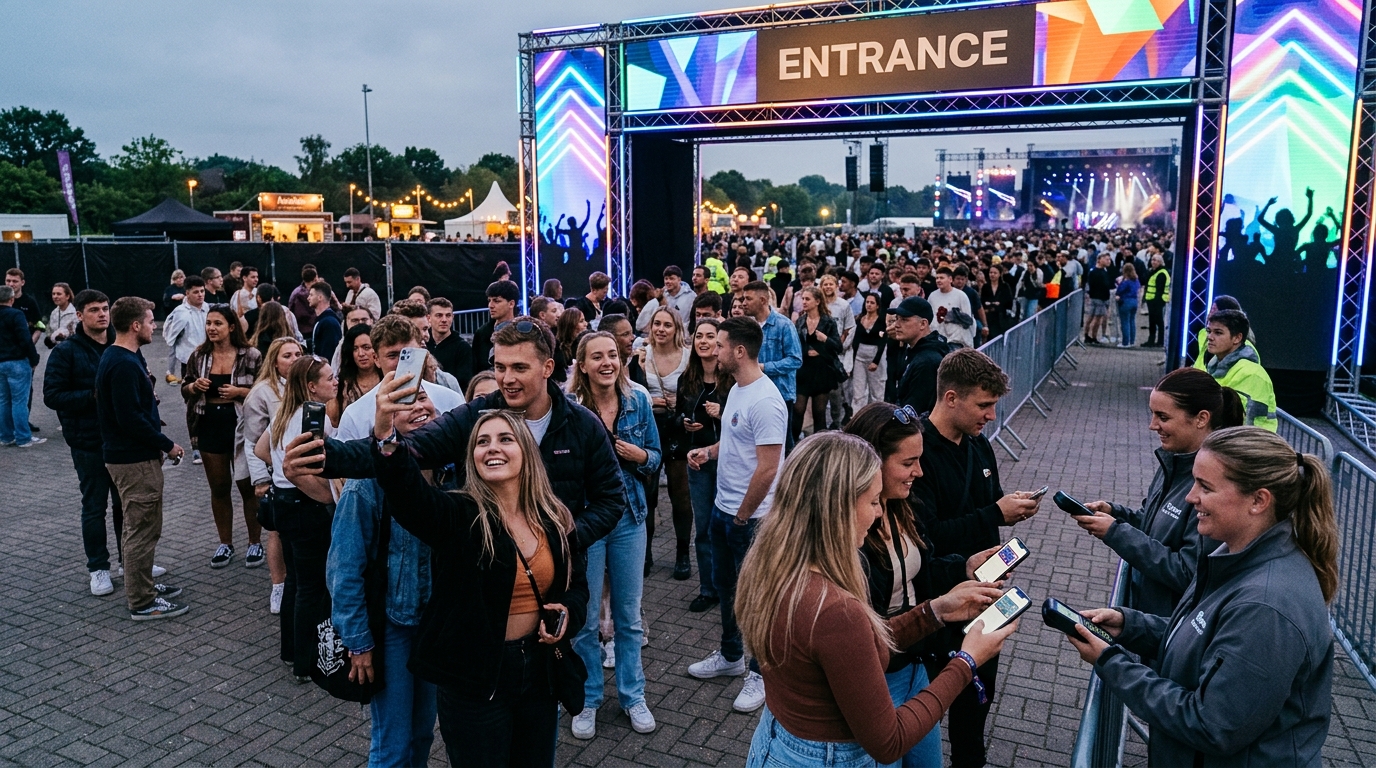
Great event marketing is part strategy, part psychology, and part execution. The tactics in this guide work — but only when applied consistently and adjusted based on real data.
Start with clarity: know your audience, define the value your event delivers, and build a promotional calendar that gives each channel time to work. From there, layer in social proof, urgency, and multi-channel reach to convert awareness into registrations.
The events that sell out aren’t always the biggest or the best-funded. They’re the ones that made the right people feel like missing out wasn’t an option.
Now it’s your turn to build that feeling.
Frequently Asked Questions About Event Marketing Tips
What are the most effective event marketing tips for increasing attendance?
The most effective strategies include building a multi-channel promotional calendar, using email marketing with a timed sequence, leveraging social proof from past attendees, activating speakers and partners as promoters, and creating urgency through early-bird pricing or limited capacity messaging. Starting at least 6–8 weeks before the event significantly improves outcomes.
How do I increase event attendance on a limited budget?
Focus on high-ROI, low-cost tactics: email marketing to your existing list, organic social media content, partner and speaker co-promotion, and referral incentives. These approaches cost little beyond time but can generate significant registrations when executed consistently.
What is a good event marketing strategy for a first-time organizer?
Start with a clear value proposition, build a simple landing page optimized for conversions, create a six-email promotional sequence, and identify 2–3 social media channels where your target audience is active. Keep the scope manageable and measure everything so you can improve with each event.
How far in advance should I start my event promotion?
For small events (under 100 people), start 4–6 weeks out. For mid-size events, allow 6–10 weeks. Large conferences and summits benefit from 3–6 months of advance promotion. Virtual events and webinars typically require 3–4 weeks of focused outreach.
What should an event marketing campaign include?
A complete event marketing campaign includes a save-the-date announcement, an email nurture sequence, organic and paid social media content, a speaker or partner promotion kit, a conversion-optimized landing page, and post-registration communication to reduce no-shows.
How can I use social media to promote an event effectively?
Use a consistent event hashtag from the start, post varied content types (speaker spotlights, agenda reveals, behind-the-scenes preparation), run paid retargeting to warm audiences, and encourage speakers and attendees to share content. Mixing organic posts with targeted paid ads delivers the best results across platforms like LinkedIn, Instagram, and Facebook.
What is the best way to measure event marketing success?
Track registration rate (landing page visitors vs. registrants), email open and click-through rates, cost-per-registration for paid campaigns, and referral source breakdown using UTM parameters. These metrics reveal which channels are working and where to adjust budget or messaging before the event date.