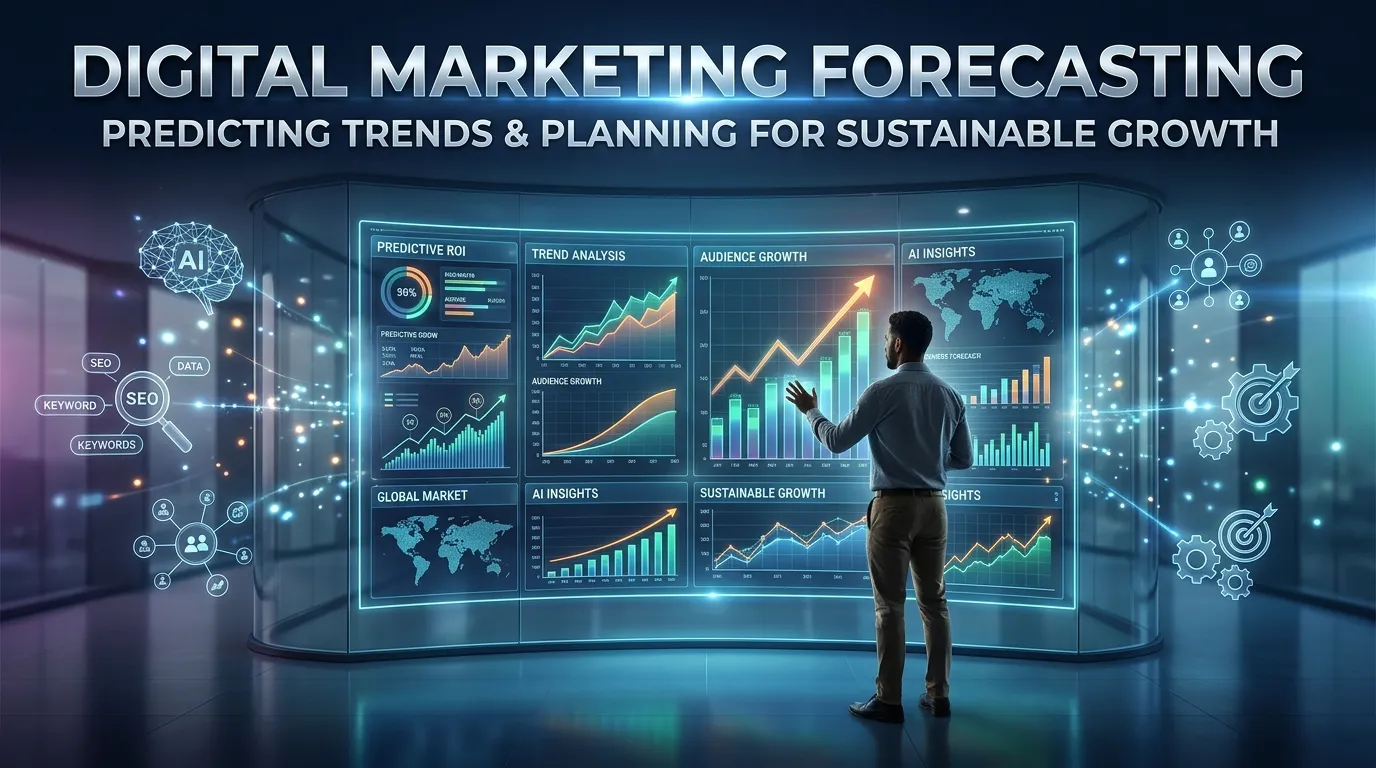
Digital Marketing Forecasting helps businesses estimate future marketing performance by analyzing historical data, customer behavior, market trends, and advertising results. It supports budget planning, demand estimation, campaign optimization, and long-term growth projections. By combining predictive models with reliable data and regular reviews, organizations can make more informed marketing decisions and prepare for changing market conditions.
Digital marketing rarely follows a perfectly predictable path. Customer interests change, advertising costs fluctuate, search behavior evolves, and new platforms introduce different ways for businesses to reach their audiences. A campaign that performs well today may produce different results next month, while an emerging trend can create opportunities that were not part of the original marketing plan.
For businesses investing in online promotion, making decisions based only on past performance can create unnecessary uncertainty. Marketing teams need to understand what is happening now while preparing for what may happen next. This is where Digital Marketing Forecasting becomes valuable.
Digital Marketing Forecasting uses historical performance, current market information, customer behavior, and analytical methods to estimate future marketing outcomes. It helps organizations anticipate demand, plan advertising expenditure, estimate campaign performance, and identify potential growth opportunities.
Rather than relying entirely on assumptions, businesses can use forecasting to make more informed decisions. It does not guarantee that every prediction will be accurate, but it provides a structured way to prepare for different possibilities and respond when market conditions change.
Understanding the Purpose of Digital Marketing Forecasting

At its core, digital marketing forecasting is about turning available information into useful expectations about the future. Businesses collect data from websites, advertising platforms, search engines, social media, email campaigns, and customer relationship management systems. This information can reveal patterns that help marketers estimate future activity.
For example, an ecommerce company may notice that demand for certain products increases during specific months. By examining previous sales, website traffic, advertising performance, and seasonal search interest, the marketing team can estimate how much demand to expect during the next promotional period.
A software company may take a different approach. It could analyze website visits, product demonstration requests, email engagement, and lead conversion rates to estimate how many new customers its marketing activities might generate.
These forecasts support several important decisions. Businesses can prepare budgets, assign employees, select promotional channels, and determine whether current marketing targets are realistic.
Forecasting also helps organizations recognize potential problems earlier. If historical patterns and current indicators suggest that customer acquisition costs may increase, marketers can investigate alternative channels before the change significantly affects their results.
How Digital Marketing Prediction Models Support Better Decisions
Digital Marketing Prediction Models provide structured methods for estimating future outcomes. The appropriate model depends on the type of information available, the business objective, and the complexity of the marketing activity being evaluated.
One common approach is time-series forecasting. It examines data collected over regular periods to identify patterns such as seasonality, growth, and recurring fluctuations. Businesses can use it to estimate future website traffic, sales volume, advertising expenditure, or lead generation.
Regression analysis is another useful method. It examines relationships between variables to understand how changes in one factor may be associated with changes in another. For example, a company may analyze how advertising spending, website traffic, and conversion rates relate to sales performance.
Scenario-based forecasting takes a different approach. Instead of producing one expected outcome, it explores several possible situations. A marketing team might prepare conservative, expected, and optimistic projections based on different assumptions about customer demand and advertising costs.
Machine learning models can also identify complex patterns in large datasets. These methods may be useful for businesses with substantial customer and campaign information, although they require appropriate data preparation and ongoing evaluation.
No model should be treated as a perfect representation of future behavior. External events, platform changes, competitor activity, and unexpected customer preferences can affect results. A good forecasting process therefore combines analytical models with human judgment.
Marketing Performance Forecasting: Looking Beyond Past Results
Marketing Performance Forecasting helps businesses estimate how their campaigns and marketing channels may perform in the future. It goes beyond reporting previous results by examining whether current activities are likely to support upcoming targets.
A company might review several months of campaign data to estimate future impressions, clicks, leads, conversions, and customer acquisition costs. These projections can help managers understand whether their existing marketing approach is likely to deliver the expected results.
However, performance forecasting should not rely on a single metric. An increase in website traffic does not necessarily mean that revenue will increase. Similarly, a higher click-through rate may not produce more qualified leads if the campaign attracts visitors with limited purchasing interest.
A more complete forecast considers how different performance indicators connect. Traffic estimates can be combined with conversion rates to project potential leads, while lead-to-customer rates can help estimate future sales.
For example, if a website receives an estimated 10,000 relevant visits and historically converts 3% of those visitors into inquiries, the business may expect approximately 300 inquiries under similar conditions. This is a projection, not a guarantee. Changes in audience quality, website experience, or campaign targeting could produce a different outcome.
Marketing teams should regularly compare forecasts with actual results. This makes it possible to identify inaccurate assumptions and improve future estimates.
Digital Marketing Trend Analysis and Changing Customer Expectations
Forecasting becomes more useful when businesses understand the trends influencing their markets. Digital Marketing Trend Analysis examines changes in customer preferences, technology, platform behavior, and industry activity to identify developments that may affect future marketing performance.
Search behavior is one important area. People may begin using different phrases, researching new product features, or expecting more detailed information before making purchasing decisions. These changes can influence content strategy and search visibility.
Social media behavior also evolves. Audience preferences may shift between short-form videos, educational posts, live discussions, and creator recommendations. Businesses that monitor these changes can make better decisions about where to invest their creative resources.
Technology introduces additional changes. Artificial intelligence, marketing automation, conversational interfaces, and advanced analytics can affect how businesses communicate with customers and manage campaigns.
However, not every popular trend represents a valuable opportunity. A platform may attract considerable attention without reaching the company’s target audience. A new technology may offer impressive features but create more complexity than practical value.
Trend analysis should therefore connect external developments with actual business needs. The objective is to recognize meaningful changes rather than follow every new marketing trend.
Predictive Marketing Analytics and the Value of Customer Data
Predictive Marketing Analytics uses historical and current information to estimate future customer behavior and marketing outcomes. It helps businesses understand which audiences may respond to campaigns, which customers may be interested in particular products, and which interactions may indicate purchasing intent.
Customer segmentation is one area where predictive analytics can provide value. Instead of treating every customer as part of one large audience, businesses can identify groups with similar characteristics, preferences, or engagement patterns.
A retailer, for example, may analyze purchase history and browsing activity to estimate which customers are likely to respond to a seasonal promotion. A subscription business might examine usage patterns to identify customers who may be at risk of canceling their subscriptions.
Predictive analytics can also support lead scoring. By examining previous customer journeys, companies can identify characteristics commonly associated with qualified leads. New inquiries can then be evaluated according to their similarity to those patterns.
The quality of these predictions depends heavily on the data being used. Incomplete records, outdated information, inconsistent tracking, or biased datasets can lead to misleading results.
Businesses should also respect privacy expectations and applicable data protection requirements. Customer information should be collected and used responsibly, with appropriate transparency and security.
Marketing Demand Forecasting and Seasonal Opportunities
Marketing Demand Forecasting estimates how much interest customers may show in particular products, services, or categories during a future period. It helps businesses prepare campaigns according to expected market demand.
Seasonality is an important influence. Travel companies may experience higher interest during holiday periods, while retailers may see demand increase around major shopping events. Educational businesses may experience changes in enrollment interest around academic calendars.
Historical information provides a useful starting point, but marketers should not assume that every year will repeat the previous one. Economic conditions, product availability, competitor campaigns, and changing customer preferences can influence demand.
Search data can provide additional context. An increase in searches related to a product category may indicate growing interest, while declining search activity could suggest changing preferences or seasonal movement.
Businesses can combine these insights with sales records, website analytics, customer inquiries, and industry research to develop more realistic demand projections.
These estimates can influence campaign timing and content planning. If a company expects interest to increase during a particular period, it can prepare relevant landing pages, promotional materials, email campaigns, and advertising budgets in advance.
Demand forecasting is especially useful when marketing activities depend on inventory, staffing, or other operational resources. It helps departments coordinate their plans instead of reacting only after customer demand has already increased.
Digital Advertising Forecasting and Campaign Investment
Digital Advertising Forecasting helps businesses estimate the likely outcomes and costs of their paid promotional activities. Advertising platforms provide historical information about impressions, clicks, conversions, and spending, which marketers can use to develop future projections.
One important factor is advertising cost. Competition for particular keywords, audience segments, and placements can influence how much a business needs to spend to reach potential customers. These costs may change during seasonal periods or when competitors increase their advertising activity.
Marketers can examine previous campaign performance to estimate the potential reach and conversion volume of future campaigns. For instance, historical cost-per-click data can help estimate how many website visits a budget may generate. Conversion rates can then be used to estimate potential leads or purchases.
However, advertising forecasts should account for changes in campaign quality. A campaign targeting a new audience may perform differently from one targeting an established customer segment. Creative fatigue, landing page improvements, bidding changes, and platform updates can also affect results.
Businesses should avoid treating platform estimates as guaranteed outcomes. Forecasts are planning tools, and actual performance should be monitored throughout the campaign.
A flexible advertising plan allows marketers to redistribute spending when results differ from expectations. This helps protect budgets and prevents teams from continuing to invest heavily in campaigns that are no longer performing effectively.
Marketing Budget Predictions and Financial Planning

Marketing Budget Predictions help organizations estimate how much money they may need to achieve future marketing objectives. These estimates connect performance expectations with financial planning.
A business preparing for expansion may need to increase spending on search visibility, content production, paid advertising, and customer acquisition. An established company may focus more on retention campaigns, brand development, and improving the efficiency of existing channels.
Budget forecasting helps managers understand how different spending levels could affect expected outcomes. A conservative budget may limit campaign reach, while a larger investment may create additional opportunities but also increase financial risk.
The important consideration is not simply how much money a company can spend. It is how effectively that investment supports its business priorities.
Marketing teams can develop several budget scenarios based on different assumptions. For example, one projection may assume stable advertising costs, while another accounts for increased competition and higher acquisition expenses.
These scenarios make financial planning more realistic. They also help managers explain why additional resources may be necessary or why certain activities should receive less funding.
Forecasts should be reviewed as new information becomes available. If campaign performance improves beyond expectations, the organization may have an opportunity to increase investment. If costs rise or demand weakens, managers can revise their plans before the budget becomes difficult to control.
Customer Behavior Forecasting: Understanding What People May Do Next
Customer Behavior Forecasting examines patterns in customer interactions to estimate future interests, preferences, and actions. It helps businesses move beyond broad audience assumptions and develop a more informed understanding of individual customer needs.
For example, an online retailer may identify customers who frequently browse a particular product category but have not completed a purchase. A business could use this information to improve its product information, provide relevant recommendations, or create more useful follow-up communication.
Subscription companies may examine engagement frequency, account activity, and customer support interactions to identify possible signs of declining interest. This can help them improve the customer experience before a customer decides to leave.
Forecasting can also support personalization. If a customer regularly engages with content about a particular topic, a business may recommend related educational resources or relevant products.
However, customer behavior is not always consistent. A person who purchases a product once may not repeat the behavior, and someone who ignores a campaign may simply be busy rather than uninterested.
Businesses should therefore treat behavioral predictions as probabilities rather than definite statements about what a customer will do. Respectful communication and responsible use of customer data remain essential.
Digital Marketing Data Analysis: Building a Reliable Forecast
Digital Marketing Data Analysis provides the foundation for accurate forecasting. Before estimating future performance, businesses need to understand whether their existing information is complete, consistent, and relevant.
Marketing data may come from several sources, including website analytics, search performance reports, advertising platforms, social media insights, email marketing systems, and customer databases. Each source offers a different perspective on audience behavior and campaign performance.
The challenge is connecting these sources in a meaningful way. If website conversions are recorded differently across platforms, the same customer action may appear multiple times or be overlooked entirely.
Consistent measurement definitions help prevent this problem. Teams should agree on what counts as a lead, purchase, qualified conversion, or engaged customer. Campaign naming conventions should also remain consistent so that results can be compared across periods.
Data quality requires ongoing attention. Missing tracking parameters, duplicate records, inaccurate conversion events, and changes in analytics configuration can distort forecasts.
Businesses should also consider the time period being analyzed. A short period may not provide enough information to identify seasonal patterns, while older data may no longer reflect current customer behavior.
Reliable forecasting begins with reliable measurement. The more accurately a business understands its past and present performance, the more useful its future projections can become.
Marketing Growth Projections and Strategic Planning
Marketing Growth Projections estimate how marketing activities may contribute to future business development. They help organizations connect audience growth, lead generation, conversion rates, customer acquisition, and revenue expectations.
A company planning to enter a new market may use growth projections to estimate the resources required to attract customers. It can examine the size of the target audience, expected website traffic, historical conversion rates, and potential customer acquisition costs.
An established business may use similar projections to evaluate whether expanding an existing campaign is likely to support its revenue goals.
Growth projections should include realistic assumptions. A business should not assume that doubling its advertising budget will automatically double its sales. Market saturation, operational capacity, competition, and diminishing returns may influence the outcome.
It is also useful to distinguish between short-term and long-term growth. Some campaigns generate immediate inquiries, while others build awareness and trust that may contribute to future conversions.
A balanced forecast considers both. This helps businesses avoid focusing exclusively on immediate results while neglecting activities that support sustainable growth.
The Role of Artificial Intelligence in Marketing Forecasting
Artificial intelligence is changing how businesses analyze marketing information and estimate future outcomes. AI-powered systems can process large datasets, recognize patterns, classify customer behavior, and support predictive models.
For example, machine learning may help identify audience segments with a higher probability of converting. AI-based tools can also support demand estimation, campaign performance analysis, content planning, and customer retention predictions.
Automation makes it possible to update certain forecasts as new information becomes available. This can reduce manual reporting and help marketing teams respond more quickly to changing conditions.
However, AI does not eliminate the need for human judgment. Models may produce inaccurate results when they rely on poor-quality data or assumptions that no longer reflect the market. Businesses also need to understand how predictions are generated before using them for important decisions.
The most effective approach combines technology with marketing expertise. AI can identify patterns and estimate possibilities, while experienced marketers evaluate whether those findings make sense in the context of the business.
Managing Uncertainty Through Better Forecasting Practices
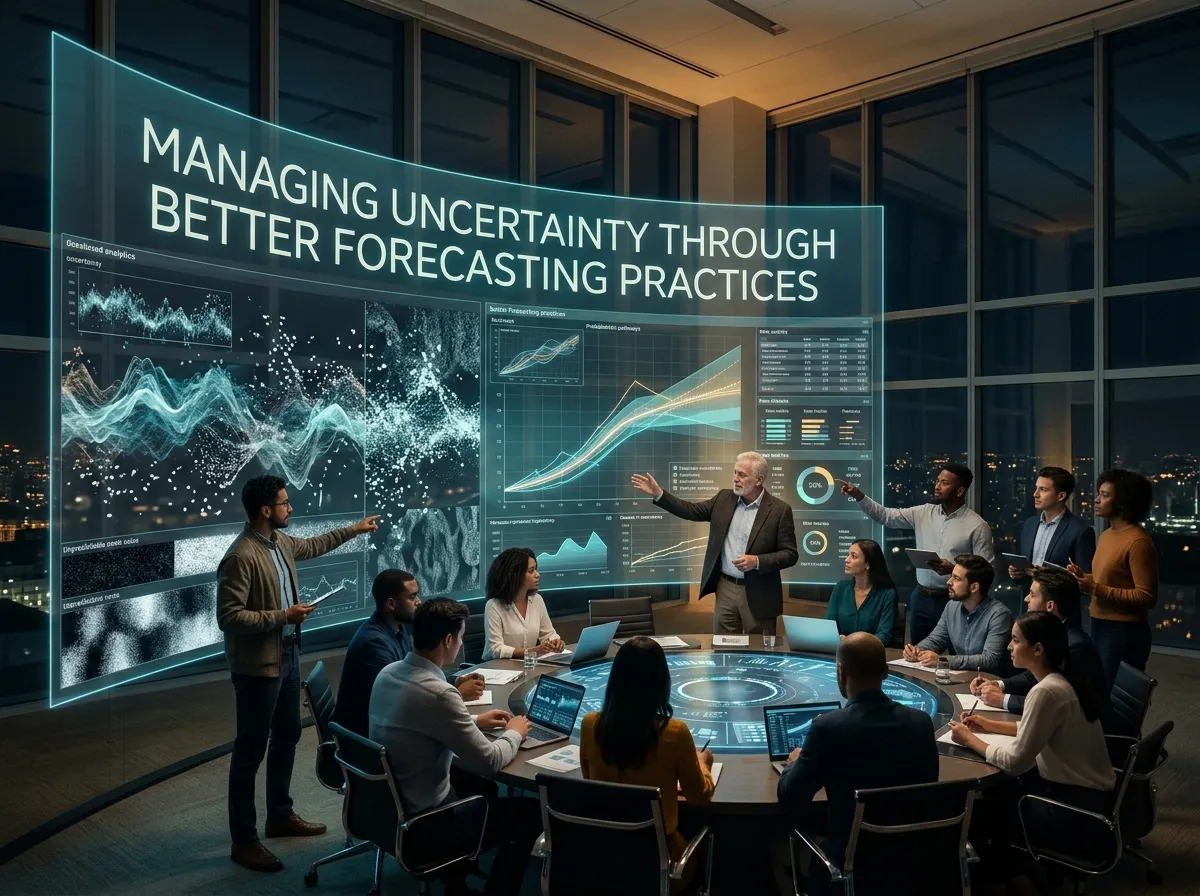
Even a well-developed forecasting system cannot predict every market change. New competitors, economic uncertainty, platform policy updates, technological developments, and unexpected events can influence marketing outcomes.
This uncertainty makes scenario planning especially useful. Rather than relying on one forecast, businesses can prepare several possible outcomes and understand how each would affect their marketing activities.
For example, an organization might estimate how its campaigns would perform if customer demand increased, remained stable, or declined. It could also examine how higher advertising costs would influence customer acquisition expenses.
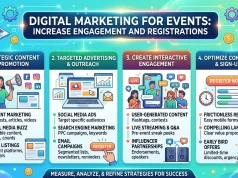
Risk awareness should extend beyond campaign performance. Events, public communication, and brand reputation can also affect customer confidence and marketing plans. Businesses that organize Event Risk Management as part of their wider planning can better understand how unexpected situations may affect event-related marketing activities and audience experiences.
Public communication is another consideration. A change in market conditions may require businesses to adjust their messaging or explain important developments to customers. Effective Event Publicity can help organizations communicate relevant event information and maintain audience awareness when promotional priorities change.
Similarly, forecasts involving creator partnerships should account for campaign reach, audience response, and promotional timing. Event Influencer Promotion can provide useful context for understanding how influencer activity contributes to event awareness and engagement.
When unexpected incidents occur during events, accurate records and communication become important. A structured Event Incident Reporting process can support documentation and help organizations understand issues that may influence future event planning.
These examples demonstrate that forecasting should not be limited to traffic and advertising numbers. It should consider the wider factors that can influence marketing performance and customer relationships.
Conclusion
Digital Marketing Forecasting gives businesses a more structured way to prepare for future opportunities and challenges. By analyzing historical performance, customer behavior, market trends, advertising costs, and campaign data, marketing teams can develop more informed expectations about what may happen next.
Digital Marketing Prediction Models, predictive analytics, demand forecasting, and growth projections each contribute a different perspective. When these methods are supported by reliable data and regular performance reviews, they can improve planning and reduce uncertainty.
Forecasts will never replace real-world results, but they can help businesses make better decisions before those results arrive. Organizations that treat forecasting as an ongoing process can adapt more effectively, allocate resources with greater confidence, and build marketing strategies that support sustainable growth.
Frequently Asked Questions
1. What is Digital Marketing Forecasting?
Digital Marketing Forecasting is the process of using historical data, current performance, market trends, and analytical models to estimate future marketing outcomes such as traffic, leads, conversions, and advertising costs.
2. Why is digital marketing forecasting important?
It helps businesses plan budgets, anticipate customer demand, estimate campaign results, identify potential risks, and make better decisions about marketing investments.
3. What are digital marketing prediction models?
Digital Marketing Prediction Models are analytical methods used to estimate future outcomes. Examples include time-series forecasting, regression analysis, scenario planning, and machine learning models.
4. How does predictive marketing analytics work?
Predictive Marketing Analytics examines historical and current customer information to identify patterns that may indicate future behavior, purchasing interest, conversion likelihood, or customer retention risks.
5. What is marketing demand forecasting?
Marketing Demand Forecasting estimates future customer interest in products or services. It uses information such as historical sales, search activity, customer behavior, and seasonal patterns.
6. How can businesses forecast digital advertising performance?
Businesses can analyze previous impressions, clicks, conversion rates, cost-per-click data, and campaign spending to estimate future advertising reach, costs, and potential conversions.
7. What data is needed for digital marketing forecasting?
Useful information includes website analytics, advertising performance, search trends, email engagement, CRM records, conversion data, customer purchase history, and market research.
8. Can artificial intelligence improve marketing forecasting?
Yes. AI can analyze large datasets, identify patterns, estimate customer behavior, support audience segmentation, and help update forecasts as new information becomes available.
9. How often should marketing forecasts be updated?
Forecasts should be reviewed regularly, often monthly or quarterly. Businesses may need more frequent updates when running major campaigns or experiencing significant changes in customer demand or advertising costs.
10. What is the difference between marketing forecasting and marketing reporting?
Marketing reporting explains what has already happened, while marketing forecasting uses available information to estimate what may happen in the future. Both are important for evaluating performance and planning improvements.