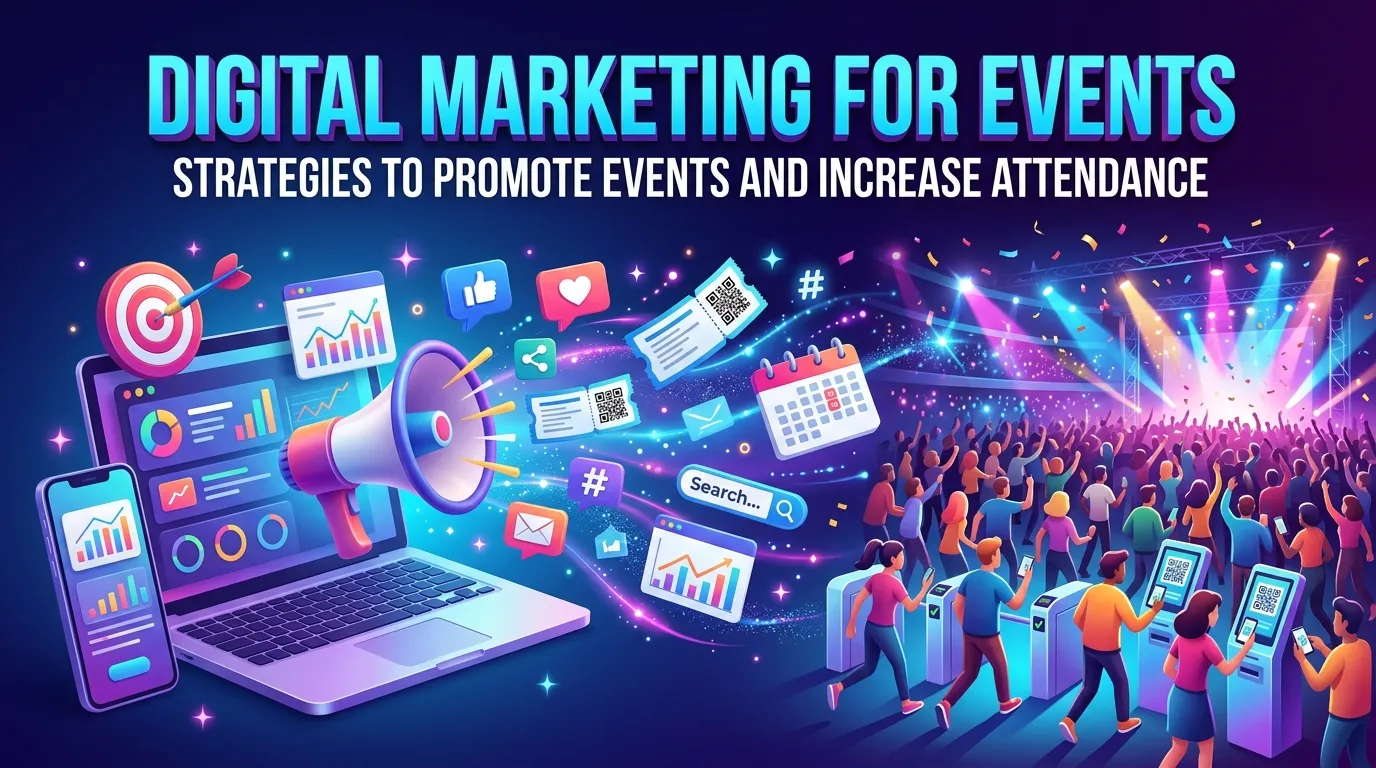
Digital marketing for events helps businesses, organizations, and event professionals reach the right audience, build awareness, increase registrations, and maintain engagement before, during, and after an event. By combining social media, search engine optimization, email marketing, paid advertising, content, automation, and data analysis, businesses can create more effective event promotion campaigns and improve overall attendance.
Promoting an event successfully requires more than simply announcing the date, location, and event details. People are constantly exposed to advertisements, social media posts, emails, videos, and other online content, which means event organizers need a strong strategy to capture attention and encourage people to take action. This is where digital marketing for events becomes valuable.
Digital marketing allows event organizers to connect with potential attendees across multiple online channels. Instead of depending only on traditional advertising, businesses can use social media, search engines, email, websites, content marketing, paid campaigns, and online communities to build awareness and generate registrations.
A strong event digital marketing strategy should cover the complete customer journey. It should help potential attendees discover the event, understand its value, develop interest, register, participate, and remain connected with the organizer after the event. When these activities work together, event promotion becomes more consistent and measurable.
Why Digital Marketing Is Important for Events
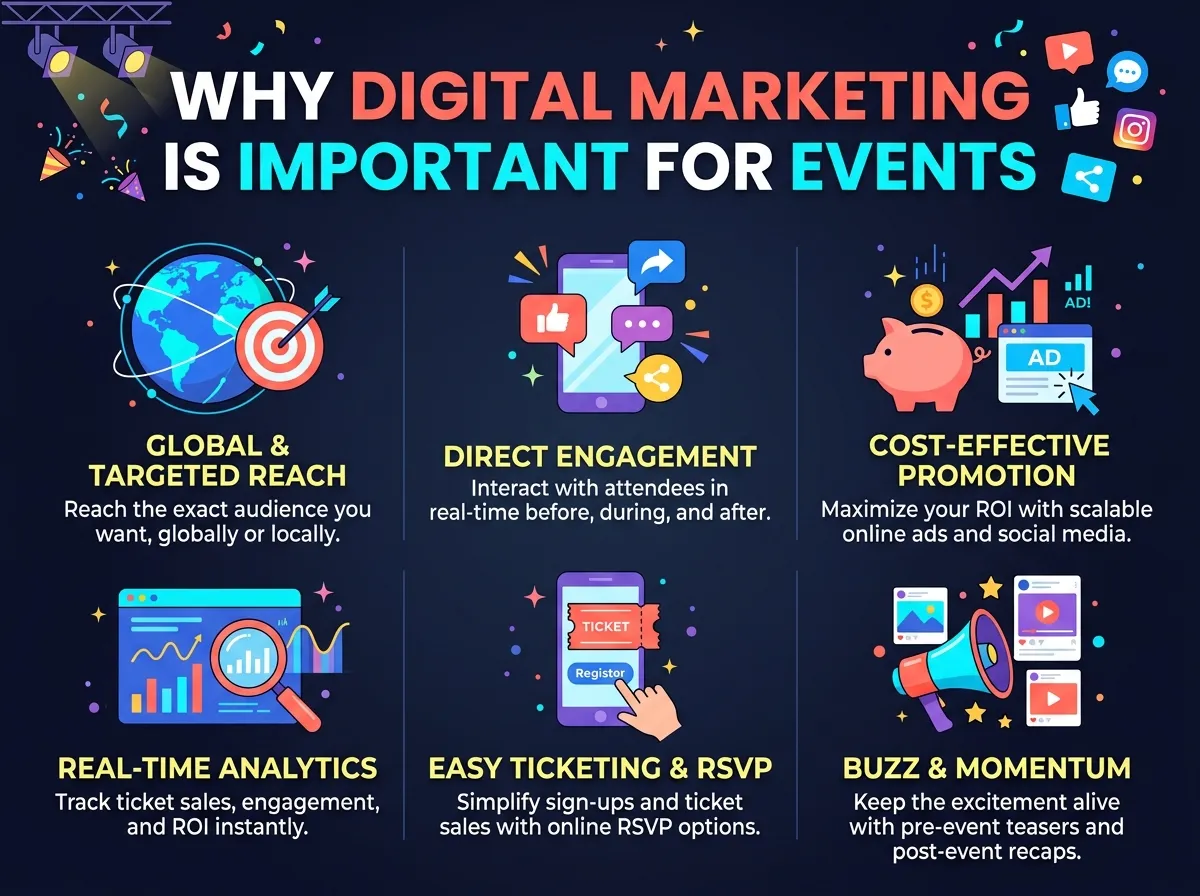
Digital marketing gives event organizers access to audiences that may be difficult to reach through traditional promotional methods. People search online for conferences, webinars, exhibitions, workshops, networking events, festivals, and business events every day. Having a strong online presence allows an event to appear when potential attendees are actively looking for relevant experiences.
Another important advantage is targeting. Digital platforms allow marketers to reach people according to interests, location, professional background, online behavior, and previous interactions. This makes promotional campaigns more relevant and can reduce wasted advertising spend.
Digital marketing also makes event promotion easier to measure. Organizers can monitor website visits, social media engagement, email opens, registration activity, advertisement performance, and conversions. These insights help marketers understand which channels are producing results and where improvements are needed.
Building an Event Digital Marketing Strategy
A successful event digital marketing strategy starts with a clear understanding of the target audience. Before creating advertisements or social media posts, organizers should determine who the event is designed for and what those people expect to gain from attending.
For a business conference, the audience may care about networking, expert speakers, industry insights, and business opportunities. For an entertainment event, attendees may be more interested in performers, experiences, location, and ticket value. Understanding these motivations makes it easier to create messages that connect with the right people.
The event website should then become the central destination for campaign traffic. It should clearly explain the event, provide important information, highlight speakers or activities, communicate benefits, and make registration simple. A well-optimized landing page can turn promotional traffic into actual registrations.
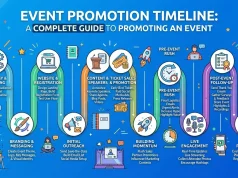
Marketers should also establish a timeline for promotion. Early campaigns can focus on awareness, while later campaigns can emphasize urgency, limited availability, special offers, speaker announcements, testimonials, and registration deadlines.
Using Digital Event Marketing to Build Awareness
Digital event marketing includes the online activities used to create awareness and encourage people to attend an event. It can include search engine optimization, social media, email marketing, content creation, paid advertising, influencer partnerships, video marketing, and online communities.
Content is particularly useful because it allows organizers to communicate the value of an event before asking people to register. Blog posts can discuss event topics, speaker interviews can introduce experts, short videos can provide previews, and social posts can highlight important event benefits.
For online events, marketers can also use content to explain how the experience will work. An online event marketing campaign may highlight the platform, networking opportunities, interactive sessions, recordings, live discussions, or access to expert speakers. A detailed Online Event Marketing strategy can help organizers build stronger promotional campaigns for virtual experiences.
Creating Effective Event Marketing Campaigns
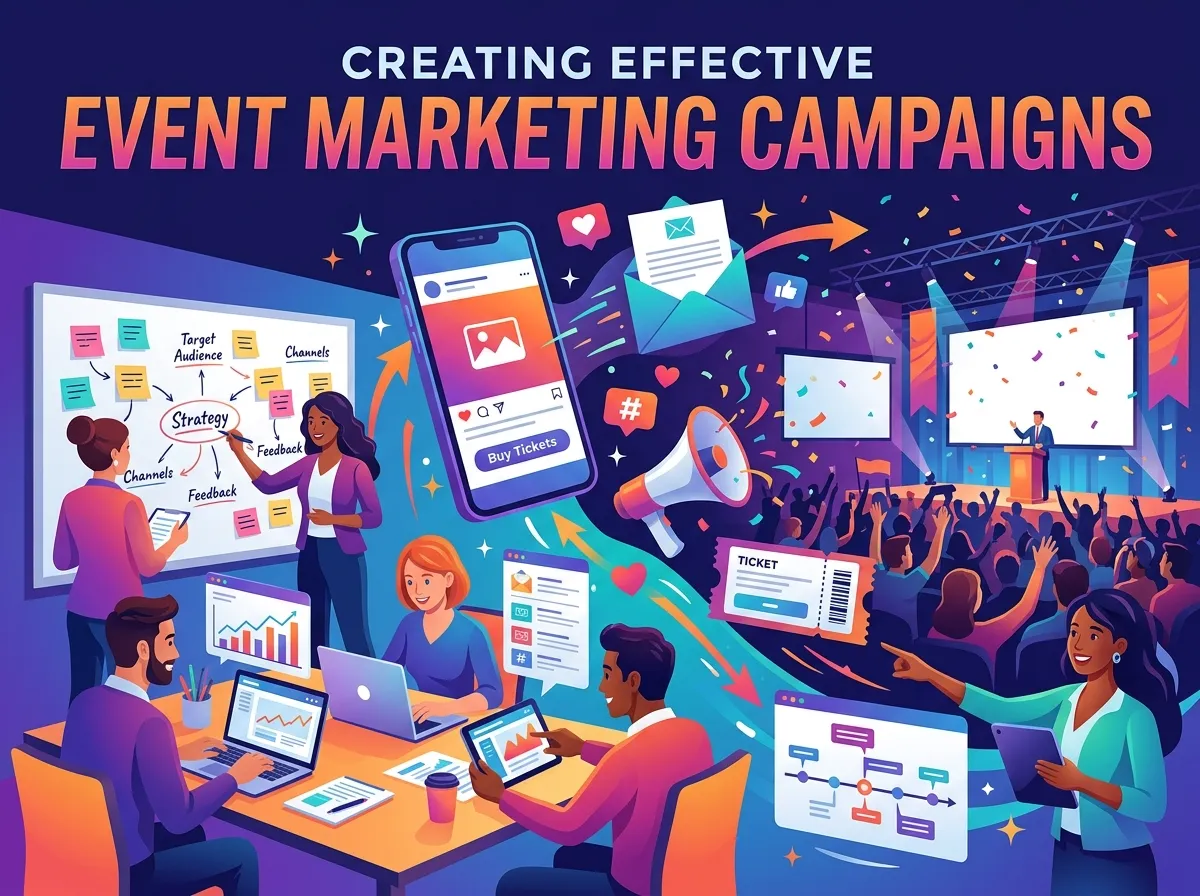
Event marketing campaigns should have a clear objective rather than simply promoting an event repeatedly. One campaign might focus on generating awareness, while another may be designed to increase registrations or encourage existing attendees to upgrade their tickets.
Campaign messaging should explain why people should attend. Instead of only saying that registration is open, marketers can communicate what attendees will learn, who they will meet, what experiences they will have, or what problems the event can help them solve.
Different content formats can also be used throughout the campaign. Short videos, event graphics, speaker announcements, testimonials, behind-the-scenes content, educational posts, email newsletters, and promotional landing pages can all support the same campaign while keeping communication interesting.
Consistency is important as well. The event name, visual identity, messaging, dates, and calls to action should remain consistent across different platforms. This creates recognition and makes the event appear more professional.
Online Event Promotion Through Social Media
Online event promotion gives organizers the opportunity to reach potential attendees wherever they spend time on the internet. Social media is particularly useful because event-related content can be shared, discussed, commented on, and distributed through personal networks.
Social media marketing for events should not rely entirely on promotional posts. A better approach is to create useful and engaging content that gives people a reason to follow the event account or interact with its content.
Organizers can introduce speakers, share event-related statistics, publish short educational videos, answer common questions, showcase previous event experiences, and create countdown content. Polls, questions, quizzes, and live sessions can also encourage interaction.
The platform should match the audience. Professional events may perform well on LinkedIn, while visually driven events may benefit from Instagram, TikTok, YouTube, or other visual platforms. The goal is not to be present everywhere but to focus on channels where the target audience is most active.
Developing an Event Promotion Strategy
An effective event promotion strategy combines multiple marketing channels instead of depending on one source of traffic. Search engine optimization can attract people actively searching for related events or topics, while social media can generate awareness and conversations.
Email marketing can be used to communicate directly with existing contacts. Paid advertising can expand reach, while content marketing can establish authority and provide useful information related to the event.
The promotional strategy should also change as the event approaches. Early promotion may focus on building awareness, while the middle stage can highlight speakers, sessions, benefits, and social proof. In the final stage, communication can emphasize registration deadlines, limited seats, ticket availability, or other reasons to act quickly.
This approach creates a more structured journey rather than sending the same promotional message repeatedly.
Digital Marketing Event Promotion Across Multiple Channels
Digital marketing event promotion becomes more effective when different channels support each other. For example, a social media advertisement can send users to an event landing page. Visitors who do not register can later receive a retargeting advertisement or email reminder.
A blog post can attract organic search traffic and direct readers toward registration. A webinar or video can educate potential attendees while also promoting the main event. Email subscribers can receive speaker announcements and then be directed to social media content where they can engage with the event community.
Understanding these connections is important because people rarely make decisions after seeing only one promotional message. Repeated exposure across relevant channels can increase familiarity and trust.
A useful way to understand this journey is through Event Marketing Funnel Optimization, which focuses on improving the different stages between initial awareness and final conversion.
Improving Event Audience Engagement
Event audience engagement should begin before attendees arrive. When people interact with event content before registration or participation, they are more likely to feel connected to the event.
Organizers can ask questions about topics attendees want to learn about, allow audiences to vote on session preferences, encourage people to submit questions for speakers, and create discussions around event themes.
During the event, digital tools can make participation more interactive. Live polls, Q&A sessions, chat discussions, social media hashtags, quizzes, and audience questions can encourage people to participate rather than simply watch.
Engagement should continue after the event. Organizers can share recordings, photos, key insights, speaker content, surveys, follow-up resources, and announcements about future events. This helps turn a single event into a longer-term relationship with the audience.
Choosing the Right Event Marketing Channels
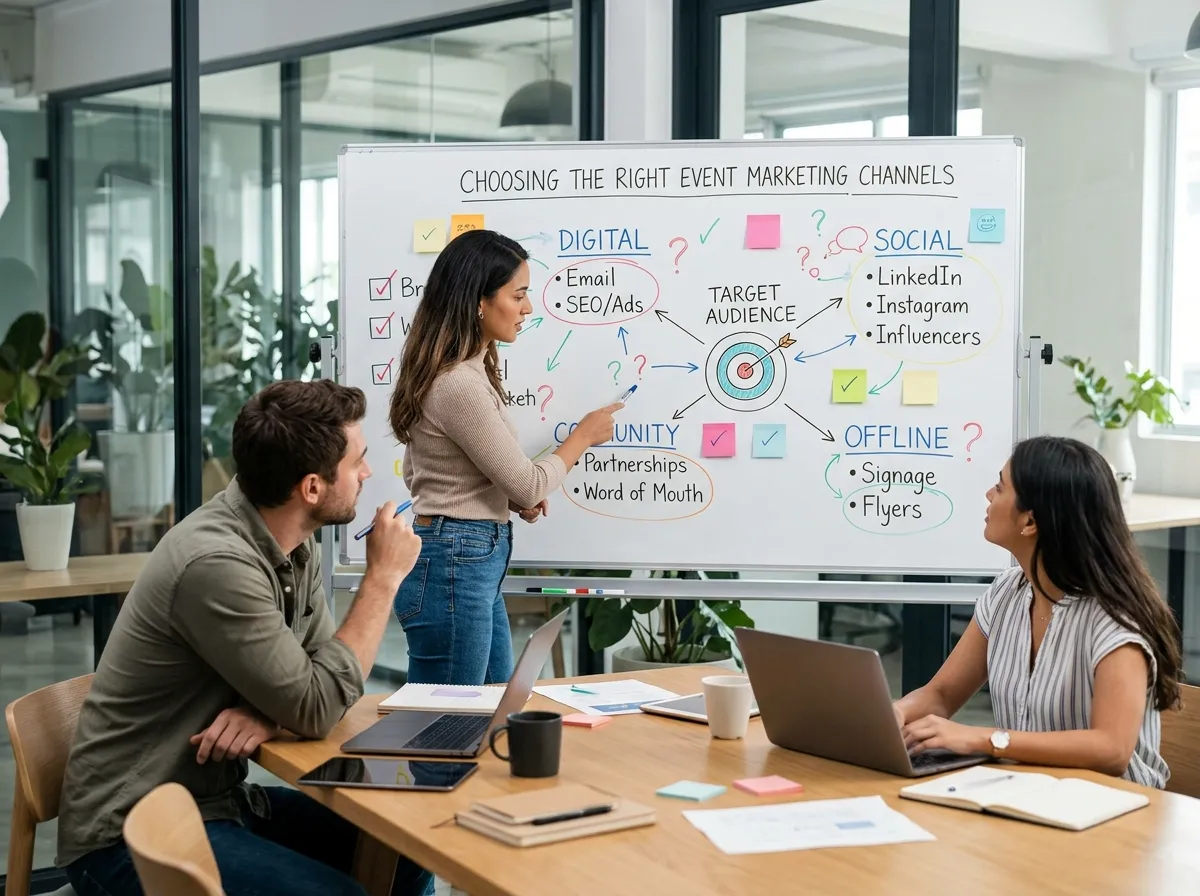
There are many event marketing channels, but not every channel is equally effective for every event. The right combination depends on the audience, event type, budget, location, and campaign objectives.
Search engines can help capture high-intent audiences. Social media can build awareness and engagement. Email marketing can nurture existing prospects. Paid advertising can provide additional reach, while content marketing can support long-term organic visibility.
Partnerships can also expand reach. Sponsors, speakers, industry organizations, influencers, and existing attendees can help distribute event information to relevant communities.
Data should guide channel decisions. Instead of assuming that a particular platform will work, marketers should monitor performance and invest more resources in channels that generate meaningful traffic, engagement, and registrations.
Event Registration Marketing and Conversion
Event registration marketing focuses on turning interested prospects into registered attendees. Even an excellent promotional campaign can produce poor results if the registration process is complicated.
The registration page should communicate the essential information clearly. Visitors should quickly understand the event date, format, location, price, benefits, and what they will receive after registering.
The registration form should also be as simple as possible. Asking for unnecessary information can create friction and increase abandonment. For some events, a short form with essential contact information may be enough.
Trust can also influence registration decisions. Testimonials, speaker credentials, previous attendee feedback, recognizable partners, and clear event details can reduce uncertainty.
Organizers should monitor where potential attendees leave the registration journey. This information can reveal whether the problem is the landing page, registration form, pricing, messaging, or another part of the funnel.
Using AI and Automation in Event Marketing
Artificial intelligence and automation are becoming increasingly useful in event promotion. AI tools can help marketers create content ideas, personalize communication, analyze campaign performance, segment audiences, and respond to common questions.
Chatbots can answer frequently asked questions about registration, schedules, speakers, pricing, locations, and event access. Automated email campaigns can send different messages based on whether someone registered, clicked a campaign, or abandoned a registration form.
AI can also support personalization by helping marketers deliver more relevant content to different audience segments. For example, attendees interested in networking may receive content focused on networking opportunities, while industry professionals may receive information about expert sessions.
Businesses interested in this area can also explore the Benefits of AI in Event Marketing to understand how AI can support event planning, promotion, engagement, and analysis.
Measuring Digital Marketing Performance
Measuring results is an essential part of digital marketing for events. Without performance data, marketers may continue investing in channels that are not producing meaningful results.
Important metrics can include website traffic, registration conversions, cost per registration, email engagement, social media engagement, advertisement clicks, landing page conversions, and attendee acquisition sources.
Organizers should also compare results between campaigns. If one advertisement generates significantly more registrations than another, the successful campaign can provide insights for future promotion.
A Digital Marketing Dashboard can make this process easier by bringing important marketing data into one place. Centralized reporting helps event marketers identify trends and make more informed decisions.
Conclusion
Digital marketing for events provides event organizers with a flexible and measurable way to attract audiences, increase registrations, and build stronger relationships with attendees. By combining search optimization, social media, email marketing, content, paid advertising, automation, and analytics, marketers can create a complete promotional journey.
The strongest results usually come from treating event marketing as an ongoing process rather than a short promotional burst. From early awareness to registration, participation, and post-event communication, every stage offers an opportunity to engage the audience.
A well-planned event digital marketing strategy can therefore help an event reach the right people, communicate its value clearly, improve registration performance, and create a stronger experience for attendees.
Frequently Asked Questions
1. What is digital marketing for events?
Digital marketing for events refers to using online channels and technologies to promote an event, attract potential attendees, generate registrations, and maintain audience engagement. It can include SEO, social media, email marketing, paid advertising, content marketing, websites, automation, and analytics.
2. Why is digital marketing important for event promotion?
Digital marketing allows event organizers to reach targeted audiences, communicate event benefits, measure campaign performance, and optimize promotional activities. It can also reach people across multiple platforms throughout the event marketing journey.
3. What is an event digital marketing strategy?
An event digital marketing strategy is a structured plan for promoting an event through online channels. It typically defines the target audience, promotional messages, marketing channels, campaign timeline, content, registration process, and performance metrics.
4. Which social media platforms are best for events?
The best platform depends on the event and its audience. LinkedIn can be useful for professional and B2B events, while Instagram, Facebook, YouTube, and TikTok may work well for consumer-focused or visually engaging events. The most effective platform is usually the one where the target audience is already active.
5. How can social media marketing increase event registrations?
Social media can increase registrations by creating awareness, showcasing event benefits, introducing speakers, sharing testimonials, answering questions, and directing interested users to a registration page. Consistent engagement can also build familiarity and trust.
6. What are the most effective event marketing channels?
Common event marketing channels include search engines, social media, email marketing, websites, content marketing, paid advertising, influencer partnerships, industry communities, and referral marketing. The right combination depends on the audience and event objectives.
7. How can event organizers improve audience engagement?
Organizers can improve event audience engagement through polls, Q&A sessions, quizzes, live discussions, social media conversations, interactive content, networking opportunities, and personalized communication. Engagement should continue before, during, and after the event.
8. How can AI help with event marketing?
AI can support event marketing through content creation, audience segmentation, personalization, chatbots, campaign analysis, automated communication, and customer support. These tools can reduce manual work while helping marketers provide more relevant experiences.
9. How can event registration marketing improve conversions?
Event registration marketing can improve conversions by using clear messaging, simple registration forms, strong calls to action, social proof, transparent pricing, relevant benefits, and timely reminders. Reducing unnecessary steps can also make registration easier.
10. How do you measure the success of digital marketing for events?
Success can be measured using metrics such as website traffic, registrations, conversion rates, cost per registration, email engagement, social media interactions, advertising performance, and attendee acquisition sources. Comparing these metrics helps marketers identify successful channels and improve future campaigns.